Begleiten Sie uns auf eine literarische Weltreise!
Buch zum Bücherregal hinzufügen
Grey
Einen neuen Kommentar schreiben Default profile 50px
Grey
Jetzt das ganze Buch im Abo oder die ersten Seiten gratis lesen!
All characters reduced
Cats and Dogs - cover

Cats and Dogs

Howard Philips Lovecraft

Verlag: Edizioni Aurora Boreale

  • 0
  • 0
  • 0

Beschreibung

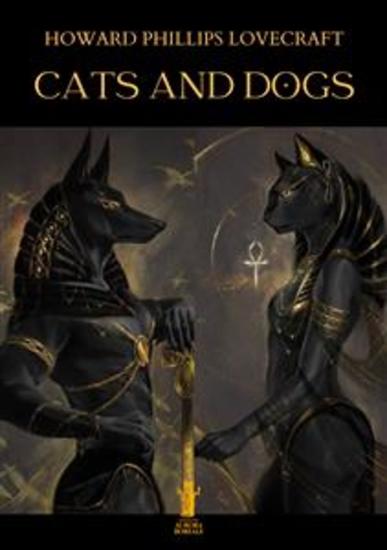
Lovecraft's short essay Cats and Dogs, which we propose to our readers today, was written on November 23, 1926, and was included in 1949 in Something About Cats and Other Pieces, a collection of fantasy, horror and science fiction short stories, poetry and essays by the great American author, published by Arkham House.
Certainly Lovecraft, like other great authors who preceded him, loved cats very much. He demonstrates this fully in his essay with these words: «Between dogs and cats my degree of choice is so great that it would never occur to me to compare the two. I have no active dislike for dogs, any more than I have for monkeys, human beings, tradesmen, cows, sheep, or pterodactyls; but for the cat I have entertained a particular respect and affection ever since the earliest days of my infancy. In its flawless grace and superior self-sufficiency I have seen a symbol of the perfect beauty and bland impersonality of the universe itself, objectively considered, and in its air of silent mystery there resides for me all the wonder and fascination of the unknown. The dog appeals to cheap and facile emotions; the cat to the deepest founts of imagination and cosmic perception in the human mind. It is no accident that the contemplative Egyptians, together with such later poetic spirits as Poe, Gautier, Baudelaire and Swinburne, were all sincere worshippers of the supple grimalkin». (…) «Cats are the runes of beauty, invincibility, wonder, pride, freedom, coldness, self-sufficiency, and dainty individuality -- the qualities of sensitive, enlightened, mentally developed, pagan, cynical, poetic, philosophic, dispassionate, reserved, independent, Nietzschean, unbroken, civilised, master-class men. The dog is a peasant and the cat is a gentleman».
Verfügbar seit: 03.05.2024.
Weitere Bücher, die Sie mögen werden

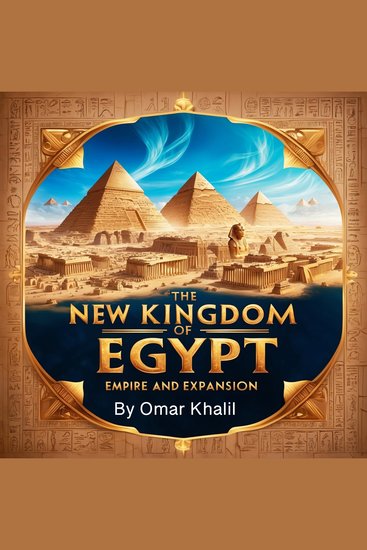
  • The New Kingdom of Egypt - Empire and Expansion - cover

    The New Kingdom of Egypt -...

    Omar Khalil

    • 0
    • 0
    • 0
    The rise of the New Kingdom marks one of the most pivotal periods in Egyptian history, signaling the transformation of Egypt from a regional power to an expansive empire. This era began with the fall of the Middle Kingdom, a time of political instability and foreign invasions. As Egypt struggled with weak leadership and incursions from Asiatic and Nubian forces, the foundations were laid for the emergence of a new, more robust regime. 
    The decisive moment came with the reign of Ahmose I, who is credited with founding the 18th Dynasty and expelling the Hyksos invaders from the Delta region. Ahmose's victory over these foreign rulers was symbolic not only of military prowess but also of a reassertion of Egyptian identity and unity. This victory allowed the pharaohs of the New Kingdom to solidify their power and embark on territorial expansion that would characterize much of their rule. 
    Ahmose's successors built upon his military success. They began to push Egypt's borders further into Nubia to the south and the Levant to the north, extending Egypt’s reach and influence. The New Kingdom was thus defined by an ambitious policy of imperial expansion, which required a well-organized military and a stable central government. The initial successes of the 18th Dynasty laid the groundwork for the period's most famous rulers, such as Thutmose III, whose campaigns in Syria and Palestine created an empire that stretched far beyond Egypt’s traditional borders.
    Zum Buch
  • The Big Quiet - One Woman's Horseback Ride Home - cover

    The Big Quiet - One Woman's...

    Lisa D. Stewart

    • 0
    • 0
    • 0
    At 54, Lisa Stewart set out to regain the fearless girl she once had been, riding her horse, Chief, 500 miles home. Hot, homeless, and on horseback, she snapped back into every original cell. On an extraordinary homegoing from Kansas City to Bates and Vernon Counties in Missouri, Lisa exhausted herself, faced her past, trusted strangers, and stayed in the middle of her frightened horse to document modern rural America, the people, animals, and land.
    Zum Buch
  • Ancient American Empires - Rise and Fall of Power (3 in 1) - cover

    Ancient American Empires - Rise...

    Rolf Hedger

    • 0
    • 0
    • 0
    This book offers a captivating journey through the rise, dominance, and eventual decline of three of the most powerful civilizations in the Americas: the Aztec, Inca, and Maya.  
    This comprehensive guide delves into their origins, cultural achievements, religious beliefs, and sophisticated societies. Discover the grandeur of the Aztec Empire, with its mighty capital of Tenochtitlán and powerful rulers; the vast and intricate Inca Empire, known for its engineering marvels and road networks; and the enigmatic Maya Civilization, famous for its advanced calendar, writing system, and towering pyramids.  
    Through war, conquest, and internal struggles, these civilizations left behind a legacy that continues to fascinate historians and archaeologists today. Perfect for history enthusiasts, this book unravels the mysteries of these ancient empires, their rise to power, and the forces that led to their downfall.
    Zum Buch
  • Praisesong for the Kitchen Ghosts - Stories and Recipes from Five Generations of Black Country Cooks - cover

    Praisesong for the Kitchen...

    Crystal Wilkinson

    • 0
    • 0
    • 0
    Years ago, when O. Henry Prize-winning writer Crystal Wilkinson was baking a jam cake, she felt her late grandmother's presence. She soon realized that she was not the only cook in her kitchen; there were her ancestors, too, stirring, measuring, and braising alongside her. These are her kitchen ghosts, five generations of Black women who settled in Appalachia and made a life, a legacy, and a cuisine. 


    An expert cook, Wilkinson shares nearly forty family recipes rooted deep in the past, full of flavor—delicious favorites, including Corn Pudding, Chicken and Dumplings, Granny Christine's Jam Cake, and Praisesong Biscuits. Together, Praisesong for the Kitchen Ghosts honors the mothers who came before, the land that provided for generations of her family, and the untold heritage of Black Appalachia. 


    As the keeper of her family's stories and treasured dishes, Wilkinson shares her inheritance in Praisesong for the Kitchen Ghosts. She found their stories in her apron pockets, floating inside the steam of hot mustard greens, and tucked into the sweet scent of clove and cinnamon in her kitchen. Part memoir, part cookbook, Praisesong for the Kitchen Ghosts weaves those stories together with recipes and a lyrical imagination to present a culinary portrait of a family that has lived and worked the earth of the mountains for over a century.
    Zum Buch
  • 100 Mind-Blowing Hockey Facts - 100 Incredible Stories from Hockey’s Most Unbelievable Moments - cover

    100 Mind-Blowing Hockey Facts -...

    Felix Grayson

    • 0
    • 0
    • 0
    Hockey isn’t just a sport—it’s a fast-paced, unpredictable, and mind-blowing spectacle packed with legendary plays, bizarre moments, and records that seem impossible. Whether you're a die-hard fan, a trivia junkie, or just someone who loves the unexpected, this audiobook delivers 100 unforgettable hockey stories that will leave you speechless.
     
    Inside, you’ll hear about:
    
     
    The time a Zamboni driver stepped in as an NHL goalie—and won
    
     
    A game that had to be stopped due to thick fog covering the ice
    
     
    The shocking moment a team scored on their own empty net… by accident
    
     
    The longest game in NHL history—176 grueling minutes of play
    
     
    A goalie who scored on himself in sudden death overtime
    
     
    A player who scored five goals—each in a different way
    
     
    The team that left the Stanley Cup at the airport
    
     
    The puck that vanished inside a goalie’s pads for nearly a minute


    Perfect for:
    
     
    Hockey fans who love the game’s wildest moments
    
     
    Sports trivia lovers chasing little-known gems
    
     
    Casual listeners who enjoy jaw-dropping true stories
    
     
    Anyone who loves a great conversation starter


    Whether you listen straight through or skip around, every fact is guaranteed to entertain, surprise, and make you see hockey in a whole new way.
     
    Lace up and hit play—you're about to relive the craziest, most mind-blowing moments in hockey history. A must-have for every sports fan’s collection!
    Zum Buch
  • Nazca Civilization - The Enigmatic Lines and the Desert Kingdom of Peru - cover

    Nazca Civilization - The...

    Rolf Hedger

    • 0
    • 0
    • 0
    The Nazca civilization emerged along the southern coast of present-day Peru, a harsh and arid region that required ingenuity and adaptation for survival. Flourishing between approximately 100 BCE and 800 CE, the Nazca people built upon the cultural and technological advancements of their predecessors, most notably the Paracas culture. The transition from the Paracas to the Nazca was marked by shifts in artistic expression, religious practices, and innovations in agriculture that allowed the new civilization to thrive in the desert landscape. 
    One of the defining characteristics of the Nazca civilization was its ability to adapt to the unforgiving environment. The region’s climate was dry, with little rainfall, yet the Nazca found ways to harness the limited water supply to sustain their agricultural economy. They engineered underground aqueducts known as puquios, a sophisticated irrigation system that transported water from underground sources to the surface, ensuring a steady supply for crops. This ingenuity allowed them to cultivate maize, beans, squash, and cotton, which became essential to their diet and economy. 
    The Nazca culture was also shaped by its geography. The valleys of the Rio Grande de Nazca provided fertile land where the civilization’s settlements and ceremonial centers flourished. Unlike the grand urban centers of the Andean highlands, the Nazca people lived in smaller, dispersed communities that relied on a combination of agriculture and trade. These communities were connected by a shared cultural and religious framework that revolved around the worship of powerful deities linked to nature, fertility, and water.
    Zum Buch