Junte-se a nós em uma viagem ao mundo dos livros!
Adicionar este livro à prateleira
Grey
Deixe um novo comentário Default profile 50px
Grey
Assine para ler o livro completo ou leia as primeiras páginas de graça!
All characters reduced
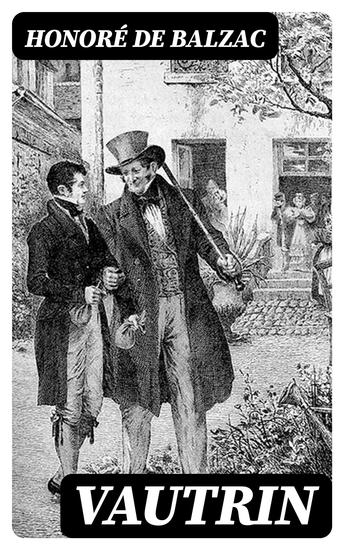
Vautrin - Enriched edition A Drama in Five Acts - cover
LER

Vautrin - Enriched edition A Drama in Five Acts

Honore de Balzac

Editora: DigiCat

  • 0
  • 0
  • 0

Sinopse

In "Vautrin," Honoré de Balzac delves into the complexities of identity, morality, and ambition in early 19th-century France. This riveting novel unfolds through the lens of the enigmatic character of Vautrin, a master manipulator whose intricate web of schemes encapsulates the clash between social aspirations and ethical dilemmas. Balzac's evocative prose and vivid characterizations not only reflect the influences of Romanticism and Realism but also serve as a detailed portrait of society's stratifications, underscoring the lengths to which individuals will go to achieve their desires amidst a backdrop of social instability. Honoré de Balzac, a seminal figure in French literature, often drew from his own experiences and observations of Parisian life. His extensive work, collectively known as "La Comédie Humaine," aims to provide a comprehensive exploration of the human experience. Balzac's engagement with the socio-political currents of his time, combined with his acute psychological insight, enriches the narrative of "Vautrin," allowing readers to glimpse the turbulent moral landscape of post-revolutionary France. Recommended for both literary enthusiasts and casual readers alike, "Vautrin" offers profound insights into the human condition while challenging conceptions of morality and ambition. Balzac's masterpiece is essential for those interested in understanding the complexities of society and the indelible mark of ambition on the human soul.

In this enriched edition, we have carefully created added value for your reading experience:
- A succinct Introduction situates the work's timeless appeal and themes.
- The Synopsis outlines the central plot, highlighting key developments without spoiling critical twists.
- A detailed Historical Context immerses you in the era's events and influences that shaped the writing.
- An Author Biography reveals milestones in the author's life, illuminating the personal insights behind the text.
- A thorough Analysis dissects symbols, motifs, and character arcs to unearth underlying meanings.
- Reflection questions prompt you to engage personally with the work's messages, connecting them to modern life.
- Hand‐picked Memorable Quotes shine a spotlight on moments of literary brilliance.
- Interactive footnotes clarify unusual references, historical allusions, and archaic phrases for an effortless, more informed read.
Disponível desde: 04/09/2022.
Comprimento de impressão: 71 páginas.

Outros livros que poderiam interessá-lo

  • Selfish Giant The (Unabridged) - cover

    Selfish Giant The (Unabridged)

    Oscar Wilde

    • 0
    • 0
    • 0
    "The Selfish Giant" Owns a beautiful garden which has 12 peach trees and lovely fragrant flowers, in which children love to play after returning from the school. On the giant's return from seven years visiting his friend the Cornish Ogre, he takes offence at the children and builds a wall to keep them out. He put up a notice board "TRESPASSERS WILL BE PROSECUTED". The garden falls into perpetual winter.
    Ver livro
  • After the Race - From their pens to your ears genius in every story - cover

    After the Race - From their pens...

    James Joyce

    • 0
    • 0
    • 0
    James Augustine Aloysius Joyce was born on the 2nd February 1882 in Dublin into a middle-class family, and the eldest of ten surviving siblings 
    Admired as a brilliant student he briefly attended the Christian Brothers-run O'Connell School before excelling at the Jesuit schools of Clongowes and Belvedere.  From there he went on to attend University College Dublin from 1898, studying English, French and Italian 
    In 1902, Joyce was now in his early twenties, and went to Paris to study Medicine but soon abandoned his teachings.  Back in Dublin to attend to his dying Mother he met Nora Barnacle. They bonded immediately into a life-long match. Together they decided to emigrate to Europe.  The couple lived in Trieste, Rome, Paris, and finally Zürich where Joyce pursued a variety of jobs and ventures to supplement his literary pursuits but none of these paid off.  
    After publishing a poetry volume, ‘Chamber Music’, in 1907, his short story collection ‘The Dubliners’, in 1914, helped establish his talent in the rapidly changing world.  
    Although far from home Joyce’s literary heart and works were set in his recollections of Dublin.  Characters are close resemblances of family and friends and indeed enemies.  His landmark work ‘Ulysses’, published in 1922, is set in the streets and alleyways of the city as it parallels Homer’s Odyssey in a variety of styles including its famed stream of consciousness. 
    His pen continued to produce classics of the order of ‘A Portrait of the Artist as A Young Man’ and ‘Finnegan’s Wake’ together with several volumes of poetry and a play ‘The Exiles, in 1918.   
    On the 11th January 1941, Joyce underwent surgery in Zürich for a perforated duodenal ulcer. The next day he fell into a coma. On the 13th after a brief period of lucidity in which he called for his wife and son he passed.  He was 58.
    Ver livro
  • Billy Budd - cover

    Billy Budd

    Herman Melville

    • 0
    • 0
    • 0
    "Billy Budd" is a novella written by Herman Melville, completed shortly before his death in 1891. It tells the story of Billy Budd, a handsome and popular sailor who becomes embroiled in a conflict with his ship's master-at-arms, John Claggart, on board a British naval vessel during the late 18th century. The novella explores themes of innocence, morality, justice, and the inherent conflict between good and evil.The narrative centers around the character of Billy Budd, a young and virtuous sailor admired by his peers for his exceptional charm and simplicity. However, his life takes a dramatic turn when he is falsely accused of inciting mutiny by Claggart, a malevolent and envious officer. The novella delves into the psychological dynamics between the two characters and the moral dilemmas faced by the ship's captain, Captain Vere, as he grapples with the decision of how to handle the situation."Billy Budd" explores the clash between absolute goodness and institutional authority, with Melville examining the complexities and ambiguities of human nature. The novella raises profound questions about the nature of justice, the corrupting influence of power, and the struggle to maintain one's moral integrity in a society driven by hierarchy and oppression.Melville's writing in "Billy Budd" is characterized by his rich prose, nuanced characterization, and philosophical inquiries. The novella incorporates nautical terminology and imagery, drawing on Melville's own experiences as a sailor, and employs a multi-layered narrative that invites readers to contemplate deeper moral and existential questions.
    Ver livro
  • A Middle-Sized Artist - From their pens to your ears genius in every story - cover

    A Middle-Sized Artist - From...

    Charlotte Perkins Gilman

    • 0
    • 0
    • 0
    Charlotte Perkins Gilman was born on 3rd July 1860 in Hartford, Connecticut, to an unaffectionate mother and a father who abandoned her and her older brother to a life of poverty. 
    Inevitably her schooling was limited and by 15 she had attended seven different schools but received only four years education.  However Charlotte was resourceful and did spend time with her father’s aunts – the suffragist Isabella Beecher Hooker and the ‘Uncle Tom Cabin’s’ author, Harriet Beecher Stowe as well as many hours at the public library studying ancient civilisations. 
    In 1878, she enrolled in classes at the Rhode Island School of Design where she met Martha Luther and they developed a close relationship until Luther married in 1881. Charlotte was devastated and detested romance and love until she met and married the artist Charles Walter Stetson.  
    Their only child, Katharine Beecher Stetson, was born in 1885 but left Charlotte with post-natal depression, then often dismissed as a case of hysteria or nerves.  Unsuited to domestic life she ruptured her life and moved to California with Katherine.  She divorced in 1894 and then sent Katharine east to live with her father and his second wife confirming that his paternal rights be acknowledged and that Katherine establish a relationship with her father. 
    After her mother died in 1893, Charlotte moved back east and became involved with her first cousin, Wall Street attorney, Houghton Gilman who she married in 1900. After his death she moved back to California, where Katherine now lived.   
    Her most popular story is ‘The Yellow Wallpaper’ which touched on her own post-partum depression and underlined the need for women to be responsible for their mental and physical well-being, as the narrator is ordered by her husband/doctor to take compete rest in her room where she is isolated and becomes obsessed with the revolting yellow wallpaper.   
    She wrote other notable short stories the best of which we also include.   
    Charlotte lectured widely for social reform, wrote important non-fiction works that questioned our patriarchal system and left a legacy as a leading and positive spokesperson for feminism.  
    She was diagnosed with incurable breast cancer in 1932 and, as she wrote in her suicide note and autobiography, she ‘chose chloroform over cancer’    
    Charlotte Perkins Gilman took her own life on 17th August 1935, aged 75, in Pasadena, California.
    Ver livro
  • A Room of One's Own - cover

    A Room of One's Own

    Virginia Woolf

    • 0
    • 0
    • 0
    Discover the Essential Manifesto for Female Creativity.
    
    In A Room of One's Own, Virginia Woolf delivers a powerful and enduring argument for the necessity of intellectual and financial independence for women. Based on a series of lectures given at Cambridge University, Woolf explores the historical and social barriers that have silenced women's voices for centuries.
    
    Through the brilliant fictional creation of Judith Shakespeare—the imagined talented sister of William—Woolf illustrates how genius is often stifled by poverty and lack of opportunity. Her famous conclusion that "a woman must have money and a room of her own if she is to write fiction" remains a cornerstone of feminist literature and a rallying cry for creators everywhere.
    
    This definitive edition presents one of the most important works of the 20th century. A masterpiece of modernist prose and literary criticism, Woolf's essay is a witty, profound, and essential exploration of gender, class, and the creative spirit.
    
    Claim your space in literary history. Buy "A Room of One's Own" today.
    Ver livro
  • The Master of Mystery - cover

    The Master of Mystery

    Jack London

    • 0
    • 0
    • 0
    Jack London's "The Master of Mystery" is set in a Native American fishing village in Alaska. A woman has lost her most valuable possession: the blankets of a deceased Englishman. The culprit must be found, but what makes matters more complicated is that the local shaman has fallen out of favor, forcing a feared shaman from outside the village to come to their aid. Can he help them, and will the culprit be found? The short story is one of London's stories inspired by the period the writer spent at the Klondike Gold Rush in the late 19th century and was published in the early 20th century.
    Ver livro