Begleiten Sie uns auf eine literarische Weltreise!
Buch zum Bücherregal hinzufügen
Grey
Einen neuen Kommentar schreiben Default profile 50px
Grey
Jetzt das ganze Buch im Abo oder die ersten Seiten gratis lesen!
All characters reduced
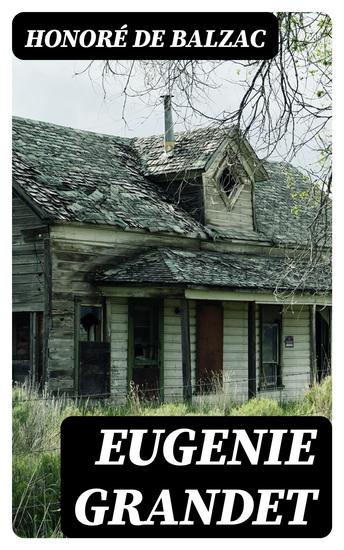
Eugenie Grandet - cover

Eugenie Grandet

Honoré de Balzac

Übersetzer Katharine Prescott Wormeley

Verlag: DigiCat

  • 0
  • 0
  • 0

Beschreibung

In "Eugénie Grandet," Honoré de Balzac crafts a poignant narrative that epitomizes his realist style, deeply rooted in the social dynamics of early 19th-century France. The novel centers around the titular character, Eugénie, a beautiful and kind-hearted young woman, whose life is shaped by the ruthless financial pursuits of her father, a miserly and domineering figure. Balzac's keen observations of bourgeois greed, familial obligation, and the struggle for love and autonomy create a rich tapestry of character interactions and societal critiques. The novel illustrates the complex interplay between wealth and personal happiness, embodying themes commonly explored within Balzac's larger work, "La Comédie Humaine. As a central figure of the French literary world, Honoré de Balzac was noted for his detailed portrayal of various strata of society, which largely stemmed from his own experiences in a rapidly industrializing France. His acute awareness of the societal pressures of his time, along with his struggles with financial instability, influenced his vivid depictions of characters like Eugénie Grandet, whose yearning for love clashes with the cold realities of her father's avarice and the societal expectations placed upon her. "Eugénie Grandet" is a must-read for anyone interested in the intricacies of human relationships and social critique. Balzac's masterful storytelling invites readers to engage with profound moral questions while offering a detailed glimpse into the emotional and societal landscapes of his era. This novel remains relevant, resonating with contemporary issues of wealth, love, and autonomy.
Verfügbar seit: 17.05.2022.
Drucklänge: 159 Seiten.
Weitere Bücher, die Sie mögen werden

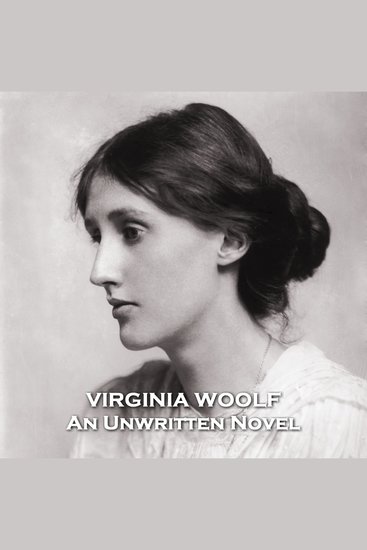
  • Unwritten Novel An - From their pens to your ears genius in every story - cover

    Unwritten Novel An - From their...

    Virginia Woolf

    • 0
    • 0
    • 0
    Adeline Virginia Woolf was born on the 25th January 1882 in South Kensington in London. 
    Although lauded as a founder of modernist writing with such classics as ‘Orlando’, ‘Mrs Dalloway’ and ‘To the Lighthouse’ and, of course, many classic short stories, her background is filled with elements of tragedy that she somehow overcame to become such a revered writer.   Her mother died when she was 13, her half-sister Stella two years later and with it her first of several nervous breakdowns.  Appallingly it was later found that three of her half-brothers had sexually abused her so darkness must have seemed ever present.   
    She began writing professionally at age 20 but her father’s death two years later brought a complete mental collapse and she was briefly institutionalised.  Somehow she found within herself a literary career and with it great innovations in writing; she was a pioneer of “stream of consciousness”.    
    Her tight circle of friends were the founders of the Bloomsbury Group, a movement whose legacy still influences across the arts and society in many way to this day.   
    Whilst the dark periods continued to interrupt her emotional state her rate of work never ceased.  Until, on 28th March 1941, Woolf put on her overcoat, filled up its pockets with stones, and walked into the River Ouse, in Lewes, East Sussex and drowned herself.  Her body was not recovered until the 18th April.  She was 59. 
    She left behind a note which read in part “Dearest, I feel certain that I am going mad again.  I feel we can't go through another of those terrible times.  And I shan't recover this time.  I begin to hear voices, and I can't concentrate.  So I am doing what seems the best thing to do”.
    Zum Buch
  • Diary of a Lunatic - From their pens to your ears genius in every story - cover

    Diary of a Lunatic - From their...

    Leo Tolstoy

    • 0
    • 0
    • 0
    Leo Tolstoy was born in 1828 in the Russian province of Tula to a wealthy noble family. As a child, he had private tutors but he showed little interest in any formal education. When he went to the University of Kazan in 1843 to study oriental languages and law, he left without completing his courses.  Life now was relaxed and idle but with some writing also taking place.  Gambling debts forced an abrupt change of path and he joined the army to fight in the Crimean War.  He was commended for his bravery and promoted but was appalled at the brutality and loss of life.  He recorded these and other earlier experiences in his diaries which formed the basis of several of his works. 
    In 1852 ‘Childhood’ was published to immediate success and was followed by ‘Boyhood’ and ‘Youth’. 
    His experience in the army and the horrors he witnessed resulted in ‘The Cossacks’ in 1862 and the trilogy ‘Sevastopol Tales’. After the war he travelled around Europe, visiting London and Paris and meeting such luminaries as Victor Hugo and Charles Darwin.  
    It was now that Tolstoy began his masterpiece, ‘War and Peace’. Published in 1869 it was an epic work that changed literature. He quickly followed this with ‘Anna Karenina’.  
    These successes made Tolstoy rich and helped him accomplish many of his dreams but also brought problems as he grappled with his faith and the lot of the oppressed poor. These revolutionary views became so popular that the authorities now kept him under surveillance.  
    He led a life of asceticism and vegetarianism and put his socialist ideals into practice by establishing numerous schools for the poor and food programmes. He also believed in giving away his wealth, which caused much discord with his wife.  
    His writing continued to bring forth classics such as ‘The Death of Ivan Ilyich’ and many brilliant and incisive short stories such as ‘How Much Land Does A Man Need’.  
    In 1901 Tolstoy was excommunicated from the Church and controversially deselected for the Nobel Prize for Literature. 
    Whilst undertaking a pilgrimage by train in October 1910 with his daughter Aleksandra he caught pneumonia in the nearby town of Astapovo.  Leo Tolstoy died on November 9th, 1910, he was 82.
    Zum Buch
  • A Chapel and a Hayhut Among the Mountains - cover

    A Chapel and a Hayhut Among the...

    D H Lawrence

    • 0
    • 0
    • 0
    'A Chapel and a Hayhut among the Mountains'. This piece of writing falls between the short story and travel writing but is presented here as a short story largely because it depicts the warm love between Lawrence and his wife Frieda (Anita in the story) as they begin their life of travel together.
    Zum Buch
  • The Stranger of the Night - A solitary walk becomes a journey of salvation - cover

    The Stranger of the Night - A...

    Edgar Wallace

    • 0
    • 0
    • 0
    Richard Horatio Edgar Wallace was born on the 1st April 1875 in Greenwich, London.  Leaving school at 12 because of truancy, by the age of fifteen he had experience; selling newspapers, as a worker in a rubber factory, as a shoe shop assistant, as a milk delivery boy and as a ship’s cook.  
     
    By 1894 he was engaged but broke it off to join the Infantry being posted to South Africa. He also changed his name to Edgar Wallace which he took from Lew Wallace, the author of Ben-Hur.  
     
    In Cape Town in 1898 he met Rudyard Kipling and was inspired to begin writing. His first collection of ballads, The Mission that Failed! was enough of a success that in 1899 he paid his way out of the armed forces in order to turn to writing full time.  
     
    By 1904 he had completed his first thriller, The Four Just Men. Since nobody would publish it he resorted to setting up his own publishing company which he called Tallis Press. 
      
    In 1911 his Congolese stories were published in a collection called Sanders of the River, which became a bestseller. He also started his own racing papers, Bibury’s and R. E. Walton’s Weekly, eventually buying his own racehorses and losing thousands gambling.  A life of exceptionally high income was also mirrored with exceptionally large spending and debts.  
     
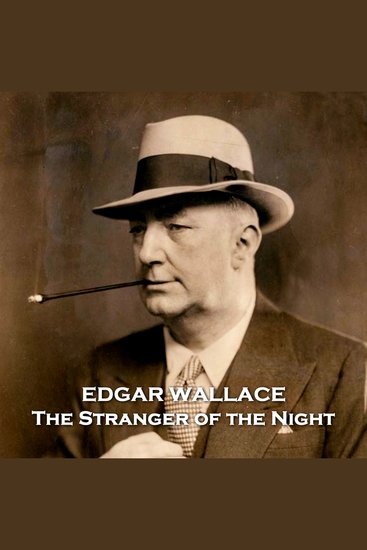
    Wallace now began to take his career as a fiction writer more seriously, signing with Hodder and Stoughton in 1921. He was marketed as the ‘King of Thrillers’ and they gave him the trademark image of a trilby, a cigarette holder and a yellow Rolls Royce. He was truly prolific, capable not only of producing a 70,000 word novel in three days but of doing three novels in a row in such a manner. It was estimated that by 1928 one in four books being read was written by Wallace, for alongside his famous thrillers he wrote variously in other genres, including science fiction, non-fiction accounts of WWI which amounted to ten volumes and screen plays. Eventually he would reach the remarkable total of 170 novels, 18 stage plays and 957 short stories. 
     
    Wallace became chairman of the Press Club which to this day holds an annual Edgar Wallace Award, rewarding ‘excellence in writing’.  
     
    Diagnosed with diabetes his health deteriorated and he soon entered a coma and died of his condition and double pneumonia on the 7th of February 1932 in North Maple Drive, Beverly Hills. He was buried near his home in England at Chalklands, Bourne End, in Buckinghamshire.
    Zum Buch
  • Outsider The (Unabridged) - cover

    Outsider The (Unabridged)

    H. P. Lovecraft

    • 0
    • 0
    • 0
    "The Outsider" is a short story by American horror writer H. P. Lovecraft. Written between March and August 1921, it was first published in Weird Tales, April 1926. In this work, a mysterious individual who has been living alone in a castle for as long as he can remember decides to break free in search of human contact and light. "The Outsider" is one of Lovecraft's most commonly reprinted works and is also one of the most popular stories ever to be published in Weird Tales. "The Outsider" combines horror, fantasy, and gothic fiction to create a nightmarish story, containing themes of loneliness, the abhuman, and the afterlife. Its epigraph is from John Keats' 1819 poem "The Eve of St. Agnes".
    Zum Buch
  • Top 10 Short Stories The - The African American Women - The top ten short stories written by black female American authors - cover

    Top 10 Short Stories The - The...

    Frances W Harper

    • 0
    • 0
    • 0
    Short stories have always been a sort of instant access into an author’s brain, their soul and heart.  A few pages can lift our lives into locations, people and experiences with a sweep of landscape, narration, feelings and emotions that is difficult to achieve elsewhere. 
     
    In this series we try to offer up tried and trusted ‘Top Tens’ across many different themes and authors. But any anthology will immediately throw up the questions – Why that story? Why that author?  
     
    The theme itself will form the boundaries for our stories which range from well-known classics, newly told, to stories that modern times have overlooked but perfectly exemplify the theme.  Throughout the volume our authors whether of instant recognition or new to you are all leviathans of literature. 
     
    Some you may disagree with but they will get you thinking; about our choices and about those you would have made.  If this volume takes you on a path to discover more of these miniature masterpieces then we have all gained something. 
     
    Race and gender have denied many their rightful place in literary history.  When we take time to look again we find remarkable jewels of astonishing merit that reveal just how many talented stories have emerged from the pens of these very special women. 
     
    01 - The Top 10 - The African American Women - An Introduction 
    2 - Two Offers by Frances W Harper 
    3 - The Wooing of Pastor Cummings by Georgia F Stewart 
    4 - The Stones of the Village by Alice Dunbar Nelson 
    5 - The Hoodoo by Martha Gruening 
    6 - The Octoroon's Revenge by Ruth D Todd 
    7 - Breaking the Color Line by Annie McCary 
    8 - The Quadroons by Lydia Maria Child 
    9 - The Preacher at Hill Station by Katherine Davis Chapman Tillman 
    10 - Talma by Pauline E Hopkins 
    11 - Aunt Lindy. A Story Founded on Real Life by Victoria Earle Matthews
    Zum Buch