Rejoignez-nous pour un voyage dans le monde des livres!
Ajouter ce livre à l'électronique
Grey
Ecrivez un nouveau commentaire Default profile 50px
Grey
Abonnez-vous pour lire le livre complet ou lisez les premières pages gratuitement!
All characters reduced
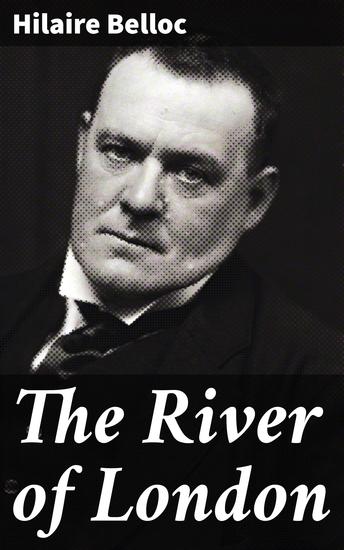
The River of London - Exploring London's Iconic Waterway Through Belloc's Poetic Lens - cover

The River of London - Exploring London's Iconic Waterway Through Belloc's Poetic Lens

Hilaire Belloc

Maison d'édition: Good Press

  • 0
  • 0
  • 0

Synopsis

In 'The River of London', Hilaire Belloc embarks on a vibrant exploration of the River Thames, weaving together lyrical prose and insightful historical commentary. This work is not merely a geographical account but a celebration of the river's cultural significance, capturing its essence through vivid imagery and rich descriptions. Belloc intertwines his observations of the river's flow with reflections on the changing landscape of London, encapsulating the interplay between nature and urban life in the early 20th century. The book resonates with the literary tradition of both the topographical and the pastoral, echoing the sentiments of earlier writers who found inspiration in the interplay of water and land. Hilaire Belloc, a prominent figure in English literature, was a multifaceted writer known for his poetry, essays, and historical narratives. His experience as a French-born Englishman, along with his deep affection for England and its history, profoundly influenced his writing. This affinity is particularly evident in 'The River of London', where his passion for storytelling is coupled with a profound understanding of the historical and societal dimensions that shape the river's legacy. This book is highly recommended for readers seeking a deeper appreciation of both the River Thames and London itself. Belloc's insightful observations and immersive style invite readers to reflect on the interconnectedness of place, history, and culture. It is an essential read for those interested in understanding the soul of London through its most iconic waterway.
Disponible depuis: 21/08/2022.
Longueur d'impression: 64 pages.

D'autres livres qui pourraient vous intéresser

  • The Crusader States - Kingdoms in the Holy Land - cover

    The Crusader States - Kingdoms...

    Nova Ashford

    • 0
    • 0
    • 0
    The story of the Crusader States begins with a cry for help and a call to arms that would echo across Christendom. In 1095, at the Council of Clermont, Pope Urban II delivered a fiery sermon urging the Christian knights of Europe to take up arms and reclaim the Holy Land from Muslim control. This call to crusade was not merely a military summons—it was framed as a sacred duty, a spiritual journey that promised the remission of sins and eternal reward for those who participated. The response was overwhelming. Nobles, peasants, and knights alike took up the cross, inspired by religious fervor, promises of salvation, and, for some, the allure of land and glory. 
    The roots of the crusading movement were complex. The Byzantine Empire, under threat from the Seljuk Turks, had appealed to the West for military support. Urban II seized the opportunity not only to assist a fellow Christian empire but also to assert papal authority, redirect knightly violence away from Europe, and perhaps reunite the Eastern and Western Churches. His appeal resonated deeply in a Europe rife with feudal conflict, religious devotion, and a growing warrior culture. The concept of "holy war" gave new legitimacy to warfare as a religious act, transforming knights into pilgrims with a sword. 
    The First Crusade, launched in 1096, was both chaotic and remarkable. It was not a single army but a series of loosely organized forces, including the infamous People's Crusade led by Peter the Hermit, which was largely destroyed before reaching the Holy Land. The main crusading armies followed, composed of powerful lords such as Godfrey of Bouillon, Raymond of Toulouse, Bohemond of Taranto, and others. These forces traversed hostile territory, besieged cities, and faced hunger, disease, and internal divisions. Yet, against the odds, they succeeded in capturing Jerusalem in July 1099.
    Voir livre
  • The Madman - cover

    The Madman

    Kahlil Gibran

    • 0
    • 0
    • 0
    The Madman, His Parables and Poems is a book written by Kahlil Gibran, which was published in the United States by Alfred A. Knopf in 1918, with illustrations reproduced from original drawings by the author. It was Gibran's first book in English to be published, also marking the beginning of the second phase of Gibran's career. May Ziade, with whom Gibran had been corresponding since 1912, reviewed it in Al-Hilal, a magazine in Egypt.
    Among the most significant works Kahlil Gibran: "Broken Wings", "The Prophet", "The Earth Gods" , "The Garden of the Prophet".
    Voir livre
  • Sandinistas and the Shining Path The: The History of Latin America’s Notorious Communist Revolutionaries - cover

    Sandinistas and the Shining Path...

    Charles River Editors

    • 0
    • 0
    • 0
    For much of the 20th century, Latin American governments in large part lived under a system of military junta governments. The mixture of indigenous peoples, foreign settlers and European colonial superpowers produced cultural and social imbalances into which military forces intervened as a stabilizing influence. The proactive personalities of military heads and the rigid structures of such a hierarchy guaranteed the “strong man” commanding officer an abiding presence in the form of executive dictator. Such leaders often bore the more collaborative title of “President,” but the reality was, in most cases, identical. Likewise, the gap between rich and poor was often vast, and a disappearance of the middle class fed a frequent urge for revolution, reenergizing the military’s intent to stop it. With no stabilizing center, the ideologies most prevalent in such conflicts alternated between a federal model of industrial and social nationalization and an equally conservative structure under privatized ownership and autocratic rule drawn from the head of a junta government.  
    	Whichever belief system was in play for the major industrial nations of Central and South America, a constant bombardment of foreign influence pushed the people of states such as Nicaragua, Chile, Brazil, Argentina, and others toward overthrow, in one direction or the other. To the left came Stalinist influences from the Soviet Union and Castro’s Cuba, while the German World War II model and an anti-communist mindset from the United States worked behind the scenes to upset any movement toward extreme liberalism. The tacit acceptance of these right-wing dictators across South America was part of an overarching effort known as Operation Condor, consisting mostly of CIA operations that are as infamous and controversial as ever, with a lasting legacy that affects current events such as reactions to the ongoing unrest in Venezuela. 
    Voir livre
  • Goodbye Transylvania - A Romanian Waffen-SS Soldier in WWII - cover

    Goodbye Transylvania - A...

    Sigmund Heinz Landau

    • 0
    • 0
    • 0
    A Romanian soldier details serving for Germany on the Eastern Front during World War II in this memoir, featuring firsthand accounts of combat. German by ancestry, born and raised in the ethnic welter of post-World War I Romania, Sigmund Heinz Landau left his home to volunteer for the Third Reich during World War II. Serving on the Eastern Front, he saw nearly six years of continuous fighting with a Luftwaffe Flak unit and eventually in the Waffen-SS, from sentry duty to desperate attacks against Soviet T-34s, from the siege of Budapest to the final campaign for Berlin in 1945. Landau’s memoir, written from a unique perspective, offers rare insight into what motivated soldiers to fight—and die—for Nazi Germany.
    Voir livre
  • Code of the Illuminati - cover

    Code of the Illuminati

    Abbé Barruel

    • 0
    • 0
    • 0
    In 1776 Adam Weishaupt, a respected German professor of Canon Law, founded a covert revolutionary group - The Illuminati - a secret society dedicated to destroying repressive regimes and shaping a world government in terms of Liberty and Equality. These ideals surfaced with violent emphasis during the French Revolution, which many saw as the work of Illuminati agitators. The Jesuit Abbé Augustin Barruel was one such. In this book, (the third of his four-part monumental work on the French Revolution), he describes - from contemporary sources and accounts - the history, organization and ethos of the Illuminati, and their role in the destruction of the 'ancien regime'. This is an important work on the Illuminati, and is especially relevant considering the continuing belief that the Order remains among us, still working secretly to achieve their goals.
    Voir livre
  • France and England’s Most Famous Palaces: The History of the Most Famous Royal Residences in Western Europe - cover

    France and England’s Most Famous...

    Editors Charles River

    • 0
    • 0
    • 0
    When people think of the British Royal family, and more specifically where they live, the first image that often pops into mind is that of stately Buckingham Palace, with its changing of the guard and the occasional royal coach leaving or entering. Others may think of the royal country estate of Windsor Castle, a favorite of both Britain’s longest-reigning and second longest-reigning monarchs. And there was a time when both royal residences played second fiddle to a much better known home, the elegant Kensington Palace. Buckingham Palace is not different, for though it was originally built as a home of a private citizen, once a king bought it, its future was sealed.  
    	For the French, and those who study their history, Versailles is a symbol of, as Charles Dickens once put it, “the best of times…the worst of times.” It was here that the Sun King, Louis XIV, built a palace worthy of a great nation during a time when peace was, at best, short-lived. It was at Versailles that Russian Tsar Peter the Great studied the palace’s architecture and gardens so that he could recreate them in his home country. Indeed, the greatest minds and artistic geniuses of the later stages of the Renaissance came to Versailles to build and paint, and it was here that Madame de Pompadour and her successor, Madame du Barry, used their wit and beauty to charm a king into doing their bidding. However, as history constantly demonstrates, nothing good lasts forever, and so it was with Versailles.  
    	France, like all European countries, has had its fair share of palaces over time, but none suffered the rise and fall of fortune like the Tuileries. Built by a widow with a flair for architecture, it grew for more than a decade, along with the royal family that it housed. Then, during the French Revolution, it fell from grace with that family and even became a sight of execution, its famous gardens providing the background for the infamous guillotine. 
    Voir livre