Begleiten Sie uns auf eine literarische Weltreise!
Buch zum Bücherregal hinzufügen
Grey
Einen neuen Kommentar schreiben Default profile 50px
Grey
Jetzt das ganze Buch im Abo oder die ersten Seiten gratis lesen!
All characters reduced
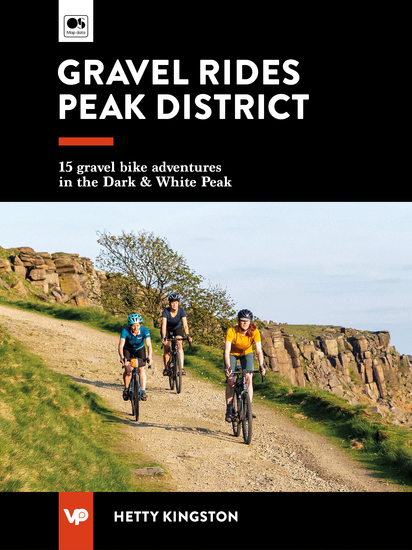
Gravel Rides Peak District - 15 gravel bike adventures in the Dark & White Peak - cover

Gravel Rides Peak District - 15 gravel bike adventures in the Dark & White Peak

Hetty Kingston

Verlag: Vertebrate Publishing

  • 0
  • 0
  • 0

Beschreibung

Gravel Rides Peak District showcases 15 of the best gravel bike rides in the stunning Peak District National Park. From 18 to 107 kilometres in length and covering a variety of terrain, there is something for every gravel cyclist.
Explore the fast-rolling, smooth gravel of disused railway lines on the High Peak Trail and Monsal Trail, traverse the breathtaking gritstone Eastern Edges on the edge of Sheffield, and discover unexpected gravel delights tucked away in the most unexpected places in the Dark and White Peak.
Researched, ridden and written by Peak local Hetty Kingston, the routes feature clear and easy-to-use Ordnance Survey maps; easy-to-follow directions; details of distance, timings and difficulty gradings; stunning action photography; refreshment stops and local knowledge; and a detailed appendix. Also included is a link to downloadable GPX files.
Verfügbar seit: 04.07.2024.
Drucklänge: 128 Seiten.

Weitere Bücher, die Sie mögen werden

  • The Cultural Revolution - A Decade of Upheaval - cover

    The Cultural Revolution - A...

    Jun Liu

    • 0
    • 0
    • 0
    The Cultural Revolution, which lasted from 1966 to 1976, was a decade of intense political and social upheaval in China. It was initiated by Mao Zedong, the Chairman of the Chinese Communist Party, as a means to reassert his ideological dominance and eliminate perceived threats within the party and society. The roots of the Cultural Revolution can be traced back to the aftermath of the Great Leap Forward, growing political divisions, and Mao’s desire to reshape China’s ideological landscape. 
    One of the key factors that led to the Cultural Revolution was Mao’s declining influence following the disastrous Great Leap Forward (1958–1962). This economic and social campaign, aimed at transforming China into a communist utopia through rapid industrialization and collectivization, resulted in widespread famine and the deaths of millions. The failures of the Great Leap Forward weakened Mao’s credibility, and he was forced to step back from day-to-day governance, allowing more pragmatic leaders such as Liu Shaoqi and Deng Xiaoping to implement economic reforms. These leaders promoted policies that prioritized economic stability over radical communist ideology, which Mao saw as a betrayal of the revolution’s goals. 
    In response to his diminished authority, Mao sought to reassert control by launching an ideological campaign against those he deemed “capitalist roaders” within the party. By the early 1960s, internal power struggles intensified as Mao and his radical supporters, including Lin Biao and Jiang Qing, clashed with moderate leaders advocating for a more pragmatic approach to governance. Mao viewed the growing influence of his rivals as a direct threat to his vision for China. To counter their policies, he began promoting the idea of a new revolutionary movement that would purify Chinese society and eliminate counterrevolutionary elements.
    Zum Buch
  • The Maurya Empire - History of Events Causes and Consequences - cover

    The Maurya Empire - History of...

    Kelly Mass

    • 0
    • 0
    • 0
    The Maurya Empire was a South Asian Iron Age historic empire centered in Magadha, created by Chandragupta Maurya in the year 322 before Christ and lasting till 185 before Christ in a loose-knit way. The conquest of the Indo-Gangetic Plain focused the Maurya Empire, and Pataliputra functioned as its capital city (modern-day Patna). Beyond this royal core, the empire's geographical reach was limited by the dedication of army leaders who ruled the armed cities that dot the landscape. 
    Other than for the far south, the empire briefly controlled the significant city centers and arteries of the Indian subcontinent throughout Ashoka's rule (which was from around 268 to 232 before Christ). 
    After Ashoka's reign, it sank for practically 50 years before liquifying in 185 before Christ with the murder of Brihadratha by Pushyamitra Shunga and the facility of the Shunga dynasty in Magadha. 
    Let’s explore the details of this empire that’s relatively unknown in the west, but certainly something people in South Asia are often familiar with.
    Zum Buch
  • Live Your Bucket List and Cycling King Alfred's Way Box Set - cover

    Live Your Bucket List and...

    Julia Goodfellow-Smith

    • 0
    • 0
    • 0
    What’s on your bucket list?  
    Do you think about how extraordinary your life would be if you fulfilled those dreams?  
    It’s time to make "one day" today with Live Your Bucket List.  
    In Live Your Bucket List, Julia Goodfellow-Smith guides you through the proven process that will take you from dreaming to achieving. You’ll find steps to: Ignite your passion. Overcome obstacles including fear and lack of money and time. Plan to achieve your dream. Successfully implement your plans. Reflect on your achievements.  
    Each step of the process is detailed and accompanied by inspiring personal stories and key lessons from Goodfellow-Smith’s own journey to live her bucket list.  
    If bikepacking is on your bucket list, then combine Live Your Bucket List with Cycling King Alfred's Way in this box set.  
    What’s it really like to cycle King Alfred’s Way?  
    Julia Goodfellow-Smith was a non-cyclist just six weeks before she and her mountain biking friend Alison set off on this epic 350km route around southern England. Follow Julia’s sometimes bumpy journey from cycling novice to riding King Alfred’s Way itself.  
    In Cycling King Alfred’s Way, you’ll discover what each section of the route is like to cycle, as well as strategies to: Plan your adventure. Reach the top of hills without stopping or pushing. Carry on when things get tough.  
    Whether you’re an experienced cycle tourer or rookie, learn from Julia to make your next bikepacking adventure the best possible success.
    Zum Buch
  • Olmec Civilization - The First American Empire and Giant Stone Heads of Mesoamerica - cover

    Olmec Civilization - The First...

    Rolf Hedger

    • 0
    • 0
    • 0
    The Olmec civilization, often regarded as the "Mother Culture" of Mesoamerica, emerged around 1200 BCE in the tropical lowlands of present-day southern Mexico, specifically in the Gulf Coast region. This area, rich in natural resources, served as the cradle for one of the earliest and most influential cultures in the Americas. The Olmec are best known for their monumental stone heads, intricate artwork, and the development of many foundational aspects of Mesoamerican civilization. 
    The origins of the Olmec civilization can be traced back to a combination of environmental factors, agricultural innovations, and the development of social structures. The region’s fertile lands provided an abundant supply of food, particularly maize, which became the cornerstone of Olmec agriculture. The availability of other crops, such as beans, squash, and cassava, further supported the growth of a settled society. The Olmec were skilled farmers, and their ability to adapt to the challenging conditions of the tropical lowlands allowed them to create surplus food, leading to population growth and the emergence of more complex social and political systems. 
    One of the defining features of the Olmec civilization was the rise of their urban centers, most notably San Lorenzo, La Venta, and Tres Zapotes. These cities became hubs of political and religious activity, with powerful rulers who controlled vast territories. The creation of these urban centers marked a shift from small, scattered villages to larger, more centralized societies. The Olmec rulers established authority through both political power and religious influence, often associating themselves with divine figures and acting as intermediaries between the gods and the people. This centralization of power allowed for the coordination of large-scale construction projects, such as the creation of the colossal stone heads and other monumental sculptures.
    Zum Buch
  • An Open Door - New Travel Writing for a Precarious Century - cover

    An Open Door - New Travel...

    Steven Lovatt

    • 0
    • 0
    • 0
    'If the mountains secluded Wales from England, the long coastline was like an open door to the world at large.' – Jan Morris
    The history of Wales as a destination and confection of English Romantic writers is well-known, but this book reverses the process, turning a Welsh gaze on the rest of the world.
    This shift is timely: the severing of Britain from the European Union asks questions of Wales about its relationship to its own past, to the British state, to Europe and beyond, while the present political, public health and environmental crises mean that travel writing can and should never again be the comfortably escapist genre that it was. Our modern anxieties over identity are registered here in writing that questions in a personal, visceral way the meaning of belonging and homecoming, and reflects a search for stability and solace as much as a desire for adventure. Here are lyrical stories refracted through kaleidoscopes of family and world history, alongside accounts of forced displacement and the tenacious love that exists between people and places. Yet these pieces also show the enduring value and joy of travel itself. As Eluned Gramich expresses it 'It's one of the pleasures of travel to submit yourself to other people, let yourself be guided and taught'.
    Taken together, the stories of An Open Door extend Jan Morris' legacy into a turbulent present and even more uncertain future. Whether seen from Llŷn or the Somali desert, we still take turns to look out at the same stars, and it might be this recognition, above all, that encourages us to hold the door open for as long as we can.
    Featuring contributions from Eluned Gramich, Grace Quantock, Faisal Ali, Sophie Buchaillard, Giancarlo Gemin, Siân Melangell Dafydd, Mary-Ann Constantine, Kandace Siobhan Walker, Neil Gower, Julie Brominicks and Electra Rhodes.
    Zum Buch
  • Dragonfly - Choosing To Be Nomads in Retirement - cover

    Dragonfly - Choosing To Be...

    Margaret Herle

    • 0
    • 0
    • 0
    Through her engaging memoir, author Margaret Herle shares a pioneering tale of life on the road. After deciding to retire in a home on wheels, Herle and her husband satisfied their cravings for travels (and being warm in winters!) on their own terms, exploring every province in Canada, most of the US, and the entire length of the Baja Peninsula in Mexico. From tourist destinations to unexpected offbeat spots, they found more adventure than they imagined in their converted bus, the Dragonfly.  
    Readers can come along for the ride with one of the original “vanlifers” who dared to give up a fixed address for an undetermined time and fulfill a love of travel in retirement—meeting locals, discovering different cultures, finding and immersing in new communities, and overcoming some epic challenges. For anyone interested in the #vanlife trend, Herle’s journey throughout North America in the 1990s—told through her reflections and personal letters to family—is an inspiration to choose the unordinary lifestyle and live your dream.
    Zum Buch