Rejoignez-nous pour un voyage dans le monde des livres!
Ajouter ce livre à l'électronique
Grey
Ecrivez un nouveau commentaire Default profile 50px
Grey
Abonnez-vous pour lire le livre complet ou lisez les premières pages gratuitement!
All characters reduced
Lost Gip - cover

Lost Gip

Hesba Stretton

Maison d'édition: Good Press

  • 0
  • 0
  • 0

Synopsis

In 'Lost Gip,' Hesba Stretton crafts a poignant narrative that interweaves themes of love, loss, and redemption within the framework of Victorian literature. The novel follows the heartwarming journey of a boy and his loyal dog, Gip, as they navigate the challenges of life in a rapidly changing society. Stretton's evocative prose, rich character development, and her ability to portray the intricate bond between humans and animals highlight the emotional landscape of her characters, making it both a tender and gripping read. Set against the backdrop of Victorian moral values and social responsibilities, the story serves as a reflection on the resilience of the human spirit and the innocence of childhood amidst adversity. Hesba Stretton, an influential figure in 19th-century literature, often drew upon her own experiences as a social reformer and her deep love for animals. Her commitment to championing the welfare of children and the humane treatment of animals is evident in her writing. Stretton's keen insights into the struggles of the working class, combined with her passionate advocacy, inform the thematic concerns of 'Lost Gip,' making it a work that resonates with her broader humanitarian goals. This book is highly recommended for readers interested in Victorian literature, animal welfare, or heartwarming tales of companionship. Stretton's lush narrative ensures that 'Lost Gip' not only entertains but also invites readers to reflect on the deeper meanings of loyalty and compassion in our lives.
Disponible depuis: 24/04/2025.
Longueur d'impression: 200 pages.


D'autres livres qui pourraient vous intéresser

  • Sylvia - From their pens to your ears genius in every story - cover

    Sylvia - From their pens to your...

    Bessie Kyffin-Taylor

    • 0
    • 0
    • 0
    Bessie Cope was born in Liverpool in Lancashire in 1869 (some accounts give an alternative birth year of 1880). 
    Her father died when she was a teenager and her mother remarried a journalist who later became the proprietor of the Liverpool Courier. 
    In 1892 Bessie married Gerald Kyffin-Taylor, who later sat in Parliament before resigning his seat at the outbreak of World War I to serve in the Army, where he rose to the rank of Brigadier-General. 
    After their marriage they settled in Heswall, a town in the Wirral in Cheshire. 
    Little else is known of her works or life except for her obituary in the Daily Mail dated 29th August 1922 which records that she was an enthusiastic sportswoman, especially in angling and motoring and had a reputation in literary circles for the writing of various articles and short stories.  The later were primarily in the Weird and Supernatural genres.
    Voir livre
  • Money Magic - cover

    Money Magic

    Hamlin Garland

    • 0
    • 0
    • 0
    Money Magic turns early-twentieth-century American ambition into a kind of spellwork, the sort that promises elevation and delivers vertigo. In a rough boomtown world of hotels, miners, gamblers, and sudden fortunes, a young woman is drawn into the gravitational field of money—its glamour, its violence, its power to remake names, morals, and futures. Hamlin Garland treats wealth less as arithmetic than as enchantment, and the novel watches—patiently, almost sternly—how that enchantment alters love, loyalty, and self-respect. 
    Voir livre
  • The Garden Party and Other Stories - cover

    The Garden Party and Other Stories

    Katherine Mansfield, Susannah...

    • 0
    • 0
    • 0
    The Garden Party and Other Stories was published in 1922. A collection of fifteen short stories, it explores themes including life and death, gender and family roles, relationships and duty.  
    CONTENTS: 
    Introduction to Katherine Mansfield, written and read by Susannah Fullerton“At the Bay”“The Garden Party”“The Daughters of the Late Colonel”“Mr. and Mrs. Dove”“The Young Girl”“Life of Ma Parker”“Marriage à la Mode”“The Voyage”“Miss Brill”“Her First Ball”“The Singing Lesson”“The Stranger”“Bank Holiday”“An Ideal Family”“The Lady’s Maid”
    Voir livre
  • Great Expectations - cover

    Great Expectations

    Charles Dickens

    • 0
    • 0
    • 0
    Considered a literary classic, "Great Expectation" follows the life of orphan Pip, who rises from humble beginnings to become a gentleman with 'great expectations' from a mysterious benefactor who he believes is Miss Havisham. The story explores Pip's developing relationship with the beautiful yet cold Estella, whom he loves but who seems unable to return his affection for some reason. 
    Pip is deeply influenced by his experiences, particularly in his encounters with an escaped convict, Magwitch, and the eccentric Miss Havisham, leading to a journey of moral development as he confronts issues of social class, unrequited love, and false expectation.
    Voir livre
  • Bethel Merriday - cover

    Bethel Merriday

    Sinclair Lewis

    • 0
    • 0
    • 0
    “Bethel Merriday” is a novel by Sinclair Lewis, first published in 1940. The book depicts the journey of an aspiring young actress, Bethel Merriday, and her life in a touring company. Most of the story surrounds her time in an acting troupe preparing for and performing a ‘modern’ version of "Romeo and Juliet".
    Voir livre
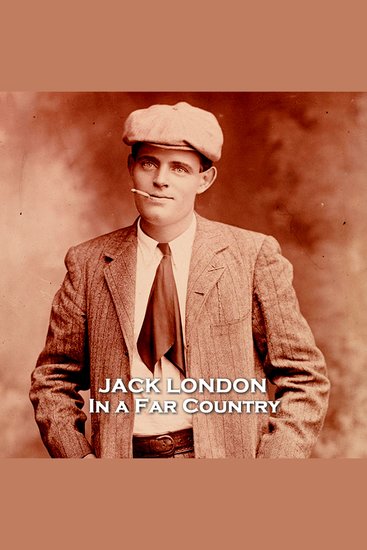
  • In a Far Country - From their pens to your ears genius in every story - cover

    In a Far Country - From their...

    Jack London

    • 0
    • 0
    • 0
    John Griffith Chaney was born on January 12th, 1876 in San Francisco.   
    His father, William Chaney, was living with Flora Wellman when she became pregnant.  Chaney insisted she have an abortion.  Flora's response was to turn a gun on herself.  Although her wounds were not severe the trauma made her temporarily deranged. 
    In late 1876 his mother married John London and the young child was brought to live with them as they moved around the Bay area, eventually settling in Oakland where now, calling himself Jack, he completed grade school. 
    Jack worked hard at several jobs, sometimes 12-18 hours a day, but his dream was university.  He studied hard and borrowed the money to enrol in the summer of 1896 at the University of California in Berkeley. 
    In 1897, at 21, Jack searched out newspaper accounts of his mother's suicide attempt and for the name of his biological father. He wrote to Chaney, then living in Chicago, who claimed he could not be Jack’s father because he was impotent and casually asserted that London's mother had relations with other men.  Jack, devastated by the response, quit Berkeley and went to the Klondike. Other accounts suggest that his dire finances presented Jack with the excuse he needed to leave. 
    In the Klondike Jack began to gather material for his writing but also accumulated many health problems, including scurvy, which together with hip and leg problems he would carry for the rest of his life. 
    During the late 1890's Jack was regularly publishing short stories and by the turn of the century full blown novels. 
    By 1904 Jack had married, fathered two children and was now in the process of divorcing.  A stint as a reporter on the Russo-Japanese war of 1904 was equal amounts trouble and experience. But that experience was always put to good use in a continuing and remarkable output of work. 
    In 1905 he married Charmian Kittredge who at last was a soul and companion who brought him some semblance of peace despite his advancing alcoholism and his incurable wanderlust. 
    Twelve years later Jack had amassed both wealth and a literary reputation through such classics as ‘The Call of the Wild’, ‘White Fang’ and many others. He had a reputation as a social activist and was a tireless friend of the workers.   
    Jack London died suffering from dysentery, late-stage alcoholism and uremia, aged only 40, on November 22nd 1916 at his property in Glen Elen in California.
    Voir livre