Begleiten Sie uns auf eine literarische Weltreise!
Buch zum Bücherregal hinzufügen
Grey
Einen neuen Kommentar schreiben Default profile 50px
Grey
Jetzt das ganze Buch im Abo oder die ersten Seiten gratis lesen!
All characters reduced
Mardi - cover

Mardi

Herman Melville

Verlag: DigiCat

  • 0
  • 0
  • 0

Beschreibung

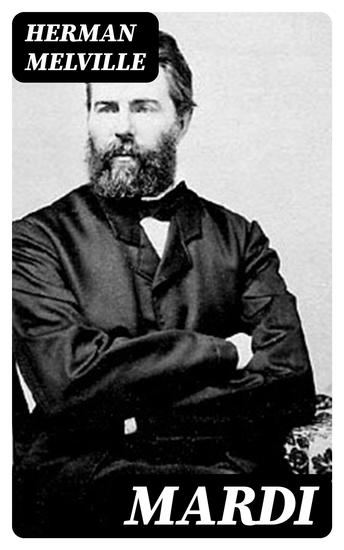
In "Mardi," Herman Melville embarks on a complex narrative voyage, blending elaborate language and philosophical musings within a richly woven tapestry of allegory. Set against the backdrop of an imaginary archipelago, the novel unfolds through the eyes of the protagonist, Taji, who grapples with existential dilemmas and the nature of reality, reflecting Melville's own struggles with identity and purpose. The literary style is notable for its intricate prose and intertextual references, resonating with themes of social critique and the quest for truth, positioning "Mardi" within the broader context of 19th-century American literature that seeks to understand both the self and society. Herman Melville, an esteemed American novelist and poet, drew inspiration from his own maritime experiences and travel encounters, which are central to the narrative structure of "Mardi." The author's previous works, such as "Moby-Dick," laid the groundwork for his exploration of existential themes and the human condition, while his interest in romanticism and transcendental philosophy informed his approach in "Mardi," revealing a deep engagement with the complexities of human nature and the critique of societal conventions. Readers who seek a profound exploration of the interplay between reality and illusion will find "Mardi" a remarkable journey. Melville's imaginative storytelling invites reflection on the larger human experience, making it a compelling read for those interested in philosophical literature and the evolution of American narrative art.
Verfügbar seit: 11.10.2022.
Drucklänge: 749 Seiten.


Weitere Bücher, die Sie mögen werden

  • The Adventure of the Noble Bachelor - cover

    The Adventure of the Noble Bachelor

    Sir Arthur Conan Doyle

    • 0
    • 0
    • 0
    Lord Robert St. Simon's new American bride, Hatty Doran, has disappeared almost immediately after the wedding. Hatty had been seen in whispered conversation with her maid, and Inspector Lestrade arrives with the news that Hatty's wedding dress and ring have been found floating in the Serpentine. What may be the reason behind Hatty's disappearance?
    Zum Buch
  • Alexander's Den - cover

    Alexander's Den

    Dawn Blair

    • 0
    • 0
    • 0
    Thomis doesn’t want to be here.Alexander’s Den: a place very few people know about and even fewer actually venture into willingly. Everyone here has a story; some want to tell it, and some don’t.Alexander won’t give Thomis a warm homecoming, even though he has something Alexander might want. Will a special egg be enough to get his foot back in the door? Will Alexander want too much from him in this storyteller’s final days?Enter the lair of Alexander’s Den in this fantasy short story.
    Zum Buch
  • Whitmore Asylum - cover

    Whitmore Asylum

    Mai Redding

    • 0
    • 0
    • 0
    Falsely imprisoned in Whitmore Asylum by her cruel husband, Laurence, Eleanor fights to retain 
    her sanity in a world that seeks to break her. As she uncovers horrifying secrets within the 
    asylum’s walls, she plans her escape and revenge. When an opportunity arises, she 
    seizes it, determined to reclaim her freedom. 
    Mai Redding, both author and narrator of this chilling tale, weaves a haunting story of injustice, 
    resilience, and revenge. With a sharp eye for gothic suspense and psychological horror, she 
    brings Eleanor’s harrowing journey to life, immersing readers in a world where power corrupts 
    and the fight for survival is relentless.
    Zum Buch
  • Reader I Married Him - Stories Inspired by Jane Eyre - cover

    Reader I Married Him - Stories...

    Tracy Chevalier, Various Authors

    • 0
    • 0
    • 0
    This collection of original stories by today’s finest women writers—including Tracy Chevalier, Francine Prose, Elizabeth McCracken, Tessa Hadley, Audrey Niffenegger, and more—takes inspiration from the famous line in Charlotte Brontë’s most beloved novel, Jane Eyre. 
    A fixture in the literary canon, Charlotte Brontë is revered by readers all over the world. Her novels featuring unforgettable, strong heroines still resonate with millions today. And who could forget one of literature’s best-known lines: “Reader, I married him” from her classic novel Jane Eyre? 
    Part of a remarkable family that produced three acclaimed female writers at a time in 19th-century Britain when few women wrote, and fewer were published, Brontë has become a great source of inspiration to writers, especially women, ever since. Now in Reader, I Married Him, twenty of today’s most celebrated women authors have spun original stories, using the famous line from Jane Eyre as a springboard for their own flights of imagination. 
    Unique, inventive, and poignant, the stories in Reader, I Married Him pay homage to the literary genius of Charlotte Brontë, and demonstrate once again that her extraordinary vision continues to inspire readers and writers.
    Zum Buch
  • The Piece of String - From their pens to your ears genius in every story - cover

    The Piece of String - From their...

    Guy de Maupassant

    • 0
    • 0
    • 0
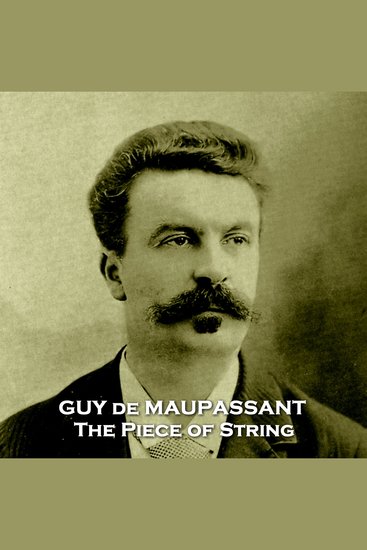
    Henri René Albert Guy de Maupassant was born on August 5th, 1850 near Dieppe in France.  
    Maupassant’s early life was badly torn when at age 11 (his younger brother Hervé was then five) his mother, Laure, a headstrong and independent-minded woman, risked social disgrace in order to obtain a legal separation from her husband. 
    After the separation, Laure kept custody of her two boys. With the father now forcibly absent, Laure became the most influential and important figure in the young boy's life.   
    Maupassant’s education was such that he rebelled against religion and other societal norms but a developing friendship with Gustave Flaubert began to turn his mind towards creativity and writing. 
    After graduation he volunteered for the Franco-Prussian war. With its end he moved to Paris to work as a clerk in the Navy Department.  Gustave Flaubert now took him under his wing.  Acting as a literary guardian to him, he guided the eager Maupassant to debuts in journalism and literature.  For Maupassant these were exciting times and the awakening of his creative talents and ambitions. 
    In 1880 he published what is considered his first great work, ‘Boule de Suif’, (translated as as ‘Dumpling’, ‘Butterball’, ‘Ball of Fat’, or ‘Ball of Lard’) which met with a success that was both instant and overwhelming.  Flaubert at once acknowledged that it was ‘a masterpiece that will endure.’ Maupassant had used his talents and experiences in the war to create something unique.  
    This decade from 1880 to 1891 was to be the most pivotal of his career.  With an audience now made available by the success of ‘Boule de Suif’ Maupassant organised himself to work methodically and relentlessly to produce between two and four volumes of work a year.  The melding of his talents and business sense and the continual hunger of sources for his works made him wealthy. 
    In his later years he developed a desire for solitude, an obsession for self-preservation, and a fear of death as well as a paranoia of persecution caused by the syphilis he had contracted in his youth.  
    On January 2nd, 1892, Maupassant tried to commit suicide by cutting his throat.  Unsuccessful he was committed to the private asylum of Esprit Blanche at Passy, in Paris.  It was here on July 6th, 1893 that Henri René Albert Guy de Maupassant died at the age of only 42.
    Zum Buch
  • The Scapegoat - From their pens to your ears genius in every story - cover

    The Scapegoat - From their pens...

    Paul Laurence Dunbar

    • 0
    • 0
    • 0
    Paul Laurence Dunbar was born on June 27th, 1872 in Dayton Ohio. His parents had been slaves in Kentucky before the Civil War.  
    Dunbar wrote his first poem at age 6 and gave his first public recital at age 9. By 16 he was already published as a poet in ‘The Herald’, a local newspaper. 
    After completing his formal schooling in 1891, Dunbar was employed as an elevator operator, at $4 a week. His hopes of a legal career floundered on a lack of funds and racial discrimination. However, he wrote his poetry and took every opportunity to publish. In 1892 his employers sent him to the United Brethren Publishing House which, in 1893, printed his dialect poetry, ‘Oak and Ivy; Dunbar subsidized the printing and earned back his investment in two weeks by selling copies himself. 
    Dunbar also wrote the lyrics for ‘In Dahomey’, the first musical written and performed entirely by African Americans. It was produced on Broadway in 1903; and then toured England and the United States for four years. 
    After returning from a literary tour of United Kingdom, Dunbar married Alice Ruth Moore on March 6th, 1898. She was a teacher and poet from New Orleans. Dunbar called her "the sweetest, smartest little girl I ever saw". Alice would become as famous as Paul during her life for her own literary works. 
    In 1900, he was diagnosed with tuberculosis and his doctors recommended drinking whisky to alleviate his symptoms.  The couple moved to Colorado as the cold, dry mountain air was considered favorable for his health. Dunbar and Alice separated in 1902, but never divorced. But Depression and declining health drove him to depend on alcohol, and health deteriorated. 
    His short career was prolific; a dozen books of poetry, four books of short stories, four novels, lyrics for ‘In Dahomey’, and a play. Dunbar’s essays and poems were published widely in leading journals including ‘Harper's Weekly’ and ‘The Saturday Evening Post’.  He was also a committed civil rights activist. 
    In 1904 he returned to Dayton to be with his mother.  
    Paul Laurence Dunbar died of tuberculosis on February 9th, 1906, at the age of only thirty-three.
    Zum Buch