Begleiten Sie uns auf eine literarische Weltreise!
Buch zum Bücherregal hinzufügen
Grey
Einen neuen Kommentar schreiben Default profile 50px
Grey
Jetzt das ganze Buch im Abo oder die ersten Seiten gratis lesen!
All characters reduced
Slavery and the slave trade in Africa - cover

Slavery and the slave trade in Africa

Henry M. Stanley

Verlag: Passerino

  • 0
  • 0
  • 0

Beschreibung

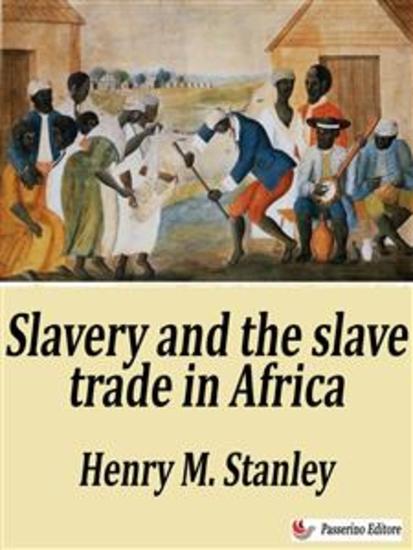
Sir Henry Morton Stanley (born John Rowlands; 28 January 1841 – 10 May 1904) was a Welsh-American explorer, journalist, soldier, colonial administrator, author and politician who was famous for his exploration of Central Africa and his search for missionary and explorer David Livingstone, whom he later claimed to have greeted with the now-famous line: "Dr. Livingstone, I presume?". Besides his discovery of Livingstone, he is mainly known for his search for the sources of the Nile and Congo rivers, the work he undertook as an agent of King Leopold II of the Belgians which enabled the occupation of the Congo Basin region, and his command of the Emin Pasha Relief Expedition. He was knighted in 1897, and served in Parliament as a Liberal Unionist member for Lambeth North from 1895 to 1900. More than a century after his death, Stanley's legacy remains the subject of enduring controversy. Although he personally had high regard for many of the native African people who accompanied him on his expeditions, the exaggerated accounts of corporal punishment and brutality in his books fostered a public reputation as a hard-driving, cruel leader, in contrast to the supposedly more humanitarian Livingstone. His contemporary image in Britain also suffered from the inaccurate perception that he was American. In the 20th century, his reputation was also seriously damaged by his role in establishing the Congo Free State for King Leopold II. Nevertheless, he is recognized for his important contributions to Western knowledge of the geography of Central Africa and for his resolute opposition to the slave trade in East Africa.
Verfügbar seit: 18.07.2022.
Weitere Bücher, die Sie mögen werden

  • Mad Tom's Rising - The Revolutionary Mystic Sir William Courtenay and the Last Battle Fought on English Soil - cover

    Mad Tom's Rising - The...

    Ian Breckon

    • 0
    • 0
    • 0
    A story of faith, fanaticism, and the uncanny power of the imagination.


    The dawn of the Victorian era: the world is changing rapidly. Poverty and the workhouse cast long shadows across rural England, and a traditional way of life is coming to an end.


    In the villages and fields of Kent, the discontented find an unlikely champion in John Nicholls Tom. Calling himself 'Sir William Courtenay', he appears to the local magistrates and gentry as a madman, a charlatan, or a dangerous radical. But for the labouring people he is the New Messiah, come to lead them in a revolt against the forces of oppression, and to herald the end of the world.


    But equality and wealth redistribution are dangerous ideas, and in May 1838 Tom's crusade ignites into bloody violence. The confrontation that follows will shock the country, and become known as the last battle ever fought on English soil.
    
    
    Mad Tom's Rising presents an alternative vision of early Victorian England, as a place of mystical religious faith, riot and disturbance, surveillance and insecurity, arson and uproar. Drawing on original sources, it reconstructs the strange and astonishing events of that time, and the lives and experiences of those forever marked by them.
    Zum Buch
  • Thou Savage Woman: Female Killers in Early Modern Britain - cover

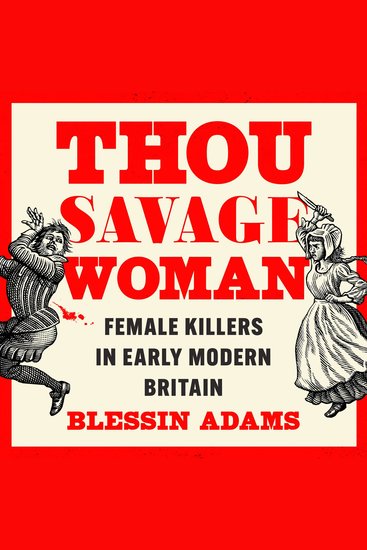
    Thou Savage Woman: Female...

    Blessin Adams

    • 0
    • 0
    • 0
    A Daily Telegraph and BBC History Magazine Book of the Year 
    'Popular history at its best' Spectator 
    'Boisterous… replete with stabbings, bashing and thumping' Daily Mail 
    'A cocktail of brutal, tragic, and fascinating true crime from the era of the Tudors and Stuarts. This dark history at its best, narrated with empathy and precision' Gareth Russell 
    LADY KILLERS AND FEMME FATALES – STORIES OF MURDER MOST FOUL – HAVE GRIPPED PUBLIC IMAGINATION FOR CENTURIES 
    Early Modern Britain was awash with pamphlets, ballads, woodcuts broadcasting bloodthirsty tales of traitorous wives, greedy mistresses, cunning female poisoning lacing the supper with deadly substances; of child killers and spiteful witches, stories of women wholly and unnaturally wicked. These were printed or sung, tacked the walls of alehouses, sold in the streets for pennies and read voraciously to thrill all. But why? When the vast majority of murders then (and now) are committed by men. 
    In this bold, page-turning new history, former police officer and historian Blessin Adams tells stories of women whose violent crimes shattered the narrow confines of their gender – and whose notoriety revealed a society that was at once repulsed by and attracted to murderous female rebellion. Based on detailed research in court archives, each chapter explores murders that thrilled and terrified the British public; the crimes that caused the most concern and provoked the most debate. Women in this period killed rarely, and when they did it was usually within the context of extreme provocation or domestic violence. Adams has the ability of the best crime novelists in recreating the setting in which each case occurred as well as the motivations of each perpetrator. 
    Thou Savage Woman reminds us that women in the past had voices, that they sought to control their bodies and their environments and that they also had the capacity for committing acts of unspeakable violence. 
    In Thou Savage Woman, Blessin Adams delves into the dark corners of Europe's Elizabethan era, unearthing the chilling tales of notorious female criminals. This non-fiction biography is a must-read for those fascinated by the macabre and the up-coming release is already topping pre-order lists. 
    For fans of Michelle Morgan (The Book of Hope), Kate Summerscale (The Peepshow), Tom Holland (The Rest is History), David Wilson (My Life with Murderers), and Christopher Clark (Kaiser Wilhelm II). 
    HarperCollins 2025
    Zum Buch
  • The Dawn of Day - cover

    The Dawn of Day

    Friedrich Nietzsche

    • 0
    • 0
    • 0
    "The Dawn of Day" is Friedrich Nietzsche's profound exploration of the philosophical underpinnings of morality, culture, and knowledge. This work marks a departure from traditional moral values, challenging readers to question the origins and implications of their beliefs. With his incisive wit and penetrating insights, Nietzsche dissects various societal norms and religious dogmas, advocating for a re-evaluation of morals in the light of reason and personal freedom. This collection of aphorisms and essays illuminates the dawn of Nietzsche's own philosophical awakening, offering a compelling invitation to intellectual liberation. Read in English, unabridged.
    Zum Buch
  • Napoleon's Imperial Guard Uniforms and Equipment Volume 1 - The Infantry - cover

    Napoleon's Imperial Guard...

    Paul L. Dawson

    • 0
    • 1
    • 0
    The author of Battle for Paris 1815 examines the uniforms and equipment of the infantry of Napoleon’s Imperial Guard.   From its origins as the Consular Guard of the French Republic, and as Napoleon’s personal bodyguard, the Imperial Guard developed into a force of all arms numbering almost 100,000 men. Used by Napoleon as his principal tactical reserve, the Guard was engaged only sparingly, being deployed at the crucial moment of battle to turn the tide of victory in favor of the Emperor of the French.   Naturally, the Imperial Guard has been the subject of numerous books over many decades, yet there has never been a publication that has investigated the uniforms and equipment of the infantry of the Imperial Guard with such detail and precision. The author has collected copies of almost all the surviving documents relating to the Guard, which includes a vast amount of material regarding the issuing of dress items, in some instances down to company level.   This information is supported by an unrivaled collection of illustrations, many of which have never been published before, as well as images of original items of equipment held in museums and private collections across the globe. In addition, the renowned military artist, Keith Rocco, has produced a series of unique paintings commissioned exclusively for this book.   This glorious book is, and will remain, unsurpassed as the standard work on the clothing and equipment of the Imperial Guard, and will not only be invaluable to historians, but also reenactors, wargamers and modelers. It is one of the most important publications ever produced on this most famous of military formations.
    Zum Buch
  • Liberty in America Past Present and Future - A Prescription for America - cover

    Liberty in America Past Present...

    Willeam Choby

    • 0
    • 0
    • 0
    In Liberty in America: Past, Present, and Future, renowned dentist and healthy policy expert, Dr. Bill Choby, presents how America, as the empire of liberty, has achieved freedom through the Godliness and goodness of its citizens. 
    Providing an essential insight into America's past, it demonstrates how the country's great forefathers fought against an oppressive government and sought freedom from political bondage through their selflessness and God-fearing personalities. 
    Dr. Choby also seeks to distinguish liberalism from liberty and define what true liberty is by highlighting what made the American government unique in all of history-faith, courage, discipline, and personal sacrifice. 
    In this book, he offers the ongoing challenges faced by freedom in the present and how the American people can secure the blessings of liberty for the future generation.
    Zum Buch
  • To Learn About Oneself One Has to Learn Anew Each Minute - Four Public Talks Bombay (Mumbai) India 1971 - cover

    To Learn About Oneself One Has...

    Jiddu Krishnamurti

    • 0
    • 0
    • 0
    "To perceive 'what is' is the basis of truth," 7 February 1971. Duration: 86 minutes.
    Where there is division, there must be conflict. A mind in conflict must inevitably be distorted, and therefore it cannot possibly see clearly what is truth.
    
    We need a total change, a deep revolution, psychological revolution, the inward revolution, without which you cannot possibly create a new society. Is it possible to observe, to perceive without the observer?
    
    How are images formed? Can the image building come to an end? Knowledge is absolutely necessary. Is it possible that knowledge, which the brain has accumulated through centuries, does not interfere with relationships?
    
    "Direct perception is freedom," 10 February 1971. Duration: 80 minutes.
    Can the mind living in this world ever be free, not only superficially but profoundly, at the very root of its existence? 'Freedom from' is an abstraction, but freedom in observing 'what is' and going beyond it is actual freedom.
    
    How do I observe greed? Do I observe it as an outsider looking in, or do I observe it without the observer? Without the mind being free, you cannot live in order. Three years have passed; I have no energy to be aware of my reactions. Can we seek God through observation?
    
    "Love is that quality of mind in which there is no division," 14 February 1971. Duration: 89 minutes.
    To live in this world with intelligence, in spite of all the complications. Is it possible to be free of fear, not only the superficial fear in relationship but the deep-rooted fear? Thought nourishes, sustains and gives continuity to fear and pleasure.
    
    When you are learning, your mind is awake. Truth isn't second-hand; you can't get it through a guru, a book; you have to learn about it. The beauty of learning is that you don't know what truth is.
    
    What is love? A man who has not love in his heart but the things made by thought will make a monstrous world, will construct a society that is totally immoral. To find out, you must undo everything that you have done.
    
    What does it mean to die?
    
    "A mind in meditation is concerned only with meditation, not with the meditator," 17 February 1971. Duration: 87 minutes.
    If you can put aside your favourite systems, if you can understand that concentration is merely a resistance and therefore constant conflict and wastage of energy, then we can find out for ourselves what is necessary for a mind that is in a state of meditation. To learn about oneself, a living thing, you have to watch, learn anew each minute.
    
    What is will? Consciousness is heritage, the result of time. Consciousness is the content of itself, which is time, sorrow, confusion, misery. Intelligence has no heritage.
    
    What is a mind that is completely silent? How does one cope with the extraordinary energy that human beings have?
    Zum Buch