Begleiten Sie uns auf eine literarische Weltreise!
Buch zum Bücherregal hinzufügen
Grey
Einen neuen Kommentar schreiben Default profile 50px
Grey
Jetzt das ganze Buch im Abo oder die ersten Seiten gratis lesen!
All characters reduced
The History of Tom Jones A Foundling - cover

The History of Tom Jones A Foundling

Henry Fielding

Verlag: Phoemixx Classics Ebooks

  • 0
  • 0
  • 0

Beschreibung

The History of Tom Jones, A Foundling - Henry Fielding - One of the cleverest and funniest novels ever written, Tom Jones is Henry Fielding's greatest achievement. Tom Jones, born a foundling, grown into a gallant and irresistible hero, romps through the English countryside getting himself into all kinds of trouble through his good nature and eye for the ladies. Betrayed by jealous relatives, Tom is exiled from home and must undergo a variety of trials and adventures in his quest to be reunited with his one true love and redeem himself in the eyes of society.
Verfügbar seit: 15.11.2021.
Drucklänge: 1333 Seiten.
Weitere Bücher, die Sie mögen werden

  • Self-Censorship - cover

    Self-Censorship

    Glenn C. Loury

    • 0
    • 0
    • 0
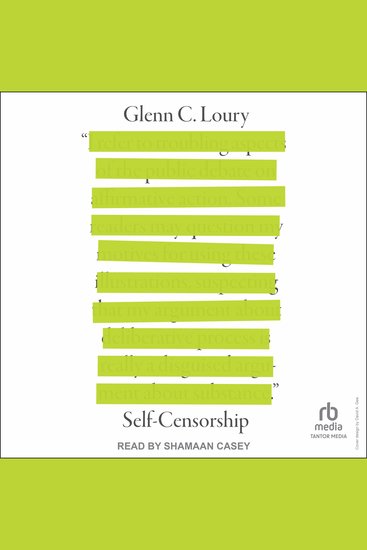
    There is no such thing as free, unconstrained speech. Laws and constitutions may protect us from the state when we speak our minds. But the state is just one possible constraint. Glenn Loury, one of America's most outspoken and important intellectuals, provides a provocative and dazzling analysis of the powerful social forces that can prevent speakers from voicing unpopular views in public forums.Every society, Loury notes, has norms to enforce. That can be a good thing: There ought to be social sanctions for, say, compulsive liars. When, however, a society shows a low degree of tolerance for speech about matters of political importance, self-censorship proliferates and public discourse and policy suffer. The answer, Loury argues, is for as many of us as possible to be braver and more human—to take a risk and unapologetically "live within the truth".Loury first presented these ideas in the 1990s in a celebrated and prophetic essay about "political correctness." In Self-Censorship he expands and updates the account, deploying his analytical powers and psychological acuity to diagnose our current political climate. The result illuminates prevailing social dynamics with the same brilliant and startling effect that made the paper an instant classic thirty years ago.
    Zum Buch
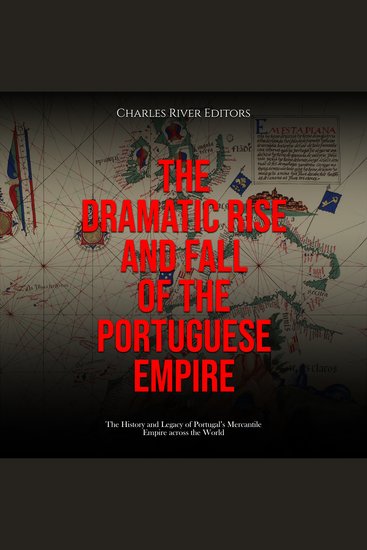
  • Dramatic Rise and Fall of the Portuguese Empire The: The History and Legacy of Portugal’s Mercantile Empire across the World - cover

    Dramatic Rise and Fall of the...

    Editors Charles River

    • 0
    • 0
    • 0
    Trade was able to increase in Europe around the world due to more effective ships being introduced, and some of the improvements that were made to the ships were first introduced by the Chinese. The introduction of multiple mast ships and the sternpost rudders allowed the ships to travel quicker and be more maneuverable. By the start of the 15th century, ships were now much larger and able to support long distance travel with a minimum number of crew aboard.  
    	With that, the Portuguese started exploring the west coast of Africa and the Atlantic under orders from Prince Henry the Navigator. At this point, Europeans had not yet been capable of navigating completely around Africa since the ships being built were not yet fully capable of being able to sail very far from the coast and navigation in open waters was difficult, but the Portuguese continued pushing down the western African coast looking for ways to bypass the Ottomans and Muslims of Africa who had been making overland trade routes difficult. In 1451, Prince Henry the Navigator helped fund and develop a new type of ship, the caravel, that featured triangular lateen sails and would be able to travel in the open ocean and sail against the wind. In 1488, Bartholomew Diaz rounded the southern tip of Africa, named the Cape of Good Hope by King John of Portugal, and entered the Indian Ocean from the Atlantic.  
    	The Portuguese found access to the trade regions that they had been searching for, but sailing from Portugal to India and beyond would require too many resources to travel with at once. To remedy this problem, Portugal began establishing a number of forts and trading posts along the route. The Portuguese were able to establish a fort on the west coast of India, Fort Manuel, in 1500, and in 1505 a fort was erected off the coast of Tanzania, thus beginning a trend of European colonization in Africa and Asia that would last for the next 400 years. 
    Zum Buch
  • Maharaji Neem Karoli Baba - cover

    Maharaji Neem Karoli Baba

    Sripad Jagannatha Dasa

    • 0
    • 0
    • 0
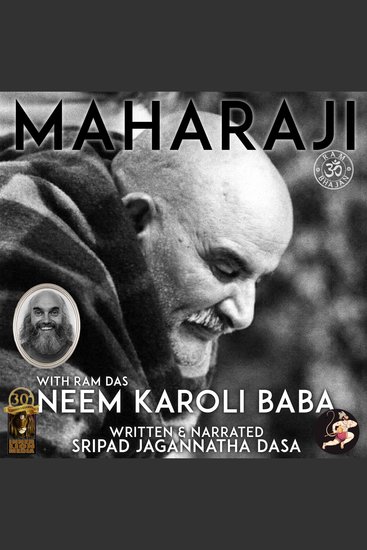
    * "Attachment is the strongest block to realization."* "Love is the strongest medicine."* "All action is prayer."* "Whoever works for God, his work will be done by itself."* "Keep God in your heart like you keep money in the bank."NEEM KAROLI BABA GURU FOR THE AGESNeem Karoli Baba known to his followers as Maharaj-ji - was a great Hindu guru, mystic, and devotee of Lord Hanuman. He is very well known outside India for being the spiritual master of a number of prominent Americans who traveled to India in the 1960s and 70s, including spiritual teachers Ram Dass, Bhagavan Das, and musicians Krishna Das and Jai Uttal. His ashrams are in India, and in Taos, New Mexico. Maharaji was a lifelong adept of bhakti-yoga, and encouraged service to others (seva) as the highest form of unconditional devotion to God.There can be no biography of him. Facts are few, stories many. He seems to have been known by different names in many parts of India, appearing and disappearing through the years. His non-Indian devotees of recent years knew him as Neem Karoli Baba, but mostly as “Maharajji” – a nickname so commonplace in India that one can often hear a tea vendor addressed thus. Just as he said, he was "nobody". He gave no discourses; the briefest, simplest stories were his teachings. Usually, he sat or lay on a wooden bench wrapped in a plaid blanket while a few devotees sat around him. Visitors came and went; they were given food, a few words, a nod, a pat on the head or back, and they were sent away. There was gossip and laughter for he loved to joke. Orders for running the ashram were given, usually in a piercing yell across the compound. Sometimes he sat in silence, absorbed in another world to which we could not follow, but bliss and peace poured down on us. Who he was was no more than the experience of him. Here are his sublime life and teachings.SPECIAL GUEST RAM DAS
    Zum Buch
  • Agnes Finnie - The Witch of the Potterrow Port - cover

    Agnes Finnie - The Witch of the...

    Mary Craig

    • 0
    • 0
    • 0
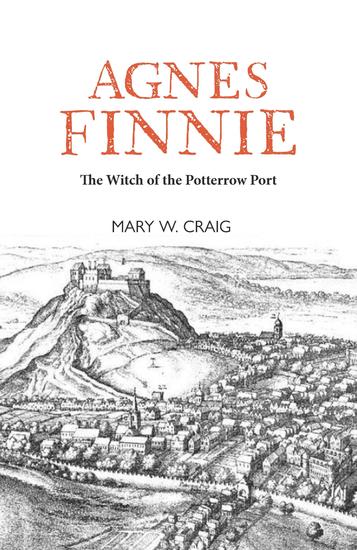
    Witchcraft holds a continued fascination for readers around the world, and the Scottish witch hunts have recently received renewed media attention, especially with the BBC 2 show Lucy Worsley Investigates, bringing attention to Edinburgh's witches.
    
    Expert Mary Craig explores the unusual story of Agnes Finnie, a middle class shopkeeper who lived in the tenements of Edinburgh. After arrest, most witches were tried within a matter of days but not Agnes. Her unusual case took months with weeks of deliberation of the jury. Mary explains why and gives her expert insight into the political and religious tensions that led to her burning.
    
    The book will interest a variety of readers, academics and non-academics alike – those interested in witchcraft, British and Scottish history, religious studies and women's studies.
    Mary Craig works as a historian with museums, archives and schools and hosts regular, well-attended events on the subject of witchcraft in the Scottish Borders. We expect strong media coverage. The Witches of Scotland campaign has recently gained traction and the attention of first minister Nicola Sturgeon, calling for a pardon and apology to those accused during the witch hunts.
    Zum Buch
  • Firing the Cloud - How Humanity Survived and Accelerated - cover

    Firing the Cloud - How Humanity...

    Ylia Callan

    • 0
    • 0
    • 0
    This audiobook is narrated by an AI Voice.   
    Firing the Cloud: How Humanity Survived and Accelerated is a sweeping, provocative journey through 15,000 years of human history tracing how we evolved from small, fire-lit bands of hunter-gatherers to a globally networked civilisation living inside a digital cloud. 
    The book explores the great transitions that shaped us: the Agricultural Revolution’s trade of autonomy for stability, the Industrial Age’s relentless acceleration and the Technological Era’s shift from reality to virtuality. Each chapter weaves anthropology, history, and systems thinking to reveal what we gained and what we lost at every turn. 
    Thoughtful, urgent and ultimately hopeful, this audiobook challenges listeners to become memory-keepers of the human story and to shape a future that is not only faster, but wiser.
    Zum Buch
  • Stories from kathasaritasagara series 26 - From various sources - cover

    Stories from kathasaritasagara...

    Anusha HS

    • 0
    • 0
    • 0
    The book Kathasaritsagara has been created by Soma Deva. It consists of 21,500 shlokas. 
    This book Kathasaritsagara has been divided into 18 lambakaas, and those 18 lambakaas are still more divided into 125 Tharanga's. 
    Some lambakaas are very big, while some are very small. 
    If there are 115 Shlokas in the 11th Lambaka, there are around 4925 Shlokas in 12th Lambaka. 
    During ancient times from the mouth of Lord Shiva, this story got birth. Those who listen to this story will experience all sorts of worldly pleasures. They will be blessed by Lord Shiva and at last reach jnana Loka by the blessings of lord shiva.
    Zum Buch