Rejoignez-nous pour un voyage dans le monde des livres!
Ajouter ce livre à l'électronique
Grey
Ecrivez un nouveau commentaire Default profile 50px
Grey
Abonnez-vous pour lire le livre complet ou lisez les premières pages gratuitement!
All characters reduced
The Foundations of Science: Science and Hypothesis The Value of Science Science and Method - Enriched edition - cover

The Foundations of Science: Science and Hypothesis The Value of Science Science and Method - Enriched edition

Henri Poincaré

Traducteur George Bruce Halsted

Maison d'édition: DigiCat

  • 0
  • 0
  • 0

Synopsis

Henri Poincaré's "The Foundations of Science: Science and Hypothesis, The Value of Science, Science and Method" is a profound exploration of the philosophical underpinnings of scientific inquiry. Poincaré delves into the nature of scientific theories, emphasizing the role of hypothesis in the scientific method and the interplay between observation and mathematical formulation. His engaging prose—marked by clarity and rigor—situates these discussions within the broader intellectual currents of early 20th-century science, where emerging theories in physics and mathematics challenged traditional epistemologies. This collection seeks to bridge the gap between empirical observations and abstract concepts, encouraging a critical examination of what constitutes scientific knowledge. Henri Poincaré, a formidable mathematician and physicist, is often regarded as a pioneer in various fields, including topology and celestial mechanics. His interdisciplinary approach reflects a deep engagement with both the scientific and philosophical dimensions of existence. Experiences such as challenging the prevailing Newtonian framework likely informed his critical outlook on science, leading him to articulate a broader understanding of its foundations that continues to resonate with contemporary debates about the nature of scientific explanation. "The Foundations of Science" is an essential read for anyone interested in the philosophical implications of scientific thought. Poincaré's insights provide invaluable perspectives for scientists, philosophers, and scholars alike, inviting readers to reflect on the underlying principles that govern our understanding of the natural world.

In this enriched edition, we have carefully created added value for your reading experience:
- A comprehensive Introduction outlines these selected works' unifying features, themes, or stylistic evolutions.
- The Author Biography highlights personal milestones and literary influences that shape the entire body of writing.
- A Historical Context section situates the works in their broader era—social currents, cultural trends, and key events that underpin their creation.
- A concise Synopsis (Selection) offers an accessible overview of the included texts, helping readers navigate plotlines and main ideas without revealing critical twists.
- A unified Analysis examines recurring motifs and stylistic hallmarks across the collection, tying the stories together while spotlighting the different work's strengths.
- Reflection questions inspire deeper contemplation of the author's overarching message, inviting readers to draw connections among different texts and relate them to modern contexts.
- Lastly, our hand‐picked Memorable Quotes distill pivotal lines and turning points, serving as touchstones for the collection's central themes.
Disponible depuis: 01/08/2022.
Longueur d'impression: 505 pages.


D'autres livres qui pourraient vous intéresser

  • A Simple Guide to User Experience in the AI World - By Dela Ariela Rostami - cover

    A Simple Guide to User...

    Dela Rostami

    • 0
    • 0
    • 0
    Are you ready to unlock the potential of AI through exceptional user experience design? 
    "UX for AI" demystifies the complex world of user experience in the burgeoning field of artificial intelligence. This book is crafted for beginners and provides a thorough introduction to the essentials of UX, tailored specifically for AI applications. 
    In this guide, you'll discover: 
    Fundamentals of UX: Learn what UX is, how it differs from UX research, and why it's crucial in AI. 
    History and Theory: Explore the evolution of UX design thinking and how psychological principles apply to user-centered design. 
    Practical Approaches: Gain insights into defining design problems, conducting effective research, and employing AI-specific design strategies. 
    Ethics and Accessibility: Tackle critical issues such as ethical design, bias in AI, and creating inclusive experiences. 
    Career Guidance: Understand the landscape for UX careers in AI, including skills needed and potential career paths. 
    Whether you're a budding designer, a tech professional looking to shift into UX, or simply AI-curious, "UX for AI" offers the tools and knowledge you need to create impactful, user-friendly AI systems. 
    Embark on your UX journey today and start designing the future of AI!
    Voir livre
  • The Story of My Boyhood and Youth - cover

    The Story of My Boyhood and Youth

    John Muir

    • 0
    • 0
    • 0
    Before he became one of America’s most influential environmental voices, John Muir was a curious Scottish immigrant boy growing up on the Wisconsin frontier. This honest and vivid memoir traces his journey from a strict religious upbringing to the early stirrings of a lifelong love for nature. 
    In simple yet moving detail, Muir recalls farm life, his inventive mechanical creations, and the challenges of a hard pioneer existence. What shines through is his relentless curiosity about the natural world and the quiet strength that would later shape the U.S. conservation movement. 
    A compelling read for fans of nature writing, American history, and personal memoirs, this book offers a glimpse into the early mind of the man who helped inspire the creation of Yosemite National Park and the Sierra Club.
    Voir livre
  • How To Raise Guinea Pigs - Your Step-By-Step Guide to Raising Guinea Pigs - cover

    How To Raise Guinea Pigs - Your...

    HowExpert, Suzanne Abel

    • 0
    • 0
    • 0
    If you want to learn how to raise guinea pigs by someone who has real life experience in this topic, then get "How To Raise Guinea Pigs". 
    This is an easy guide for those who want to enrich their lives with a guinea pig or two. The guide is written in a question-and-answer format with very simple instructions, suitable for both children and adults. 
     Step-by-Step Instructions on How to Raise Guinea Pigs 
    - The different guinea pig breeds and how they are classified 
    - Description of guinea pig behaviors and what they mean 
    - What to look for when you buy a guinea pig 
    - Daily care for your guinea pig 
    - The guinea pig's diet 
    - How to set up and maintain a cage for your guinea pig(s) 
    - Socialization with your guinea pig 
    - Conditions that require veterinary care 
    - Shows and competitions 
    - Breeding 
     Click "Buy Now" to get it now!
    Voir livre
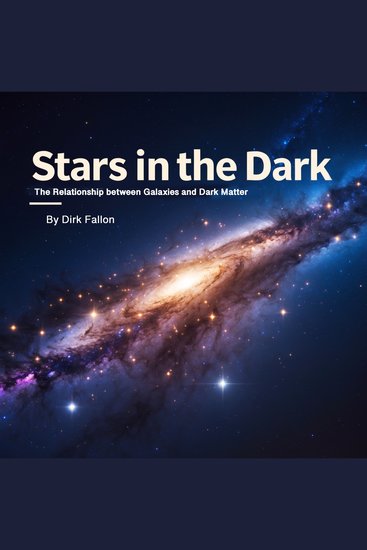
  • Stars in the Dark - The Relationship between Galaxies and Dark Matter - cover

    Stars in the Dark - The...

    Dirk Fallon

    • 0
    • 0
    • 0
    For centuries, humans have gazed into the night sky, believing that what they saw—stars, planets, glowing nebulae—was all there was. But as our tools for exploring the universe improved, scientists began to notice something strange. The visible matter in galaxies simply wasn’t enough to explain how those galaxies moved and behaved. Something unseen, something invisible, seemed to be exerting a powerful influence on everything. 
    In the 1930s, astronomer Fritz Zwicky was studying a group of galaxies known as the Coma Cluster. When he measured how fast the galaxies within the cluster were moving, he realized they were traveling far too quickly to be held together by the visible matter alone. According to the laws of gravity, the cluster should have torn itself apart. Zwicky proposed that some kind of “missing mass” must be present, something that added gravitational force without emitting light. He called it “dark matter.” At the time, his idea was mostly ignored. 
    Decades later, in the 1970s, American astronomer Vera Rubin provided even more compelling evidence. She was studying the rotation of spiral galaxies, expecting that stars farther from the center would orbit more slowly, just as planets farther from the sun move more slowly in our solar system. But that wasn’t what she found. The outer stars were moving just as fast as those closer in, a finding that didn’t make sense if only visible matter was involved. Her work suggested that some unseen material—something with mass—was surrounding the galaxies in large halos, exerting gravitational pull and affecting their motion. This was dark matter at work.
    Voir livre
  • HowExpert Guide to Technology - The Ultimate Handbook for Understanding Key Technologies Innovating Breakthrough Solutions and Mastering the Future of Technology - cover

    HowExpert Guide to Technology -...

    HowExpert

    • 0
    • 0
    • 0
    If you’re eager to explore the ever-evolving world of technology, HowExpert Guide to Technology is your essential resource for mastering today’s digital landscape. This comprehensive guide covers everything from the fundamentals of computing and AI to groundbreaking innovations like nanotechnology and renewable energy. Designed for tech enthusiasts, students, and lifelong learners, this guide provides a clear and engaging journey into core concepts, practical applications, and emerging trends. Whether you’re just starting or already tech-savvy, this guide will build your foundation and keep you current with the latest advancements. 
    Chapter Overview: 
    - Introduction 
    - Chapter 1: The Foundations of Technology 
    - Chapter 2: Computing and IT 
    - Chapter 3: Internet and Connectivity 
    - Chapter 4: Mobile and Smart Devices 
    - Chapter 5: AI and Machine Learning 
    - Chapter 6: Robotics and Automation 
    - Chapter 7: Virtual and Augmented Reality 
    - Chapter 8: Blockchain and Cryptocurrency 
    - Chapter 9: 3D Printing 
    - Chapter 10: Nanotechnology 
    - Chapter 11: Renewable Energy 
    - Chapter 12: Biotechnology 
    - Chapter 13: Space Exploration 
    - Chapter 14: Technology in Business 
    - Chapter 15: The Future of Technology 
    - Conclusion 
    - Appendices 
    HowExpert Guide to Technology is your all-in-one resource for mastering both fundamental and advanced tech concepts. Whether you want to enhance your tech skills, keep up with innovations, or understand technology’s impact on modern life, this guide will empower you to thrive in a rapidly advancing world. Get your copy today and start your journey toward becoming truly tech-savvy! 
    HowExpert publishes how to guides on all topics from A to Z.
    Voir livre
  • Nuclear Revolution - Powering the Next Generation - cover

    Nuclear Revolution - Powering...

    Jack Spencer

    • 0
    • 0
    • 0
    “Jack Spencer tells it the way it is and needs to be to make nuclear energy an affordable choice for America. Read this thoughtful and provocative book written by one of America’s great conservative thinkers.” — William Martin, Former Deputy Energy Secretary; Chair, Nuclear Energy Advisory Committee
    		 
    Skyrocketing energy prices are placing downward pressure on economic growth throughout the world. There seems to be no relief in sight, with hundreds of millions without access to reliable energy and with global energy consumption expected to grow by 50 percent over the next 30 years. Some would impose energy rationing―or in other words, slow human progress. But with nearly 46 percent of the world’s population living on less than $5.50 per day, slowing human progress is unacceptable. The only solution is more energy and lots of it.
    		 
    Jack Spencer, in his upcoming book, Nuclear Revolution: Powering the Next Generation, argues that nuclear energy offers real answers to power our homes and industries, clean our air and water, and maybe even take us to Mars. However, we have been getting nuclear power wrong for decades.
    		 
    Skeptics say that nuclear energy is too expensive and threatens the world with the proliferation of nuclear weapons material and radioactive waste. Proponents say that nuclear power needs and deserves the support of the state and the taxpayer, cradle to grave. The time has come, Spencer argues, to think big nuclear energy and pull it out of the time capsule that pop culture, environmental activists, lobbyists, peaceniks, and policymakers are all too content to leave nuclear in.
    		 
    Spencer writes that while the government-industry partnership that defined the early years of America’s commercial nuclear rise was essential to the nation’s security, reluctance to modernize that relationship has prevented the American nuclear industry from reaching its full potential. In its place, Spencer offers an alternative that shatters how we think about nuclear energy policy and realigns the responsibilities of government and industry with the incentives that will drive America to success.
    		 
    Nuclear Revolution describes why government intervention in the nuclear industry is a problem, how to move from the status quo to something new, and why such reforms will kick off an era of nuclear entrepreneurship and innovation. Over 70 years ago, nuclear energy entered the scene with great promise. Now more than ever, the world needs that promise delivered, and America can lead the way.
    Voir livre