Begleiten Sie uns auf eine literarische Weltreise!
Buch zum Bücherregal hinzufügen
Grey
Einen neuen Kommentar schreiben Default profile 50px
Grey
Jetzt das ganze Buch im Abo oder die ersten Seiten gratis lesen!
All characters reduced
The Collected Works of Henri Bergson - Exploring Consciousness and Time: A Philosophical Journey - cover

The Collected Works of Henri Bergson - Exploring Consciousness and Time: A Philosophical Journey

Henri Bergson

Übersetzer Edwin E. Slosson, Arthur Mitchell, F. L. Pogson, Cloudesley Brereton

Verlag: Good Press

  • 0
  • 0
  • 0

Beschreibung

In "The Collected Works of Henri Bergson," the eminent French philosopher presents a compendium of his seminal writings, elucidating the nature of consciousness, time, and free will. Bergson's literary style is characterized by its accessibility and lyrical prose, inviting readers to grapple with complex metaphysical concepts through vivid metaphors and illustrative anecdotes. Situated in the intellectual context of early 20th-century philosophy, this collection reflects the tension between traditional rationalist thought and the burgeoning movement of phenomenology and existentialism, positioning Bergson as a pivotal figure in the philosophical discourse on life and experience. Henri Bergson, awarded the Nobel Prize in Literature in 1927, carved a profound niche within philosophical debates, influenced by both scientific advancements and the arts. His upbringing in a Jewish intellectual milieu and his exposure to diverse philosophical traditions, including Kant and Nietzsche, shaped his perspective on the fluidity of human experience. Bergson's critique of mechanistic interpretations of life underscores his advocacy for intuitive knowledge and the immediacy of lived experience, themes that resonate throughout his collected works. For anyone interested in the interplay of philosophy, psychology, and the human condition, "The Collected Works of Henri Bergson" offers rich insights and profound reflections. This volume is essential for both students of philosophy and general readers, as it not only deepens our understanding of Bergson's thought but also invites us to reconsider the very fabric of our own experiences.
Verfügbar seit: 29.12.2023.
Drucklänge: 533 Seiten.

Weitere Bücher, die Sie mögen werden

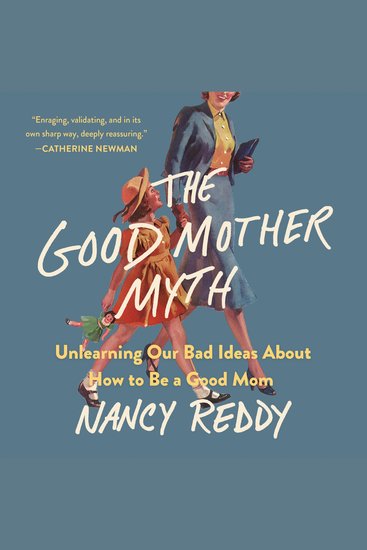
  • The Good Mother Myth - Unlearning Our Bad Ideas About How to Be a Good Mom - cover

    The Good Mother Myth -...

    Nancy Reddy

    • 0
    • 0
    • 0
    Timely and thought-provoking, Nancy Reddy unpacks and debunks the bad ideas that have for too long defined what it means to be a "good" mom.When Nancy Reddy had her first child, she found herself suddenly confronted with the ideal of a perfect mother—a woman who was constantly available, endlessly patient, and immediately invested in her child to the exclusion of all else. Reddy had been raised by a single working mother, considered herself a feminist, and was well on her way to a PhD. Why did doing motherhood "right" feel so wrong?For answers, Reddy turned to the mid-20th century social scientists and psychologists whose work still forms the basis of so much of what we believe about parenting. It seems ludicrous to imagine modern moms taking advice from midcentury researchers. Yet, their bad ideas about so-called “good” motherhood have seeped so pervasively into our cultural norms. In The Good Mother Myth, Reddy debunks the flawed lab studies, sloppy research, and straightforward misogyny of researchers from Harry Harlow, who claimed to have discovered love by observing monkeys in his lab, to the famous Dr. Spock, whose bestselling parenting guide included just one (1!) illustration of a father interacting with his child.This timely and thought-provoking audiobook will make you laugh, cry, and want to scream (sometimes all at once).  Blending history of science, cultural criticism, and memoir, The Good Mother Myth pulls back the curtain on the flawed social science behind our contemporary understanding of what makes a good mom.A Macmillan Audio production from St. Martin’s Press.
    Zum Buch
  • The American Civil War - Then and Now - cover

    The American Civil War - Then...

    GR Woodward

    • 0
    • 0
    • 0
    The Civil War is a crucial part of American history and provides valuable context for understanding the development of the nation. It helps us understand how the United States evolved politically, economically, and socially, and the impact it had on the lives of individuals and communities. By studying the Civil War, you gain a deeper understanding of the roots of many contemporary issues and challenges. The war was fought, in part, to address the moral question of slavery. It provides an opportunity to reflect on the ongoing struggle for human rights and the significance of fighting against injustice and inequality. It serves as a reminder of the important progress that has been made and the work that still needs to be done to promote equality and justice for all 
    Studying the Civil War allows us to honor and remember those who fought, sacrificed, and lost their lives during this turbulent period. It is an opportunity to acknowledge and understand the experiences, struggles, and contributions of individuals who shaped the nation's history. Overall, learning about the Civil War helps us understand our past, grapple with complex societal issues, and gain insights into leadership, unity, and the ongoing fight for justice and equality. It allows us to draw important connections between historical events and the present day, fostering a greater sense of empathy, understanding, and critical thinking.
    Zum Buch
  • Rare Recording of Joan Didion Reading Her Novel A Book of Common Prayer A - Part 1 - cover

    Rare Recording of Joan Didion...

    Joan Didion

    • 0
    • 0
    • 0
    Joan Didion (December 5, 1934 - December 23, 2021), born in Sacramento, California, was an American author, screenwriter, and journalist. Her writing during the 1960s through the late 1970s engaged audiences in the realities of the counterculture of the 1960s, the Hollywood lifestyle, and the history and culture of California. She is considered one of the pioneers of New Journalism, along with Gay Talese, Truman Capote, Norman Mailer, Hunter S. Thompson, and Tom Wolfe. In the following audio recording, Didion reads from her novel, A Book of Common Prayer.
    Zum Buch
  • World War II in 1942: The History of the Year the Allies Turned the Tide Against the Axis - cover

    World War II in 1942: The...

    Editors Charles River

    • 0
    • 0
    • 0
    The United States began 1942 determined to avenge Pearl Harbor, but the Allies, now including the Soviet Union by necessity, did not agree on the war strategy. In 1941, both the Germans and British moved armies into North Africa, where Italy had already tried and failed to reach the Suez Canal. The British sought American help in North Africa, where British General Bernard Montgomery was fighting the legendary “Desert Fox,” General Erwin Rommel. At the same time, Stalin was desperate for Allied action on the European continent that could free up the pressure on the besieged Soviets. 
    President Roosevelt had a consequential decision to make, and he eventually decided to land American forces on North Africa to assist the British against Rommel, much to Stalin’s chagrin. While the Americans and British could merely harass the Germans with air power and naval forces in the Atlantic, Stalin’s Red Army had to take Hitler’s best shots in Russia throughout 1942. But the Red Army’s tenuous hold continued to cripple the Nazi war machine while buying the other Allies precious time. 
    Despite fighting in North Africa and the Atlantic, the United States still had the resources and manpower to fight the Japanese in the Pacific. Though the Japanese had crippled the American fleet at Pearl Harbor, its distance from Japan made an invasion of Pearl Harbor impossible, and Japan had not severely damaged important infrastructure. Thus, the United States was able to quickly rebuild a fleet, still stationed at Pearl Harbor right in the heart of the Pacific. This forward location allowed the United States to immediately push deeply into the Pacific theater. In fact, the turning point in the Pacific theater took place in 1942 near Midway Island. The Japanese had moved a sizable fleet intending to occupy Midway Island and draw the American navy near.
    Zum Buch
  • 50 Ways to Rewire Your Anxious Brain - Simple Skills to Soothe Anxiety and Create New Neural Pathways to Calm - cover

    50 Ways to Rewire Your Anxious...

    PhD Maha Zayed Hoffman, PhD...

    • 0
    • 0
    • 0
    Do you struggle with anxiety? Has it taken over your life or affected your relationships? Do you feel like chronic worry and rumination are holding you back from being your best, achieving your goals, or just enjoying your day-to-day life? Get a crash course in neuroscience with this slimmed down guide—full of the actionable tools you need to face anxiety head on. 


    In this practical yet powerful guide, psychologist and neuroscience expert Catherine Pittman—author of Rewire Your Anxious Brain—introduces fifty new ways to work with your brain's neural connections to find lasting, effective relief from your worst anxiety symptoms. The chapters of this book can be used in any order, as needed, to give you the information you need to act now, whether you're at home or on the go. Also included are quick skills to help you soothe an anxious or stressed-out brain through physical movement, identifying what you care about, and banishing toxic thinking before it leads to rumination. 


    The brain is a powerful tool, and the more you work to change the way you respond to fear, the more resilient you will become. Using the practical and proven-effective techniques in this book, you will literally "rewire" the brain processes at the root of your fears!
    Zum Buch
  • The Fall of the Berlin Wall - The End of the Cold War and the Reunification of Germany - cover

    The Fall of the Berlin Wall -...

    Fredrich Hazelton

    • 0
    • 0
    • 0
    The Berlin Wall stands as one of the most defining symbols of the Cold War, a stark reminder of the ideological divide that shaped global politics in the second half of the 20th century. For nearly three decades, it separated families, friends, and a nation, embodying the tension between the communist East and the capitalist West. Its fall on November 9, 1989, marked the beginning of the end of the Cold War and set the stage for German reunification, forever altering the political landscape of Europe and the world.  
      
    The origins of the Berlin Wall lie in the aftermath of World War II. Germany, defeated and devastated, was divided among the Allied powers into zones of occupation. The ideological rivalry between the Soviet Union and Western powers grew, culminating in the division of Berlin, a microcosm of the larger global conflict. East Germany, under Soviet influence, sought to stem the flow of its citizens fleeing to the West, leading to the construction of the wall in 1961.  
      
    Life in a divided Berlin was marked by stark contrasts. The West flourished as a hub of democracy and economic prosperity, while the East struggled under authoritarian rule and economic stagnation. For those trapped behind the wall, the barriers were not only physical but also symbolic of lost freedom and opportunity. Despite this, the human spirit remained resilient, as many risked everything in daring attempts to escape to the West. 
    Zum Buch