Begleiten Sie uns auf eine literarische Weltreise!
Buch zum Bücherregal hinzufügen
Grey
Einen neuen Kommentar schreiben Default profile 50px
Grey
Jetzt das ganze Buch im Abo oder die ersten Seiten gratis lesen!
All characters reduced
History of Universities - cover

History of Universities

Harrison Stewart

Übersetzer A AI

Verlag: Publifye

  • 0
  • 0
  • 0

Beschreibung

History of Universities offers a comprehensive exploration of how higher education evolved into the institutions we know today. Tracing the journey from medieval schools, the book highlights the shifting purposes of universities – initially centered on theology, law, and medicine, and later expanding to scientific research and technological innovation. It also examines the evolving social roles of universities, from influencing social mobility to shaping cultural development. 

 
The book adopts a chronological and thematic approach, starting with the emergence of medieval universities. It then analyzes their transformation during the Renaissance and Reformation, and concludes with the rise of the modern university in the 19th and 20th centuries. A unique aspect of this academic history lies in its comparative analysis of universities across different national contexts, revealing diverse pathways of institutional development and the interconnectedness of academia. 

 
The content provides necessary historical context, including an overview of medieval society, the Renaissance, the Reformation, the Enlightenment, and the rise of modern nation-states.
Verfügbar seit: 26.02.2025.
Drucklänge: 62 Seiten.

Weitere Bücher, die Sie mögen werden

  • Uncertain Climes - Debating Climate Change in Gilded Age America - cover

    Uncertain Climes - Debating...

    Joseph Giacomelli

    • 0
    • 0
    • 0
    Uncertain Climes looks to the late nineteenth century to reveal how climate anxiety was a crucial element in the emergence of American modernity. 
     
    Even people who still refuse to accept the reality of human-induced climate change would have to agree that the topic has become inescapable in the United States in recent decades. But as Joseph Giacomelli shows in Uncertain Climes, this is actually nothing new: as far back as Gilded Age America, climate uncertainty has infused major debates on economic growth and national development. 
      
    In this ambitious examination of late-nineteenth-century understandings of climate, Giacomelli draws on the work of scientists, foresters, surveyors, and settlers to demonstrate how central the subject was to the emergence of American modernity. Amid constant concerns about volatile weather patterns and the use of natural resources, nineteenth-century Americans developed a multilayered discourse on climate and what it might mean for the nation’s future. Although climate science was still in its nascent stages during the Gilded Age, fears and hopes about climate change animated the overarching political struggles of the time, including expansion into the American West. Giacomelli makes clear that uncertainty was the common theme linking concerns about human-induced climate change with cultural worries about the sustainability of capitalist expansionism in an era remarkably similar to the United States’ unsettled present.
    Zum Buch
  • DEI Exposed - How the Biggest Con of the Century Almost Toppled Higher Education - cover

    DEI Exposed - How the Biggest...

    Stanley K. Ridgley, PhD

    • 0
    • 0
    • 0
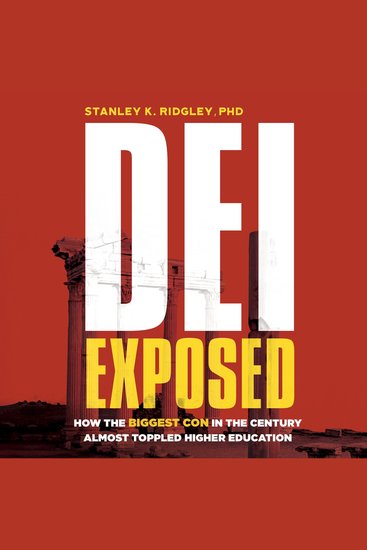
    DEI Exposed puts the spotlight on a Big Con: Diversity, Equity, and Inclusion. 
    DEI gurus siphoned funds for education into social engineering programs. They suckered and swindled some of the smartest people in the U.S., cost universities dearly in terms of funds and reputation, and ruined the livelihoods of countless faculty members. 
    DEI has fueled antisemitism on college campuses and, ironically, robbed many students of fair treatment and freedom of speech-two things DEI advocates supposedly champion. 
    How did the hustlers pull it off? 
    This book documents the dubious credentials of DEI superstars, the use of cult conversion tactics on students, the cultivation of campus informants to instill fear and suspicion, and the lawsuits that reveal DEI's virulent racialism at a high cost to universities in bad publicity and legal damages. 
    DEI Exposed maps this corruption so that we can chart a course for a restoration of higher education for years to come. 
    Ridgley reveals the striking contradictions between DEI's stated aims and its practical effects. 
    - Ram Mudambi, Frank M. Speakman Professor of Strategy, Fox School of Business, Temple University 
    The DEI monster has continually sprouted new tentacles, and Ridgley has given us an account of how it came to be its lurid self. 
    - Bruce Gilley, author of The Case for Colonialism 
    With razor-sharp analysis, Ridgley dissects how higher education compromised itself, abandoning merit and intellectual vigor in favor of pseudoscience and ideological conformity. 
    - Nicholas Giordano, Professor of Political Science and host of The P.A.S. Report Podcast 
    Dr. Stanley K. Ridgley is Clinical Full Professor of Strategic Management at Drexel University. He holds a Doctorate and Master's in International Relations and Security from Duke University and an International MBA from Temple University. He is a Russian language linguist and former Military Intelligence Officer.
    Zum Buch
  • Milo's Story - Thrown Away Children - cover

    Milo's Story - Thrown Away Children

    Louise Allen

    • 0
    • 0
    • 0
    The eleventh instalment in the popular Thrown Away Children series. 
     
    Michelle and Andy are thrilled to be fast-tracked into fostering and are quickly paired with 7-year-old Milo – whom they hope will complete their family, making a ‘pigeon pair’ with their older daughter, Grace. 
     
    But Milo tears through their home like a raging tornado, destroying a beautiful interior – and their lives. 
     
    Their dream of a new homelife costs Michelle her job, thousands of pounds in damages to their home and car, and leaves them with a traumatised daughter in need of professional support. 
     
    What are the secrets of his violent and destructive behaviours? Experienced foster carer Louise Allen steps in. Can she uncover the little boy’s disturbing past and help him?
    Zum Buch
  • A Rare Recording of Simone de Beauvoir - cover

    A Rare Recording of Simone de...

    Simone de Beauvoir

    • 0
    • 0
    • 0
    Simone Lucie Ernestine Marie Bertrand de Beauvoir (January 9, 1908 - April 14, 1986) was a French existentialist philosopher, writer and social theorist. Beauvoir wrote novels, essays, biographies, autobiographies, and monographs on philosophy, politics, and social issues. She was best known for her "trailblazing work in feminist philosophy," including The Second Sex, published in 1949, a detailed analysis of women's oppression and a foundational tract of contemporary feminism. The following is from a 1976 interview (in English).
    Zum Buch
  • The Expanding Circle - Ethics Evolution and Moral Progress - cover

    The Expanding Circle - Ethics...

    Peter Singer

    • 0
    • 0
    • 0
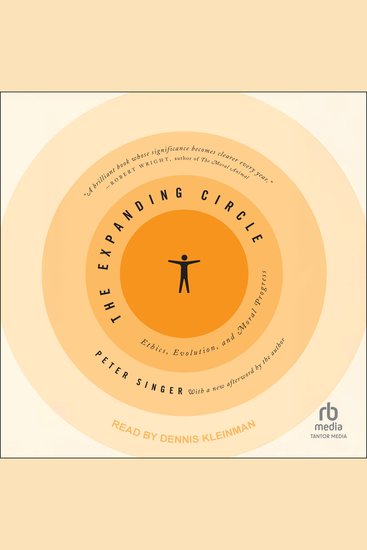
    What is ethics? Where do moral standards come from? Are they based on emotions, reason, or some innate sense of right and wrong? For many scientists, the key lies entirely in biology—especially in Darwinian theories of evolution and self-preservation. But if evolution is a struggle for survival, why are we still capable of altruism? 


    In his classic study The Expanding Circle, Peter Singer argues that altruism began as a genetically based drive to protect one's kin and community members but has developed into a consciously chosen ethic with an expanding circle of moral concern. Drawing on philosophy and evolutionary psychology, he demonstrates that human ethics cannot be explained by biology alone. Rather, it is our capacity for reasoning that makes moral progress possible. In a new afterword, Singer takes stock of his argument in light of recent research on the evolution of morality.
    Zum Buch
  • Nietzsche in 3 Hours - Philosophy Core Concepts and Misreadings — A Complete Guide for Readers in a Hurry - cover

    Nietzsche in 3 Hours -...

    Civitas Ratio

    • 0
    • 0
    • 0
    Pressed for time—but want to finally understand Nietzsche? 
    Want to sound sharp in conversation—without dropping random quotes? 
    Got an exam coming up—but no time to wade through five dense volumes? 
    This book was made for you. 
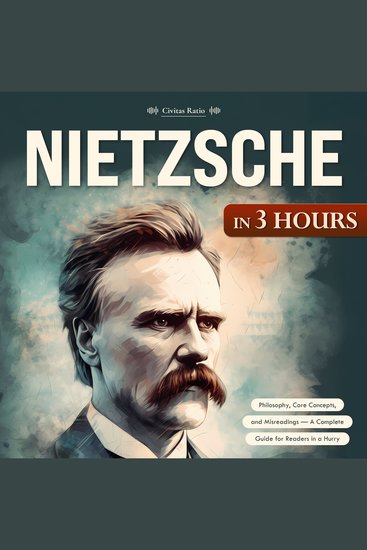
    Nietzsche in 3 Hours delivers the essentials of one of modernity’s most radical—and most misinterpreted—thinkers. No shortcuts, no empty simplifications. Just the real Nietzsche: sharp, provocative, ruthless toward lazy thinking and moral complacency. 
    What you’ll find inside: 
    – A clear, structured overview of his most important works 
    – Key concepts explained: will to power, eternal return, Übermensch, nihilism 
    – Authentic quotes, not distorted clichés from the internet 
    – A guided path through his shifting ideas and writing phases 
    – Common misreadings exposed—from nationalist myths to self-help distortions 
    – His impact on modern thought, from psychoanalysis to postmodernism 
    – A tight, rigorous format designed for real understanding—even under time pressure 
    This book is for you if: 
    – You’re studying and need clarity, fast 
    – You want to understand, not just name-drop 
    – You’re tired of vague takes and butchered quotes 
    – You’re short on time but serious about getting it right 
    You don’t need years to get Nietzsche. 
    Just the right guide—and three hours that count.
    Zum Buch