Begleiten Sie uns auf eine literarische Weltreise!
Buch zum Bücherregal hinzufügen
Grey
Einen neuen Kommentar schreiben Default profile 50px
Grey
Jetzt das ganze Buch im Abo oder die ersten Seiten gratis lesen!
All characters reduced
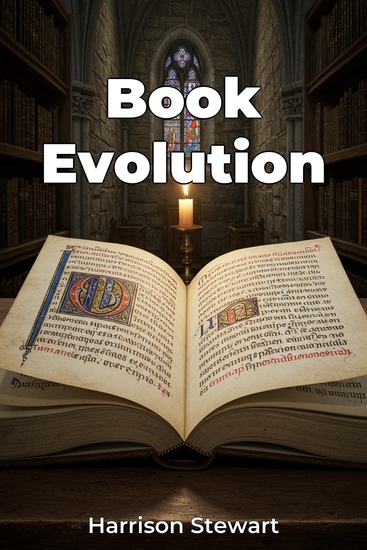
Book Evolution - cover

Book Evolution

Harrison Stewart

Übersetzer A AI

Verlag: Publifye

  • 0
  • 0
  • 0

Beschreibung

"Book Evolution" traces the remarkable journey of the book, from ancient scrolls to modern ebooks, highlighting its profound impact on society. The book examines how pivotal shifts in format, like the invention of the printing press, revolutionized not only information storage but also education and governance. Each chapter explores the social, political, and economic conditions that facilitated these technological advancements, revealing how the book's evolution is intertwined with broader cultural and intellectual shifts.

 
The narrative begins with early manuscripts, detailing their creation and role in monastic culture, before diving into the printing press era and its democratization of knowledge. The digital age, with ebooks and audiobooks, is then analyzed for its challenges and opportunities.

 
A central argument is that the book's form actively shapes its content and understanding, offering a unique perspective on the reciprocal relationship between technology and society. The book draws upon primary sources and interdisciplinary scholarship to provide a comprehensive account suitable for students, researchers, and anyone fascinated by the history of media.
Verfügbar seit: 29.03.2025.
Drucklänge: 61 Seiten.

Weitere Bücher, die Sie mögen werden

  • The Joyful Wisdom - cover

    The Joyful Wisdom

    Friedrich Nietzsche

    • 0
    • 0
    • 0
    "The Joyful Wisdom," written in 1882, just before "Zarathustra," is rightly judged to be one of Nietzsche's best books. Here the essentially grave and masculine face of the poet-philosopher is seen to light up and suddenly break into a delightful smile. The warmth and kindness that beam from his features will astonish those hasty psychologists who have never divined that behind the destroyer is the creator, and behind the blasphemer the lover of life. In the retrospective valuation of his work which appears in "Ecce Homo" the author himself observes with truth that the fourth book, "Sanctus Januarius," deserves especial attention: "The whole book is a gift from the Saint, and the introductory verses express my gratitude for the most wonderful month of January that I have ever spent." Book fifth "We Fearless Ones," the Appendix "Songs of Prince Free-as-a-Bird," and the Preface, were added to the second edition in 1887.
    Zum Buch
  • Second Book of John The - The World English Bible Book 63 (Unabridged) - cover

    Second Book of John The - The...

    Various Authors

    • 0
    • 0
    • 0
    The Second Book of John is a book of the New Testament attributed to John the Evangelist, traditionally thought to be the author of the other two epistles of John, and the Gospel of John (though this is disputed). Most modern scholars believe this is not John the Apostle, but in general there is no consensus as to the identity of this person or group.
    Zum Buch
  • What's Real about Race? - Untangling Science Genetics and Society - cover

    What's Real about Race? -...

    Rina Bliss

    • 0
    • 0
    • 0
    In What's Real About Race?, sociologist Rina Bliss illuminates the truth about one of the most misunderstood, controversial concepts in our society and reveals why we cannot confuse race with genetic difference. Blending energizing prose with the latest in genetics research, this paradigm-shifting tour unmasks what's truly real about race: namely, racism's impact on our bodies and lives. 


    Bliss traces the history of race, revealing how unscientific categories of identity—White, Black, Asian/Pacific Islander, and American Indian/Alaska Native—became the standard, and illuminates how the myth of biological races endures in science and society, warping our understanding of complex topics like intelligence, disease susceptibility, and behavior. Along the way, What's Real About Race? busts enduring myths about IQ, ancestry tests, behavioral racism, and more. In fascinating explorations of gene research, medicine, and social justice, Bliss argues for a new way forward. To create equity in science and society, we must disentangle our understanding of genetics from identity and see race for what it really is: a purely social category. At a time when misinformation about our bodies and identities is dangerously prevalent, What's Real About Race? is an indispensable resource and a powerful reminder that, biologically, our similarities vastly outweigh our differences.
    Zum Buch
  • Promise to Pay - The Politics and Power of Money in Early America - cover

    Promise to Pay - The Politics...

    Katie A. Moore

    • 0
    • 0
    • 0
    An incisive account of the crucial role money played in the formation and development of British North America. Promise to Pay follows America’s first paper money—the “bills of credit” of British North America—from its seventeenth-century origins as a means of war finance to its pivotal role in catalyzing the American Revolution. Katie A. Moore combs through treasury records, account books, and the bills themselves to tell a new story of money’s origins that challenges economic orthodoxy and mainstream histories. Promise to Pay shows how colonial governments imposed paper bills on settler communities through existing labor and kinship relations, their value secured by thousands of individual claims on the public purse—debts—and the state’s promise to take them back as payment for taxes owed. Born into a world of hierarchy and deference, early American money eroded old social ties and created new asymmetries of power, functioning simultaneously as a ticket to the world of goods, a lifeline for those on the margins, and a tool of imperial domination.Grounded in sustained engagement with scholarship from multiple disciplines, Promise to Pay breathes new life into old debates and offers an incisive account of the centrality of money in the politics and conflicts of empire, community, and everyday life. 
    Zum Buch
  • Teddy's Day in The Forest - cover

    Teddy's Day in The Forest

    Brenda Martin Eldrid

    • 0
    • 1
    • 0
    Fun sound-effects and whimsical music help tell the adventurous tale of “Teddy's Day in the Forest.” Teddy and his parents are planning a fun picnic at Silver Lake Park.  When the Bear's little red car hits a bump in the road, Teddy topples out and lands in a soft pile of leaves. But, how will Teddy find Silver Lake Park and be reunited with his parents? Find out what happens when Teddy Bear meets a real bear in the woods. A positive ending adds interest to this suspenseful story and encourages a lifelong love for reading.
    Zum Buch
  • The Theory of Money and Credit - cover

    The Theory of Money and Credit

    Ludwig Von Mises

    • 0
    • 0
    • 0
    "The Theory of Money and Credit" is a seminal work written by Austrian economist Ludwig von Mises, first published in 1912. The book is considered a cornerstone in the Austrian School of Economics and provides a comprehensive analysis of the nature, functions, and economic implications of money and credit. In "The Theory of Money and Credit," Ludwig von Mises explores the fundamental principles that govern the role of money and credit in economic systems. He delves into the origins of money, the nature of credit, and the impact of monetary policy on economic stability. Mises emphasizes the subjective theory of value and the importance of individual choices in shaping economic phenomena. The book also discusses the business cycle theory, highlighting the role of credit expansion in causing economic booms and subsequent contractions.
    Zum Buch