Begleiten Sie uns auf eine literarische Weltreise!
Buch zum Bücherregal hinzufügen
Grey
Einen neuen Kommentar schreiben Default profile 50px
Grey
Jetzt das ganze Buch im Abo oder die ersten Seiten gratis lesen!
All characters reduced
Sixty Years in Southern California 1853-1913 - Containing the Reminiscences of Harris Newmark - cover

Sixty Years in Southern California 1853-1913 - Containing the Reminiscences of Harris Newmark

Harris Newmark

Verlag: DigiCat

  • 0
  • 0
  • 0

Beschreibung

In "Sixty Years in Southern California, 1853-1913," Harris Newmark presents a vibrant autobiographical account that meticulously chronicles the transformative years of Southern California through a personal lens. Written in a reflective and narrative style, the text serves not only as a memoir but also as a historical document, offering insights into the region's social, economic, and cultural evolution during a pivotal era. Newmark's keen observations and engaging storytelling bring to life the challenges and triumphs faced by early settlers, as well as the dramatic changes brought about by the arrival of railroads, the gold rush, and urbanization. Harris Newmark was a prominent Jewish-American businessman and community leader, whose experiences as an immigrant shaped his perspective on the American West. Arriving in California during a time of great industrial and demographic shifts, Newmark's engagement with local enterprises and civic initiatives provided him with a unique vantage point from which to document the rich tapestry of life in Los Angeles and beyond. His deep-rooted connections to the city and its inhabitants illuminate the aspirations and struggles of a growing multicultural community. This book is a must-read for historians, students, and anyone interested in understanding the complexities of Southern California's past. Newmark's vivid recollections and historical insights provide an invaluable resource for comprehending the region's identity, making it a significant contribution to the study of American history and culture.
Verfügbar seit: 04.09.2022.
Drucklänge: 751 Seiten.

Weitere Bücher, die Sie mögen werden

  • Plutarco Elías Calles and the Mexican Revolution - cover

    Plutarco Elías Calles and the...

    Jürgen Buchenau

    • 0
    • 0
    • 0
    This biography of the Mexican revolutionary examines his rise from soldier to president to his continued influence as Jefe Maximo. Hailing from the border state of Sonora, Plutarco Elías Calles found his calling in the early years of the revolution, quickly rising to national prominence. As president from 1924 to 1928, Calles undertook an ambitious reform program, modernized the financial system, and defended national sovereignty against an interventionist U.S. government. Yet these reforms failed to eradicate underdevelopment, corruption, and social injustice. Moreover, his unyielding campaigns against political enemies and the Catholic Church earned him a reputation as a repressive strongman. After his term as president, Calles continued to exert broad influence as his country's foremost political figure while three weaker presidents succeeded each other in an atmosphere of constant political crisis. He played a significant role in founding a ruling party that reined in power-hungry military leaders and helped workers attain better living conditions. This dynastic party and its successors, including the present-day Partido Revolucionario Institucional (Party of the Institutional Revolution), remained in power until 2000. Through this comprehensive assessment of a quintessential Mexican politician, Buchenau opens an illuminating window into both the Mexican Revolution and contemporary Mexico.
    Zum Buch
  • The Earthquake - Your Journey from Setback to Breakthrough - cover

    The Earthquake - Your Journey...

    Vince Poscente

    • 0
    • 0
    • 0
    Personal catastrophes are like an earthquake: they leave us too shaken to know what to do next, afraid that every step we take might spark another upheaval. But we can learn to resist our human instinct to hide from challenges. In this entertaining modern-day fable, Vince Poscente introduces us to the well-intentioned, conscious ant and the habitually fearful, subconscious elephant as seismic destruction changes their world and ultimately forces them to leave their oasis. 


    What Adir the ant and Elgo the elephant learn—and what you'll learn by journeying with them—is that the linear path they used to reach the oasis in The Ant and the Elephant does not work in the chaos after an earthquake. How can they breakthrough and thrive after a life-altering setback? The answer lies in the "Solution Loop," a tool that teaches them to use collaboration, curiosity, and creativity to: reframe dark times as illuminating experiences; resist the impulse to go it alone; find fresh perspectives; and eek a path where you can enjoy the journey. 


    The methodology is told using the time-honored method of a parable. Offering prescriptive advice, and  based on Poscente's study of practices like decoding human behavior, the neuroscience of performance, and interpersonal dysfunction around fear, The Earthquake is a must-listen.
    Zum Buch
  • Ancient Egyptian Astronomy - The Stars and Their Influence - cover

    Ancient Egyptian Astronomy - The...

    Omar Khalil

    • 0
    • 0
    • 0
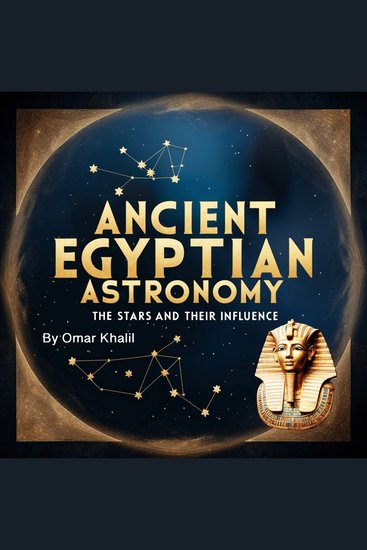
    Ancient Egyptian astronomy was deeply intertwined with the culture’s religious beliefs, daily life, and architectural marvels. Long before modern telescopes and advanced instruments, the Egyptians observed the night sky with precision, using it to navigate their world, mark the passing of time, and guide their spiritual practices. Astronomy was not merely a scientific endeavor but a fundamental aspect of their understanding of the cosmos and its connection to the gods. 
    The Egyptians viewed the stars, planets, and other celestial bodies as manifestations of divine power. Central to their astronomical system was the Sun, which they associated with the god Ra. Ra's journey across the sky each day symbolized the cycle of life, death, and rebirth. The Sun’s movement was used to structure the day and marked important moments in the agricultural calendar, such as the flooding of the Nile. The Egyptians also closely tracked the movements of the Moon and stars, which helped them define the months and seasons. 
    The study of the stars held profound religious significance for the ancient Egyptians. They believed that the stars were the eyes of the gods, observing and guiding humanity. Certain constellations, such as Orion, were particularly important, representing Osiris, the god of the afterlife. The Egyptians’ knowledge of the stars was so advanced that it influenced the alignment of their monumental architecture. The Great Pyramid of Giza, for instance, is aligned with remarkable precision to the stars, showcasing their ability to map the heavens and incorporate that knowledge into their constructions.
    Zum Buch
  • Summary: The Wager - A Tale of Shipwreck Mutiny and Murder by David Grann: Key Takeaways Summary & Analysis Included - cover

    Summary: The Wager - A Tale of...

    Brooks Bryant

    • 0
    • 0
    • 0
    Disclaimer: This is NOT the official book, but a summary & it does NOT accompany the official. 
    In "The Wager: A Tale of Shipwreck, Mutiny, and Murder" by David Grann, readers are thrust into a thrilling narrative based on true events surrounding the shipwreck of His Majesty's Ship the Wager in the 1740s. On a secret mission during an imperial war with Spain, the Wager pursued a treasure-laden Spanish galleon before meeting its tragic fate off the Patagonian coast. The wreckage and the ensuing survival tale provoke questions surrounding heroism, mutiny, and the human capacity for survival under the most extreme conditions. 
    The survivors' ordeal spans many months of starvation and anarchy, as they battled to endure in a harsh, desolate environment. The narrative takes a dramatic turn when two groups of survivors — one landing in Brazil and the other in Chile — narrate conflicting accounts of the events that transpired during their harrowing journey. This divergence sets the stage for a court-martial, where the truth hangs in a precarious balance with life-and-death stakes. 
    Grann excels in bringing this historic tale to life, paralleling the depth of narrative nonfiction greats and survival literature classics. The unraveling court-martial narrative holds the savvy of a courtroom thriller, beckoning readers into a vividly recreated world of 18th-century naval warfare and exploration.
    Zum Buch
  • Victimhood Memory and Consumerism - Profiting from Pablo - cover

    Victimhood Memory and...

    David Goyes, Katja Franko

    • 0
    • 0
    • 0
    Inhabitants of Medellín, Colombia, suffered from the war-like violence perpetrated by drug cartels and other actors in the 1980s and 1990s. Thousands died, including innocent civilians, judges, and journalists, many more were injured and suffered psychological trauma. Three decades later, however, transnational media companies such as Netflix have transformed the traumatic memories into entertainment while the main perpetrator, Pablo Escobar, became a 
    recognizable brand name. 


    Victimhood, Memory, and Consumerism: Profiting from Pablo documents the story of violence inflicted on Medellín, and critically examines the status of its victims. Drawing on unique empirical material, the book addresses the impact of commercial exploitation of the city's violent past on the victims of mass drug violence and on the present nature of the city. 


    Victimhood, Memory, and Consumerism offers a poignant critique of the role of the global market economy in the unequal distribution of narrative power among those engaged in processes of collective memory construction. A thoroughly compelling listen, this volume will appeal internationally to academics in criminology and victimology, as well as those interested in critical perspectives on Netflix, commercialism, and Colombian history.
    Zum Buch
  • Genocides - Historic Details of the Armenian Cambodian Rwandan Yugoslavian Sudanese and Nazi Genocide - cover

    Genocides - Historic Details of...

    Kelly Mass

    • 0
    • 0
    • 0
    This book consists of 6 topics, all selected to describe some of the worst atrocities of mankind: Genocides, mass rapes, abuse, mutilation and murder. It contains these topics: 
    Armenian Genocide: At the time of World War I, the Ottoman Empire committed the Armenian genocide, which led to the organized death of around one million ethnic Armenians. It was primarily achieved by mass executions, death marches resulting in the Syrian Desert, and the pushed Islamization of Armenian women and kids. 
    Cambodian Genocide: The Cambodian genocide was the methodical abuse and death of Cambodians by the Khmer Rouge, led by Pol Pot, the general secretary of the Communist Party of Kampuchea, who pushed Cambodia towards being an entirely self-dependent agrarian socialist state.  
    Genocide in Darfur: The Darfur genocide describes the methodical killing of ethnic Darfuri people in Western Sudan throughout the existing dispute. It's considered the first genocide of the twenty-first century. The International Bad Guy Court (ICC) has prosecuted many individuals for criminal offenses against mankind, rape, mass relocations and deportations, and abuse because of the genocide being committed. 
    Holocaust: At the time of WWII, the Holocaust, was a genocide of European Jews. Between 1941 and 1945, Nazi Germany and its allies killed around 6 million Jews in German-occupied Europe, representing about two-thirds of Europe's Jewish population. 
    Rwandan Genocide: Throughout the Rwandan Civil War, between April seventh and July fifteenth, 1994, the Rwandan genocide happened. Equipped militias murdered members of the Tutsi minority ethnic group, and some moderate Hutu and Twa. 
    Yugoslavian Genocide: Throughout the Bosnian War of 1992-- 1995, the Yugoslavian or Bosnian genocide describes either the Srebrenica massacre or the larger criminal activities against mankind in areas controlled by the Army of Republika Srpska (VRS).
    Zum Buch