Begleiten Sie uns auf eine literarische Weltreise!
Buch zum Bücherregal hinzufügen
Grey
Einen neuen Kommentar schreiben Default profile 50px
Grey
Jetzt das ganze Buch im Abo oder die ersten Seiten gratis lesen!
All characters reduced
Carson of Red River - cover

Carson of Red River

Harold Bindloss, Karl Wurf

Verlag: Wildside Press

  • 0
  • 0
  • 0

Beschreibung

When a young engineer is forced to leave his father's shipyard in Scotland under a cloud of suspicion, he travels to Canada and starts a new life working for the railroad. Romance and adventure are never far from the forefront in this exciting historical novel.
Verfügbar seit: 06.01.2022.


Weitere Bücher, die Sie mögen werden

  • Nana - cover

    Nana

    Emile Zola

    • 0
    • 0
    • 0
    "Nana" by Émile Zola is a novel that explores the decadence and moral decay of Parisian society in the 19th century. It follows the life of Nana, a beautiful and ambitious young woman, as she navigates the social and economic challenges of her time. The novel provides a vivid portrayal of the excesses and corruption of the Second Empire, using Nana as a symbol of the destructive influence of unchecked desire and hedonism.
    Zum Buch
  • The Time Machine - cover

    The Time Machine

    H. G. Wells

    • 0
    • 0
    • 0
    The Time Machine is an 1895 dystopian, post-apocalyptic, science fiction novella by H. G. Wells about a Victorian scientist known as the Time Traveller who travels to the year 802,701. The work is generally credited with the popularization of the concept of time travel by using a vehicle or device to travel purposely and selectively forward or backward through time.
    Zum Buch
  • Detective Police The (Unabridged) - cover

    Detective Police The (Unabridged)

    Charles Dickens

    • 0
    • 0
    • 0
    Charles Dickens was a writer and social critic who created some of the world's best-known fictional characters and is regarded as the greatest novelist of the Victorian era. His works enjoyed unprecedented popularity during his lifetime, and by the twentieth century critics and scholars had recognised him as a literary genius. His novels and short stories enjoy lasting popularity.
    THE DETECTIVE POLICE: We are not by any means devout believers in the old Bow Street Police. To say the truth, we think there was a vast amount of humbug about those worthies. Apart from many of them being men of very indifferent character, and far too much in the habit of consorting with thieves and the like, they never lost a public occasion of jobbing and trading in mystery and making the most of themselves.
    Zum Buch
  • The Moon And Sixpence - cover

    The Moon And Sixpence

    Somerset Maugham

    • 0
    • 0
    • 0
    "The Moon and Sixpence" is a captivating novel by W. Somerset Maugham, published in 1919. Loosely inspired by the life of the renowned French artist Paul Gauguin, the story delves into the life of Charles Strickland, a middle-aged Englishman leading a seemingly ordinary life as a stockbroker in London. However, Strickland's life takes a drastic turn when he abruptly abandons his family and career to pursue his burning passion for art in the bohemian world of early 20th-century Paris. 
     
    As Strickland immerses himself in the world of painting, he undergoes a profound transformation, shedding his societal constraints and embracing an unconventional and often controversial lifestyle. His single-minded devotion to his art takes him to far-flung places, including the South Pacific, where he seeks inspiration amidst primitive cultures. Through Strickland's relentless pursuit of artistic expression, Maugham explores themes of artistic genius, the clash between societal norms and individual desires, and the sacrifices an artist may make in the name of their craft. 
     
    "The Moon and Sixpence" is a thought-provoking exploration of the tension between conformity and the pursuit of one's true calling. Maugham's narrative skillfully captures Strickland's enigmatic character and the turbulent emotions that drive him. The novel challenges readers to contemplate the price of artistic freedom and the complexities of the human spirit in the face of unconventional choices, making it a timeless work that continues to resonate with those who seek to understand the nature of artistic genius and the sacrifices it may entail.
    Zum Buch
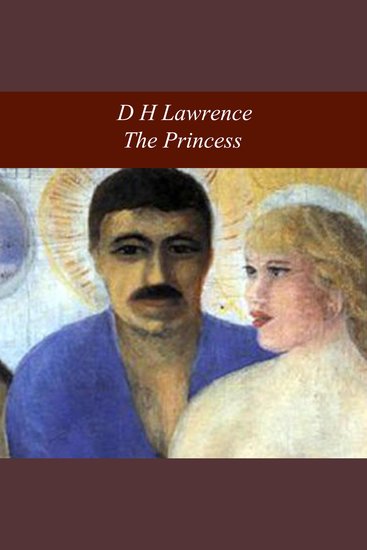
  • The Princess - cover

    The Princess

    D H Lawrence

    • 0
    • 0
    • 0
    'The Princess' of the story is a spoiled, sexless woman who is thrown in with a passionate man whom she takes into her bed and then rejects. This rejection leads to his ultimate death. Lawrence again pleads his case for the necessary domination of woman by man and shows the sterility of a life lead without sexual passion. Set against the bleak mountains of South America, it is one of Lawrence's most enduring tales.
    Zum Buch
  • Demir-Kaya - From their pens to your ears genius in every story - cover

    Demir-Kaya - From their pens to...

    Alexander Kuprin

    • 0
    • 0
    • 0
    Alexander Kuprin was born in Narovchat, Penza in Russia on 7th September 1870. 
    At 3 his Father died and he and mother moved to Moscow. By 10 he was enrolled at the Second Moscow Military High School and there his interest in literature began. The Alexander Military Academy followed and two years later he was a sub-lieutenant and posted to an Infantry Regiment for a further four years. 
    Despite his duties he was a now a keen writer and published his first short story at this time. His military duties also garnered him experiences for his breakthrough work ‘The Duel’.  Leaving the military he left for Kiev to work for local newspapers.  He continued to publish both stories and novels and by 1901 he was in St Petersburg becoming part of a group that included Chekhov, Ivan Bunin, Maxim Gorky and Leonid Andreyev.  
    In the years that followed further controversial works and acclaim followed.  His comments on the regime meant he was also put under secret police surveillance.   
    As World War I erupted, Kuprin opened a military hospital but was then given command of an infantry company in Finland. He was soon discharged on grounds of ill health.  
    The October Revolution saw him praise Lenin, but he warned that the Bolsheviks threatened Russian culture and might cause further widespread suffering to the peasants.  As Civil War raged he took his family to Helsinki and then on to Paris. 
    Exile saw his talents decline further and his succumbing to alcoholism. He became lonely and withdrawn. The family's poverty increased his malaise.   
    In May 1937, the Kuprin’s returned to Moscow.  He now saw his work published but wrote almost nothing new.  In 1938 his health rapidly deteriorated.  Already suffering from a kidney problems and sclerosis, he had now developed cancer of the oesophagus.  
    Alexander Kuprin died on 25th August 1938.
    Zum Buch