Begleiten Sie uns auf eine literarische Weltreise!
Buch zum Bücherregal hinzufügen
Grey
Einen neuen Kommentar schreiben Default profile 50px
Grey
Jetzt das ganze Buch im Abo oder die ersten Seiten gratis lesen!
All characters reduced
The Adventures of Gammelnok - A 300 Year Journey to reach a Garden Pond - cover

The Adventures of Gammelnok - A 300 Year Journey to reach a Garden Pond

Hans Wrang

Verlag: Hans Wrang

  • 0
  • 0
  • 0

Beschreibung

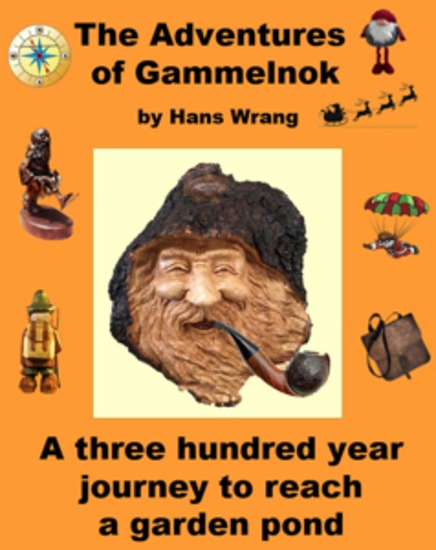
Gammelnok left his village in northern Norway after it was completely destroyed by marauding Norsemen, who also murdered all the villagers including Gammelnok's family.He then spent many years with the Sami people at the top of the world migrating with the seasons before getting kidnapped by the helpers of the bearded giant, who later was renamed Santa Claus.Gammelnok is now ready to move on. He spotted a nice secluded spot one year when flying with the sleigh over Great Britain. While trying to reach his garden pond where he intends to spend his last years, the sleigh and reindeers are thrown off course, caused by a strong jet stream.Gammelnok is thrown out of the sleigh and ends up in a Christmas Cave in a Dutch town. He is then imprisoned for shoplifting, escapes to Denmark by Tulip lorry, then crosses the Channel curtesy of a smuggler, shipwrecked and then rescued by a Spanish freighter crew.He finally arrives in Andalusia, only to be left behind after missing the freighter leaving Cadiz without him.He now faces a long journey from Seville to Granada and eventually to England in Santa's sleigh where he will spend his retirement by his selected garden pond.
Verfügbar seit: 06.07.2025.
Drucklänge: 152 Seiten.

Weitere Bücher, die Sie mögen werden

  • Raising Olives in Provence - A Guide for Body and Soul - cover

    Raising Olives in Provence - A...

    Kenneth R. Timmerman

    • 0
    • 0
    • 0
    Americans have long had a love affair with Provence: its glamour, its mystique, its foreignness. But never have they had a guide like Ken Timmerman. Bursting with humorous stories about local characters and vivid description of French landscapes and customs gleaned from thirty-five years in the country, Raising Olives in Provence tells the story of how the author improbably came to renovate a run-down house and raise olive trees in the hills above Saint-Tropez. From olive presses to truffle markets, from Templar hostelries to lunch at a beachside club with the king and queen of Sweden, Timmerman takes us to places and introduces us to people we would never find on our own. 


    In his other life as a war correspondent and investigative reporter, Timmerman deals with the horrors and betrayals of a world gone mad, always returning to this hillside in the south of France as a refuge. But even here, intrigue and treachery lie just beneath the surface, along with mysterious visitors on the hillside, an olive thief, phony artists and wannabe aristocrats, and the endless love adventures of his French neighbors. 


    Love, faith, marriage, and friendship—with a sprinkling of salt, thyme, and some olive oil, please! And don't forget the rosé.
    Zum Buch
  • Following the Equator - cover

    Following the Equator

    Mark Twain

    • 0
    • 0
    • 0
    The classic travelogue of one of America's most famous authors, Following the Equator was written when Twain had fallen on hard times. At the time, Twain found himself compelled to take a tour of the British Empire in 1895 and write about it.
    
    This account of that trip, published in 1897, is a classic example of Twain's ever-vigilant observational wit. He addresses ever timely topics such as racism, imperialism, and religion.
    Zum Buch
  • Ghosts of Scotland - Eerie Ghosts Stories Murder Witches and Folklore - cover

    Ghosts of Scotland - Eerie...

    Kelly Mass

    • 0
    • 0
    • 0
    Whether you believe in the supernatural elements or not, it is fascinating to see how the idea of ghosts happened, and how it developed over the ages. Even if they're really there, it can be said that many individuals have been totally wrong about them. And so, it is pretty much up to us to study them and sort out what the most credible, spiritual truths could be, based upon our own beliefs blended with the stories and testaments of others. 
    A ghost is the soul or spirit of a departed individual or animal who can appear to the living in folklore. Ghosts are defined in numerous ways in folklore, varying from an unnoticeable presence to clear or hardly noticeable wispy shapes to reasonable, realistic forms. Mysticism, or a séance in spiritism, is the purposeful effort to get in touch with the spirit of a departed individual. Part, haunt, phantom, poltergeist, shade, specter, ghost, alarm, wraith, devil, and evil spirit are some of the other titles used to define it. 
    The belief in a hereafter, and symptoms of the spirits of the dead, is quite common, extending back to pre-literate civilizations' animism or forefather praise. Funeral events, exorcisms, and some forms of spiritualism and routine magic are all specifically created to put the spirits of the dead to rest. Though legends of ghostly armies and the ghosts of animals instead of people have been told, ghosts are usually depicted as lonesome, human-like essences. They are said to haunt particular spots, products, or people with whom they once had a relationship. According to a Seat Proving ground research from 2009, 18% of Americans declare to have seen a ghost. 
    Let’s talk about this more in this fascinating book.
    Zum Buch
  • Canoeing in the Wilderness - cover

    Canoeing in the Wilderness

    Henry David Thoreau

    • 0
    • 0
    • 0
    "Canoeing in the Wilderness" chronicles Henry David Thoreau's captivating journey into the serene and unspoiled regions of Maine's forests and waterways. With his keen observation and profound appreciation for the natural world, Thoreau provides not only a detailed account of his expedition but also meditations on the essence of wilderness and man’s place within it. His vivid descriptions of landscapes, flora, and fauna, alongside reflections on simplicity and self-reliance, invite readers to explore the tranquil beauty of the wild and consider the value of a life closer to nature. Read in English, unabridged.
    Zum Buch
  • Kofun Period - The Mysterious Tomb Builders and the Roots of Imperial Japan - cover

    Kofun Period - The Mysterious...

    Rolf Hedger

    • 0
    • 0
    • 0
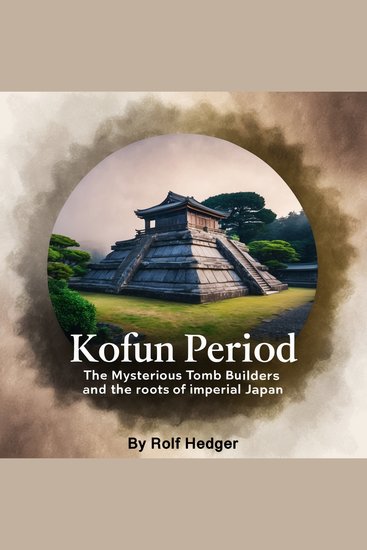
    The Kofun Period, which lasted from approximately 250 to 600 AD, marks a significant era in early Japanese history. This period is named after the distinct burial mounds, or "kofun," that were constructed during this time. These mounds vary in size and shape but are most commonly recognized for their keyhole-like design. The Kofun Period is pivotal as it represents a time of political consolidation, the development of social structures, and the emergence of a powerful ruling elite that would lay the foundation for the imperial system in Japan. 
    The beginning of the Kofun Period is closely tied to the formation of more complex societies in the Japanese archipelago. By this time, a system of chiefdoms had developed, and the early Yamato state began to emerge as a dominant political force. The period sees the consolidation of power under a centralized leadership, which eventually paved the way for the establishment of the imperial family that still exists today. During the Kofun Period, society transitioned from small, localized groups to more organized and hierarchical structures, a shift that was reflected in the elaborate tombs built for the elites. 
    The most notable characteristic of the Kofun Period is the construction of large burial mounds for the ruling class. These tombs were not only elaborate final resting places for powerful individuals but also symbolized the political power and religious authority of the deceased. The kofun mounds varied in size, with some measuring several hundred meters in length. These tombs were often surrounded by moats and would contain a wealth of grave goods, such as weapons, jewelry, and pottery, which reflected both the material culture of the time and the importance of the individual being buried.
    Zum Buch
  • Ming Dynasty - Exploration Great Walls and Forbidden Cities - cover

    Ming Dynasty - Exploration Great...

    Rolf Hedger

    • 0
    • 0
    • 0
    The Ming Dynasty emerged from the ashes of the Yuan Dynasty, a Mongol-led empire that had ruled China for nearly a century. By the late 14th century, the Yuan government had become weak and corrupt, plagued by heavy taxation, famines, and widespread unrest. The Chinese population, weary of foreign rule, began to rise in rebellion. Among the many insurgent leaders, one man would rise to power and change the course of Chinese history—Zhu Yuanzhang. 
    Born into a poor peasant family, Zhu Yuanzhang experienced hardship early in life. Orphaned as a child, he spent years in a Buddhist monastery before joining the Red Turban Rebellion, a movement dedicated to overthrowing the Yuan. His military prowess and strategic mind quickly elevated him through the ranks. As he consolidated power, he systematically eliminated rival factions, eventually establishing himself as the dominant leader of the rebellion. In 1368, Zhu marched his forces into Beijing, forcing the last Yuan emperor to flee northward. Declaring the end of Mongol rule, he proclaimed himself emperor and founded the Ming Dynasty, choosing the name "Ming," meaning "brilliant" or "bright," to symbolize a new era of Chinese rule. 
    As the first Ming emperor, Zhu Yuanzhang, now known as the Hongwu Emperor, sought to restore Chinese traditions and repair the damage caused by Mongol rule. He reestablished Confucian principles as the foundation of government, reinstating the civil service examination system to ensure that officials were selected based on merit rather than birthright. He also implemented strict laws to reduce corruption, often resorting to harsh punishments to maintain order. His administration worked to rebuild agriculture, improve irrigation systems, and distribute land to farmers, strengthening the economy and ensuring food security.
    Zum Buch