Begleiten Sie uns auf eine literarische Weltreise!
Buch zum Bücherregal hinzufügen
Grey
Einen neuen Kommentar schreiben Default profile 50px
Grey
Jetzt das ganze Buch im Abo oder die ersten Seiten gratis lesen!
All characters reduced
Notes on democracy - cover

Notes on democracy

H. L. Mencken

Verlag: Librorium Editions

  • 0
  • 0
  • 0

Beschreibung

Democracy came into the Western World to the tune of sweet, soft music. There was, at the start, no harsh bawling from below; there was only a dulcet twittering from above. Democratic man thus began as an ideal being, full of ineffable virtues and romantic wrongs—in brief, as Rousseau’s noble savage in smock and jerkin, brought out of the tropical wilds to shame the lords and masters of the civilized lands. The fact continues to have important consequences to this day. It remains impossible, as it was in the Eighteenth Century, to separate the democratic idea from the theory that there is a mystical merit, an esoteric and ineradicable rectitude, in the man at the bottom of the scale—that inferiority, by some strange magic, becomes a sort of superiority—nay, the superiority of superiorities. Everywhere on earth, save where the enlightenment of the modern age is confessedly in transient eclipse, the movement is toward the completer and more enamoured enfranchisement of the lower orders. Down there, one hears, lies a deep, illimitable reservoir of righteousness and wisdom, unpolluted by the corruption of privilege. What baffles statesmen is to be solved by the people, instantly and by a sort of seraphic intuition. Their yearnings are pure; they alone are capable of a perfect patriotism; in them is the only hope of peace and happiness on this lugubrious ball. The cure for the evils of democracy is more democracy!
Verfügbar seit: 10.04.2024.

Weitere Bücher, die Sie mögen werden

  • Doctrine Of The Mean The (zhōngyōng 中庸) - A Foundational Text of East Asian Thought Giving the Confucian Case for Balance Self-Cultivation and the Good Society - cover

    Doctrine Of The Mean The...

    Zi Zisi

    • 0
    • 0
    • 0
    Traditionally attributed to Confucius’s grandson Zǐsī (子思), Zhōngyōng (中庸) began as a single chapter in the Classic of Rites before being elevated to one of the Four Books (Sìshū, 四书) of classical Chinese philosophy by the Neo-Confucian scholar Zhū Xī (朱熹). It was a central text of Confucianism and, for over a milenium, anyone seeking a government position in China was expected to have mastered this short work, as well as influencing scholarship in Korea, Japan, and Vietnam.  
     
    The title combines zhōng (中, meaning central, impartial, or balanced) and yōng (庸, constant or unwavering). It suggests both a balanced stance between extremes and a stable, reliable way of living.  
    The series of 33 short meditations explores how self-cultivation and social order are fundamentally the same. It covers ideas about moderation, rectitude, sincerity, equilibrium, harmony, and lack of prejudice.  
    The ideal person (jūnzǐ, 君子) navigates every situation without falling into excess or deficiency, holding to a golden and self-improving mean. A friend should be neither too close nor too remote; neither grief nor joy should be excessive, since unregulated happiness can be as harmful as uncontrolled sorrow.  
     
     
    In the twentieth century, Confucianism was blamed for China’s stagnation. The May Fourth Movement attacked the Four Books as relics of a feudal past, and the Cultural Revolution sought to erase them. For decades, zhōngyōng disappeared from view.  
    In recent years mainland China has re-engaged with its classical heritage, and the Four Books have been reintroduced into schools, public life, and popular publishing, and a new generation of readers is discovering how these ancient texts speak to timeless questions about personal ethics, social order, and the search for meaning.  
    Short enough to read in an afternoon, difficult enough to spend a lifetime thinking about, The Doctrine of the Mean remains one of the most concise and quietly demanding works in the Confucian canon.
    Zum Buch
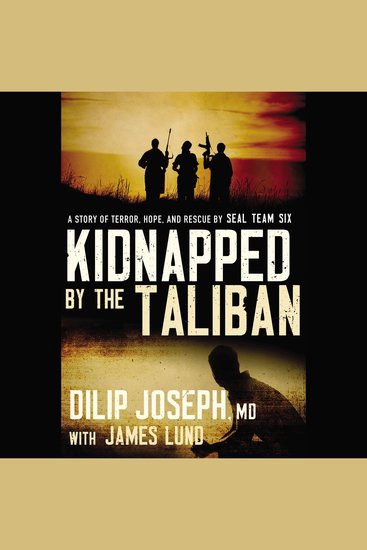
  • Kidnapped by the Taliban - A Story of Terror Hope and Rescue by SEAL Team Six - cover

    Kidnapped by the Taliban - A...

    M.D. Dilip Joseph, James Lund

    • 0
    • 0
    • 0
    Being abducted and held captive by the Taliban isn't a tale many survive to tell. An American doctor shares the harrowing story about the four days he spent with his captors after being abducted on a humanitarian mission and his incredible rescue by SEAL Team Six. 
    On December 5, 2012, American medical doctor Dilip Joseph and two colleagues are driving back to Kabul, Afghanistan, after serving villagers that morning at a rural clinic. Suddenly a man waving an AK-47 blocks their path. More armed men jump out of hiding. For Dilip, it is the beginning of a nightmare—he’s being kidnapped by the Taliban. 
    Dilip recounts his story with chilling detail, transporting the reader to rural Afghanistan. “As we walk, I fear the worst—that when we reach the top, they will shoot us. God, however this is going to end, please don’t let them torture me to death. Let it be one shot and done.” 
    Dilip and his friends endure a nine-hour march into the mountains, gruesome images of torture and death, and repeated threats of execution. After four days of uncertainty, gunfire announces the arrival of Navy SEAL Team Six, the elite group of soldiers that took down al-Qaeda founder Osama bin Laden. SEAL team member Nicolas D. Checque loses his life in the rescue, as do the Taliban kidnappers. 
    Yet this is more than a story of desperation, survival, and loss. It is also a tale of surprising connection, compassion, and inspiration. As Dilip begins to view the Taliban not as monsters but as men, both he and his captors are challenged to re-examine everything that matters: courage, sacrifice, hope, and faith. The book includes:First-hand account of a Taliban kidnapping survivorInsights into the Taliban's daily existenceInsights into the sacrifices made by the American armed forces 
    Kidnapped by the Taliban is a story of both terror and triumph. After reading this dramatic and inspiring account, you will never view Afghanistan or the Taliban in the same way again.
    Zum Buch
  • State of the Union 1985 - cover

    State of the Union 1985

    Ronald Reagan

    • 0
    • 0
    • 0
    The 1985 State of the Union Address delivered February 6, 1985, on Reagan’s 74th birthday, reports the strongest economic growth in 34 years, 3-year inflation of 3.9%, and more citizens working than ever before.  Despite progress Reagan notes “millions in our inner cities who long for real jobs, safe neighborhoods, and schools that truly teach” and people around the world “who struggle to break free from totalitarianism”.  
    “Our economy is not getting older and weaker; it's getting younger and stronger.” Reagan calls for further tax cuts to make America the investment capital of the world. He calls for enterprise zones, rejects policies that break up families and increase dependency, and says that “blacks, Hispanics, and all minorities will not have full and equal power until they have full economic power.” 
    “National security is government's first responsibility”. We “only have a military-industrial complex until a time of danger, and then it becomes the arsenal of democracy.” Reagan advocates the Strategic Defense Initiative against ballistic missiles as “the most hopeful possibility of the nuclear age” and looks forward to “the day when nuclear weapons are banned from this Earth forever.” Some say it will take a long time. The “answer to that is: Let’s get started.” 
    “Many countries in east Asia and the Pacific have few resources other than the enterprise of their own people. But through low tax rates and free markets they've soared ahead of centralized economies.” … “We've seen the benefits of free trade and lived through the disasters of protectionism. Tonight I ask all our trading partners, developed and developing alike, to join us in a new round of trade negotiations to expand trade and competition and strengthen the global economy …”   
    Audio recording courtesy of the Ronald Reagan Presidential Library. 
    AspenLeafMedia.com
    Zum Buch
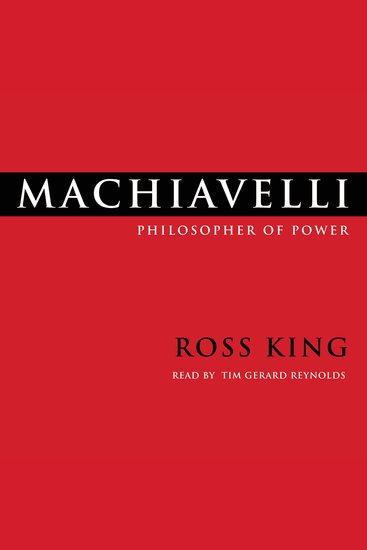
  • Machiavelli - Philosopher of Power - cover

    Machiavelli - Philosopher of Power

    Ross King

    • 0
    • 0
    • 0
    Part of the acclaimed Eminent Lives series, Machiavelli is a superb portrait of the brilliant and revolutionary political philosopher—history’s most famous theorist of “warfare, terror, murder, and bloodshed”—and the age he embodied. Ross King, the New York Times bestselling author of Brunelleschi’s Dome, argues that the author of The Prince was a far more complex and sympathetic character than is often portrayed.
    Zum Buch
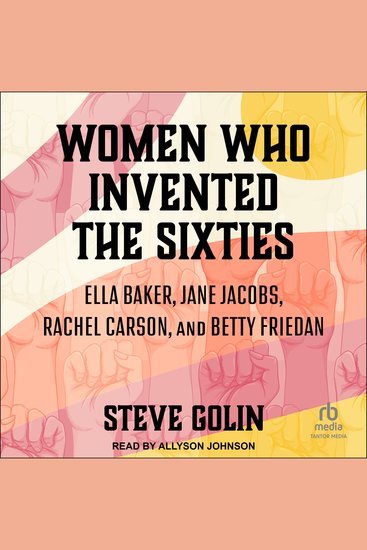
  • Women Who Invented the Sixties - Ella Baker Jane Jacobs Rachel Carson and Betty Friedan - cover

    Women Who Invented the Sixties -...

    Steve Golin

    • 0
    • 0
    • 0
    Women Who Invented the Sixties tells the story of how four women helped define the 1960s and made a lasting impression for decades to follow. 


    In 1960, Ella Baker played the key role in the founding of the Student Nonviolent Coordinating Committee, which became an essential organization for students during the civil rights movement and the model for the antiwar and women's movements. In 1961, Jane Jacobs published The Death and Life of Great American Cities, changing the shape of urban planning irrevocably. In 1962, Rachel Carson published Silent Spring, creating the modern environmental movement. And in 1963, Betty Friedan wrote The Feminine Mystique, which sparked second-wave feminism and created lasting changes for women. Their four separate interventions helped, together, to end the 1950s and invent the 1960s. 


    Women Who Invented the Sixties situates each of these four women in the 1950s—Baker's early activism with the NAACP and the Southern Christian Leadership Conference, Jacobs's work with Architectural Forum and her growing involvement in neighborhood protest, Carson's conservation efforts and publications, and Friedan's work as a labor journalist and the discrimination she faced—before exploring their contributions to the 1960s and the movements they each helped shape.
    Zum Buch
  • Mamata - Beyond 2021 - cover

    Mamata - Beyond 2021

    Shubhankar, Jayanta Ghosal,...

    • 0
    • 0
    • 0
    In the West Bengal election of 2021, the longest state election in the history of India, Mamata Banerjee won the khela, and the BJP lost the plot. How did this happen? 
    The author, Jayanta Ghosal, travelled to all the districts of West Bengal and unearthed certain key factors that helped the Trinamool win the state. For instance, there was a massive gap in the BJP's understanding of Bengali identity, which Mamata was able to exploit. An 'overdose' of central intervention, ranging from paramilitary forces to intelligence agencies to target key TMC leaders, added to the BJP's disconnect with voters. Increasingly, the state felt the divide between New Delhi and Bengal grow. 
    The book details how Mamata was successfully able to portray herself as the 'daughter of Bengal' who worked tirelessly for the state's poor and disadvantaged. It also asks the question: with the state elections under her belt, what will be Mamata's path to the general elections of 2024? Does she consider herself a candidate for the prime minister's post?
    Zum Buch