Join us on a literary world trip!
Add this book to bookshelf
Grey
Write a new comment Default profile 50px
Grey
Subscribe to read the full book or read the first pages for free!
All characters reduced
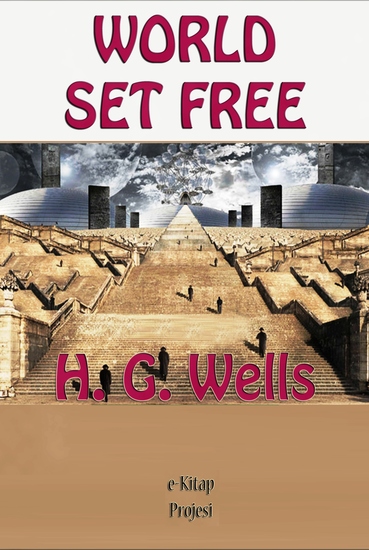
World Set Free - cover

World Set Free

H. G. Wells

Publisher: E-Kitap Projesi & Cheapest Books

  • 0
  • 0
  • 0

Summary

THE WORLD SET FREE was written in 1913 and published early in 1914, and it is the latest of a series of three fantasias of possibility, stories which all turn on the possible developments in the future of some contemporary force or group of forces. The World Set Free was written under the immediate shadow of the Great War. Every intelligent person in the world felt that disaster was impending and knew no way of averting it, but few of us realised in the earlier half of 1914 how near the crash was to us. The reader will be amused to find that here it is put off until the year 1956. He may naturally want to know the reason for what will seem now a quite extraordinary delay. As a prophet, the author must confess he has always been inclined to be rather a slow prophet.The war aeroplane in the world of reality, for example, beat the forecast in Anticipations by about twenty years or so. I suppose a desire not to shock the sceptical reader's sense of use and wont and perhaps a less creditable disposition to hedge, have something to do with this dating forward of one's main events, but in the particular case of The World Set Free there was, I think, another motive in holding the Great War back, and that was to allow the chemist to get well forward with his discovery of the release of atomic energy. 1956or for that matter 2056may be none too late for that crowning revolution in human potentialities. And apart from this procrastination of over forty years, the guess at the opening phase of the war was fairly lucky; the forecast of an alliance of the Central Empires, the opening campaign through the Netherlands, and the despatch of the British Expeditionary Force were all justified before the book had been published six months. And the opening section of Chapter the Second remains now, after the reality has happened, a fairly adequate diagnosis of the essentials of the matter. One happy hit (in Chapter the Second, Section 2), on which the writer may congratulate himself, is the forecast that under modern conditions it would be quite impossible for any great general to emerge to supremacy and concentrate the enthusiasm of the armies of either side.There could be no Alexanders or Napoleons. And we soon heard the scientific corps muttering, 'These old fools,' exactly as it is here foretold.These, however, are small details, and the misses in the story far outnumber the hits. It is the main thesis which is still of interest now; the thesis that because of the development of scientific knowledge, separate sovereign states and separate sovereign empires are no longer possible in the world, that to attempt to keep on with the old system is to heap disaster upon disaster for mankind and perhaps to destroy our race altogether. The remaining interest of this book now is the sustained validity of this thesis and the discussion of the possible ending of war on the earth.
Available since: 02/10/2024.
Print length: 300 pages.

Other books that might interest you

  • The Moneychangers - cover

    The Moneychangers

    Upton Sinclair

    • 0
    • 0
    • 0
    In Upton Sinclair's "The Moneychangers," the ruthless world of high finance is laid bare as Wall Street titan Frank Cowperwood navigates a treacherous landscape of greed and power. Amidst banking scandals and corporate intrigue, Cowperwood's ambition knows no bounds, testing his morals and relationships. With a sharp critique of capitalism's darker facets, Sinclair weaves a compelling narrative of ambition, corruption, and the relentless pursuit of wealth.
    Show book
  • Aloysha the Pot - From their pens to your ears genius in every story - cover

    Aloysha the Pot - From their...

    Leo Tolstoy

    • 0
    • 0
    • 0
    Leo Tolstoy was born in 1828 in the Russian province of Tula to a wealthy noble family. As a child, he had private tutors but he showed little interest in any formal education. When he went to the University of Kazan in 1843 to study oriental languages and law, he left without completing his courses.  Life now was relaxed and idle but with some writing also taking place.  Gambling debts forced an abrupt change of path and he joined the army to fight in the Crimean War.  He was commended for his bravery and promoted but was appalled at the brutality and loss of life.  He recorded these and other earlier experiences in his diaries which formed the basis of several of his works. 
    In 1852 ‘Childhood’ was published to immediate success and was followed by ‘Boyhood’ and ‘Youth’. 
    His experience in the army and the horrors he witnessed resulted in ‘The Cossacks’ in 1862 and the trilogy ‘Sevastopol Tales’. After the war he travelled around Europe, visiting London and Paris and meeting such luminaries as Victor Hugo and Charles Darwin.  
    It was now that Tolstoy began his masterpiece, ‘War and Peace’. Published in 1869 it was an epic work that changed literature. He quickly followed this with ‘Anna Karenina’.  
    These successes made Tolstoy rich and helped him accomplish many of his dreams but also brought problems as he grappled with his faith and the lot of the oppressed poor. These revolutionary views became so popular that the authorities now kept him under surveillance.  
    He led a life of asceticism and vegetarianism and put his socialist ideals into practice by establishing numerous schools for the poor and food programmes. He also believed in giving away his wealth, which caused much discord with his wife.  
    His writing continued to bring forth classics such as ‘The Death of Ivan Ilyich’ and many brilliant and incisive short stories such as ‘How Much Land Does A Man Need’.  
    In 1901 Tolstoy was excommunicated from the Church and controversially deselected for the Nobel Prize for Literature. 
    Whilst undertaking a pilgrimage by train in October 1910 with his daughter Aleksandra he caught pneumonia in the nearby town of Astapovo.  Leo Tolstoy died on November 9th, 1910, he was 82.
    Show book
  • Lecture to Art Students (Unabridged) - cover

    Lecture to Art Students...

    Oscar Wilde

    • 0
    • 0
    • 0
    Oscar Wilde (16 October 1854 - 30 November 1900) was an Irish poet and playwright. After writing in different forms throughout the 1880s, he became one of the most popular playwrights in London in the early 1890s.
    LECTURE TO ART STUDENTS: Delivered to the Art students of the Royal Academy at their Club in Golden Square, Westminster, on June 30, 1883. The text is taken from the original manuscript. In the lecture which it is my privilege to deliver before you to-night I do not desire to give you any abstract definition of beauty at all.
    Show book
  • War in the Air The - And Particularly How Mr Bert Smallways Fared While It Lasted (Unabridged) - cover

    War in the Air The - And...

    H. G. Wells

    • 0
    • 0
    • 0
    The War in the Air: And Particularly How Mr. Bert Smallways Fared While It Lasted is a military science fiction novel written by H. G. Wells. The novel was written in four months in 1907, and was serialized and published in 1908 in The Pall Mall Magazine. It is (like many of Wells's works) notable for its prophetic ideas, images, and concepts-particularly the use of aircraft for the purpose of warfare-as well as conceptualizing and anticipating events related to World War I. The novel's hero and main character is Bert Smallways, who is described as "a forward-thinking young man" and a "kind of bicycle engineer of the let's-'ave-a-look-at-it and enamel-chipping variety."
    Show book
  • The Invisible Man & The Time Machine - cover

    The Invisible Man & The Time...

    H. G. Wells

    • 0
    • 0
    • 0
    This bundle features two classic H. G. Wells stories narrated by Jake Urry. 
    The Invisible Man 
    An unexpected guest at the Coach and Horses in Iping arouses the local's interest with his short temper and his completely covered face. Griffin is seeking solitude and quiet, but is soon forced from the village and finds temporary shelter in the home of an old university friend, Kemp. There, injured and fatigued, he tells his old friend how he discovered the secret to making himself invisible, and tries to join forces with him to use this new power to bring about a reign of terror. 
    The Time Machine 
    A Victorian scientist travels into the far future and discovers the descendants of humanity, the Eloi, living in apparent peace and tranquility. However, after his time machine goes missing, he discovers that humanity has in fact split into two distinct species, and the Morlocks are not quite so benign as the Eloi. The time traveller must arm himself and get his time machine back if he ever wants to return to his own era.
    Show book
  • 1984 by George Orwell (Book Analysis) - Detailed Summary Analysis and Reading Guide - cover

    1984 by George Orwell (Book...

    Bright Summaries

    • 0
    • 0
    • 0
    In this clear and detailed reading guide, we've done all the hard work for you!1984 has reached bestseller lists all around the world and is considered one of the greatest pieces of English literature. It tells the story of a future society, run according to a totalitarian regime headed by Big Brother, where all inhabitants are under constant surveillance, and where opposition is quickly eradicated.This practical and insightful book includes:   • A complete plot summary   • Character studies   • Key themes and symbols   • Questions for further reflectionWhy choose BrightSummaries.com?Available in print and digital format, our publications are designed to accompany you in your reading journey. The clear and concise style makes for easy understanding, providing the perfect opportunity to improve your literary knowledge in no time.Shed new light on your favorite books with BrightSummaries.com!
    Show book