Begleiten Sie uns auf eine literarische Weltreise!
Buch zum Bücherregal hinzufügen
Grey
Einen neuen Kommentar schreiben Default profile 50px
Grey
Jetzt das ganze Buch im Abo oder die ersten Seiten gratis lesen!
All characters reduced
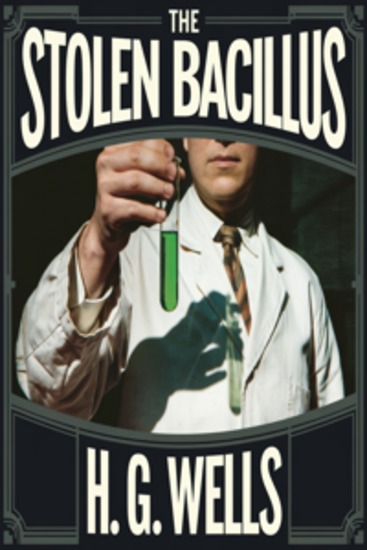
The Stolen Bacillus (illustrated) - cover

The Stolen Bacillus (illustrated)

H. G. Wells

Verlag: Swish

  • 0
  • 0
  • 0

Beschreibung

"The Stolen Bacillus" by H.G. Wells - A Classic Tale of Intrigue and Science
Dive into the captivating world of H.G. Wells with The Stolen Bacillus, a thrilling short story first published in 1894. This public domain classic blends humor, suspense, and science fiction as it explores the dangers of unchecked scientific curiosity. Follow the gripping events as an anarchist plots chaos using a bacteriologist’s experiment, only to face unexpected consequences. This edition has been thoughtfully formatted for digital devices to enhance your reading experience without altering the original text.
Whether you're a fan of timeless literature, a science fiction enthusiast, or simply curious about one of H.G. Wells’ lesser-known masterpieces, this short story is a must-read.
Verfügbar seit: 19.12.2024.

Weitere Bücher, die Sie mögen werden

  • Political Ideals - cover

    Political Ideals

    Bertrand Russell

    • 0
    • 0
    • 0
    “Liberty demands self-government, but not the right to interfere with others.”“The object of education ought not to be to make all men think alike, but to make each think in the way which is the fullest expression of his own.”“You may kill an artist or a thinker, but you cannot acquire his art or his thought. You may put a man do death because he loves his fellow men, but you will not by so doing acquire the love which made his happiness.” ? Bertrand Russell, Political Ideals'Political Ideals' was written during the upheaval of World War One. It is, in many ways, a statement, of Russell's beliefs, a declaration of the ideas that influenced his thinking on the major events of the 20th century. In this sense, it is essential reading for every student of this great philosopher.
    Zum Buch
  • The Door in the Wall - cover

    The Door in the Wall

    H. G. Wells

    • 0
    • 0
    • 0
    Title: The Door in the Wall 
    Author: H. G. Wells 
    Narrator: Jonathan Dunne 
    Original Publication: 1906 
    Public Domain: Yes 
    Series Placement: Number 42 in the Timeless Terrors series 
    Description: 
    The Door in the Wall by H. G. Wells is a haunting meditation on memory, regret, and the fragile boundary between reality and imagination. Blending psychological mystery with quiet supernatural suggestion, Wells crafts one of his most poignant and enduring tales. 
    Lionel Wallace, a successful statesman, is haunted by a recurring vision from his childhood — a green door in a white wall that opens onto a garden of impossible beauty. Throughout his life, the door reappears at unexpected moments, tempting him to abandon the world he knows for one that may not exist at all. As Wallace’s obsession deepens, the story becomes a reflection on the price of ambition, the ache of lost wonder, and the peril of yearning for what lies beyond the known. 
    Narrated by Amazon bestselling horror author Jonathan Dunne, this performance captures Wells’s tone of wistful dread and quiet revelation — the sense that paradise may be only a step away, but that to open the door is to lose oneself forever. While the text is in the public domain, this narration is an original performance and copyright © 2025 Jonathan Dunne. 
    Part of Timeless Terrors, a series devoted to resurrecting the masters of the macabre and uncanny, The Door in the Wallendures as a tale of elusive beauty and the inexorable pull of the mysterious — a reminder that some doors, once found, can never truly be closed.
    Zum Buch
  • Hide And Seek - From their pens to your ears genius in every story - cover

    Hide And Seek - From their pens...

    Fyodor Sologub

    • 0
    • 0
    • 0
    Fyodor Kuzmich Teternikov was born on 1st March 1863 in St. Petersburg into the family of a poor tailor.  When his father died of tuberculosis in 1867, his illiterate mother was forced to become a servant in the home of an aristocrat, where Sologub and his younger sister grew up.  
    Seeing how difficult his mother's life was, Sologub was determined to rescue her from it, and after graduating from the St. Petersburg Teachers' Institute in 1882 he took his mother and sister with him to his first teaching post in Kresttsy.  It was here he began his literary career in 1884 with his poem ‘The Fox and the Hedgehog’ under the name Te-rnikov. 
    It would be another decade before he could escape his various jobs to move to Moscow and begin his literary career on what would be his most famous novel, ‘The Petty Demon’.  It was now suggested that he use a pseudonym and so Sologub became his new identity. 
    In 1896 he published a book of poems, a collection of short stories, and his first novel, ‘Bad Dreams’, which is considered one of the first decadent Russian novels. 
    In 1905 ‘The Petty Demon’, was published, initially in serial form. But life was still difficult unrewarding jobs, little time to write and a small, cramped apartment lightened only by gatherings of friends, poets and writers. 
    By the October Revolution his work was becoming popular and with the novel of ‘The Petty Demon’, finally published as a book, he now had a growing income. 
    His sister's tuberculosis could now be more easily treated with treatments in proper sanitoria, even as far away as Finland, but in June 1907 she passed. 
    He returned to St. Petersburg and retired.  The following year he married the translator Anastasia Chebotarevskaya who reordered his life.  A big new apartment was rented, small gilt chairs were bought, and the walls of the large cold office were decorated with paintings. 
    Sologub continued to write and publish poems, plays, and translations and in 1914 he started a magazine, Writers' Journals, but the outbreak of World War I put an end to it.  
    The October Revolution, with publishing under Bolshevik control, ensured he now had no outlets for his writing and could only lecture. 
    His wife’s suicide in September 1921, mainly due to deprivation and uncertainty, as they prepared for a new life abroad, grieved him for the rest of his life. 
    In May 1927 Sologub became seriously ill, and by summer he could leave his bed only rarely.  
    After a long struggle, Fyodor Sologub died on 5th December 1927 in Leningrad.  He was 64.
    Zum Buch
  • Father Brown: The Eye of Apollo (Unabridged) - cover

    Father Brown: The Eye of Apollo...

    G. K. Chesterton

    • 0
    • 0
    • 0
    The tenth story in The Innocence of Father Brown is entitled "The Eye of Apollo." At the beginning of this short story, Flambeau has just opened his detective agency in a new building located near Westminster Abbey. The other tenants in the building are a religious charlatan named Kalon, who claims to be "the New Priest of Apollo," and two sisters, who are typists. Flambeau and Father Brown instinctively distrust Kalon, who has installed a huge eye of Apollo outside his office.
    Zum Buch
  • A Tale of Two Cities - A Story of the French Revolution - cover

    A Tale of Two Cities - A Story...

    Charles Dickens

    • 0
    • 0
    • 0
    In "A Tale of Two Cities," Charles Dickens masterfully weaves a narrative set against the turbulent backdrop of the French Revolution. The lives of Charles Darnay, a French aristocrat, and Sydney Carton, a disillusioned English lawyer, become intertwining fates of love and sacrifice. As revolutionary fervor grips Paris, the calm of London contrasts sharply. Themes of redemption, loyalty, and transformation shine as both men navigate a world in chaos, making ultimate sacrifices for love and justice.
    Zum Buch
  • A Nervous Breakdown - cover

    A Nervous Breakdown

    Anton Chekhov

    • 0
    • 0
    • 0
    In A Nervous Breakdown, Vasilyev feeling distressed after his visit to few brothels for the first time. Guilt, disgust and shame and of that little voices debating inside his mind that lead him to a symptom of a nervous breakdown. A quirky storytelling, quite distressing but entertaining.
    Zum Buch