Rejoignez-nous pour un voyage dans le monde des livres!
Ajouter ce livre à l'électronique
Grey
Ecrivez un nouveau commentaire Default profile 50px
Grey
Abonnez-vous pour lire le livre complet ou lisez les premières pages gratuitement!
All characters reduced
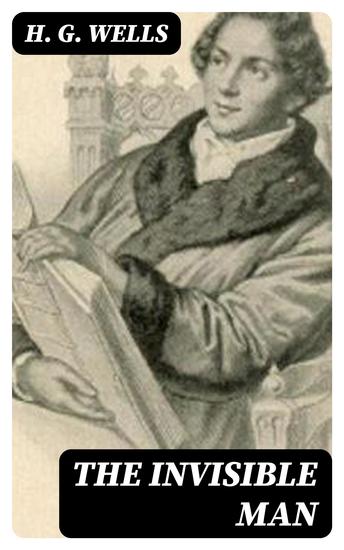
The Invisible Man - cover

The Invisible Man

H. G. Wells

Maison d'édition: DigiCat

  • 0
  • 0
  • 0

Synopsis

In H. G. Wells' 'The Invisible Man,' readers are drawn into a chilling narrative that interweaves scientific innovation and moral ambiguity. Through the story of Griffin, a scientist who discovers the key to invisibility, Wells explores themes of isolation, identity, and the destructive potential of unfettered ambition. His masterful prose shifts between horror and profound philosophical inquiry, revealing the dark side of human nature as Griffin grapples with his invisibility, both literally and metaphorically, in a society that refuses to accept him. The novel is a stirring reflection on the tension between scientific progress and ethical responsibility, situating itself within the broader context of the burgeoning scientific advancements of the late 19th century, particularly in the realm of physics and biology. Wells, often termed the 'father of science fiction,' draws on his background in biology and social criticism to craft this compelling tale. His own experiences with societal constraints and his desire to provoke thought regarding the repercussions of technological advancements undoubtedly shaped the narrative's direction. Wells's early exposure to the inequalities of Victorian society further fueled his exploration of themes related to power, control, and the human condition, allowing him to resonate with a diverse readership. 'The Invisible Man' is essential reading for those fascinated by the intersections of science, morality, and identity. It challenges readers to confront uncomfortable truths about ambition and empathy, making it profoundly relevant today. This thought-provoking work is highly recommended for anyone seeking to understand both the characters' psychological depths and the broader implications of isolation and desperation in the human experience.
Disponible depuis: 11/10/2022.
Longueur d'impression: 109 pages.

D'autres livres qui pourraient vous intéresser

  • A Midsummer Night's Dream - cover

    A Midsummer Night's Dream

    Maria Krestovskaya

    • 0
    • 0
    • 0
    Maria Krestovskaya demonstrates her incredibly astute understanding of human mind as she gives us a unique glimpse into the mental turmoils associated with one boy's first love.
    Voir livre
  • Editha's Burglar - cover

    Editha's Burglar

    Frances Hodgson Burnett

    • 0
    • 0
    • 0
    Editha was a queer little girl. She was rather old-fashioned, as her aunts used to call it, and was always very fond of books. Indeed, Editha perhaps read more than was quite good for her. She spent the greater part of her time in the library reading her papa's big books and newspapers. Her most recent obsession, derived from her daily news intake, was the subject of burglars. One night, when confronted with a real-life burglar, and with the conviction that she must protect her mother from the fright of such an intruder, Editha took it upon herself to confront the unusual nocturnal visitor.     Editha's Burglar was first published in 1888.
    Voir livre
  • The Diary of a God - From their pens to your ears genius in every story - cover

    The Diary of a God - From their...

    Barry Pain

    • 0
    • 0
    • 0
    Barry Eric Odell Pain was born at 3 Sydney Street in Cambridge on 28th September 1864. He was one of 4 children. 
    He was educated at Sedbergh School and then Corpus Christi College, Cambridge where he read classics and contributed to and edited Granta. 
    Four years of service as an Army coach followed before he moved to London. In 1889, Cornhill Magazine published his short story ‘The Hundred Gates’.  This opened the way for Pain to advance his literary career on several fronts. He became a contributor to Punch and The Speaker, as well as joining the staff of both the Daily Chronicle and Black and White.  
    In 1897 he succeeded Jerome K Jerome as editor of To-Day but still contributed regularly, until 1928, to the Windsor Magazine. 
    It is often said that Pain was discovered by Robert Louis Stevenson, who compared his work to that of Guy de Maupassant.  It’s an apt comparison. Pain was also a master of disturbing prose but able to inject parody and light comedy into many of his works.  A simple premise could in his hands suddenly expand into a world very real but somehow emotionally fraught and on the very edge of darkness as many of these short stories demonstrate.   
    Despite applying his talents to several genres and forms today Pain is more readily thought of, especially during the first decade of the 20th Century, as perhaps the leading British humorist of his day.  These stories reveal a darker side and beg to differ. 
    Barry Pain died on 5th May 1928 in Bushey, Hertfordshire.
    Voir livre
  • Tales from Shakespeare: Twelfth Night - cover

    Tales from Shakespeare: Twelfth...

    Mary Lamb, Charles Lamb

    • 0
    • 0
    • 0
    The re-written Shakespeare tale of Twelfth Night by Charles and Mary Lamb.
    Voir livre
  • Porch Swings Parlors & Pryin’ Eyes - Gossip Gumption and the Glories of Small-Town Life - cover

    Porch Swings Parlors & Pryin’...

    Anne Warner, Edna Ferber, Booth...

    • 0
    • 0
    • 0
    In the towns where the porch lights glow late, the screen doors creak often, and no secret stays secret for long, life unfolds with charm, chatter, and more than a touch of mischief. 
    Porch Swings, Parlors & Pryin’ Eyes invites you into parlors both prim and peculiar, where romances are whispered behind teacups, rivalries simmer at choir practice, and widows form committees with suspicious speed. Within these sixteen short stories, you’ll find aging sopranos and checker champions, tangled telegrams and moonlit deacons, poker parties gone sideways and gossip spun tighter than a handmade scarf. 
    Each tale captures the distinct rhythms of small-town American life in the late 19th and early 20th centuries—with all its humor, heartbreak, and sly subversion of social norms. These are stories not just of people, but of places—of communities that cradle, confine, and sometimes surprise those who call them home. 
    Pull up a chair, pour something sweet, and don’t be surprised if someone starts talkin’ about you next. 
    Featuring the work of renowned authors and some hidden gems of classic American fiction, including: 
    The Gay Old Dog, by Edna Ferber 
    Melinda's Humorous Story, by May McHenry 
    Friends in San Rosario, by O. Henry 
    The Associated Widows, by Katharine M. Roof 
    The Tale of the Tangled Telegram, by Wilbur D. Nesbit 
    A Village Singer, by Mary E. Wilkins Freeman 
    A New England Nun, by Mary E. Wilkins Freeman 
    The Scarf, by Madeline Yale Wynne 
    The Champion Checker-Player of Ameriky, by James Whitcomb Riley 
    How The Widow Won The Deacon, by William James Lampton 
    Evan Anderson's Poker Party, by Benjamin Stevenson 
    A Rivermouth Romance, by Thomas Bailey Aldrich 
    Not According to Schedule, by Mary Stewart Cutting 
    A Reward of Merit, by Booth Tarkington 
    Sand Flat Shadows, by Carl Sandburg 
    Mrs. Lathrop's Love Affair, by Anne Warner
    Voir livre
  • The Requiem - cover

    The Requiem

    Anton Chekhov

    • 0
    • 0
    • 0
    "The Requiem"  is an 1886 short story by Anton Chekhov.
    Andrey Andreyitch, a shopkeeper, comes to the local village church to ask for prayers for his recently deceased daughter Maria, and is chided by the priest for the wrong kind of language that he'd used in his written request. The shopkeeper's daughter was an actress, and quite a well known one, and he simply fails to understand why the clergymen are so offended by the word 'harlot' with which he described her occupation. The rendition of the prayers awaken in Andrey Andreyitch some tender memories of his beautiful, sensitive and intelligent girl, yet even mentally he keeps referring to her as 'harlot' for he can't see how an actress could be described otherwise.
    Voir livre