Rejoignez-nous pour un voyage dans le monde des livres!
Ajouter ce livre à l'électronique
Grey
Ecrivez un nouveau commentaire Default profile 50px
Grey
Abonnez-vous pour lire le livre complet ou lisez les premières pages gratuitement!
All characters reduced
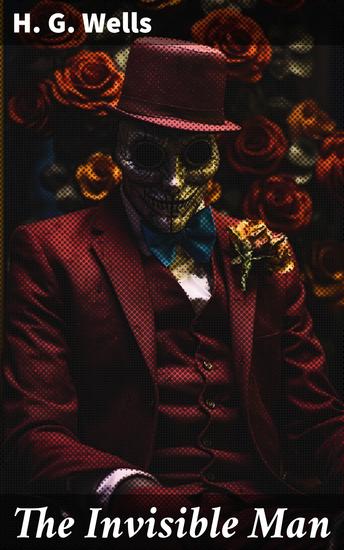
The Invisible Man - Unveiling Power and Identity in a Victorian Science Fiction Classic - cover

The Invisible Man - Unveiling Power and Identity in a Victorian Science Fiction Classic

H. G. Wells

Maison d'édition: Good Press

  • 0
  • 0
  • 0

Synopsis

H.G. Wells's 'The Invisible Man' presents a riveting exploration of the duality of human nature through the harrowing tale of Griffin, a scientist who invents a method to become invisible. With a pioneering blend of science fiction and psychological horror, Wells ingeniously intertwines themes of isolation, the quest for power, and the moral implications of unfettered ambition. The narrative, set against the backdrop of Victorian society's fears of the unknown, employs a rich, descriptive prose style that evokes both empathy and horror, serving as a critique of an era grappling with rapid scientific advancement and ethical dilemmas. H.G. Wells (1866-1946), often referred to as the father of science fiction, drew upon his background in biology and an acute awareness of societal issues to craft this profound tale. Influenced by the political and scientific landscape of his time, Wells was particularly interested in the darker aspects of human ingenuity and its potential for chaos. His personal experiences with social injustice and class disparities further fueled the existential questions posed in 'The Invisible Man'. This seminal work is highly recommended for readers interested in the intersections of science, ethics, and human psychology. Wells'Äôs thought-provoking narrative invites readers to ponder the implications of invisibility, both literal and metaphorical, urging reflection on societal invisibility and the human condition. 'The Invisible Man' remains a timeless classic, relevant in today'Äôs discourse on identity and moral responsibility.
Disponible depuis: 28/10/2023.
Longueur d'impression: 120 pages.

D'autres livres qui pourraient vous intéresser

  • Nikolai Gogol - A Short Story Collection - The absurdist Masters most compelling tale Ukranian born short story great that influenced the likes of Tolstoy and Dostoyevsky - cover

    Nikolai Gogol - A Short Story...

    Nikolai Gogol

    • 0
    • 0
    • 0
    Nikolai Vasilievich Gogol was born on 1st April 1809 to a father, descended from Ukrainian Cossacks and a mother with a military background in the Ukrainian town of Sorochyntsi, then part of the Russian Empire and rich in Cossack traditions and folklore.   
     
    His father wrote poetry and plays which the young Gogol helped stage at his uncle’s home theatre.  This helped ignite in him a love of literature and blossomed when he attended, what is now, the Nizhyn Gogol State University at the age of 12.  Here he participated in school theatre productions and refined his mastery of his native Ukrainian and also the Russian of his Imperial masters. 
     
    In 1828 he went to St Petersburg and unsuccessfully tried to begin a career as an actor after finding that with no money and no connections the civil service was barred to him. 
     
    Embezzling money from his mother he embarked on a trip to Germany. When the money ran out, he returned to St Petersburg but the experiences were used in a series of stories he contributed to periodicals.  These tales were steeped in his childhood memories of the Ukrainian landscape and peasantry enlivened with the supernatural of its folklore woven with realistic events of the day.  He wrote in Russian in a whimsical, colloquial style with a smattering of Ukrainian words and phrases that provided an authenticity.  Eight stories were published as ‘Evenings on a Farm near Dikanka’.  Seemingly all at once fame and fortune arrived. Gogol was hailed by his contemporaries, including Pushkin, as a pre-eminent writer of Russian literature.   
     
    His success continued with his brilliant plays ‘The Inspector General’ and the comedy ‘The Marriage for the Theatre’, both being highly acclaimed.   
     
    In 1834 he became Professor of Medieval History at the University of St. Petersburg but with little academic or teacher training, failed to adequately fulfil many of his duties and soon resigned this post.  With no obligations and using his earnings from his writing, which now included the impressionistic and immortal ‘Dead Souls’, Gogol travelled around Europe, spending the most time in Rome where he studied art, read Italian literature and developed a passion for opera.  
     
    In the 1840s Gogol became preoccupied with a need to purify his soul and embarked on a pilgrimage to Jerusalem. In tandem he fell under the influence of a strict and austere spiritual ascetic who persuaded him to observe strict fasts that, allied with his depression and deteriorating health, contributed to his death on 21st April 1852 at the age of only 43. 
     
    1 - Nikolai Gogol - A Short Story Collection - An Introduction 
    2 - The Nose by Nikolai Gogol 
    3 - The Cloak by Nikolai Gogol also known as 'The Overcoat' 
    4 - Old Fashioned Landowners by Nikolai Gogol 
    5 - St Johns Eve by Nikolai Gogol 
    6 - Diary of a Madman by Nikolai Gogol
    Voir livre
  • H G Wells - Six of the Best - Their legacy in 6 classic stories - cover

    H G Wells - Six of the Best -...

    H G Wells

    • 0
    • 0
    • 0
    Six has always been a number we group things around – Six of the best, six of one half a dozen of another, six feet under, six pack, six degrees of separation and a sixth sense are but a few of the ways we use this number. 
     
    Such is its popularity that we thought it is also a very good way of challenging and investigating an author’s work to give width, brevity, humour and depth across six of their very best. 
     
    In this series we gather together authors whose short stories both rivet the attention and inspire the imagination to visit their gems in a series of six, to roam across an author’s legacy in a few short hours and gain a greater understanding of their writing and, of course, to be lavishly entertained by their ideas, their narrative and their way with words. 
     
    These stories can be surprising and sometimes at a tangent to what we expected, but each is fully formed and a marvellous adventure into the world and words of a literary master. 
     
     1 - Six of the Best - H G Wells - An Introduction 
    2 - H G Wells - An Introduction 
    3 - The Crystal Egg by H G Wells 
    4 - The Man Who Could Work Miracles by H G Wells 
    5 - The Sea Raiders by H G Wells 
    6 - The Magic Shop by H G Wells 
    7 - The Flowering of the Strange Orchid by H G Wells 
    8 - A Dream of Armageddon - Part 1 by H G Wells 
    9 - A Dream of Armageddon - Part 2 by H G Wells
    Voir livre
  • Flowering of the Strange Orchid The (Unabridged) - cover

    Flowering of the Strange Orchid...

    H. G. Wells

    • 0
    • 0
    • 0
    A short story from the British Library Tales of the Weird collection Evil Roots. The Victorian era saw orchids become one of the most expensive and collectable plants, and this short story follows orchid collector Wedderburn, who gets more than he bargained for with his latest floral specimen.
    Voir livre
  • Lord Jim - cover

    Lord Jim

    Joseph Conrad

    • 0
    • 0
    • 0
    "Lord Jim" is a novel by Joseph Conrad, originally published as a serial in Blackwood's Magazine from 1899 to 1900 and later as a book in 1900. The novel is a complex exploration of honor, guilt, and redemption through the story of Jim, a young British seaman. Jim dreams of being a hero but is faced with a critical test when he abandons a ship in distress. His idealism is shattered by his actions, and the novel follows his quest for atonement. Conrad's narrative delves into the psychological depth of Jim's character, using a non-linear storytelling technique that was innovative for its time.
    Voir livre
  • Northanger Abbey (Legend Classics) - cover

    Northanger Abbey (Legend Classics)

    Jane Austen

    • 0
    • 0
    • 0
    “If adventures will not befall a young lady in her own village, she must seek them abroad.”
    Voir livre
  • War and Peace Book 1 - cover

    War and Peace Book 1

    Leo Tolstoy

    • 0
    • 0
    • 0
    "War and Peace," an epic novel by Leo Tolstoy, unfolds during the Napoleonic era in Russia. The narrative intertwines five aristocratic families amidst the tumult of war and societal change. Amidst political intrigue and military campaigns, Pierre Bezukhov inherits a vast fortune, embarking on a quest for meaning and spiritual fulfillment. Prince Andrei Bolkonsky, disillusioned by the futility of war after severe injury, grapples with love, despair, and the search for purpose. Natasha Rostova, a vivacious young woman, experiences passionate love, heartbreak, and personal growth. The novel masterfully juxtaposes individual destinies against the sweeping backdrop of history, exploring themes of free will versus historical determinism, the human capacity for change, and the timeless questions of war's destructive nature and peace's elusive pursuit.
    Voir livre