Begleiten Sie uns auf eine literarische Weltreise!
Buch zum Bücherregal hinzufügen
Grey
Einen neuen Kommentar schreiben Default profile 50px
Grey
Jetzt das ganze Buch im Abo oder die ersten Seiten gratis lesen!
All characters reduced
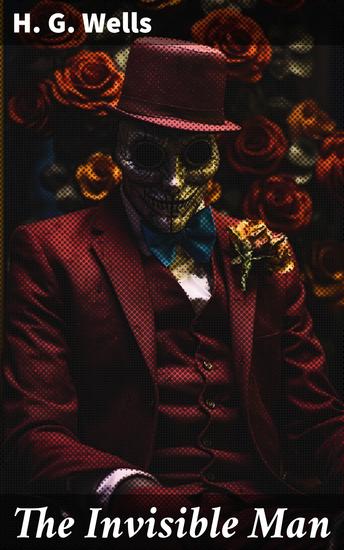
The Invisible Man - Unveiling Power and Identity in a Victorian Science Fiction Classic - cover

The Invisible Man - Unveiling Power and Identity in a Victorian Science Fiction Classic

H. G. Wells

Verlag: Good Press

  • 0
  • 0
  • 0

Beschreibung

H.G. Wells's 'The Invisible Man' presents a riveting exploration of the duality of human nature through the harrowing tale of Griffin, a scientist who invents a method to become invisible. With a pioneering blend of science fiction and psychological horror, Wells ingeniously intertwines themes of isolation, the quest for power, and the moral implications of unfettered ambition. The narrative, set against the backdrop of Victorian society's fears of the unknown, employs a rich, descriptive prose style that evokes both empathy and horror, serving as a critique of an era grappling with rapid scientific advancement and ethical dilemmas. H.G. Wells (1866-1946), often referred to as the father of science fiction, drew upon his background in biology and an acute awareness of societal issues to craft this profound tale. Influenced by the political and scientific landscape of his time, Wells was particularly interested in the darker aspects of human ingenuity and its potential for chaos. His personal experiences with social injustice and class disparities further fueled the existential questions posed in 'The Invisible Man'. This seminal work is highly recommended for readers interested in the intersections of science, ethics, and human psychology. Wells'Äôs thought-provoking narrative invites readers to ponder the implications of invisibility, both literal and metaphorical, urging reflection on societal invisibility and the human condition. 'The Invisible Man' remains a timeless classic, relevant in today'Äôs discourse on identity and moral responsibility.
Verfügbar seit: 28.10.2023.
Drucklänge: 120 Seiten.

Weitere Bücher, die Sie mögen werden

  • A Complete Recovery - From their pens to your ears genius in every story - cover

    A Complete Recovery - From their...

    Barry Pain

    • 0
    • 0
    • 0
    Barry Eric Odell Pain was born at 3 Sydney Street in Cambridge on 28th September 1864. He was one of 4 children. 
    He was educated at Sedbergh School and then Corpus Christi College, Cambridge. 
    In 1889, Cornhill Magazine published his short story ‘The Hundred Gates’.  This opened the way for Pain to advance his literary career on several fronts. He became a contributor to Punch and The Speaker, as well as joining the staff of both the Daily Chronicle and Black and White.  
    Pain was also a noted and prominent contributor to The Granta and from 1896 to 1928 a regular contributor to the Windsor Magazine. 
    It is often said that Pain was discovered by Robert Louis Stevenson, who compared his work to that of Guy de Maupassant.  It’s an apt comparison. Pain was a master of disturbing prose but was also able to inject parody and light comedy into many of his works.  A simple premise could in his hands suddenly expand into a world very real but somehow emotionally fraught and on the very edge of darkness. 
    Barry Pain died on 5th May 1928 in Bushey, Hertfordshire.
    Zum Buch
  • Hills and the Sea - cover

    Hills and the Sea

    Hilaire Belloc

    • 0
    • 0
    • 0
    In Hills and the Sea , Hilaire Belloc offers a lyrical celebration of the natural world, blending travel writing, philosophy, and personal reflection. With vivid prose and deep emotional resonance, he explores the spiritual and intellectual significance of landscapes—particularly the rolling hills and vast sea that symbolize freedom, permanence, and the divine order of creation. Drawing from his walks across southern England and reflections on the English Channel, Belloc meditates on history, faith, and man’s connection to place. Rooted in his Catholic worldview and love for tradition, the essays convey a profound sense of wonder and reverence for the beauty and meaning embedded in the natural world. A timeless work for lovers of nature, travel, and thoughtful contemplation.
    Zum Buch
  • A Little Joke - From their pens to your ears genius in every story - cover

    A Little Joke - From their pens...

    Anthony Hope

    • 0
    • 0
    • 0
    Sir Anthony Hope Hawkins was born on 9th February 1863 in Clapton, London.  
    He was educated at St John's School, Leatherhead, Marlborough College and Balliol College, Oxford.  Hope trained as a lawyer and barrister and was called to the Bar by the Middle Temple in 1887. Despite what was thought to be a promising legal career he had literary ambitions and wrote in his spare time. 
    His early works appeared in various periodicals of the day but for his first book ‘A Man of Mark’ (1890), with no publisher interested, he published with his own resources.  
    More novels and short stories followed, including the mildly successful ‘Mr Witt's Widow’ in 1892. Hope even found time to run as the Liberal candidate for Wycombe in the election that same year but was unsuccessful. 
    His first major literary success came with ‘The Dolly Dialogues’, a collection of previously published magazine pieces followed very quickly by his instant classic, ‘The Prisoner of Zenda’. He now gave up the vestiges of his legal career to pursue writing full-time. 
    Despite never again reaching the same pinnacle of success he was popular and wrote prolifically across novels, plays and of course, short stories though his writing output rapidly diminished after the war. 
    In 1918 he was knighted for his contribution to propaganda efforts during World War I.  
    His short stories are delicate, mannered and often surprising with their wit, humour and interplay of characters who say one thing and usually mean another.  He was very definitely a writer of escapist rather than serious fare but they are no less enjoyable for that. 
    Anthony Hope died of throat cancer on 8th July 1933 at his country home, Heath Farm at Walton-on-the-Hill in Surrey. He was 70.
    Zum Buch
  • The Original Dracula - cover

    The Original Dracula

    Bram Stoker

    • 0
    • 0
    • 0
    Dracula is a novel by Bram Stoker, published in 1897. As an epistolary novel, the narrative is related through letters, diary entries, and newspaper articles. It has no single protagonist but opens with solicitor Jonathan Harker taking a business trip to stay at the castle of a Transylvanian nobleman, Count Dracula. Harker escapes the castle after discovering that Dracula is a vampire, and the Count moves to England and plagues the seaside town of Whitby. A small group, led by Abraham Van Helsing, hunt Dracula and, in the end, kill him. 
     
    Dracula was mostly written in the 1890s. Stoker produced over a hundred pages of notes for the novel, drawing extensively from Transylvanian folklore and history. Some scholars have suggested that the character of Dracula was inspired by historical figures like the Wallachian prince Vlad the Impaler or the countess Elizabeth Báthory, but there is widespread disagreement. Stoker's notes mention neither figure. He found the name Dracula in Whitby's public library while holidaying there, picking it because he thought it meant devil in Romanian.
    Zum Buch
  • Rats in the Walls The (Unabridged) - cover

    Rats in the Walls The (Unabridged)

    H. P. Lovecraft

    • 0
    • 0
    • 0
    In 1923, an American named Delapore, the last descendant of the De la Poer family, moves to his ancestral estate in England following the death of his only son during World War I. To the dismay of nearby residents, he restores the estate, called Exham Priory. After moving in, Delapore and his cat frequently hear the sounds of rats scurrying behind the walls. Upon investigating further, and through recurring dreams, Delapore learns that his family maintained an underground city for centuries, where they raised generations of "human cattle"-some regressed to a quadrupedal state-to supply their taste for human flesh. This was stopped when Delapore's ancestor killed his entire family in their sleep and left the country in order to end the horror, leaving the remaining human livestock and a surviving relative to be devoured by the rats inhabiting the city's cesspits. Maddened by the revelations of his family's past, a hereditary cruelty, and his anger over his son's death, Delapore attacks one of his friends in the dark of the cavernous city and begins eating him while rambling in a mixture of Middle English, Latin, and Gaelic, before devolving into a cacophony of animalistic grunts. He is subsequently subdued and placed in a mental institution. At least one other investigator, Thornton, has gone insane as well. Soon after, Exham Priory is destroyed and the investigators decide to cover up the existence of the underground city. Delapore maintains his innocence, proclaiming that it was "the rats, the rats in the walls", who ate the man. He continues to be plagued by the sound of rats in the walls of his cell.
    Zum Buch
  • Brothers Karamazov The - Audiobook - cover

    Brothers Karamazov The - Audiobook

    Fyodor Dostoevsky, Classic...

    • 0
    • 0
    • 0
    The Brothers Karamazov is Fyodor Dostoevsky's final and most profound novel, a sweeping philosophical and psychological exploration of faith, doubt, free will, and morality. Set in 19th-century Russia, the story revolves around the lives of the three Karamazov brothers—Alyosha, the spiritual and kind-hearted novice; Ivan, the intellectual and tormented skeptic; and Dmitri, the passionate and impulsive soldier. Their deeply conflicted relationships with their debauched and manipulative father, Fyodor Pavlovich, lead to a tragic series of events culminating in his mysterious murder.Through the lens of this family drama, Dostoevsky examines the human soul, the struggle between reason and belief, and the consequences of spiritual and moral choices. Rich in philosophical dialogue and emotional depth, The Brothers Karamazov stands as one of the greatest novels ever written, offering timeless insights into the complexities of human nature and the eternal questions of existence.
    Zum Buch