Rejoignez-nous pour un voyage dans le monde des livres!
Ajouter ce livre à l'électronique
Grey
Ecrivez un nouveau commentaire Default profile 50px
Grey
Abonnez-vous pour lire le livre complet ou lisez les premières pages gratuitement!
All characters reduced
A Modern Utopia (Unabridged) - Exploring a Perfect Societal Vision - cover

A Modern Utopia (Unabridged) - Exploring a Perfect Societal Vision

H. G. Wells

Maison d'édition: Good Press

  • 0
  • 0
  • 0

Synopsis

In "A Modern Utopia," H. G. Wells embarks on a thought-provoking exploration of a future society characterized by advanced technology and progressive social structures. Written in a speculative style that blends elements of fiction, philosophy, and social commentary, the book delves into the intricacies of a utopian world where issues such as governance, morality, and community are explored through the lens of rationalism and optimism. Wells employs a vivid narrative technique that invites the reader to envision the possibilities of human progress while grappling with the inherent complexities of societal organization, positioning the work within the broader context of early 20th-century utopian literature amidst growing industrialization and political upheaval. H. G. Wells, often regarded as the father of science fiction, was a prolific writer and social critic whose own experiences in a rapidly changing society deeply influenced his thoughts on humanity's potential. His background in biology and sociology informed his perception of progress and social evolution, which are central themes in "A Modern Utopia." Wells's keen insight into the human condition and his advocacy for social reform mirror his aspirations for creating a society that transcends the ills of contemporary civilization. Readers intrigued by the intersection of utopian ideals and realistic implications will find "A Modern Utopia" an essential read. It challenges us to reflect on our present trajectories and consider the possibilities for a more equitable future. Whether one is a student of literature, political theory, or social science, this book provides a significant and thought-provoking discourse on the potential of humanity to forge a better world.
Disponible depuis: 05/01/2024.
Longueur d'impression: 222 pages.

D'autres livres qui pourraient vous intéresser

  • Tess of the d'Urbervilles - cover

    Tess of the d'Urbervilles

    Thomas Hardy

    • 0
    • 0
    • 0
     Tess of the d'Urbervilles by Thomas Hardy: "Tess of the d'Urbervilles" tells the tragic story of Tess Durbeyfield, a young woman from a poor rural family who discovers her aristocratic heritage. The novel explores themes of fate, morality, and the rigid social norms of Victorian England. As Tess's life is shaped by events beyond her control, including a tumultuous romance with the charismatic Alec d'Urberville and her relationship with the compassionate Angel Clare, Hardy's narrative examines the harsh consequences of society's judgment on female purity. With its powerful critique of societal double standards and its portrayal of a flawed yet resilient heroine, "Tess of the d'Urbervilles" remains a timeless classic in English literature.
    Voir livre
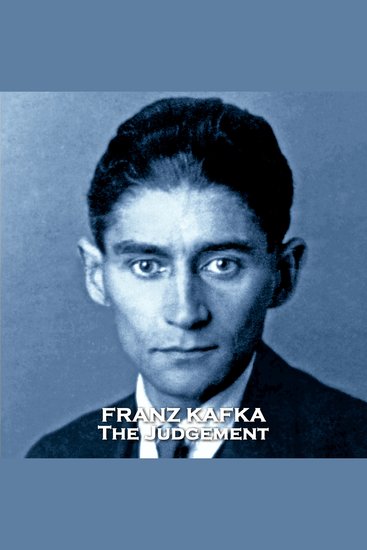
  • The Judgement - A kafkaesque view of a father son relationship - cover

    The Judgement - A kafkaesque...

    Franz Kafka

    • 0
    • 0
    • 0
    Franz Kafka was born on 3rd July 1883 in Prague, then in Bohemia, the eldest of 6, into a middle-class Jewish family. 
     
    Life for the young Kafka and his passion for literature was often made an ordeal by his over-bearing and domineering entrepreneur of a father.   
     
    In 1889 Kafka was sent to the Deutsche Knabenschule, an elementary school in Prague. His father would only allow him to be educated in German-speaking schools and even went so far as to limit visits to the synagogue to four a year. 
     
    In 1901 he graduated from the classics-oriented Altstädter Gymnasium. Kafka did well there and across a large range of subjects.  He now enrolled at the Charles Ferdinand University, to study chemistry, but quickly switched to law for which he obtained his degree in June 1906 and then performed the mandatory year of unpaid service as clerk at the civil and criminal courts. 
     
    A job at an Italian insurance company left him little time to write and after a year he took another job with the Worker's Accident Insurance Institute for the Kingdom of Bohemia where he stayed until ill health led to his resignation in 1922. 
     
    Although he saw work as a means to pay the bills and to allow him time to write, he received several promotions and was noted as a good employee. 
     
    By 1917 Kafka was suffering from tuberculosis, which required frequent periods of convalescence. Interspersed with this, were several intense affairs before he settled in Berlin with Dora Diamant, a 25-year-old kindergarten teacher who herself having left the ghetto now influenced Kafka's interest in the book of Jewish law, the Talmud. 
     
    Kafka’s on-going health was littered with problems. Apart from TB there were several other ailments, including migraines, insomnia, boils, depression, all usually brought on by excessive stresses and strains. He attempted to counteract all of this by naturopathic treatments, a vegetarian diet and consuming large quantities of unpasteurized milk. 
     
    His tuberculosis still worsened. He returned to Prague, where he died on 3rd June 1924. He was 40. 
     
    His literary works are few in number but towering in influence.  His masterpieces include ‘The Trial’, ‘The Metamorphosis’ as well as a number of short stories which reveal facets of humankind that truthfully could only be born from Kafka’s brain and pen.
    Voir livre
  • Clay (Unabridged) - cover

    Clay (Unabridged)

    James Joyce

    • 0
    • 0
    • 0
    James Augustine Aloysius Joyce (2 February 1882 - 13 January 1941) was an Irish novelist, short story writer, poet and literary critic. He contributed to the modernist avant-garde movement and is regarded as one of the most influential and important writers of the 20th century.
    CLAY: The matron had given her leave to go out as soon as the women's tea was over and Maria looked forward to her evening out. The kitchen was spick and span: the cook said you could see yourself in the big copper boilers.
    Voir livre
  • Two Views of a Cheap Theatre (Unabridged) - cover

    Two Views of a Cheap Theatre...

    Charles Dickens

    • 0
    • 0
    • 0
    Charles Dickens was a writer and social critic who created some of the world's best-known fictional characters and is regarded as the greatest novelist of the Victorian era. His works enjoyed unprecedented popularity during his lifetime, and by the twentieth century critics and scholars had recognised him as a literary genius. His novels and short stories enjoy lasting popularity.
    TWO VIEWS OF A CHEAP THEATRE: As I shut the door of my lodging behind me, and came out into the streets at six on a drizzling Saturday evening in the last past month of January,
    all that neighbourhood of Covent-garden looked very desolate.
    Voir livre
  • Seduction of the Seducer of Seducers - Another Platitudinous Upanishad - A Memento for an Eternal Life - cover

    Seduction of the Seducer of...

    Inderpreet Kaur

    • 0
    • 0
    • 0
    A hungry pythoness on the prowl for Eternal Truth ... 
    Why you should choose me over my competition is because I write from my experience that comes from being exposed to both the eastern and western style of living, where in the first half of my life it was east while the other half of my life in the west, which means it puts the burden of being that missing link that is needed to unite the east and the west!
    Voir livre
  • The Moneychangers - cover

    The Moneychangers

    Upton Sinclair

    • 0
    • 0
    • 0
    In Upton Sinclair's "The Moneychangers," the ruthless world of high finance is laid bare as Wall Street titan Frank Cowperwood navigates a treacherous landscape of greed and power. Amidst banking scandals and corporate intrigue, Cowperwood's ambition knows no bounds, testing his morals and relationships. With a sharp critique of capitalism's darker facets, Sinclair weaves a compelling narrative of ambition, corruption, and the relentless pursuit of wealth.
    Voir livre