Rejoignez-nous pour un voyage dans le monde des livres!
Ajouter ce livre à l'électronique
Grey
Ecrivez un nouveau commentaire Default profile 50px
Grey
Abonnez-vous pour lire le livre complet ou lisez les premières pages gratuitement!
All characters reduced
The Greatest French Classics Of All Time - Enriched edition 100+ Novels Short Stories Poems Plays Philosophical Essays… - cover

The Greatest French Classics Of All Time - Enriched edition 100+ Novels Short Stories Poems Plays Philosophical Essays…

Stendhal, Jules Verne, Gustave Flaubert, Anatole France, Émile Zola, Victor Hugo, Guy de Maupassant, Jean-Jacques Rousseau, François Rabelais, George Sand, Marcel Proust, Gaston Leroux, Charles Baudelaire, Molière Molière, Pierre Corneille, Jean Racine, Voltaire, Pierre Choderlos de Laclos, Alexandre Dumas pere, Alexandre Dumas fils

Maison d'édition: DigiCat

  • 0
  • 0
  • 0

Synopsis

The anthology 'The Greatest French Classics Of All Time' embarks on an unparalleled literary voyage through the rich tapestry of French literature. This collection encapsulates an array of genres and styles, from the romanticism and realism that defined the 19th century to the philosophical and satirical narratives of the Enlightenment. Within its pages lie the compelling stories of love, adventure, social critique, and existential musings that are hallmarks of French literary artistry. Each selected piece stands as a testament to the enduring influence of French literature, inviting readers into worlds crafted by the pens of its most celebrated authors. The anthology draws together a pantheon of celebrated writers, each contributing a unique voice to the chorus of French literary tradition. The likes of Stendhal, Hugo, and Flaubert bring vivid narratives that explore human emotion and societal structures, while Voltaire and Rousseau challenge the status quo with their incisive essays and philosophical treatises. This compendium also includes the captivating adventures and ingenious plots of Dumas, alongside the introspective and avant-garde stylings of Proust. Together, these writers underscore the profound cultural and intellectual movements that have shaped France's literary canon. For those seeking a definitive exploration of French literature, this anthology offers a comprehensive and enlightening experience. It presents a rare opportunity to engage with a confluence of literary greats, whose works continue to resonate and inspire. Through this collection, readers are invited to explore a multitude of perspectives, fostering a deeper understanding of the human condition as viewed through the prism of French classicism. Ideal for both the seasoned scholar and the inquisitive reader, this volume promises not just a journey through literary history, but a dialogue across centuries.

In this enriched edition, we have carefully created added value for your reading experience:
- An Introduction draws the threads together, discussing why these diverse authors and texts belong in one collection.
- Historical Context explores the cultural and intellectual currents that shaped these works, offering insight into the shared (or contrasting) eras that influenced each writer.
- A combined Synopsis (Selection) briefly outlines the key plots or arguments of the included pieces, helping readers grasp the anthology's overall scope without giving away essential twists.
- A collective Analysis highlights common themes, stylistic variations, and significant crossovers in tone and technique, tying together writers from different backgrounds.
- Reflection questions encourage readers to compare the different voices and perspectives within the collection, fostering a richer understanding of the overarching conversation.
Disponible depuis: 13/11/2023.
Longueur d'impression: 29090 pages.
D'autres livres qui pourraient vous intéresser

  • Gentle Breathing - From their pens to your ears genius in every story - cover

    Gentle Breathing - From their...

    Ivan Bunin

    • 0
    • 0
    • 0
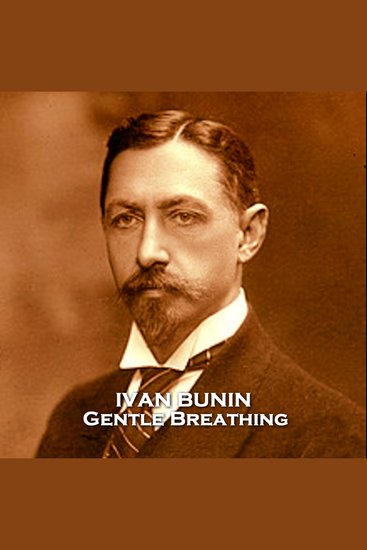
    Ivan Alekseyevich Bunin was born on 22nd October 1870 in Voronezh province, in the South-West of the Russian Empire. 
    His early life was plagued by his Father’s gambling habits which caused his education to be erratic and the family to lose most of their wealth. 
    Bunin published his first poem in 1887 in St Petersburg and later in Oryol he worked for the local paper and became its editor, handily allowing him to publish his own poems and short stories.  There he met and married Varvara Pashchenko.  Ivan Bunin's debut book of poetry ‘Poems (1887–1891)’ was published in 1891. 
    This poetry and his translation of Longfellow garnered him his first Pushkin Prize.  Now he switched to writing prose and his novella ‘Antonov Apples’ is regarded as his first masterpiece.  Many more would follow. 
    The October Revolution of 1905 found Bunin in the Crimea.  Scenes of ‘class struggle’ he saw more as the oppressed people's craving for anarchy and destruction. 
    In November 1906 he began a passionate affair with Vera Muromtseva, within a few months they were touring through Egypt and Palestine.  ‘The Bird's Shadow’ collection was the result.   
    His second Pushkin Prize came in 1909 for Poems (1903–1906) and further translations.  He was now elected to the prestigious Russian Academy. 
    More widespread fame came in 1910 with ‘The Village’, a controversial and bleak portrayal of Russian country life.  Travel too beckoned them back to the Middle East, Ceylon (now Sri Lanka) and for winters in Capri with their friend Maxim Gorky.  
    That friendship suddenly ended in April 1917 as the revolution began to ferment in war-ravaged Russia.  After the Bolsheviks took power and the upheavals continued, he decided to leave Russia, finally achieving that in early 1920.  
    It would take some time to heal the wounds and stress he had been under and for his writing to begin again.  Settled in France, Bunin published many of his previous works and collections of novellas.  He also made regular contributions to the Russian emigre press.  
    Although reluctant to become involved in politics, Bunin was now feted as both a writer and the figurehead of non-Bolshevik Russian values and traditions.  In 1933 he became the first Russian to be awarded the Nobel Prize for Literature ‘for following through and developing with chastity and artfulness the traditions of Russian classic prose.’  
    In 1938 Bunin began working on the celebrated cycle of nostalgic, and erotically themed stories known Dark Avenues (or Dark Alleys).  
    As World War II broke out he chose to remain in Grasse spending the war at his remote Villa Jeanette, high in the mountains.  
    Ivan Bunin was a staunch anti-Nazi, and often, under difficult conditions, sheltered fugitives after Vichy was occupied by the Germans.  He wrote but did not publish during these years until on August 23rd the Nazi’s fled Grasse without a fight.  The next day the Americans came.  
    In May 1945 he returned to Paris and, apart from convalescing at times in Juan-les-Pins, he stayed for the rest of his life. 
    After 1948, with his health deteriorating, Bunin concentrated upon writing his memoirs and a book on Chekhov.  His last years were overshadowed by bitterness and despair at the situation in Russia and the treatment of its peoples.  He was suffering now from asthma, bronchitis and chronic pneumonia. 
    Ivan Alekseyevich Bunin died in a Paris attic flat on 8th November 1953.  Heart failure, cardiac asthma and pulmonary sclerosis were given as the causes of death.  He was 83.
    Voir livre
  • The Master of the World - cover

    The Master of the World

    Jules Verne

    • 0
    • 0
    • 0
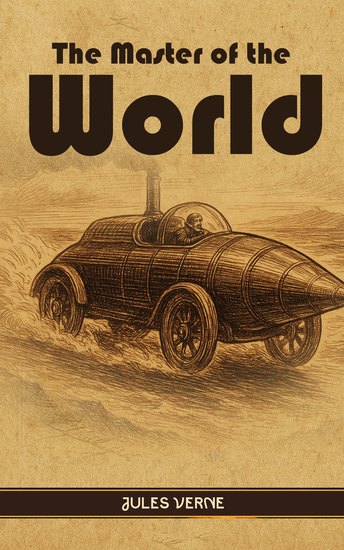
    The Master of the World is a thrilling and forward-looking science fiction novel by Jules Verne that explores the intoxicating power of technological genius—and the dangers of ambition without restraint. Serving as a sequel to Robur the Conqueror, the story revisits the enigmatic inventor Robur, whose unmatched intellect has enabled him to create machines that defy the limits of land, sea, and air.
    
    When mysterious disturbances and inexplicable sightings begin to alarm authorities across the United States, government investigators are dispatched to uncover the truth. Their search leads to the hidden stronghold of Robur, who has perfected a revolutionary vehicle capable of operating as an automobile, submarine, speedboat, and aircraft all in one. With this unprecedented invention, Robur seeks not cooperation with the world, but domination over it.
    
    Blending suspense, cutting-edge imagination, and social commentary, The Master of the World examines the ethical responsibility that accompanies scientific progress. Verne raises timeless questions about control, freedom, and the moral limits of innovation, anticipating modern debates about technology and power.
    
    Dark, intense, and visionary, The Master of the World stands as one of Jules Verne's most prophetic works—a compelling classic of science fiction that warns as much as it inspires, and continues to resonate in an age defined by technological advancement.
    Voir livre
  • Use of Ideals The (Unabridged) - cover

    Use of Ideals The (Unabridged)

    H. G. Wells

    • 0
    • 0
    • 0
    Herbert George "H. G." Wells (1866 - 1946) was an English writer.
    He was prolific in many genres, including the novel, history, politics, social commentary, and textbooks and rules for war games. Wells is now best remembered for his science fiction novels and is called a "father of science fiction"
    THE USE OF IDEALS: "Ideals!" said my uncle; "certainly Ideals. Of course one must have
    ideals, else life would be bare materialism. Bare fact alone, naked necessity, is impossible barren rock for a soul to root upon.
    Voir livre
  • Haunted House The (Unabridged) - cover

    Haunted House The (Unabridged)

    Charles Dickens

    • 0
    • 0
    • 0
    "The Haunted House" is a story series published in 1859 for the weekly periodical All the Year Round. It was "Conducted by Charles Dickens", with Charles Dickens writing the opening and closing stories, framing stories by Dickens himself and five other authors.
    The story appeared in the Extra Christmas Number on 13 December 1859. Dickens began a tradition of Christmas publications with A Christmas Carol in 1843 and his Christmas stories soon became a national institution. The Haunted House was his 1859 offering.
    In Dickens's opening story, The Mortals in the House, the narrator's ("John") health "required a temporary residence in the country." Knowing this, a friend of the narrator had chanced to drive by the house-situated close to a railroad stop mid-way between Northern England and London-and had written to the narrator suggesting he travel down from the North and look the place over. It was a large mid-eighteenth-century manor house on two square acres with a "sadly neglected garden," recently cheaply repaired, and "much too closely and heavily shadowed by trees." The house itself is "stiff ... cold ... [and] formal" and "in as bad taste, as could possibly be desired by the most loyal admirer of the whole quartet of [King] Georges." It was "ill-placed, ill-built, ill-planned, and ill-fitted." It was "damp ... not free from dry rot" and redolent with the "flavour of rats."
    Voir livre
  • History - cover

    History

    Isaac Asimov

    • 0
    • 0
    • 0
    "History" is a science fiction short story by American writer Isaac Asimov. It was first published in the March 1941 issue of Super Science Stories and reprinted in the 1972 collection The Early Asimov.
    Voir livre
  • Poor Mercantile Jack (Unabridged) - cover

    Poor Mercantile Jack (Unabridged)

    Charles Dickens

    • 0
    • 0
    • 0
    Charles Dickens was a writer and social critic who created some of the world's best-known fictional characters and is regarded as the greatest novelist of the Victorian era. His works enjoyed unprecedented popularity during his lifetime, and by the twentieth century critics and scholars had recognised him as a literary genius. His novels and short stories enjoy lasting popularity.
    POOR MERCANTILE JACK: Is the sweet little cherub who sits smiling aloft and keeps watch on life of poor Jack, commissioned to take charge of Mercantile Jack, as well as Jack of the national navy?
    Voir livre