Rejoignez-nous pour un voyage dans le monde des livres!
Ajouter ce livre à l'électronique
Grey
Ecrivez un nouveau commentaire Default profile 50px
Grey
Abonnez-vous pour lire le livre complet ou lisez les premières pages gratuitement!
All characters reduced
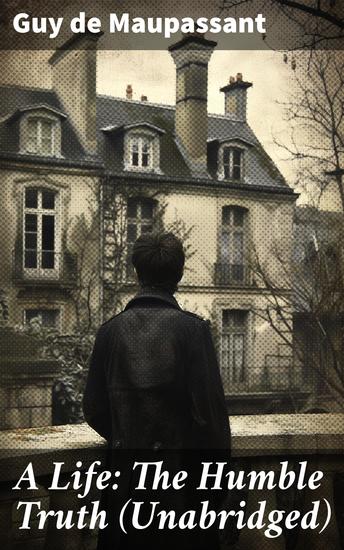
A Life: The Humble Truth (Unabridged) - A poignant journey through love ambition and betrayal in 19th-century Parisian society - cover

A Life: The Humble Truth (Unabridged) - A poignant journey through love ambition and betrayal in 19th-century Parisian society

Guy de Maupassant

Maison d'édition: Good Press

  • 0
  • 0
  • 0

Synopsis

In "A Life: The Humble Truth (Unabridged)," Guy de Maupassant intricately weaves a tale of disillusionment and the trials of provincial life through the experiences of Jeanne, a young woman whose innocence is gradually stripped away by the harsh realities of the world. The novel, rooted in the naturalist tradition, employs a keen observational style that captures the minutiae of daily existence while exploring themes of love, sacrifice, and the inexorable passage of time. Maupassant's prose is marked by its clarity and emotive depth, revealing the poignant contrast between societal expectations and individual aspirations within the constraints of 19th-century French society. Guy de Maupassant, a master of the short story and a prominent figure in literary realism, draws from his own tumultuous experiences, including a tumultuous childhood and the pervasive influence of his mentor Flaubert. These elements contribute to the vivid realism and psychological complexity found in "A Life." Maupassant navigates his characters through the turbulent waters of emotion, desire, and disillusionment, reflecting his deep understanding of human nature and societal pressures. This profound narrative is essential for readers intrigued by the human condition and the complexity of life. "A Life: The Humble Truth" is not only a reflection on lost dreams but also a sharp critique of societal norms, making it a timeless exploration of the pursuit of happiness amid adversity. Readers seeking to delve into the depths of character and circumstance will find this unabridged edition a rewarding journey.
Disponible depuis: 04/01/2024.
Longueur d'impression: 290 pages.
D'autres livres qui pourraient vous intéresser

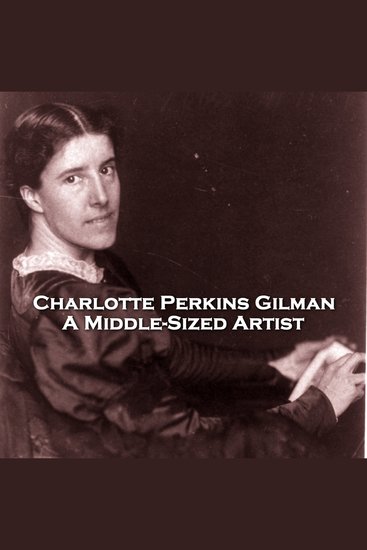
  • A Middle-Sized Artist - From their pens to your ears genius in every story - cover

    A Middle-Sized Artist - From...

    Charlotte Perkins Gilman

    • 0
    • 0
    • 0
    Charlotte Perkins Gilman was born on 3rd July 1860 in Hartford, Connecticut, to an unaffectionate mother and a father who abandoned her and her older brother to a life of poverty. 
    Inevitably her schooling was limited and by 15 she had attended seven different schools but received only four years education.  However Charlotte was resourceful and did spend time with her father’s aunts – the suffragist Isabella Beecher Hooker and the ‘Uncle Tom Cabin’s’ author, Harriet Beecher Stowe as well as many hours at the public library studying ancient civilisations. 
    In 1878, she enrolled in classes at the Rhode Island School of Design where she met Martha Luther and they developed a close relationship until Luther married in 1881. Charlotte was devastated and detested romance and love until she met and married the artist Charles Walter Stetson.  
    Their only child, Katharine Beecher Stetson, was born in 1885 but left Charlotte with post-natal depression, then often dismissed as a case of hysteria or nerves.  Unsuited to domestic life she ruptured her life and moved to California with Katherine.  She divorced in 1894 and then sent Katharine east to live with her father and his second wife confirming that his paternal rights be acknowledged and that Katherine establish a relationship with her father. 
    After her mother died in 1893, Charlotte moved back east and became involved with her first cousin, Wall Street attorney, Houghton Gilman who she married in 1900. After his death she moved back to California, where Katherine now lived.   
    Her most popular story is ‘The Yellow Wallpaper’ which touched on her own post-partum depression and underlined the need for women to be responsible for their mental and physical well-being, as the narrator is ordered by her husband/doctor to take compete rest in her room where she is isolated and becomes obsessed with the revolting yellow wallpaper.   
    She wrote other notable short stories the best of which we also include.   
    Charlotte lectured widely for social reform, wrote important non-fiction works that questioned our patriarchal system and left a legacy as a leading and positive spokesperson for feminism.  
    She was diagnosed with incurable breast cancer in 1932 and, as she wrote in her suicide note and autobiography, she ‘chose chloroform over cancer’    
    Charlotte Perkins Gilman took her own life on 17th August 1935, aged 75, in Pasadena, California.
    Voir livre
  • The Adventure of Black Peter - cover

    The Adventure of Black Peter

    Arthur Conan Doyle

    • 0
    • 0
    • 0
    The Adventure of Black Peter is a Sherlock Holmes story by Arthur Conan Doyle. This tale is in the collection The Return of Sherlock Holmes, but was published originally in 1904 in the Strand Magazine and Collier's.Forest Row in the Weald is the scene of a harpoon murder, and a young police inspector, Stanley Hopkins, asks Holmes, whom he admires, for help. Holmes has already determined that it would take a great deal of strength and skill to run a man through with a harpoon and embed it in the wall behind him.Peter Carey, the 50-year-old victim and former master of the Sea Unicorn of Dundee, who lived with his wife and daughter, had a reputation for being violent. Carey did not sleep in the family house, but in a small cottage that he built some distance from the house, whose interior he had decorated to look like a sailor's cabin on a ship. This is where he was found harpooned. Hopkins could find no footprints or other physical evidence. However, a tobacco pouch made of sealskin and with the initials "P.C." was found at the scene, which was full of strong ship's tobacco. This is rather unusual, as Peter Carey—or "Black Peter" as people called him—seldom smoked. Indeed, Hopkins found no pipe in the cabin. Carey was found fully dressed, suggesting that he was expecting a visitor, and there was some rum laid out along with two dirty glasses...Famous works of the author Arthur Conan Doyle: A Study in Scarlet, The Sign of the Four, The Adventures of Sherlock Holmes, The Memoirs of Sherlock Holmes, The Hound of the Baskervilles, The Return of Sherlock Holmes, The Valley of Fear, His Last Bow, The Case-Book of Sherlock Holmes, Stories of Sherlock Holmes, The Lost World.
    Voir livre
  • Diary of a Mad Man - cover

    Diary of a Mad Man

    Guy de Maupassant

    • 0
    • 0
    • 0
    Title: The Diary of a Madman 
    Author: Guy de Maupassant 
    Narrator: Jonathan Dunne 
    Original Publication: 1885 
    Public Domain: Yes 
    Series Placement: Number 14 in the Timeless Terrors series 
    Description: 
    The Diary of a Madman by Guy de Maupassant is a chilling study of psychological horror and the fragility of sanity. First published in 1885, it presents the private writings of a respected judge whose outward civility hides a dark descent into obsession and cruelty. 
    Told through the intimate form of diary entries, the story reveals the gradual unraveling of a mind — a voice both rational and terrifyingly unhinged. Maupassant strips away the veneer of normalcy to expose the horrors lurking within the human psyche. 
    This recording, narrated by Amazon bestselling horror author Jonathan Dunne, captures the eerie intimacy and creeping dread that defines Maupassant’s tale. While the text is in the public domain, this performance is an original work and copyright © 2025 Jonathan Dunne. 
    This audiobook is part of Timeless Terrors, a dedicated series bringing classic horror back to life — stories from the great masters of the macabre, narrated afresh to haunt a new generation. 
    Listeners should be prepared for an unsettling exploration of madness, hidden violence, and the shadows that dwell in ordinary men.
    Voir livre
  • The Metropolis - cover

    The Metropolis

    Upton Sinclair

    • 0
    • 0
    • 0
    This gripping novel follows Allan Montague, a young lawyer who enters the dazzling high society of New York City, only to uncover a web of corruption, greed, and moral decay. As Montague navigates the glittering ballrooms and shadowy boardrooms of the elite, he is forced to confront the stark realities behind the facade of wealth and power. Sinclair's incisive critique of the American Gilded Age unveils the stark contrasts between opulence and poverty, integrity and vice.
    Voir livre
  • Shirley - cover

    Shirley

    Charlotte Brontë

    • 0
    • 0
    • 0
    "Shirley" is a social novel set during the industrial depression of 1811-1812 in the manufacturing district of Yorkshire. The story revolves around the struggles of the working class and explores themes of social injustice, gender roles, and economic hardship. The title character, Shirley, is a strong and independent woman who challenges societal norms.
    Voir livre
  • The Blue Hotel and Other Stories - cover

    The Blue Hotel and Other Stories

    Anonyme

    • 0
    • 0
    • 0
    Stephen Crane's "The Blue Hotel and Other Stories" immerses readers in a vivid exploration of the human psyche and the unpredictable forces of fate. Set against the backdrop of a bleak Nebraska winter, "The Blue Hotel" stands out as a compelling tale of paranoia, misunderstanding, and tragedy. Accompanied by other poignant narratives, Crane masterfully captures the essence of conflict, both internal and external, revealing the profound impact of our perceptions on our reality. A captivating collection that resonates with timeless truths.
    Voir livre