Rejoignez-nous pour un voyage dans le monde des livres!
Ajouter ce livre à l'électronique
Grey
Ecrivez un nouveau commentaire Default profile 50px
Grey
Abonnez-vous pour lire le livre complet ou lisez les premières pages gratuitement!
All characters reduced
Summary of Anansi's Gold by Yepoka Yeebo - The Man Who Looted the West Outfoxed Washington and Swindled the World - cover

Summary of Anansi's Gold by Yepoka Yeebo - The Man Who Looted the West Outfoxed Washington and Swindled the World

GP SUMMARY

Maison d'édition: BookRix

  • 0
  • 0
  • 0

Synopsis

DISCLAIMER 
  
This book does not in any capacity mean to replace the original book but to serve as a vast summary of the original book. 
  
Summary of Anansi's Gold by Yepoka Yeebo: The Man Who Looted the West, Outfoxed Washington, and Swindled the World 
  
IN THIS SUMMARIZED BOOK, YOU WILL GET:Chapter astute outline of the main contents.Fast & simple understanding of the content analysis.Exceptionally summarized content that you may skip in the original book 
  
Anansi's Gold is a non-fiction masterpiece that tells the story of Ghanaian con artist John Ackah Blay-Miezah, who swindled millions of dollars from thousands of believers. After Ghana gained independence in 1957, a CIA-funded military junta falsely accused Nkrumah of hiding Ghana's gold overseas. Blay-Miezah and his accomplices deceived Philadelphia lawyers, London financiers, and Seoul businessmen, earning him the title of one of the most fascinating and lucrative scams in modern history. Yepoka Yeebo follows Blay-Miezah's trail and uncovers the truth about Ghana's missing wealth, revealing how history writes itself into being through one lie at a time.
Disponible depuis: 21/12/2023.
Longueur d'impression: 112 pages.

D'autres livres qui pourraient vous intéresser

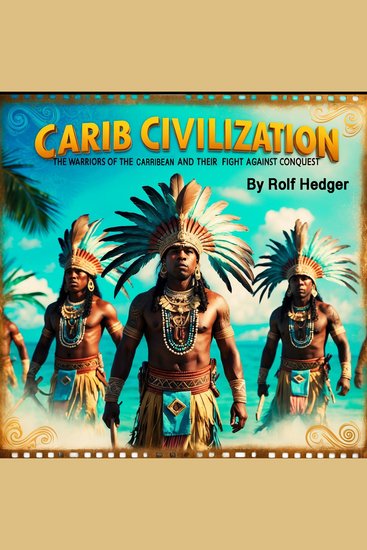
  • Carib Civilization - The Warriors of the Caribbean and Their Fight Against Conquest - cover

    Carib Civilization - The...

    Rolf Hedger

    • 0
    • 0
    • 0
    The Carib civilization, known for their resilience and military prowess, was one of the dominant forces in the Caribbean before and during the early phases of European colonization. The Caribs, who were part of the larger Arawakan language family, developed a distinct culture that set them apart from other indigenous groups in the region. Their territory spanned many of the islands in the Lesser Antilles, with notable populations in Dominica, Saint Vincent, and Grenada. While they were widely recognized for their fierce resistance against European colonizers, their rich history and cultural achievements also played a significant role in shaping the Caribbean. 
    The early origins of the Caribs are a subject of ongoing research, but they are believed to have migrated from South America, possibly from the Orinoco River Basin in present-day Venezuela. Over time, they settled in various parts of the Caribbean, with their most prominent presence being on the islands of the Lesser Antilles. The Caribs are often distinguished from their neighbors, the Arawaks, due to their more aggressive and militaristic nature, a characteristic that would become critical in their dealings with the European powers who arrived on their shores. 
    Carib society was organized around a hierarchical structure with a chief, or ouin (sometimes known as karifuna), at the top, followed by warriors, farmers, and fishermen. Despite their reputation as fierce fighters, the Caribs were also skilled agriculturalists and fishermen. Their diet was rich in cassava, corn, fruits, and fish, which they caught using canoes made from hollowed trees. The Caribs' ability to navigate the seas using their advanced knowledge of the stars and ocean currents made them formidable maritime traders and warriors. They built large, ocean-going canoes capable of carrying multiple warriors, enabling them to wage successful raids across the Caribbean islands.
    Voir livre
  • Jane Eyre: A Christian Readers' Guide - cover

    Jane Eyre: A Christian Readers'...

    Rachel Kovaciny

    • 0
    • 0
    • 0
    Explore the story of Jane Eyre in a brand new light. With prompts for discussions, thought provoking questions, and a breakdown and analysis of each chapter,Rachel Kovaciny brings to the forefront the major and minor themes and valuable lessons to be learned from this classic novel. An excellent companion for the novel, this guide demonstrates a love and appreciation for the classics and elevates understanding through the author’s clear grasp of the historical context as well as Charlotte Brontë’s background. Kovaciny’s guide also approaches each analysis through the lens of a Christian worldview. Viewing the heartbreak, growth, introspection, and lessons of love and loss through a Biblical perspective allows for an even deeper understanding of the characters, plot, and even Brontë herself. A wonderful library addition for fans of classic literature, homeschool families, book clubs, or those looking to further their education on the classics, this thoughtful and thorough guide is a must have!
    Voir livre
  • Dealing with Stress: The 'Mind Body Spirit' Way - cover

    Dealing with Stress: The 'Mind...

    Dr. Rebecca Williams

    • 0
    • 0
    • 0
    Stress is a problem for many people. This practical book was written by a GP who developed her approach for dealing with stress to help her patients and felt it could help a wider audience. It was first available in 2014 but the latest version was released in 2024. The book is designed to encourage you (the reader) to reflect on what is causing stress in your life, how this stress is affecting you and on what you can change in your situation, and in yourself, to help you make life feel less stressful. There is plenty of space for you to jot down your thoughts. 
    The introduction includes a definition of the word 'stress', and is followed by a description of the Acute Stress Reaction. You are then asked to consider whether there are aspects of your life that you can change and if so, to focus your energy on bringing about these changes. From then on, the book focuses on how stress can affect you: your mind, your body and your spirit. You may recognise some of the thoughts, physical symptoms and feelings described. There is also a section on unhealthy coping behaviours, prompting personal reflection. It goes on to give practical advice to help life become less stressful for you. This advice focuses on helping you to control your mind and any anxious thoughts, and also on ways to look after your body and to restore your spirit. 
    It is hoped that through the process of reading this book, and reflecting as you go, you will gain a greater understanding of yourself and the way you respond to stressful situations and events. The book provides a handy reference tool which you can personalise by annotation and also by highlighting areas which are particularly useful. Through this process you will become more empowered to make changes which will hopefully make your life more manageable and enjoyable.
    Voir livre
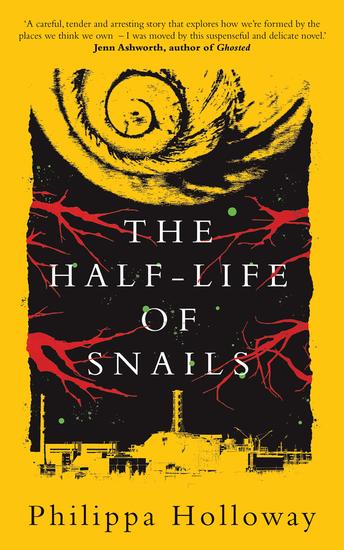
  • The Half-life of Snails - cover

    The Half-life of Snails

    Philippa Holloway

    • 0
    • 0
    • 0
    'a novel that shimmers with compassion... the author has crafted a tale that will linger longer than the half-life of many other books you will read this year.' – Alex Lockwood, author of The Chernobyl Privileges
    'A careful, tender and arresting story that explores how we're formed by the places we think we own – I was moved by this suspenseful and delicate novel.' – Jenn Ashworth, author of Ghosted
    Two sisters, two nuclear power stations, one child caught in the middle...
    When Helen, a self-taught prepper and single mother, leaves her young son Jack with her sister for a few days so she can visit Chernobyl's Exclusion Zone, they both know the situation will be tense. Helen opposes plans for a new power station on the coast of Anglesey that will take over the family's farmland, and Jennifer works for the nuclear industry and welcomes the plans for the good of the economy.
    But blood is thicker than heavy water, and both want to reconnect somehow, with Jack perhaps the key to a new understanding of one another.
    Yet while Helen is forced to face up to childhood traumas, and her worst fears regarding nuclear disaster, during a trip that sees her caught up in political violence and trapped in Chernobyl's Exclusion Zone during the 2014 Euromaidan revolution, Jennifer too must discover that even the smallest decision can have catastrophic and long-lasting effects, both within the nuclear industry, and within the home.
    And Jack isn't like other five-year olds... as they will both discover with devastating consequences.
    Voir livre
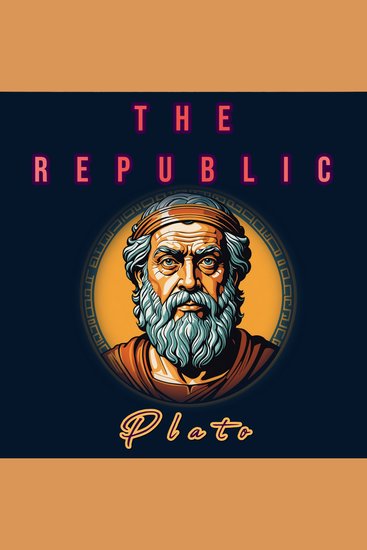
  • The Republic - cover

    The Republic

    Plato

    • 0
    • 0
    • 0
    The Republic (Greek: Politeia) is a Socratic dialogue, written by Plato around 380 BC, concerning the definition of (justice), the order and character of the just city-state and the just man, reason by which ancient readers used the name On Justice as an alternative title (not to be confused with the spurious dialogue also titled On Justice). The dramatic date of the dialogue has been much debated and though it must take place some time during the Peloponnesian War, "there would be jarring anachronisms if any of the candidate specific dates between 432 and 404 were assigned".    It is Plato's best-known work and has proven to be one of the most intellectually and historically influential works of philosophy and political theory. In it, Socrates along with various Athenians and foreigners discuss the meaning of justice and examine whether or not the just man is happier than the unjust man by considering a series of different cities coming into existence "in speech", culminating in a city (Kallipolis) ruled by philosopher-kings; and by examining the nature of existing regimes.    The participants also discuss the theory of forms, the immortality of the soul, and the roles of the philosopher and of poetry in society. Short Summary (Epilogue): X.1—X.8. 595a—608b. Rejection of Mimetic Art X.9—X.11. 608c—612a. Immortality of the Soul X.12. 612a—613e. Rewards of Justice in Life X.13—X.16. 613e—621d. Judgment of the Dead The paradigm of the city — the idea of the Good, the Agathon — has manifold historical embodiments, undertaken by those who have seen the Agathon, and are ordered via the vision. The centre piece of the Republic, Part II, nos. 2–3, discusses the rule of the philosopher, and the vision of the Agathon with the allegory of the cave, which is clarified in the theory of forms.    The centre piece is preceded and followed by the discussion of the means that will secure a well-ordered polis (City). Part II, no. 1, concerns marriage, the community of people and goods for the Guardians, and the restraints on warfare among the Hellenes. It describes a partially communistic polis. Part II, no. 4, deals with the philosophical education of the rulers who will preserve the order and character of the city-state. In Part II, the Embodiment of the Idea, is preceded by the establishment of the economic and social orders of a polis (Part I), followed by an analysis (Part III) of the decline the order must traverse. The three parts compose the main body of the dialogues, with their discussions of the "paradigm", its embodiment, its genesis, and its decline. The Introduction and the Conclusion are the frame for the body of the Republic.    The discussion of right order is occasioned by the questions: "Is Justice better than Injustice?" and "Will an Unjust man fare better than a Just man?" The introductory question is balanced by the concluding answer: "Justice is preferable to Injustice". In turn, the foregoing are framed with the Prologue (Book I) and the Epilogue (Book X). The prologue is a short dialogue about the common public doxai (opinions) about "Justice". Based upon faith, and not reason, the Epilogue describes the new arts and the immortality of the soul.
    Voir livre

  • Chained To The Desk - Workaholism And The Psychology of Behavioral Addiction - cover

    Chained To The Desk -...

    Brian Gibson

    • 0
    • 0
    • 0
    This audiobook is narrated by an AI Voice.   
    Chained to the Desk: Workaholism and the Psychology of Behavioral Addiction 
    In an age that glorifies hustle culture and celebrates busyness as a badge of honor, Chained to the Desk dares to ask a difficult question: When does dedication to work cross the line into addiction? 
    This groundbreaking book delves deep into the often-overlooked world of workaholism, a form of behavioral addiction that can be just as destructive as substance abuse yet often goes unnoticed, even rewarded. Beginning with a clear-eyed overview of what addiction truly is, the author builds a compelling case for understanding workaholism not simply as ambition or drive but as a psychological compulsion rooted in deeper emotional and personality patterns. 
    Through an engaging, accessible, and research-informed journey, readers will uncover: 
    •	The evolving landscape of modern addictions, including digital, performance-based, and socially reinforced behaviors 
    •	Why work is a necessary but potentially dangerous force in our lives 
    •	The behavioral signs and symptoms of workaholism—what to look for in yourself or others 
    •	How certain personality types are more vulnerable to this hidden addiction 
    •	The emotional, physical, and relational toll that chronic overwork can exact 
    With clarity and compassion, the author explains the psychology behind work addiction and offers insight into how to break free from its grip without abandoning your goals or success.
    Voir livre