Rejoignez-nous pour un voyage dans le monde des livres!
Ajouter ce livre à l'électronique
Grey
Ecrivez un nouveau commentaire Default profile 50px
Grey
Abonnez-vous pour lire le livre complet ou lisez les premières pages gratuitement!
All characters reduced
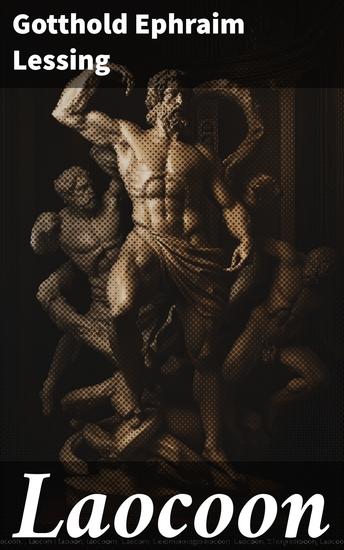
Laocoon - An essay upon the limits of painting and poetry - cover

Laocoon - An essay upon the limits of painting and poetry

Gotthold Ephraim Lessing

Maison d'édition: Good Press

  • 0
  • 0
  • 0

Synopsis

In "Laocoon," Gotthold Ephraim Lessing offers a groundbreaking exploration of the interplay between the arts, particularly poetry and visual art, through the lens of a detailed analysis of the classical Laocoön statue. Lessing's literary style is marked by clarity and precision, employing philosophical argumentation to dissect the differences in expression between visual and verbal mediums. Set within the context of the Enlightenment, this work engages with aesthetic theory, challenging the conventions of the time and paving the way for modern critical thought by addressing how emotions and meaning are conveyed differently in art forms. Lessing, a luminary of German literature and a key figure in the advent of German Romanticism, drew inspiration from his diverse intellectual background that encompassed philosophy, theology, and art. His deep engagement with classical works, evident in his upbringing and education, led him to examine the emotional and representational capacities of art, contributing to his argument in "Laocoon" that art should cater to its inherent strengths rather than try to mimic other genres. This seminal text is highly recommended for anyone interested in the philosophy of art and the dynamics of cultural expression. Lessing's insights remain pertinent, making "Laocoon" an essential read for scholars, artists, and anyone intrigued by the fundamental questions of aesthetics.
Disponible depuis: 02/03/2025.
Longueur d'impression: 210 pages.

D'autres livres qui pourraient vous intéresser

  • Hypnotic Gastric Band - A Complete Guide to Stop Food Addiction Lose Weight and Eat Healthy with Rapid Weight Loss Hypnosis for Women Meditation Self Esteem Confidence & Positive Affirmations - cover

    Hypnotic Gastric Band - A...

    Wanda J. Scott

    • 0
    • 0
    • 0
    The audiobook version of Hypnotic Gastric Band, written by renowned hypnotherapist Wanda J. Scott, offers a revolutionary approach to weight loss. Through a combination of hypnosis and the concept of gastric band surgery, listeners will discover effective methods to achieve their weight loss goals. 
    This audiobook provides listeners with a range of techniques and exercises designed to help them change their relationship with food and develop healthier eating habits. By using hypnosis to simulate the experience of gastric band surgery, listeners will learn how to feel full more quickly and reduce their portion sizes. 
    Unlike other weight loss books that offer quick-fix solutions, Hypnotic Gastric Band focuses on long-term results. The audiobook encourages listeners to make sustainable lifestyle changes that will help them maintain their weight loss over time. 
    Whether you're looking to shed a few pounds or make a significant change, Hypnotic Gastric Band is the perfect tool to help you achieve your goals. With its powerful combination of hypnosis and gastric band surgery techniques, this audiobook offers a unique and effective approach to weight loss that can help you achieve the lasting results you desire.
    Voir livre
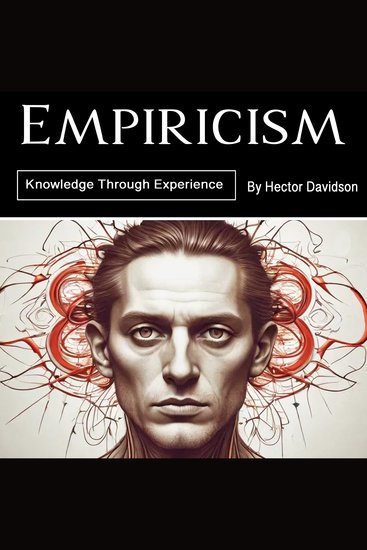
  • Empiricism - Knowledge Through Experience - cover

    Empiricism - Knowledge Through...

    Hector Davidson

    • 0
    • 0
    • 0
    Empiricism, as a philosophical doctrine, asserts that knowledge is primarily derived from sensory experience. This perspective contrasts sharply with rationalism, which emphasizes reason and innate knowledge. Empiricism has shaped our understanding of the world and influenced numerous fields, from the natural sciences to ethics and epistemology. The essence of empiricism lies in the conviction that the mind begins as a "blank slate" (tabula rasa) and that experience, rather than pre-existing ideas or concepts, forms the foundation of all knowledge. 
    At the heart of empiricist thought is the belief that all human knowledge starts with perception. We acquire information about the world through our senses—sight, hearing, touch, taste, and smell—which provide the raw data from which we form concepts and beliefs. For empiricists, knowledge is not something we discover internally, but something we gather from external reality. This view stands in contrast to the rationalist emphasis on a priori knowledge, which is independent of experience and accessible only through reason. 
    Empiricism's roots can be traced back to ancient philosophy, with early proponents like Aristotle, who argued that all knowledge comes from sensory observation. However, the modern development of empiricism is largely credited to three major figures: John Locke, George Berkeley, and David Hume. Locke introduced the idea of the mind as a tabula rasa, arguing that individuals are born without innate ideas and that all knowledge comes from experience. Berkeley took this further by suggesting that even the existence of the external world depends on perception, encapsulating the notion that "to be is to be perceived." Hume, the most radical empiricist of the three, questioned the very basis of causality and inductive reasoning, asserting that our beliefs in cause-and-effect relationships were not rationally justified but arose from habitual experience.
    Voir livre
  • Summary: The Creature from Jekyll Island - A Second Look at the Federal Reserve by G Edward Griffin: Key Takeaways Summary & Analysis - cover

    Summary: The Creature from...

    Brooks Bryant

    • 0
    • 0
    • 0
    Disclaimer: This is a summary book; not the official book & it does not accompany it. 
    Uncover the mysteries of the American financial system in our succinct summary of 'The Creature from Jekyll Island: A Second Look at the Federal Reserve' by G. Edward Griffin. This revealing exploration invites you on a journey into the shadowy corridors of power, shedding light on the origins and operations of the U.S Federal Reserve. 
    Griffin's probing examination raises critical questions about the true nature of this influential institution. Is the Federal Reserve a benign entity serving the public good or a clandestine machine that manipulates economies for the benefit of a select few?
    Voir livre
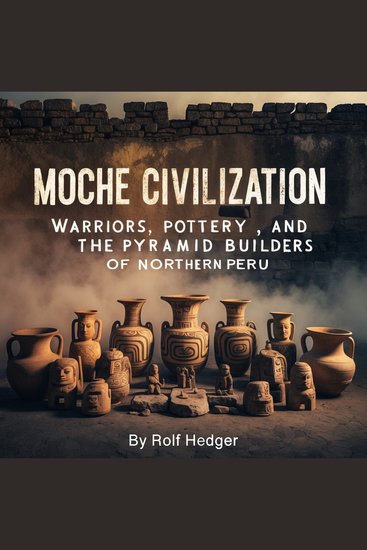
  • Moche Civilization - Warriors Pottery and the Pyramid Builders of Northern Peru - cover

    Moche Civilization - Warriors...

    Rolf Hedger

    • 0
    • 0
    • 0
    The Moche civilization emerged along the northern coast of present-day Peru, flourishing between approximately 100 and 750 CE. This society developed in a region marked by arid deserts, fertile river valleys, and proximity to the Pacific Ocean, which shaped its economy, culture, and political structure. The Moche were not a singular unified state but rather a collection of regional polities connected through shared traditions, artistic styles, and religious beliefs. Their rise was influenced by earlier Andean cultures, particularly the Cupisnique and Chavín, which had already laid the foundations for complex societies in the region. 
    The origins of the Moche civilization can be traced to the early centuries of the Common Era when small communities along the coast began to expand due to agricultural advancements and increasing social stratification. The region's rivers, fed by Andean runoff, allowed for irrigation-based farming that supported large populations. Over time, leaders emerged who controlled land, labor, and water resources, leading to the development of hierarchical societies. These early rulers likely solidified their power through religious authority, military strength, and their ability to organize large-scale construction projects. 
    One of the defining aspects of Moche civilization was its adaptation to the harsh environment. The coastal deserts of northern Peru posed challenges for sustaining large populations, yet the Moche mastered irrigation technology, channeling river water to expand arable land. This agricultural innovation provided surplus food, which in turn fueled urban growth, specialization of labor, and the rise of elite classes. Moche settlements grew into centers of political and religious activity, with monumental architecture such as pyramids and temples becoming focal points of their cities.
    Voir livre
  • How to Influence People - Analyze People Control Your Emotions and Your Body Language Enhance Your Mind Control Techniques Learn How to Make Friends and Take Control of Others (Beginner Guide 2022) - cover

    How to Influence People -...

    Wayne Frost

    • 0
    • 0
    • 0
    Every day of our lives, we are impacted by both the positive and negative... 
      
    Take a look at your smartphone and pay attention to the people around you. 
    They generally discuss unpleasant things occurring or what was mentioned on the news. 
      
    Influencing people necessitates a certain amount of control over them. 
      
      
    This guide will teach you: 
      
     The Persuasion Principles and How to Apply Them in Daily LifeWhat is the difference between influence and manipulation?The tools and tactics used to persuade others to act in a certain way. 
     Tips for being a better friend, parent, spouse, or businessman or woman describe the beliefs or mental habits that one should nurture to apply effective negotiating strategies in everyday life circumstances. 
                And Much More!.... 
      
      
    Go to the top of the page and click the BUY NOW button to Get Your Copy Right Now
    Voir livre
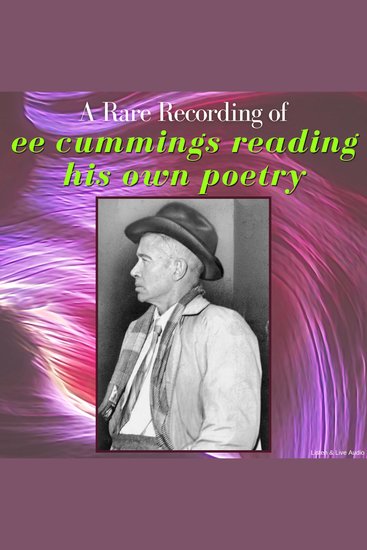
  • A Rare Recording of EE Cummings Reading His Own Poetry - cover

    A Rare Recording of EE Cummings...

    EE Cummings

    • 0
    • 0
    • 0
    Edward Estlin Cummings (October 14, 1894 - September 3, 1962), commonly known as e e cummings, was an American poet, painter, essayist, author, and playwright. During World War I, he worked as an ambulance driver and was imprisoned in an internment camp, which provided the basis for his 1922 novel The Enormous Room. The following year he published his first collection of poetry. Cummings wrote approximately 2,900 poems and is often regarded as one of the most important American poets of the 20th century. He is associated with modernist free-form poetry, and much of his work uses idiosyncratic syntax and lower-case spellings for poetic expression. In the following recordings, Cummings reads his poems "somewhere i have never travelled,gladly beyond" (1931), "next to of course god america i" (1926), "anyone lived in a pretty how town" (1940), "Buffalo Bill's (1920), "in Just–" (1920), i carry your heart with me(i carry it in)" (1952). The final audio clip is from a 1955 Cummings speech, "A Poet's Advice to Students."
    Voir livre