Rejoignez-nous pour un voyage dans le monde des livres!
Ajouter ce livre à l'électronique
Grey
Ecrivez un nouveau commentaire Default profile 50px
Grey
Abonnez-vous pour lire le livre complet ou lisez les premières pages gratuitement!
All characters reduced
Education Value Facts - cover

Education Value Facts

Glen Naturewise

Traducteur A AI

Maison d'édition: Publifye

  • 0
  • 0
  • 0

Synopsis

Education Value Facts explores how formal education shapes economic and social outcomes globally. It examines the tangible benefits of educational attainment, illustrating how investments in schooling correlate with individual and societal well-being. The book argues that education serves as a catalyst for positive change, driving economic growth, fostering social mobility, and promoting healthier societies.

 
Did you know that higher levels of education often lead to greater earning potential and improved living standards? Also, education positively influences social indicators like crime rates and civic engagement.

 
The book progresses from defining formal education and its metrics to presenting evidence-based research from sources like OECD and UNESCO. It analyzes the relationship between education and income, then broadens the scope to include social indicators. The book also explores the role of education in promoting global citizenship.

 
By integrating insights from economics, sociology, and public policy, Education Value Facts offers a comprehensive view, making it valuable for students, researchers, and policymakers interested in the societal impact of education.
Disponible depuis: 13/02/2025.
Longueur d'impression: 73 pages.


D'autres livres qui pourraient vous intéresser

  • Thus Spoke Zarathustra - Nietzsche’s Vision of Human Potential Power and Freedom - cover

    Thus Spoke Zarathustra -...

    Friedrich Nietzsche, Tim Zengerink

    • 0
    • 0
    • 0
    What if you could unlock your full potential, embrace freedom, and rise above limitations to live life on your own terms? 
    Thus Spoke Zarathustra: Nietzsche’s Vision of Human Potential, Power, and Freedom presents the groundbreaking philosophy of Friedrich Nietzsche, thoughtfully adapted for today’s listeners. 
    Originally written as a philosophical novel, Thus Spoke Zarathustra explores humanity’s potential for self-overcoming, freedom, and greatness. Through poetic language and powerful ideas, Nietzsche challenges us to question conventional morality, embrace individuality, and strive to become the “Übermensch”—the best version of ourselves. 
    This isn’t just a philosophical text—it’s a transformative guide to living boldly, thinking independently, and creating your own path. Whether you’re seeking personal growth, deeper meaning, or a sense of purpose, Nietzsche’s timeless insights provide clarity and empowerment. 
    What You’ll Discover: 
    - The Power of Self-Overcoming: Break free from limitations and strive for greatness. 
    - A Vision of Freedom: Explore personal liberation and authentic living. 
    - Nietzsche’s Key Philosophies: Understand the “Übermensch,” the will to power, and eternal recurrence. 
    - Clear, Accessible Language: Experience Nietzsche’s poetic masterpiece in a modern, listener-friendly translation. 
    Nietzsche’s work is a call to action: rise above conformity, embrace your potential, and live with courage and creativity. His visionary ideas have inspired countless thinkers, artists, and leaders—and now, it’s your turn to harness their power. 
    Download your copy today and begin transforming your life with Nietzsche’s visionary philosophy.
    Voir livre
  • The Trayvon Generation - cover

    The Trayvon Generation

    Elizabeth Alexander

    • 0
    • 0
    • 0
    *Named one of TIME magazine's Most Anticipated Titles of 2022*From a Pulitzer Prize finalist and New York Times bestselling author and poet comes a galvanizing meditation on the power of art and culture to illuminate America's unresolved problem with race.In the midst of civil unrest in the summer of 2020 and following the murders of George Floyd, Breonna Taylor, and Ahmaud Arbery, Elizabeth Alexander—one of the great literary voices of our time—turned a mother's eye to her sons’ and students’ generation and wrote a celebrated and moving reflection on the challenges facing young Black America. Originally published in the New Yorker, the essay incisively and lovingly observed the experiences, attitudes, and cultural expressions of what she referred to as the Trayvon Generation, who even as children could not be shielded from the brutality that has affected the lives of so many Black people. The Trayvon Generation expands the viral essay that spoke so resonantly to the persistence of race as an ongoing issue at the center of the American experience. Alexander looks both to our past and our future with profound insight, brilliant analysis, and mighty heart, interweaving her voice with groundbreaking works of art by some of our most extraordinary artists. At this crucial time in American history when we reckon with who we are as a nation and how we move forward, Alexander's lyrical prose gives us perspective informed by historical understanding, her lifelong devotion to education, and an intimate grasp of the visioning power of art. This breathtaking  book is essential reading and an expression of both the tragedies and hopes for the young people of this era that is sure to be embraced by those who are leading the movement for change and anyone rising to meet the moment.
    Voir livre
  • Letters to Milena - cover

    Letters to Milena

    Franz Kafka

    • 0
    • 0
    • 0
    The passionate but doomed epistolary love affair between a Czech translator and one of the greatest writers of the twentieth century, the author of The Metamorphosis and The Trial.  
      
    “Extraordinary … touching, horrifying, brilliant, sickly, [and] heartbreaking. … The most significant key we have for a reading of the author’s novels and short stories.”—The New York Times 
      
    In no other work does Franz Kafka reveal himself as in Letters to Milena, which begins as a business correspondence but soon develops into an epistolary love affair. Kafka’s Czech translator, Milena Jesenská, was a gifted and charismatic twenty-three-year-old who was uniquely able to recognize Kafka’s complex genius and his even more complex character. For thirty-six-year-old Kafka, she was “a living fire, such as I have never seen.” It was to Milena that he revealed his most intimate self and, eventually, entrusted his diaries for safekeeping.
    Voir livre
  • Rome’s Best Emperors: The History and Legacy of the Roman Empire’s Most Able Leaders - cover

    Rome’s Best Emperors: The...

    Editors Charles River

    • 0
    • 0
    • 0
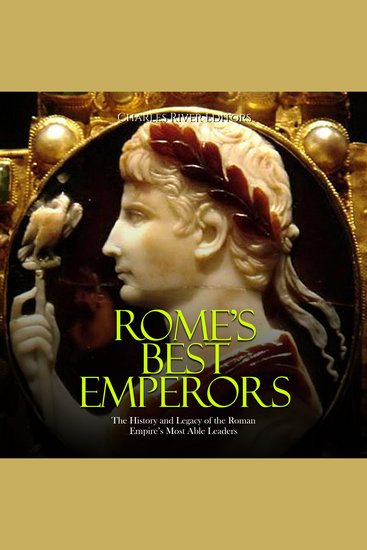
    The importance of Gaius Julius Caesar Augustus (or as he was known from birth, Gaius Octavius “Octavian” Thurinus) to the course of Western history is hard to overstate. His life, his rise to power, his political, and his social and military achievements all laid the foundations for the creation of an empire which would endure for almost five centuries, and whose traditions, laws, architecture and art continue to influence much of Europe and the world today. Octavian was the first true Roman Emperor, and the first man since the Etruscan Tarquins five centuries earlier to establish a successful hereditary ruling dynasty in what had been a proud Republic for over half a millennium. He was a canny strategist, an excellent orator, a fine writer, a generous patron of the arts and enthusiastic promoter of public works, but above all he was a master politician. Octavian’s great-uncle (and adoptive father) Julius Caesar was a great general, and his rival Mark Antony was a great soldier, but as a politician Octavian outmatched them all. He still stands in bronze on Rome’s Via dei Fori Imperiali to this day, along with the likes of Caesar, Hadrian, Trajan and Marcus Aurelius, and he is forever immortalized in all Western calendars as the patron of the month of August, which was dedicated to him when he was deified, following his death, as Divus Augustus.  
    	“The Five Good Emperors,” a reference to the five emperors who ruled the Roman Empire between 96 and 180 CE (Nerva, Trajan, Hadrian, Antoninus Pius, and Marcus Aurelius), was a term first coined by Machiavelli and later adopted and popularized by historian Edward Gibbon, who said that under these men, the Roman Empire “was governed by absolute power under the guidance of wisdom and virtue.” This period of 84 years is generally regarded as the high point of the Roman Empire, at least after Augustus.
    Voir livre
  • American Nation The: A History Vol 15 - Jacksonian Democracy 1829–1837 - cover

    American Nation The: A History...

    William MacDonald

    • 0
    • 0
    • 0
    A Dusty Tomes Audio BookIn Cooperation with Spoken Realms 
    Jacksonian Democracy 1829–1837 by William MacDonald, LLD. Professor of History in Brown University. Published in 1906 by Harper and Brothers. 
    Narrated by Joseph Tabler. This book is in the public domain. It is read ‘as written.' 
    Volume 15 of 27 in The American Nation: A History From Original Sources by Associated Scholars published by Harper Brothers (1904–1918). Edited by Albert Bushnell Hart, Professor of History at Harvard University. 
    In the Editor’s Introduction to the Series: That a new history of the United States is needed, extending from the discovery down to the present time hardly needs a statement. No such comprehensive work by a competent writer is now in existence. Individual writers have treated only limited chronological fields. Meantime there is a rapid increase of published sources and serviceable monographs based on material hitherto unused. On the one side, there is a necessity for an intelligent summarizing of the present knowledge of American history by trained specialists; on the other hand, there is a need for a complete work, written in an untechnical style, which shall serve for the instruction and the entertainment of the general reader. 
    From the Editor’s Introduction to Volume Fifteen: Hardly any year in American history so distinctly marks the transition from one era to another as 1829. The character of Andrew Jackson is so distinct and so aggressive that few writers upon the period can resist the temptation to group the events of his administration around his personality. This temptation Professor MacDonald has resisted. His conception of the period is that it witnessed the fruition of national policies, nearly all of which would have come up and would have divided the nation had there been no Andrew Jackson. At the same time, he shows how that dominant personality determined when and how most of the great questions should arise; and how Jackson hammered out a series of political principles that became the foundation of a new democratic party. 
    From the Author’s Preface: The present narrative has been kept, for the most part, strictly within the limits of the eight years of Jackson’s administration. It has not, however, been possible in all cases to avoid summarizing the early course of movements having important development within this period, though I have tried to avoid undue overlapping. The subject of slavery is, by the plan of the series, excluded altogether. As I am not writing a life of Jackson, but an account of his time, many personal details have also been omitted. 
    The volume is, in part, the outcome of special studies, of which the fruit has been presented in lectures given in the ordinary course of instruction at Bowdoin College and Brown University, and to summer classes at Harvard, Cornell, and the University of Chicago.  
    Editor’s IntroductionAuthor’s PrefaceI. The United States in the Thirties (1829–1837)II. Early Public Life of Jackson (1767–1823)III. Election of 1828 (1824–1829)IV. The Beginning of Personal Politics (1829–1837)V. Tariff and Nullification (1816–1829)VI. The Great Debate on the Constitution (1829–1830)VII. The Bank of the United States (1823–1832)VIII. Internal Improvements (1796–1837)IX. Nullification in South Carolina (1829–1833)X. Indian Affairs (1825–1837)XI. Election of 1832 (1830–1833)XII. Foreign Affairs under Jackson (1829–1837)XIII. Removal of the Deposits (1832–1837)XIV. Changes and Reforms (1829–1837)XV. The States in Jackson’s Time (1829–1837)XVI. Public Lands and the Specie Circular (1829–1837)XVII. The Election of 1836 (1836–1837)XVIII. The Personality of Jackson 
    Dusty Tomes Audio Books are public domain books retrieved from the ravages of time. Available for the first time in this format for your pleasure and consideration. 
    Narrator’s Note: I read only as written. These old books were once solid sellers for bookmen of their time. The
    Voir livre
  • Dome of the Rock and the Church of the Holy Sepulchre The: The History of Medieval Jerusalem’s Most Famous Sites - cover

    Dome of the Rock and the Church...

    Charles River Editors

    • 0
    • 0
    • 0
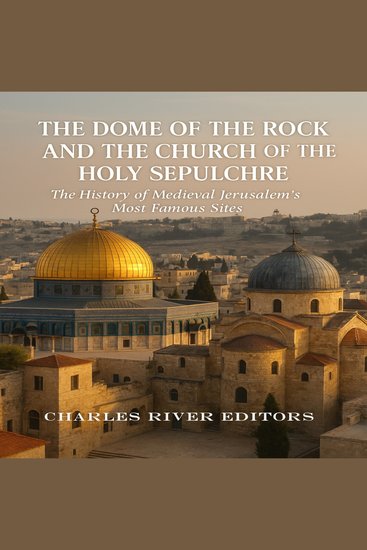
    The most famous church in Jerusalem for nearly 2,000 years, the Church of the Holy Sepulchre, often called the Church of the Resurrection, was built in the era of St. Constantine, and the church as a structure has no history separable from the city of Jerusalem and its environs. It is venerated as being on the site where Jesus was crucified and buried, and naturally, making it a crucial pilgrimage site for Christians, and it is now the home of the Greek Orthodox Jerusalem Patriarchate. Moreover, it was the site of many important councils, some of which altered Christian history forever. In short, the Sepulchre was and is synonymous with Jerusalem, and it was essentially the nodal center of the city.  
    Naturally, the Church has had a turbulent history just as Jerusalem has. The evidence that Christ's tomb was at that location was backed by the apostolic tradition and basic common sense. The local population had venerated this site since apostolic times, but so much had been destroyed in the ensuing centuries that records which might have been consulted were likely long lost already.  
    	Among the world’s most recognizable man-made structures, the Dome of the Rock – known in Arabic as the Qubbat as-Sakara – is also one of its most mysterious. Although much of the Dome’s construction, reconstruction, and later additions are well-known from historical texts and archeological work, what it represents, why it was built where it was, and even its use remain the subject of scholarly controversy. Known for its immense size and beauty, and also for being located in the middle of Jerusalem, one of the world’s holiest cities, the Dome of the Rock has been the focus of political leaders who wished to legitimize their rule, religious warriors who believed that it empowered their weapons, and pilgrims who thought it was a site of salvation and enlightenment.
    Voir livre