Rejoignez-nous pour un voyage dans le monde des livres!
Ajouter ce livre à l'électronique
Grey
Ecrivez un nouveau commentaire Default profile 50px
Grey
Abonnez-vous pour lire le livre complet ou lisez les premières pages gratuitement!
All characters reduced
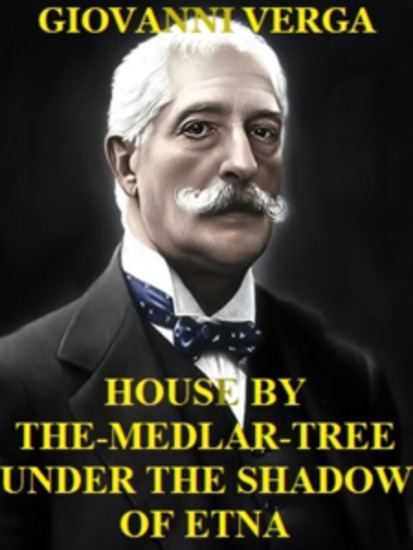
The House by the Medlar Tree Under the shadow of Etna - Illustrations - cover

Nous sommes désolés! L'éditeur ou l'auteur a retiré ce livre de notre catalogue. Mais ne vous inquiétez pas, vous pouvez toujours choisir les livres que vous souhaitez parmi plus de 500 000 titres!

The House by the Medlar Tree Under the shadow of Etna - Illustrations

Giovanni Verga

Maison d'édition: Youcanprint

  • 0
  • 0
  • 0

Synopsis

The House by the Medlar-Tree is the best known novel by Giovanni Verga. In Sicily lives the Toscano family, who, has been nicknamed (for antiphrasis) the Malavoglia ("The Lazy Ones"). The main source of family income is la Provvidenza (the Providence), which is a small fishing boat. Padron Ntoni (the head of family) attempts a business venture and buys a large amount of lupins. A film based on the story of The House by the Medlar-Tree, La Terra Trema was directed by Luchino Visconti. The stories collected in Under the Shadow of Etna are drawn from the Sicily of Giovanni Verga's childhood, reported at the time to be the poorest place in Europe. Here it is grim reality. The poor and weak go relentlessly to the wall.
Disponible depuis: 05/02/2025.

D'autres livres qui pourraient vous intéresser

  • The Poisoned Pen - cover

    The Poisoned Pen

    Arthur B. Reeve

    • 0
    • 0
    • 0
    "The Poisoned Pen" by Arthur B. Reeve is a detective novel that likely originated in the early 20th century. The story follows Craig Kennedy, a brilliant professor and detective, who is called to investigate a high-profile poisoning case involving a young actress named Vera Lytton. As he delves deeper into the mystery, Kennedy teams up with his companion, Walter Jameson, to uncover the intricate web of deceit and motives surrounding Lytton's tragic death, exploring themes of conspiracy and justice. 
    At the beginning of the novel, Kennedy and Jameson are hastily preparing to travel to the small town of Danbridge, which is currently embroiled in a scandal due to the poisoning of Vera Lytton. They discuss the shocking details of her case, including the involvement of various characters, such as the young doctor, Dr. Dixon, who is considered a suspect, and the potential conspiracy against him orchestrated by others. 
    As they gather information from local authorities and witnesses, Kennedy demonstrates his keen deductive skills while contemplating the implications of a mysterious note linked to Dr. Dixon that was found near the victim. The opening sets the stage for an intricate narrative full of twists, revealing the social dynamics and manipulative backgrounds that could lead to such a heinous crime.
    Voir livre
  • Hanuman - Son Of The Wind Beloved Of Ram - cover

    Hanuman - Son Of The Wind...

    Sripad Jagannatha Dasa

    • 0
    • 0
    • 0
    "Sripad Jagannatha Dasa guides us into the sacred heart space of this life-changing hymn as only a dedicated lifelong Ram bhakta may. A self-realized yogi - a wonderful trip!." The Yoga Journal 
     
    "I bow to the Hanuman who is swifter than the mind and wind. The sacred one who has controlled his senses, the one who is the epitome of learning and wisdom. Salutations to the son of the God of Air and chief of the Vanaras, I pray always to Lord Hanuman." 
     
    The Hanuman Chalisa is a Vedic devotional hymn (stotra) in praise of Hanuman authored by the poet sage Tulsi Das. The word "ch?l?s?" means the number forty in Sanskrit, as the Hanuman Chalisa has forty verses. Lord Hanuman is a great devotee of Sri Ram and one of the central characters in the epic, Ramayan. Hanuman is also an incarnation of Shiva. The qualities of Hanuman - his strength, courage, wisdom, celibacy, devotion to Lord Ram, and the many names by which he is known are all in the Hanuman Chalisa. Devotional recitation of this sacred prayer is done by millions every day. 
     
    Hanumanji is the greatest devotee of Sri Ram and an incarnation of the mighty Lord Shiva. He is therefore the epitome of ultimate devotion manifested with its full glory unchallenged in all times and places. By the power of his devotion to Sita Ram, he easily achieved supreme status as the perfect devotee and servitor. 
     
    Lord Hanuman is the eternal link between all devotees and Ram whom he serves, inspires, and protects. By honoring Hanuman one is blessed with all kinds of siddhis including power, valor, prosperity, and devotion. 
    Reciting or hearing the Hanuman Chalisa infuses one with unlimited energy and prana. This sacred mantra also increases a person's resilience and they emerge victorious in every challenging situation.
    Voir livre
  • A Middle-Sized Artist - From their pens to your ears genius in every story - cover

    A Middle-Sized Artist - From...

    Charlotte Perkins Gilman

    • 0
    • 0
    • 0
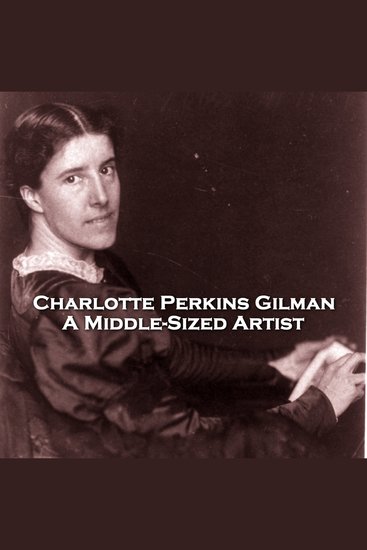
    Charlotte Perkins Gilman was born on 3rd July 1860 in Hartford, Connecticut, to an unaffectionate mother and a father who abandoned her and her older brother to a life of poverty. 
    Inevitably her schooling was limited and by 15 she had attended seven different schools but received only four years education.  However Charlotte was resourceful and did spend time with her father’s aunts – the suffragist Isabella Beecher Hooker and the ‘Uncle Tom Cabin’s’ author, Harriet Beecher Stowe as well as many hours at the public library studying ancient civilisations. 
    In 1878, she enrolled in classes at the Rhode Island School of Design where she met Martha Luther and they developed a close relationship until Luther married in 1881. Charlotte was devastated and detested romance and love until she met and married the artist Charles Walter Stetson.  
    Their only child, Katharine Beecher Stetson, was born in 1885 but left Charlotte with post-natal depression, then often dismissed as a case of hysteria or nerves.  Unsuited to domestic life she ruptured her life and moved to California with Katherine.  She divorced in 1894 and then sent Katharine east to live with her father and his second wife confirming that his paternal rights be acknowledged and that Katherine establish a relationship with her father. 
    After her mother died in 1893, Charlotte moved back east and became involved with her first cousin, Wall Street attorney, Houghton Gilman who she married in 1900. After his death she moved back to California, where Katherine now lived.   
    Her most popular story is ‘The Yellow Wallpaper’ which touched on her own post-partum depression and underlined the need for women to be responsible for their mental and physical well-being, as the narrator is ordered by her husband/doctor to take compete rest in her room where she is isolated and becomes obsessed with the revolting yellow wallpaper.   
    She wrote other notable short stories the best of which we also include.   
    Charlotte lectured widely for social reform, wrote important non-fiction works that questioned our patriarchal system and left a legacy as a leading and positive spokesperson for feminism.  
    She was diagnosed with incurable breast cancer in 1932 and, as she wrote in her suicide note and autobiography, she ‘chose chloroform over cancer’    
    Charlotte Perkins Gilman took her own life on 17th August 1935, aged 75, in Pasadena, California.
    Voir livre
  • The Petchenyeg - cover

    The Petchenyeg

    Anton Chekhov

    • 0
    • 0
    • 0
    The story was written during Chekhov's stay in Nice.  It was first published on November 2, 1897, in issue No. 303 of Russkikh Vedomosti. Chekhov later included an edited version of the story in the ninth volume of his collection of works, published by Adolf Marx in 1899-1901.
    Voir livre
  • Tales For Every Season - cover

    Tales For Every Season

    Ivan Bunin

    • 0
    • 0
    • 0
    One of the last true classics of Russian literature and 1933 Nobel Laureate for literature, Ivan Bunin brings you a series of relationship tales as diverse as the seasons and far more engrossing.
    Voir livre
  • A Capitalist - From their pens to your ears genius in every story - cover

    A Capitalist - From their pens...

    George Gissing

    • 0
    • 0
    • 0
    George Robert Gissing was born on November 22nd, 1857 in Wakefield, Yorkshire.  
    He was educated at Back Lane School in Wakefield. Gissing loved school. He was enthusiastic with a thirst for learning and always diligent.  By the age of ten he was reading Dickens, a lifelong hero. 
    In 1872 Gissing won a scholarship to Owens College. Whilst there Gissing worked hard but remained solitary. Unfortunately, he had run short of funds and stole from his fellow students. He was arrested, prosecuted, found guilty, expelled and sentenced to a month's hard labour in 1876. 
    On release he decided to start over.  In September 1876 he travelled to the United States. Here he wrote short stories for the Chicago Tribune and other newspapers. On his return home he was ready for novels. 
    Gissing self-published his first novel but it failed to sell.  His second was acquired but never published. His writing career was static.  Something had to change.  And it did. 
    By 1884 The Unclassed was published.  Now everything he wrote was published. Both Isabel Clarendon and Demos appeared in 1886. He mined the lives of the working class as diligently as any capitalist. 
    In 1889 Gissing used the proceeds from the sale of The Nether World to go to Italy. This trip formed the basis for his 1890 work The Emancipated. 
    Gissing's works began to command higher payments. New Grub Street (1891) brought a fee of £250.  
    Short stories followed and in 1895, three novellas were published; Eve's Ransom, The Paying Guest and Sleeping Fires. Gissing was careful to keep up with the changing attitudes of his audience.  
    Unfortunately, he was also diagnosed as suffering from emphysema. The last years of his life were spent as a semi-invalid in France but he continued to write. 1899; The Crown of Life. Our Friend the Charlatan appeared in 1901, followed two years later by The Private Papers of Henry Ryecroft. 
    George Robert Gissing died aged 46 on December 28th, 1903 after catching a chill on a winter walk.
    Voir livre