Begleiten Sie uns auf eine literarische Weltreise!
Buch zum Bücherregal hinzufügen
Grey
Einen neuen Kommentar schreiben Default profile 50px
Grey
Jetzt das ganze Buch im Abo oder die ersten Seiten gratis lesen!
All characters reduced
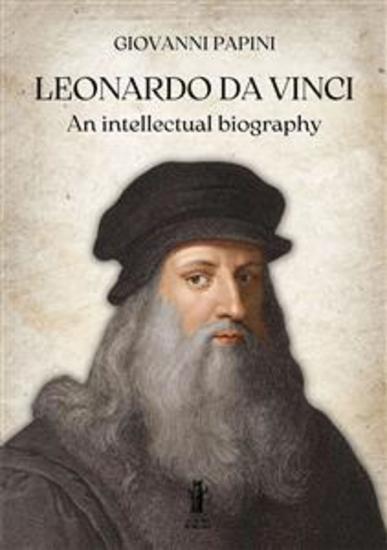
Leonardo Da Vinci an intellectual biography - cover

Leonardo Da Vinci an intellectual biography

Giovanni Papini

Verlag: Edizioni Aurora Boreale

  • 0
  • 0
  • 0

Beschreibung

Giovanni Papini, journalist, essayist, novelist, writer, poet, literary critic and philosopher, was a controversial literary figure of the early and mid-twentieth century and the earliest and most enthusiastic representative and promoter of Italian pragmatism.
Due to his ideological choices, Papini’s work was almost forgotten after his death, although it was later re-evaluated and appreciated again: in 1975, Jorge Luis Borges called him an “undeservedly forgotten” author.
In 1913 he published his essay Ventiquattro cervelli (“Twenty four brains”), in which he reviewed, with a critical slant and with great philosophical scrutiny, the life and works of great personalities such as Dante Alighieri, Leonardo Da Vinci, George Berkeley, Herbert Spencer, Friedrich Nietzsche, Jonathan Swift and, finally, himself!
«He is a pagan ascetic, a purified mystic, who chose to ascend the heights of intellectual ecstasy by the two great paths of art and knowledge. His paintings are but memories of visions he sought to fix in color that he might rise still higher. His observations and his speculations are but doors through which he passed to behold the secrets of nature to discover throughout the world the pulsing of that life which he perceived, and thus to satisfy the perpetual desire of souls that are incomplete».
Verfügbar seit: 05.01.2023.

Weitere Bücher, die Sie mögen werden

  • Cleopatra’s Needles - The Lost Obelisks of Egypt - cover

    Cleopatra’s Needles - The Lost...

    PhD Bob Brier

    • 0
    • 0
    • 0
    In the half-century between 1831 and 1881 three massive obelisks left Egypt for new lands. Prior to these journeys, the last large obelisk moved was the Vatican obelisk in 1586—one of the great engineering achievements of the Renaissance. Roman emperors moved more than a dozen, but left no records of how they did it. The nineteenth-century engineers entrusted with transporting the obelisks across oceans had to invent new methods, far from certain that they would work. As the three obelisks, bound for Paris, London, and New York, sailed towards their new homes, the world held its breath. Newspapers reported the obelisks' daily progress, complete with illustrations of the heroic deeds of the engineers and crews struggling under nearly impossible conditions. When the obelisks arrived safely in their new homes, bands played Cleopatra's Needle Waltz and silver obelisk pencils dangled from fashionable ladies' necks. 


    This turbulent era, caught up in obelisk mania, is recreated by Bob Brier in all its glory. Amid tales of engineering dexterity and naval endurance, the individuals involved in transporting the obelisks and receiving them in their future homes are brought to life through their letters, diaries, and newspaper articles. This book will fascinate all those interested in Egypt, its iconic monuments, and the history of great endeavor.
    Zum Buch
  • Information Science - The Basics - cover

    Information Science - The Basics

    Judith Pintar, David Hopping

    • 0
    • 0
    • 0
    Information Science: The Basics provides an accessible introduction to the multifaceted field of Information Science (IS). 


    Inviting listeners to explore a modern field of study with deep historical foundations, the book begins by considering the complexities of the term "information" and the information life cycle from classification to preservation. Each chapter examines a different area within IS, surveying its history, technologies, and practices with a critical eye. This interdisciplinary field incorporates a wide range of approaches which it shares with humanities, social science, and technology fields. What makes IS unique is its emphasis on the connections between information, technology, and society. The need to share information more effectively in response to social, environmental, and biomedical challenges has never been so urgent; the volume discusses the risks as well as benefits that come with the emerging technologies that make it possible. The book also explores how IS, with its long-standing commitment to intellectual freedom and digital inclusion, and its keen attention to the protection of privacy, data ethics, and algorithmic transparency, can contribute to the creation of a more open and equitable society.
    Zum Buch
  • Good Gimmicks For Breaking Bad Habits - Motivational and Effective Tips to Quit Bad Habits - cover

    Good Gimmicks For Breaking Bad...

    John Maverick, Van Johnson

    • 0
    • 0
    • 0
    We shape our environment, and habits shape us. The key to personal development is understanding habit formation, which is the natural process in which behaviors are repeated over time and become automatic or even an Atomic Habit. You will learn that habits can begin without your intention; also, the Habits of Highly Effective People are intentional and long-lasting. "Making Good Habits Breaking Bad Habits" is also deliberately cultivated or destroyed to conform to one's personal goals and objectives. Bad habits and good habits are formed by a process in which behavior becomes habitual due to repetitive actions. The term NLP or (Neuro-Linguistic Programming) also can create Good Habits while Breaking Bad Habits. The process can be slow or quick, depending on factors such as the type of habit or the individual.  
    You will learn about 
    •	KEYSTONE HABITS 
    •	FACTS ABOUT HABITS 
    •	UNDERSTANDING HOW OUR MINDS WORK 
    •	THE DRASTIC CHANGE MYTH ABOUT HABITS 
    •	THE OPTIMAL GROWTH RATE 
    •	THE BEHAVIOR CHANGE PROBLEM 
    •	HABITS OF THE MIND 
    Habits can make or break a person's life. Good habits can lead to happiness and self-actualization, whilst bad habits inhibit a person's quality of life, resulting in depression and failure.  
    This self-help book will teach you everything about habits, Changing Your Habits, habit formation, and much more. Now is the time to learn how to destroy that bad habit once and for all.   
    Let's get started.
    Zum Buch
  • Victories Never Last - Reading and Caregiving in a Time of Plague - cover

    Victories Never Last - Reading...

    Robert Zaretsky

    • 0
    • 0
    • 0
    In any time of disruption or grief, many of us seek guidance in the work of great writers who endured similar circumstances. During the first year of the COVID-19 pandemic, historian and biographer Robert Zaretsky did the same while also working as a volunteer in a nursing home in south Texas. In Victories Never Last Zaretsky weaves his reflections on the pandemic siege of his nursing home with the testimony of six writers on their own times of plague: Thucydides, Marcus Aurelius, Michel de Montaigne, Daniel Defoe, Mary Shelley, and Albert Camus, whose novel The Plague provides the title of this book. 


    Zaretsky delves into these writers to uncover lessons that can provide deeper insight into our pandemic era. At the same time, he goes beyond the literature to invoke his own experience of the tragedy that enveloped his Texas nursing home, one which first took the form of chronic loneliness and then, inevitably, the deaths of many residents whom we come to know through Zaretsky's stories. In doing so, Zaretsky shows the power of great literature to connect directly to one's own life in a different moment and time. 


    For all of us still struggling to comprehend this pandemic and its toll, this book serves as a thoughtful and down-to-earth guide to the many ways we can come to know and make peace with human suffering.
    Zum Buch
  • Islamic Relics: The History of Some of the Holiest Items in Islam - cover

    Islamic Relics: The History of...

    Editors Charles River

    • 0
    • 0
    • 0
    Muslim relics have become sought after relatively recently, since in the tradition of Islam it is customary to bury the deceased together with his belongings. However, many religious relics have rather controversial origins. Sometimes the faithful sincerely worship artful forgeries masquerading as holy relics and things that supposedly belonged to saints. The real sanctuaries are carefully guarded and are not always accessible to believers. They are brought out for public viewing on especially festive days. It is often represented as creating a special ritual.  
    	It is curious that the attitude towards such relics gradually changed over the centuries. If, at first, they were considered amulets used by private individuals, then over time their purpose and comprehension took on a different character. Most notably, the possession of the relics of the prophet began to be considered one of the arguments in favor of the appointment of the Caliph. The concentration of several relics in one mosque immediately sharply increased, in the eyes of the believers, the piety of such a mosque; this, in turn, immediately affected the growth of its wealth and political influence. Thus, in the published catalog of relics stored in the former Badshahi mosque of the Mughal state in Lahore (now Pakistan), there are 28 items: seven belonged to the prophet himself, three to the son-in-law of the prophet Ali, two to the daughter of the prophet Fatima, five to the grandson of the prophet Hussein, etc. It is believed that some of these items were taken out by Timur after the capture of Damascus, and some were donated by Sultan Bayazid to Timur's descendant, Babur. After the fall of the Mughal dynasty in India, they were first in private possession in the second half of the 19th century. In different ways, they came to the Lahore Mosque.
    Zum Buch
  • Summary: Dare to Lead - Brave Work Tough Conversations Whole Hearts By Brené Brown: Key Takeaways Summary and Analysis - cover

    Summary: Dare to Lead - Brave...

    Brooks Bryant

    • 0
    • 0
    • 0
    DISCLAIMER: THIS IS NOT THE OFFICIAL BOOK. 
    This is a summary, & it does not accompany the official 
    "Dare to Lead" by Brené Brown challenges conventional notions of leadership by emphasizing that true leadership isn't about titles or power but about recognizing and developing the potential in people and ideas. Brown contends that daring leadership involves curiosity, asking the right questions, sharing power, embracing vulnerability, and engaging in tough conversations when necessary. 
    In a world marked by scarcity and uncertainty, where machines and AI are taking on more tasks, Brown argues that human traits like empathy, connection, and courage are what leaders should focus on developing. Drawing from her extensive research and experiences working with leaders globally, she addresses the universal question of how to cultivate braver and more daring leaders while embedding a culture of courage. 
    In her characteristic no-nonsense style, Brown identifies four teachable and measurable skill sets that constitute daring leadership. She emphasizes that choosing courage over comfort is a challenging but essential endeavor and encourages readers to show up with their whole hearts in their leadership roles. Whether you're familiar with Brené Brown's previous work or new to her ideas, "Dare to Lead" is a valuable resource for anyone seeking to step up and become a brave leader.
    Zum Buch