Rejoignez-nous pour un voyage dans le monde des livres!
Ajouter ce livre à l'électronique
Grey
Ecrivez un nouveau commentaire Default profile 50px
Grey
Abonnez-vous pour lire le livre complet ou lisez les premières pages gratuitement!
All characters reduced
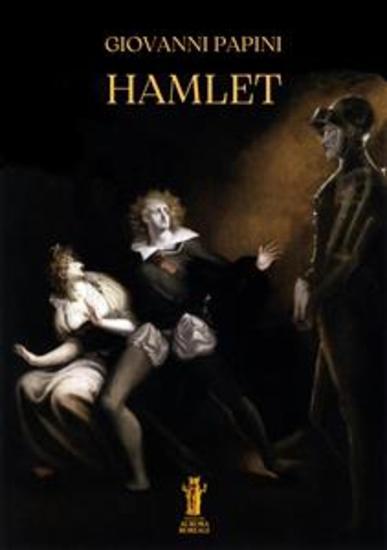
Hamlet - cover

Hamlet

Giovanni Papini

Maison d'édition: Edizioni Aurora Boreale

  • 0
  • 0
  • 0

Synopsis

Giovanni Papini, journalist, essayist, novelist, writer, poet, literary critic and philosopher, was a controversial literary figure of the early and mid-twentieth century and the earliest and most enthusiastic representative and promoter of Italian pragmatism.Due to his ideological choices, Papini’s work was almost forgotten after his death, although it was later re-evaluated and appreciated again: in 1975, Jorge Luis Borges called him an “undeservedly forgotten” author.In 1913 he published his essay Ventiquattro cervelli (“Four and Twenty Minds”), in which he reviewed, with a critical slant and with great philosophical scrutiny, the life and works of great personalities of history and literature such as Dante Alighieri, Leonardo Da Vinci, George Berkeley, Herbert Spencer, Friedrich Nietzsche, and, finally, himself!From Four and Twenty Minds, translated into English by Ernest Hatch Wilkins and published in the United States in 1922, we have drawn the study Hamlet, which today we propose to modern readers. It’s a short essay dedicated to the controversial Prince Hamlet of Denmark, protagonist of one of the most famous William Shakespeare's tragedy, written in 1916, for the third centenary of Shakespeare’s death.
Disponible depuis: 08/01/2024.

D'autres livres qui pourraient vous intéresser

  • Alexander the Great - cover

    Alexander the Great

    Jacob Abbott

    • 0
    • 0
    • 0
    "Alexander the Great  was a king of the ancient Greek kingdom of Macedon. He succeeded his father Philip II to the throne in 336 BC at the age of 20 and spent most of his ruling years conducting a lengthy military campaign throughout Western Asia, Central Asia, parts of South Asia, and Egypt. By the age of 30, he had created one of the largest empires in history, stretching from Greece to northwestern India12.    Here are some key points about Alexander the Great:    Military Conquests: Alexander was undefeated in battle and is widely considered to be one of history's greatest and most successful military commanders. His campaigns included victories at Issus and Gaugamela, where he overthrew Darius III and conquered the entire Achaemenid Empire.    Education    Education: Until the age of 16, Alexander was tutored by the philosopher Aristotle.  Empire Building: He expanded his empire through relentless military campaigns, forging connections between different cultures and leaving a lasting impact on the regions he conquered.    Alexander's Balkan campaign    Legacy: Alexander's legacy extends beyond military conquests. He promoted the fusion of Greek and Persian cultures, leading to the Hellenistic period. His influence on art, architecture, and literature reverberated for centuries.    Death of Alexander the Great    Death: Alexander died in Babylon at the age of 32, leaving behind a legacy that continues to captivate historians and enthusiasts alike."
    Voir livre
  • Leon Trotsky - cover

    Leon Trotsky

    Kelly Mass

    • 0
    • 0
    • 0
    Leon Trotsky was a Ukrainian-Russian Marxist revolutionary, political thinker, and political leader who lived from November the 7th, in the year 1879 till August the 21st 1940. He developed a variation of Marxism referred to as Trotskyism after being a communist ideologically.Trotsky accepted Marxism after moving to Nikolayev in the year 1896, where he was born to a wealthy Ukrainian-Jewish family in Yanovka (now Bereslavka, Ukraine). He was detained and banned to Siberia by Tsarist authorities in the year 1898 for advanced activity. In the year 1902, he got away Siberia for London, where he ended up being good friends with Vladimir Lenin. At the time of the Russian Social Democratic Labour Party's preliminary organizational split in the year 1903, he supported Julius Martov's Mensheviks against Lenin's Bolsheviks. Trotsky was locked up and deported to Siberia after helping to prepare the unsuccessful Russian Revolution of 1905. He got away again and operated in the U.K., Austria, Switzerland, France, Spain, and the U.S. for the next 10 years. After the Tsarist monarchy was toppled in the February Revolution of 1917, Trotsky went back to Russia and signed up with the Bolshevik faction as a leader. He was a popular figure in the November 1917 October Revolution, which deposed the new Provisional Federal government, as head of the Petrograd Soviet.Let’s see what else Leon Trotsky did in his life.
    Voir livre
  • Baron Munchausen - cover

    Baron Munchausen

    Rudolf Erich Raspe

    • 0
    • 0
    • 0
    Baron Munchausen is a popular German fairy tale. Baron Munchausen likes to tell everyone about his travels. The only thing is his stories seems very unlikely, he is always exaggerating everything... The moral of the story is: people will see through your lies. Recommended for age 3+.
    Voir livre
  • A Reading of the Inaugural Address of President George Washington - cover

    A Reading of the Inaugural...

    President George Washington

    • 0
    • 0
    • 0
    George Washington (February 22, 1732 - December 14, 1799) was a Founding Father and the first president of the United States, serving from 1789 to 1797. As commander of the Continental Army, Washington led Patriot forces to victory in the American Revolutionary War against the British Empire. He is commonly known as the Father of His Country for his role in bringing about American independence. The following is a reading of President Washington's inaugural address delivered on April 30, 1789.
    Voir livre
  • Songs from a Poor Mother's Tears - cover

    Songs from a Poor Mother's Tears

    Raymond Sturgis

    • 0
    • 0
    • 0
    Donald Trump and the Republican party misunderstand and miscalculate the conditions of the poor. Since poverty destroys everything that psychologically and physically makes a person whole, it induces impoverished individuals to commit crimes. President Donald Trump and the Republican party, have reduced food benefits for poor Americans, and want to cut social security benefits and health care for poor people while ignoring safe restrictions for our water and environment. The poor condition of people the world over should arouse the conscience of governments to pay more attention to the poor and homeless people of this great nation. This book is not to criticize or point fingers; however, it mainly corroborates the lives of people who are sadly ignored as many of us waste money on vices that poor Americans can use. Now that the United States Supreme Court has decided that homeless people can no sleep on the streets or in parks, it strains their resolve to live from day to day.
    Voir livre
  • Taming the Octopus - The Long Battle for the Soul of the Corporation - cover

    Taming the Octopus - The Long...

    Kyle Edward Williams

    • 0
    • 0
    • 0
    The untold story of how efforts to hold big business accountable changed American capitalism. 


    In this vivid and surprising history, we meet twentieth-century activists, investors, executives, and workers who fought over a simple question: Is the role of the corporation to deliver profits to shareholders, or something more? On one side were "business statesmen" who believed corporate largess could solve social problems. On the other were libertarian intellectuals such as Milton Friedman and his oft-forgotten contemporary, Henry Manne, whose theories justified the ruthless tactics of a growing class of corporate raiders. But Kyle Edward Williams reveals that before the "activist investor" emerged as a capitalist archetype, Civil Rights groups used a similar playbook for different ends, buying shares to change a company from within. 


    As a rising tide of activists pushed corporations to account for societal harms from napalm to environmental pollution to inequitable hiring, a new idea emerged: that managers could maximize value for society while still turning a maximal profit. This elusive ideal, "stakeholder capitalism," still dominates our headlines today. Williams's necessary history equips us to reconsider democracy's tangled relationship with capitalism.
    Voir livre