Begleiten Sie uns auf eine literarische Weltreise!
Buch zum Bücherregal hinzufügen
Grey
Einen neuen Kommentar schreiben Default profile 50px
Grey
Jetzt das ganze Buch im Abo oder die ersten Seiten gratis lesen!
All characters reduced
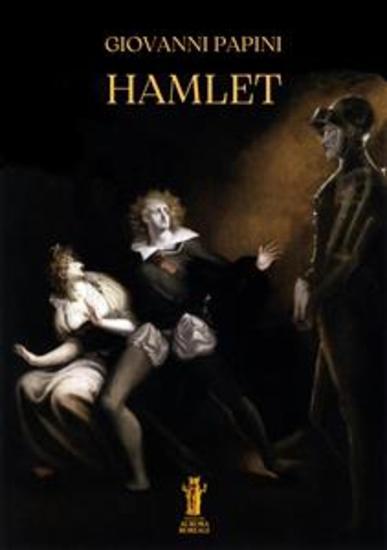
Hamlet - cover

Hamlet

Giovanni Papini

Verlag: Edizioni Aurora Boreale

  • 0
  • 0
  • 0

Beschreibung

Giovanni Papini, journalist, essayist, novelist, writer, poet, literary critic and philosopher, was a controversial literary figure of the early and mid-twentieth century and the earliest and most enthusiastic representative and promoter of Italian pragmatism.Due to his ideological choices, Papini’s work was almost forgotten after his death, although it was later re-evaluated and appreciated again: in 1975, Jorge Luis Borges called him an “undeservedly forgotten” author.In 1913 he published his essay Ventiquattro cervelli (“Four and Twenty Minds”), in which he reviewed, with a critical slant and with great philosophical scrutiny, the life and works of great personalities of history and literature such as Dante Alighieri, Leonardo Da Vinci, George Berkeley, Herbert Spencer, Friedrich Nietzsche, and, finally, himself!From Four and Twenty Minds, translated into English by Ernest Hatch Wilkins and published in the United States in 1922, we have drawn the study Hamlet, which today we propose to modern readers. It’s a short essay dedicated to the controversial Prince Hamlet of Denmark, protagonist of one of the most famous William Shakespeare's tragedy, written in 1916, for the third centenary of Shakespeare’s death.
Verfügbar seit: 08.01.2024.
Weitere Bücher, die Sie mögen werden

  • Great Escapes during the World Wars: The History of the Most Legendary Prisoner Breakouts in World War I and World War II - cover

    Great Escapes during the World...

    Editors Charles River

    • 0
    • 0
    • 0
    War has always led to prisoners. In ancient times, many were turned into slaves by the victorious armies, while in medieval Europe, they were often returned to their families in return for a ransom, leading to fortune or poverty depending upon which side one was on. By the Napoleonic era, as armies grew in size and professionalism, many were kept in camps for the duration of the fighting, their captors not wanting to restore their enemies' manpower while the fate of nations hung in the balance. 
    Prisoners were taken across the world, and prisoners of war were typically comprised of two classes: officers and other ranks. Officers were often treated well, as there was still a sort of aristocratic courtesy among officers, particularly among the Germans, British, French, and somewhat less so for the Russians, Italians, and Turks. Concepts such as honor still held considerable currency, and bravery was greatly admired. Enemy officers as a class often had more in common with each other than with the millions of draftees in their armies, so enlisted men as POWs generally were not as well treated. 
    	Regardless of rank though, throughout the war, many of these men did not sit idle. Many spent their time preparing elaborate escape plans in the hopes of returning to their home nations and back to the fight.  
    The Second World War was full of escape stories, some bold, some tragic, and most filled with courage and ingenuity. The greatest number of successful escapes was made by Allied troops in Europe, including soldiers left behind after the fall of France and airmen shot down in bombing raids, but escapes happened across the world, from Canadian trains to German castles, and from the mountains of Italy to the wilds of Australia. Axis as well as Allied troops made their bids for freedom, keeping both sides on their toes. Everybody was looking to make the next great escape.
    Zum Buch
  • Meno - Can Virtue Be Taught? – A Foundational Exploration of Knowledge Learning and Moral Character - cover

    Meno - Can Virtue Be Taught? – A...

    Plato, Tim Zengerink

    • 0
    • 0
    • 0
    What if every question you asked rewove the fabric of your mind? 
    Immerse yourself in the verbal joust between an impatient pupil and history’s greatest gadfly. This engaging audio edition of Plato’s Meno captures: 
    •	A Dramatic Dialogue – Dynamic narration brings Meno’s swagger and Socrates’ ironic wit to life. 
    •	The Puzzle of Virtue – Hear the debate shift from definitions to dazzling intellectual breakthroughs. 
    •	Learning as Awakening – Experience the famous slave-boy scene that illustrates how knowledge may already reside within us. 
    •	Guided Context – Brief scene-setting intros keep the plot clear while letting the philosophical fireworks shine. 
    Press play to discover why the path to virtue begins with the courage to question.
    Zum Buch
  • Giant Killers War Heroes and Special Forces Legends - cover

    Giant Killers War Heroes and...

    David A. Yuzuk

    • 0
    • 0
    • 0
    What causes a soldier to make the split second to decision to jump on a grenade and sacrifice his life to save his men? 


    What drives a man to go from homeless to the recipient of the military's highest commendation, The Medal of Honor? 


    How does a prisoner of war survive years of unspeakable torture and deprivation and yet never give up hope? 


    A vivid collection of stories spanning multiple wars and military branches chosen by military enthusiasts from around the world. These compelling accounts of heroism and sacrifice depict the raw and brutal realities of war, without a shred of sentimentality or false patriotism. 


    Included are some names you might already know, like Pappy, Mad-Dog, Bong, Benavidez, and Hathcock, along with others you should know, like Pitsenbarger and Poolaw. 


    Veteran police detective and bestselling author, David A. Yuzuk, brings you this gripping collection of spectacular battle stories and trial-by-fire lessons of honor and duty from WWII to Iraq, all in one action-packed volume.
    Zum Buch
  • The Grammar of Self - Collected Poems 2000-2023 - cover

    The Grammar of Self - Collected...

    George Watt

    • 0
    • 0
    • 0
    In THE GRAMMAR OF SELF, George Watt presents a lifetime of memories, which seemingly move at random from decade to decade, from continent to continent, from cosmos to microcosm. It does have one central goal: to look at poetry as an attempt towards objectification of aspects of personal identity, as a means through which the self may be confronted, challenged and celebrated. But the volume of verse does more than that as it subscribes to a notion from Thomas Szasz about the self: it is “not something that one finds. It is something that one creates.” (T.S. Szasz, The Second Sin (New York: Anchor Press, 1973, p. 49.) This volume accepts that the poetic text, or multiples thereof, is one means through which a self finds articulation. This articulation is open-ended, chaotic, composed of innumerable experiential fragments that come from deed, time, place and person. The self in this volume is composed of psychic jigsaw pieces (single poems) each of which assert their right to placement, but which will never collate into a perfect picture. This volume of poetry is a collection of many of these pieces, which together present an incomplete movement towards Szaszian self-creation.
    Zum Buch
  • 999 Powerful Affirmations for Black Women - cover

    999 Powerful Affirmations for...

    EasyTube Zen Studio

    • 0
    • 0
    • 0
    Dear black woman,You are beautiful, powerful, effervescent. Yet the weight of the world seeks to dim your glow, gnaw at your strengths, and dull your spark.Whenever you feel alone, remember that there have been many others in your shoes once. Now, look at how they shine — brimming with self-love, optimism, confidence, motivation, vigor, power, and success.You see, there is an upside to the gloom and doom: it serves as the canvas for your light.So, stoke the frozen embers and give way to a brighter, happier, more confident YOU with the help of “999 Powerful Affirmations for Black Women”.Here is where you will find powerful daily affirmations to hack your mind to positivity, confidence, health, money, success, and motivation.In this compelling book, you will find 999 affirmations that will help you to:Put yourself firstLove yourself again after a terrible experienceBuild your strength in the midst of anxiety and stressImprove your sleep quality and rejuvenate your entire beingMake you feel beautiful againSeek joy in everything you doStep out of your comfort zone with confidence and easeStay true to your authentic selfAnd so much more!Use “999 Powerful Affirmations for Black Women” by EasyTube Zen Studio to help you overcome anxiety, depression, self-doubt, and all other odds stacked against you in the modern world, so you can tower over the world like the goddess that you are!Scroll up, Click on “Buy Now”, and Start Honoring Yourself Today!
    Zum Buch
  • Ancient Mesopotamia: An Enthralling Overview of Mesopotamian History Starting from Eridu through the Sumerians Akkadians Assyrians Hittites and Persians to Alexander the Great - cover

    Ancient Mesopotamia: An...

    Enthralling History

    • 0
    • 0
    • 0
    How much do you know about the “cradle of civilization?” Come explore the legacy of the brilliant ancient Mesopotamians who transformed the world. 
    Ancient Mesopotamia’s legacy was truly revolutionary. Childlike pictures scratched into wet clay evolved into the first written language. The Mesopotamians wrote the first epic poems, the first hymns, the first histories, and the first law codes. They developed the first wheel for transportation; simple carts that hauled bricks or produce morphed into chariots racing along at thirty-five miles per hour. 
    They gazed at the sky and mapped it, observing the planets’ retrograde motions and predicting lunar and solar eclipses. They developed the concept of time, measurements, basic counting, higher math, and hydraulic engineering. 
    Mesopotamia gave birth to the world’s first great empires—the Akkadians, Assyrians, Babylonians, and Achaemenids—which stretched over three continents. 
    A glimpse at the questions this overview unpacks includes:How old is the world’s first city?How did the Eridu Genesis compare to Noah and the ark?How fast was the world’s first postal system?How many times did Babylon’s patron god Marduk get stolen?How did Hammurabi’s law code compare to the Law of Moses?Who calculated pi (π) to the value of 3.125 and understood the Pythagorean theorem twelve centuries before Pythagoras was born?Did Xerxes really have a million men in his army?Which empire encompassed 44 percent of the world’s population?What eunuch poisoned most of the Persian royal family?And much, much more! 
    Get this audiobook now to learn the stories of incredible ancient Mesopotamia!
    Zum Buch