Begleiten Sie uns auf eine literarische Weltreise!
Buch zum Bücherregal hinzufügen
Grey
Einen neuen Kommentar schreiben Default profile 50px
Grey
Jetzt das ganze Buch im Abo oder die ersten Seiten gratis lesen!
All characters reduced
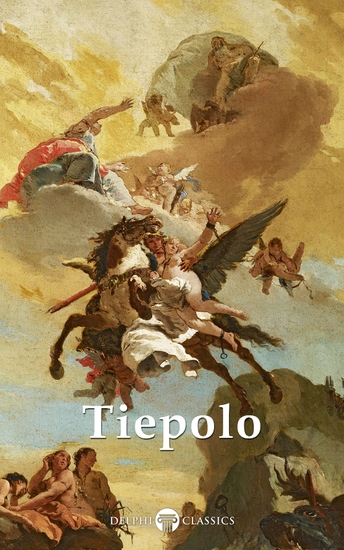
Delphi Complete Works of Giovanni Battista Tiepolo Illustrated - cover

Delphi Complete Works of Giovanni Battista Tiepolo Illustrated

Giovanni Battista Tiepolo

Verlag: Delphi Publishing Ltd

  • 0
  • 0
  • 0

Beschreibung

The last great artist of the Baroque era, Giovanni Battista Tiepolo was a master of the Rococo style. He decorated numerous palaces across Europe with frescoes full of turbulent movement and vibrant colour. He excelled in painting magnificent ceiling frescoes, summoning aerial visions of the ancient world that have never been matched in their depth of expression and sheer scale of achievement. The inventiveness and variety that characterise his fresco cycles secure his place in the pantheon of great artists, continuing the tradition of Giotto and Michelangelo. Delphi’s Masters of Art Series presents the world’s first digital e-Art books, allowing readers to explore the works of great artists in comprehensive detail. This volume presents Tiepolo’s collected works, with concise introductions and hundreds of high quality images. (Version 1)
 
* The collected paintings of Giovanni Battista Tiepolo – over 400 images, fully indexed and arranged in chronological and alphabetical order* Includes reproductions of rare works* Features a special ‘Highlights’ section, with concise introductions to the masterpieces, giving valuable contextual information* Enlarged ‘Detail’ images, allowing you to explore Tiepolo’s celebrated works in detail, as featured in traditional art books* Hundreds of images in colour – highly recommended for viewing on tablets and smartphones or as a valuable reference tool on more conventional eReaders* Special chronological and alphabetical contents tables for the paintings* Easily locate the artworks you wish to view
 
CONTENTS:
 
The HighlightsScipio Africanus Freeing Massiva (c. 1720)Allegory of the Power of Eloquence (c. 1725)Frescoes for the Archbishop’s Palace, Udine (c. 1726)The Education of the Virgin (1732)The Virgin in Glory with Saints (1734)Jupiter and Danaë (1736)Saint Clement Adoring the Trinity (1736)The Institution of the Rosary (c. 1739)Armida Encounters the Sleeping Rinaldo (1742)The Transportation of the Holy House of Loreto (1744)The Banquet of Cleopatra (1744)Allegory of the Planets and Continents (c. 1753)The Death of Hyacinth (1753)Young Lady in a Tricorn Hat (c. 1760)Apollo Pursuing Daphne (c. 1760)The Apotheosis of Aeneas (1766)The Rest on the Flight into Egypt (c. 1770)
 
The PaintingsThe Collected PaintingsAlphabetical List of Paintings
Verfügbar seit: 30.06.2023.
Drucklänge: 1221 Seiten.


Weitere Bücher, die Sie mögen werden

  • A Rare Recording of Film Icon Charlie Chaplin - cover

    A Rare Recording of Film Icon...

    Charlie Chaplin

    • 0
    • 0
    • 0
    Sir Charles Spencer Chaplin (April 16, 1889 to December 25, 1977), born in London, was an English actor, filmmaker, and composer who rose to fame in the era of silent film. He became a worldwide icon through his screen persona, the Tramp, and is considered one of the film industry's most important figures. His career spanned more than 75 years, from childhood in the Victorian era until a year before his death in 1977. The following three recordings are from a speech at the Variety Club in 1952, discussing the re-release of his film The Circus in 1969, and from the 1972 Academy Awards ceremony when Chaplin received an Honorary Oscar.
    Zum Buch
  • Time to Kindness - cover

    Time to Kindness

    Disney

    • 0
    • 0
    • 0
    Growing Up Stories brings together beloved Disney characters and a ton of fun, providing a new way to teach kids about positive traits. These simple stories highlight social-emotional skills like bravery, responsibility, and honesty, making it easy for young ones to grasp these important lessons.
    Zum Buch
  • Mahabharata - cover

    Mahabharata

    Miriam Fernandes, Ravi Jain

    • 0
    • 0
    • 0
    Winner of 2025 Toronto Theatre Critics’ Awards Best New Canadian Work 
    Winner of 2025 Toronto Theatre Critics’  Awards Best Production of a Play 
    Winner of 2025 Toronto Theatre Critics’  Awards Best Sound Design and Music of a Play or MusicalA contemporary dramatic take on a 4,000-year-old Sanskrit epic that is foundational to Indian culture.  
    Why Not Theatre’s large-scale, once-in-a-generation retelling of Mahabharata brings together a cast of performers entirely from the South Asian diaspora, blending cultures and art forms in a spectacular production at the Shaw Festival and the Barbican Theatre in London. Over two parts (Karma and Dharma) and a communal meal (Khana), this translation and adaptation of Mahabharata spans generations and takes audiences into the hearts and minds of some of the most complex and enduring characters ever created.  
    With warring families and devious revenge plots, Mahabharata tells the story of an ancient feud with philosophical and spiritual questions that are no less urgent today. In times of division, how do we find wholeness? Are we destined to repeat the mistakes of our ancestors? And how can we build a new world when we have nearly destroyed this one?  
    Contains the full text of the play along with materials opening up the behind-the-scenes world of the production, including interviews with the creators, background and context about the source material, production photographs, a Mahabharata family tree, and glossary. 
    "Ravi Jain and Miriam Fernandes’s contemporary take on the Mahabharata is one of the most beautiful emotional journeys I have had the privilege to witness. It is inspiring, mind broadening, and speaks to all the senses. It even brings you back to the origins of theatre itself, when people would gather in the quarries around a bonfire to tell stories. With their tasteful use of technology, dance, and opera, the 4,000-year-old Sanskrit poem comes to life and feels more universal than ever. A captivating theatre experience, from the first flame to the last pixel." – Robert Lepage 
    "In their stunning rendition of the great Indian epic Mahabharata, Ravi Jain and Miriam Fernandes brilliantly reverse the whole concept of what Bertolt Brecht famously advised theatre directors: to make the familiar, unfamiliar. Jain and Fernandes have turned the unfamiliar into the familiar. The 4,000-year-old saga most Indians grew up with is made accessible to a contemporary audience the world over. No mean feat.
      ‘The play, true to its source, crosses all boundaries of culture, class, and geography. Its timeless storytelling and evocative stage design is transformed into a saga for the world, with its fundamental emotions of human nature – power, hate, jealousy, greed, and lust. To be gob-smacked by this innovation would be an understatement. Immerse yourself in this take on the Mahabharata and travel with it in time into the past, present, and future of humanity." – Deepa Mehta
    Zum Buch
  • Mughal Empire - The Taj Mahal Legacy - cover

    Mughal Empire - The Taj Mahal...

    Rolf Hedger

    • 0
    • 0
    • 0
    The Mughal Empire emerged as one of the most powerful and influential dynasties in Indian history, leaving a lasting impact on culture, architecture, and governance. Its foundation was laid by Babur, a descendant of both Timur and Genghis Khan, who established Mughal rule in the early 16th century. Babur's military prowess and strategic vision enabled him to defeat the Delhi Sultanate in the First Battle of Panipat in 1526. This victory marked the beginning of Mughal dominance in the Indian subcontinent. However, Babur’s reign was short-lived, and it was his grandson, Akbar, who truly solidified the empire’s foundation. 
    Akbar ascended the throne at a young age and quickly proved himself to be an exceptional leader. His reign, which lasted from 1556 to 1605, was marked by territorial expansion, administrative reforms, and a commitment to cultural and religious harmony. Unlike previous rulers, Akbar recognized the diversity of India and sought to integrate different communities into his empire. He abolished the jizya tax on non-Muslims, promoted interfaith dialogue, and appointed talented individuals from various backgrounds to key positions in his administration. His policy of religious tolerance and inclusive governance earned him the loyalty of many, contributing to the stability and prosperity of the empire. 
    One of Akbar’s most remarkable achievements was the establishment of an efficient administrative system. He divided his empire into provinces, each governed by appointed officials who reported directly to the central authority. This system ensured effective governance and facilitated tax collection, trade, and law enforcement. Additionally, Akbar introduced a standardized revenue system that helped regulate the economy and promote agricultural growth. His emphasis on merit-based appointments created a well-organized bureaucracy that endured long after his reign.
    Zum Buch
  • Mysteries of Secret Societies - Uncover the mysteries of secret societies from ancient times to the modern era - cover

    Mysteries of Secret Societies -...

    Nora Arman

    • 0
    • 0
    • 0
    Have you ever wondered how secret societies have shaped our history? Their symbols and rituals continue to influence modern culture and inspire conspiracy theories. This guide explores the following topics: Origins and Early History: Discover the beginnings of secret societies.Rituals and Symbols: Decode the meanings of their symbols over time.Impact on History: Learn about their roles in significant events like the American Revolution.Key Figures: Explore the lives of influential members.Cultural Analysis: Compare secret societies from around the world.Myth Debunking: Separate fact from fiction regarding these organizations.Modern Relevance: Examine the secret societies that exist today.Psychological Insights: Understand the motivations behind joining these groups.Societal Influence: Assess the impact of secret societies on different demographics.Personal Accounts: Read narratives from members and historians
    Zum Buch
  • Minority Report - The Ultimate Trivia Collection - From The Movie Directed By Steven Spielberg - cover

    Minority Report - The Ultimate...

    Film Trivia Metaverse

    • 0
    • 0
    • 0
    MINORITY REPORT 
    THE ULTIMATE TRIVIA COLLECTION 
      
    FROM THE MOVIE DIRECTED BY STEVEN SPIELBERG 
      
    CREATED BY FILM TRIVIA METAVERSE 
      
    ABOUT THE FILM 
    Minority Report is a 2002 science fiction thriller directed by Steven Spielberg, set in a dystopian future where a specialized police unit, PreCrime, prevents crimes before they occur. The system relies on three psychics, called "Precogs," who foresee murders, allowing the police to apprehend perpetrators before they commit the crime. The story follows John Anderton, the head of PreCrime, who is accused of a future murder and becomes a fugitive. The film explores themes of free will versus determinism, the morality of preemptive justice, and the ethical implications of surveillance and control in a highly technological society. 
      
    TRIVIA SAMPLES: 
      
    “The "Precogs" were named after famous mystery writers: Dashiell Hammett, Sir Arthur Conan Doyle, and Agatha Christie.” 
      
    “For the scene where Anderton holds his breath in the bathtub, Steven Spielberg planned to create the rising air bubble using CGI, but Tom Cruise took the time to learn how to do it himself.” 
      
    “Tom Cruise and Steven Spielberg both agreed to waive their usual salary to help keep the film's budget under $100 million. Instead, they agreed to take 15% of the film's gross.” 
      
    “Initially, Steven Spielberg wanted Greta (Dr. Eddie’s assistant) to sing a song by ABBA, but Peter Stormare suggested something more absurd: the Swedish children's song "Små grodorna" ("The Small Frogs"), traditionally sung during Midsummer Eve parties in Sweden.”
    Zum Buch