Begleiten Sie uns auf eine literarische Weltreise!
Buch zum Bücherregal hinzufügen
Grey
Einen neuen Kommentar schreiben Default profile 50px
Grey
Jetzt das ganze Buch im Abo oder die ersten Seiten gratis lesen!
All characters reduced
La Cenerentola - Flute Quintet (C piccolo Flute) - (Cinderella or Goodness Triumphant) overture - cover

La Cenerentola - Flute Quintet (C piccolo Flute) - (Cinderella or Goodness Triumphant) overture

Gioachino Rossini, a cura di Francesco Leone

Verlag: Glissato Edizioni Musicali

  • 0
  • 0
  • 0

Beschreibung

C piccolo Flute part _ "La Cenerentola" (Cinderella, or Goodness Triumphant) overture by Gioacchino Rossini. Complete transcription for Flute Quintet (C Piccolo, C Flutes 1 & 2, G Alto and Bass Flute) advanced level, key concert C, duration 8.00 (+-). Score and single parts available in series. Audio demo on www.glissato.it product code: EG0103
Verfügbar seit: 15.01.2022.


Weitere Bücher, die Sie mögen werden

  • Radical Cartography - How Changing Our Maps Can Change Our World - cover

    Radical Cartography - How...

    William Rankin

    • 0
    • 0
    • 0
    A thought-provoking exploration of how maps shape our understanding of the world 
    Cartographer and historian William Rankin argues that it's time to reimagine what a map can be and how it can be used. Maps are not neutral visualizations of facts. They are innately political, defining how the world is divided, what becomes visible and what stays hidden, and whose voices are heard. What matters isn't just the topics or the data, but how maps make arguments about how the world works. And the consequences are enormous. A map's visual argument can change how cities are designed and how rivers flow, how wars are fought and how land claims are settled, how children learn about race and how colonialism becomes a habit of mind. Maps don't just show us information—they help construct our world.Brimming with vibrant maps, including many "radical" maps created by Rankin himself and by other cutting-edge mapmakers, Radical Cartography exposes the consequences of how maps represent boundaries, layers, people, projections, color, scale, and time. Challenging the map as a tool of the status quo, Rankin empowers listeners to embrace three unexpected values for the future of cartography: uncertainty, multiplicity, and subjectivity. Changing the tools—changing the maps—can change the questions we ask, the answers we accept, and the world we build.
    Zum Buch
  • Albertus - The Biography of a Typeface - cover

    Albertus - The Biography of a...

    Simon Garfield

    • 0
    • 0
    • 0
    A compact and charming history of the beloved handcrafted font by the New York Times bestselling author of Just My Type. 


    Albertus, first carved on a bronze tablet in the 1930s by German Jewish refugee Berthold Wolpe, has proved to be one of the most enduring handcrafted typefaces in the world. It is at once modern and timeless, authoritative and whimsical—renowned as the typeface of London Street signs, David Bowie albums, and Star Wars movie posters. In this unique celebration, bestselling author Simon Garfield charts the story of the creation of Albertus, its innumerable and vibrant uses, and the erratic brilliance of its designer, as recounted by Wolpe's children. Through his exploration of this singular font, Garfield grapples with one of the most fundamental artistic questions: what makes great art not only survive but flourish in each new age and medium?
    Zum Buch
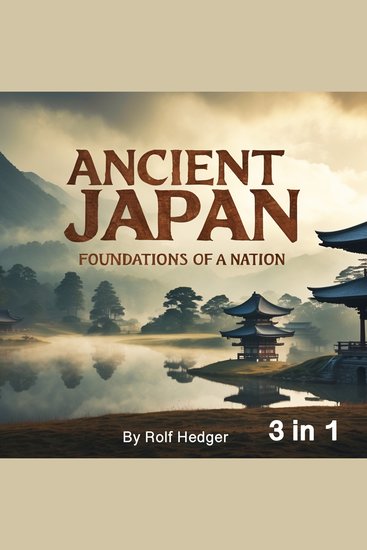
  • Ancient Japan - Foundations of a Nation (3 in 1) - cover

    Ancient Japan - Foundations of a...

    Rolf Hedger

    • 0
    • 0
    • 0
    The early history of Japan was shaped by three key periods—the Kofun, Yamato, and Asuka—each playing a crucial role in laying the foundations of the Japanese nation.  
    The Kofun Period, named after the massive burial mounds built for elite rulers, saw the rise of warrior aristocracy and the early consolidation of power by influential clans. This era transitioned into the Yamato Period, during which the Yamato clan emerged as Japan’s first ruling dynasty, establishing the imperial lineage that continues to this day.  
    The Asuka Period marked a profound transformation as Buddhism, Confucian governance, and Chinese cultural influences began shaping Japan’s political and social structures.  
    The Taika Reforms introduced centralized administration, strengthening the authority of the emperor.  
    These three periods together set the stage for Japan’s evolving identity, blending indigenous traditions with foreign influences to create a distinct and enduring civilization.
    Zum Buch
  • Everyday Chanakya | Women in Leadership S01E09 - cover

    Everyday Chanakya | Women in...

    Dr.Radhakrishnan Pillai

    • 0
    • 0
    • 0
    Due to their traditional roles, women often sideline their professional lives. Although in recent times, an increasing number of women are entering the professional sphere and taking up leadership roles. Here is a comprehensive guide for women planning to take up leadership roles.
    Zum Buch
  • Summary: The Artist's Way - A Spiritual Path to Higher Creativity by Julia Cameron: Key Takeaways Summary & Analysis Included - cover

    Summary: The Artist's Way - A...

    Brooks Bryant

    • 0
    • 0
    • 0
    Disclaimer: This is not the official book; it is a summary & it does not accompany the official. 
    Drawing upon her own experiences as a writer, Cameron employs a compassionate and encouraging voice to guide readers through a transformative twelve-week program that aims to recover and unleash their creativity. Centered on the basic principle that creative expression is the natural direction of life, it embarks on a spiritual expedition into the self, urging readers to undertake a deep exploration to overcome the inner hurdles that impede their artistic journeys. 
    Each week unveils a new set of explorative tasks, thought-provoking questions, and exercises, all meticulously designed to ignite the dormant creativity in individuals. The journey is accompanied by the establishment of foundational routines such as “Morning Pages,” a practice involving daily free-writing that navigates one’s stream of consciousness, and “Artist Dates,” which encourage the exploration of stimulating activities to fuel one’s imagination. 
    As you delve into your summary of this revered handbook, consider accentuating the spiritual elements that intertwine with creativity. Showcase how Cameron bridges the gap between the creative self and the spiritual self, paving the way for an enriching journey that is not just about nurturing creativity but also about reclaiming the self.
    Zum Buch
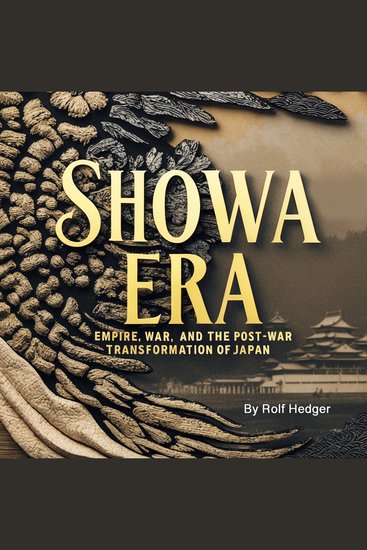
  • Showa Era - Empire War and the Post-War Transformation of Japan - cover

    Showa Era - Empire War and the...

    Rolf Hedger

    • 0
    • 0
    • 0
    The Showa Era began on December 25, 1926, with the ascension of Emperor Hirohito following the death of his father, Emperor Taisho. This period marked a critical turning point in Japan’s history, as the nation transitioned from the political turbulence of the Taisho democracy to a time of increasing militarism and nationalist sentiment. Although the early years of the Showa Era were characterized by economic struggles and political instability, they also set the stage for Japan’s dramatic expansion and eventual involvement in global conflict. 
    Emperor Hirohito’s rise to the throne was met with both hope and uncertainty. Many saw him as a symbol of continuity and strength, while others were concerned about the growing influence of the military in governmental affairs. Unlike his father, whose reign was defined by a parliamentary democracy, Hirohito’s early years as emperor witnessed the gradual erosion of democratic institutions. The shift toward a more authoritarian government was driven by widespread dissatisfaction with the parliamentary system and the belief that Japan needed strong leadership to navigate domestic and international challenges. 
    One of the most pressing issues Japan faced at the beginning of the Showa Era was economic instability. The global economy had already begun to weaken, and in 1929, the Wall Street Crash sent shockwaves through Japan’s financial system. The economic downturn led to mass unemployment, factory closures, and widespread poverty, exacerbating social tensions. Farmers, who made up a significant portion of Japan’s population, suffered greatly as the price of rice plummeted, leading to rural hardships that fueled growing resentment toward the government. In response, nationalist and ultraconservative factions gained popularity, advocating for territorial expansion as a means to secure resources and economic stability.
    Zum Buch