Rejoignez-nous pour un voyage dans le monde des livres!
Ajouter ce livre à l'électronique
Grey
Ecrivez un nouveau commentaire Default profile 50px
Grey
Abonnez-vous pour lire le livre complet ou lisez les premières pages gratuitement!
All characters reduced
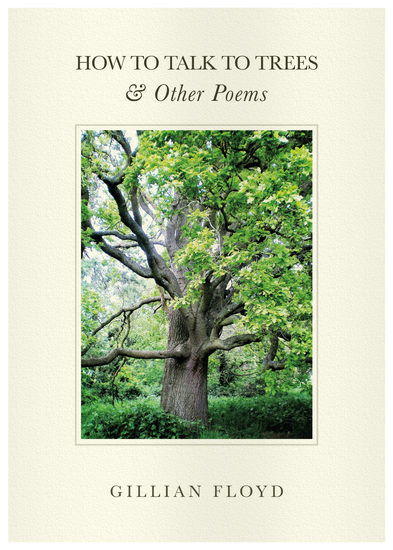
How to Talk to Trees & Other Poems - cover

How to Talk to Trees & Other Poems

Gillian Floyd

Maison d'édition: Brown Dog Books

  • 0
  • 0
  • 0

Synopsis

This poetry collection by Gillian Floyd is largely inspired by her love of nature and her interest in Greek Mythology. You will find poems about trees, such as sycamore and lilac trees; flowers, such as sunflowers and snapdragons; birds, such as sparrows, seagulls, owls and robins; and creatures, such as cats, bats, wolves, unicorns and dragons. You will follow Orpheus to the underworld, meet Persephone as she writes home to her mother and Athena as she weaves. You will even watch Icarus as he attempts to fly for a second time. The perfect collection of poems to relax with and reflect upon.
Disponible depuis: 02/07/2023.
D'autres livres qui pourraient vous intéresser

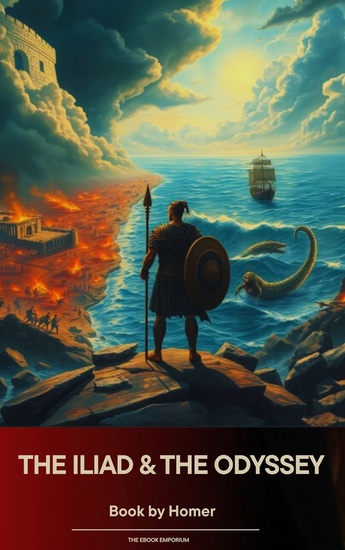
  • The Iliad & The Odyssey - cover

    The Iliad & The Odyssey

    Homer Homer

    • 0
    • 0
    • 0
    "Sing, O Muse, of the rage of Achilles—and the man of many wiles."
    
    Experience the dual masterpieces that have shaped the world's imagination for millennia. The Iliad plunges you into the final weeks of the Trojan War, where the demigod Achilles faces off against Hector under the watchful, meddling eyes of the Olympian gods. It is a visceral exploration of glory, grief, and the brutal reality of combat. The Odyssey picks up the threads of the war's aftermath, following the hero Odysseus on his ten-year struggle to return home to Ithaca. Battling cyclopes, sirens, and his own pride, Odysseus's journey is the ultimate testament to human resilience and the longing for home.
    
    The Heroic Code: Homer defines what it means to be a hero through two distinct archetypes: Achilles, the embodiment of kleos (eternal glory through strength), and Odysseus, the master of metis (cunning and intelligence). These works examine the cost of greatness and the inevitable tragedy of the human condition.
    
    The Divine Theater: The Trojan War is not just a human conflict; it is a game played by the gods. From Athena's wisdom to Poseidon's wrath, the epics illustrate a world where destiny is woven by divine hands, yet human choices still resonate through the ages.
    
    Witness the birth of storytelling. Purchase "The Iliad & The Odyssey" today and walk among legends.
    Voir livre
  • A Streetcar Named Desire - cover

    A Streetcar Named Desire

    Tennessee Williams

    • 0
    • 0
    • 0
    Tennessee Williams’s Pulitzer Prize-winning masterpiece is one of the most enduring, explosive works in theater. Blanche DuBois, once a well-heeled Southern belle but now alcoholic and destitute, arrives in New Orleans to stay with her sister Stella and her brutish brother-in-law Stanley. And as Stanley terrorizes the fragile Blanche, reality slips slowly away from her. 


    Recorded at KCRW, Santa Monica in May 1998.


    Directed by Martin Jenkins
     
    Producing Director: Susan Albert Loewenberg


    An L.A. Theatre Works full-cast recording, starring:


    Amy Brenneman as Stella
     
    Fred Coffin as Steve and The Man
     
    Vincent D'Onofrio as Stanley
     
    Jamie Hanes as the Doctor
     
    Glenne Headly as Blanche
     
    Lyvingston Holmes as the Matron and others 
     
    Armando Molina as Pablo and the Sailor
     
    Rondi Reed as Eunice and others
     
    David Selby as Mitch
     
    Danny Strauss as the Young Man


    Stage Manager and Live Sound Effects: Tilo Ponder
     
    Recording Engineer: John McCarthy


    Music composed by John Robey, and performed by John Robey, Steve McDade and Jack Zaza.


    A co-production with the BBC and the CBC.
    Voir livre
  • The New Negro - An Interpretation - cover

    The New Negro - An Interpretation

    Alain Locke

    • 0
    • 0
    • 0
    "Of all the voluminous literature on the Negro, so much is mere external view and commentary…We turn therefore in the other direction to the elements of truest social portraiture, and discover in the artistic self-expression of the Negro to-day a new figure on the national canvas and a new force in the foreground of affairs.” 
      
    The New Negro Movement of the 1920s marked a shift in the pursuit of African American equality. African American soldiers were returning home from World War I, and after fighting for freedoms abroad, they were inspired to continue that fight on their own soil. The “old” ways had focused on passively accepting social policies, but the “new” ways would harness their collective voices in defining their own identity. The intellectual and artistic movement of the Harlem Renaissance stirred a tremendous wave of social change. 
      
    The New Negro was edited by Dr. Alain LeRoy Locke, a great intellectual and social visionary who is also considered the father of the Harlem Renaissance. This collection features works from many influential African American writers, such as Langston Hughes, Zora Neale Hurston, and Countee Cullen. 
      
    Alain Locke dedicates this book to future generations. In keeping with his vision, inAudio is honored to share this audiobook production with an enduring legacy of listeners.
    Voir livre
  • The Eclogues and Georgics - cover

    The Eclogues and Georgics

    Virgil

    • 0
    • 0
    • 0
    Though it is for the sparkling epic, Aeneid, that the Roman poet Virgil is best known, it was these two poems, The Eclogues and Georgics, which first established his reputation.  Cast in the tradition of pastoral poetry, The Eclogues were written between 41 BCE and 37 BCE when Virgil (Publius Vergilius Maro, to give him his full name) was in his thirties. The Eclogues (the word means ‘Selections’ in Greek) contain 10 poems, a combination of dialogues and monologues. They drew on the ‘bucolic’ (rural) style of the ancient Greek poet Theocritus (c 300BCE-c 260 BCE), but Virgil weaves many references to contemporary Roman events. Though The Eclogues have perhaps existed in the shadow of Georgics, they have been highly regarded and studied by academics and poets down the centuries. They are presented here in the 20th century translation by the British poet R. C. Trevelyan, and read in multi-voice format as they were originally written, with clearly delineated characters bringing the content to life with verve and temperament. 
    Though also pastoral in nature, Georgics is very different in style. Published in 29 BCE, the main subject is agriculture (the title reflects the Greek word ‘georgika’, agricultural things), and vigorously promotes traditional means of farming. Again, Virgil weaves into his verse cultural and political themes. Cast in four Books, the dynamic expression draws on numerous Classical, mythical and contemporary references, while explaining the best methods for ploughing, animal husbandry, observing weather patterns, the life of bees and the like. Increasingly, the rise and fall of man’s endeavours can be reflected in the vicissitudes of agricultural life. The 20th century translation of Georgics used on this recording is by the highly respected translator of Latin poetry, Smith Palmer Bovie. It is read by Jamie Parker. Closer study of both works while listening is possible through the complete texts that come with the recording. 
     
    PLEASE NOTE: When you purchase this title, the accompanying PDF will be available in your Audible Library along with the audio.
    Voir livre
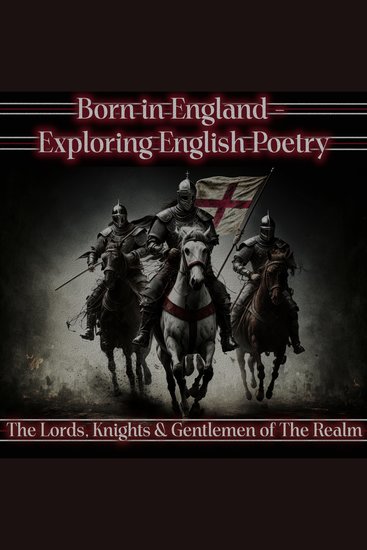
  • Born in England – Exploring English Poetry - The Lords Knights & Gentlemen of the Realm - A celebration of English poems - cover

    Born in England – Exploring...

    Sir Philip Sidney, Sir Thomas...

    • 0
    • 0
    • 0
    Poetry. A form of words that seems so elegantly simple in one verse and so cleverly complex in another.  Each poet has a particular style, an individual and unique way with words and yet each of us seems to recognise the path and destination of where the verses lead, even if sometimes the full comprehension may be a little beyond us. 
     
    Through the centuries every culture has produced verse to symbolize and to describe everything from everyday life, natural wonders, the human condition and even in its more hubristic moments, the crushing triumph of an enemy. 
     
    In the volumes of this series, we take a look at poetry through the prism of individual regions of England, or sometimes more quaintly known as ‘Albion’, or ‘Blighty’, through the centuries of its gloried history. 
     
    England, despite its perception of reserve and under-statement has, in reality, strode the global stage at various time in many things, both good and bad, from Empire to long distance running. Here our focus in on its literature.  Famed for its fiction and dramas, it is equally admired for its plethora of gifted poets and the dazzling verse which has added so much to its artistic legacy.  These classic poets are wonders of their age and of their art.  Genius is written in their names. 
     
    In this volume we explore through many centuries the poetry written by the Nobility of England.  Their titles may be inherited and reek of undeserved privilege but their verse is the inheritance of us all.  Our poets include Sir Thomas Wyatt, W S Gilbert, Sir John Beaumont, Sir John Suckling and many others.  Genius is written in their names.
    Voir livre
  • The Elephant Leg's Rope - A short philosophical story - cover

    The Elephant Leg's Rope - A...

    Shady El Seify

    • 0
    • 0
    • 0
    A short story about an Egyptian young man who wanders around Cairo until he finds himself in the zoo to look at an elephant. He is surprised that the elephant looks at him with the same look as he does, so their minds unite and separate to see the world from the perspective of an elephant tied with a rope to its leg.
    Voir livre