Begleiten Sie uns auf eine literarische Weltreise!
Buch zum Bücherregal hinzufügen
Grey
Einen neuen Kommentar schreiben Default profile 50px
Grey
Jetzt das ganze Buch im Abo oder die ersten Seiten gratis lesen!
All characters reduced
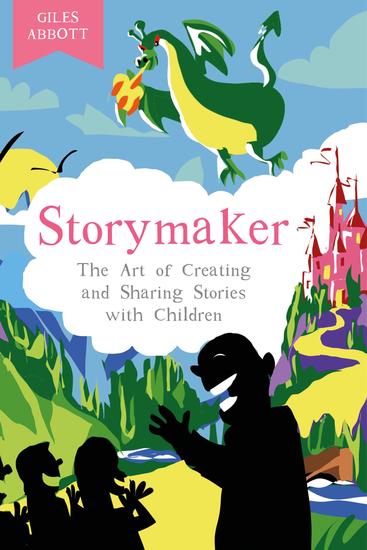
Storymaker - The Art of Creating and Sharing Stories with Children - cover

Entschuldigung, dieses Buch ist in Ihrem Land nicht verfügbar.

Storymaker - The Art of Creating and Sharing Stories with Children

Giles Abbott

Verlag: The History Press

  • 0
  • 0
  • 0

Beschreibung

Whether you're a teacher, parent, guardian or family member, the need to engage with and entertain the youngsters you care for is universal. Modern life makes access to entertainment easy, but what if there was another way – one that truly strengthened the bonds between you? For generations, humanity has practised the art of storytelling – a skill that you too can learn, enabling you to create magical tales that will shape those listening for years to come.
Perhaps it's a group of restless children and you wish you could catch, hold and reward their attention? Perhaps it's a long journey, or you want to get them off their screens? As you conjure a gripping story from thin air using the methods in this book, you'll find that face-to-face engagement creates contentment, concentration and connection on your journey together through story.
Verfügbar seit: 15.05.2025.
Drucklänge: 208 Seiten.

Weitere Bücher, die Sie mögen werden

  • The Actor's Mindset - Acting as a Craft Discipline and Business - cover

    The Actor's Mindset - Acting as...

    Craig Archibald, Constance Wu

    • 0
    • 0
    • 0
    The Actor's Mindset: Acting as a Craft, Discipline, and Business uniquely prepares actors to live full, successful lives as performing artists. While most acting books focus on either the art or the business of entertainment, Archibald looks at the entire picture of what it means to be an actor, focusing on the foundations of both the artist and the entrepreneur to guarantee a complete and fully functioning approach to a career. 


    The Actor's Mindset is divided into three distinct parts: "The Craft," "The Discipline," and "The Business." 


    Archibald's unique experience as both an actor and a coach gives him an unparalleled perspective on the current industry landscape. While classic method texts still circulate, and there are actors who have written books that address craft, none have Archibald's depth of knowledge and experience in coaching, nor approach the art from a professional standpoint instead of solely an instructional one. The success of Craig's approach is exemplified by the success of his clients, a roster that includes Constance Wu, John Slattery, and two-time Academy Award nominee Dan Futterman.
    Zum Buch
  • The Rainbow Age of Television - An Opinionated History of Queer TV - cover

    The Rainbow Age of Television -...

    Shayna Maci Warner

    • 0
    • 0
    • 0
    With the last decade's television boom across a multitude of platforms, American audiences are being treated to a cascade of shows that some have trumpeted as a second Golden Age. But something completely new is stirring, too—the Rainbow Age. For the first time in the history of American television, we have shows in which LGBTQIA+ characters have evolved from being an anomaly to being an almost given and celebrated presence on the small screen. But what more can queer TV do? Is each new queer character really breaking ground? And has the curse of the fictional dead lesbian finally been defeated? 


    The Rainbow Age of Television tackles these questions and more as author Shayna Maci Warner tracks the history and evolution of LGBTQIA+ icons across the televised ages and into the future—from the first televised queer kiss (we think) to the shows that are making household names and heroes of queer characters. Warner uses original interviews with queer TV icons along with detailed history to investigate the constraints under which queer people have been allowed to exist on American television. The Rainbow Age of Television explores why queer people are so invested in—and conflicted by—the kinds of storytelling that TV has to offer. Above all, it's a celebration of the LGBTQIA+ shows, their characters, and their creators that define this new age in television.
    Zum Buch
  • African Empires - Civilizations Kingdoms and Powers That Shaped African History (25 Titles) - cover

    African Empires - Civilizations...

    Rolf Hedger

    • 0
    • 0
    • 0
    This long, elaborate book bundle consists of 25 titles, which are the following: 
    Aksumite Empire 
    Ancient Egypt 
    Ashanti Empire 
    Axum Empire 
    Benin Empire 
    Carthaginian Empire 
    Dahomey Kingdom 
    Empire of Ife 
    Ghana Empire 
    Great Zimbabwe 
    Kanem-Bornu Empire 
    Kilwa Sultanate 
    Kingdom of Kongo 
    Kingdom of Kush 
    Kingdom of Mapungubwe 
    Luba Empire 
    Mali Empire 
    Meroitic Kingdom 
    Mutapa Empire 
    Nok Civilization 
    Oyo Empire 
    Songhai Empire 
    Sosso Empire 
    Wagadu (Ghana) Empire 
    Zulu Kingdom 
    Don't miss out. This is insane value! Get it now!
    Zum Buch
  • The Ming Dynasty - Maritime Exploration and the Forbidden City - cover

    The Ming Dynasty - Maritime...

    Jun Liu

    • 0
    • 0
    • 0
    The Ming Dynasty, one of China's most influential and enduring dynasties, emerged in the aftermath of the Mongol-led Yuan Dynasty’s decline. It was a period marked by great transformation, political consolidation, and cultural revival. The dynasty's establishment under Zhu Yuanzhang, later known as Emperor Hongwu, signified the restoration of Han Chinese rule and the reinforcement of Confucian governance. Through military conquest, administrative reforms, and strategic centralization of power, the Ming Dynasty laid the foundation for a strong and prosperous China. 
    The fall of the Yuan Dynasty was driven by internal corruption, economic mismanagement, and widespread discontent. Mongol rulers faced difficulties controlling the vast empire, and their reliance on foreign administrators alienated the native Chinese population. Heavy taxation and frequent natural disasters exacerbated social unrest, leading to a series of revolts across the country. Among these rebellions, the Red Turban Rebellion, a movement rooted in peasant uprisings and religious discontent, played a crucial role in undermining Yuan authority. It was within this turbulent period that Zhu Yuanzhang, a former Buddhist monk turned military leader, rose to prominence. His leadership and military strategies enabled him to unify rebel factions and ultimately overthrow the Mongols in 1368, marking the beginning of the Ming Dynasty. 
    Upon ascending the throne, Emperor Hongwu sought to consolidate power and rebuild a nation weakened by war and misrule. His first priority was to eliminate threats to his rule, which led to purges against those he suspected of disloyalty. To prevent a recurrence of Yuan-era administrative failures, he restructured the government, reducing the influence of court eunuchs and emphasizing Confucian ideals in governance. He also reinstated the civil service examination system, ensuring that officials were selected based on merit rather than birthright.
    Zum Buch
  • HowExpert Guide to Street Performing - The Ultimate Handbook for Mastering the Art Business and Lifestyle of Busking and Street Performers - cover

    HowExpert Guide to Street...

    HowExpert

    • 0
    • 0
    • 0
    HowExpert Guide to Street Performing: The Ultimate Handbook for Mastering the Art, Business, and Lifestyle of Busking and Street Performers is your all-in-one resource for entering the world of street performing. Whether you’re starting out or looking to refine your craft, this comprehensive guide covers everything you need to succeed. 
    This guide walks you through every aspect of street performing, offering practical advice for developing your skills, building a crowd, and turning street entertainment into a sustainable career. Inside, you'll discover: 
    - Introduction 
    - Chapter 1: Getting Started as a Street Performer 
    - Chapter 2: Mastering the Art of Public Performance 
    - Chapter 3: Street Performer Essentials 
    - Chapter 4: Building a Successful Street Performance 
    - Chapter 5: Navigating the Business Side of Street Performing 
    - Chapter 6: Building Your Personal Brand 
    - Chapter 7: Street Performing Around the World 
    - Chapter 8: The Role of Technology in Street Performing 
    - Chapter 9: The Future of Street Performing 
    - Chapter 10: Personal Growth and Mindset 
    - Conclusion 
    - Appendices 
    Packed with expert tips, practical advice, and inspiration, HowExpert Guide to Street Performing gives you everything you need to take your talent to the streets and thrive. Whether for fun or to build a career, this guide will help you captivate audiences and make the most of every performance. Start your street performing journey today! 
    HowExpert publishes how to guides on all topics from A to Z. 
    Zum Buch
  • Muromachi Period - Ashikaga Shoguns and the Rise of Feudal Japan - cover

    Muromachi Period - Ashikaga...

    Rolf Hedger

    • 0
    • 0
    • 0
    The Muromachi Period, spanning from 1336 to 1573, marked a significant turning point in Japanese history, characterized by the rise of the Ashikaga Shogunate and the gradual shift toward decentralized feudal rule. This period emerged following the fall of the Kamakura Shogunate, as Ashikaga Takauji established his military government in Kyoto. The political, social, and cultural transformations that unfolded during this time laid the foundation for the later Sengoku era, a period of constant warfare among regional warlords. 
    The decline of the Kamakura Shogunate stemmed from mounting dissatisfaction among the samurai class, who had grown discontent with the Hojo regents’ rule. The Mongol invasions of Japan in 1274 and 1281 had placed immense strain on the government, as victory brought no financial rewards for the warriors who had fought to defend the nation. With no lands to distribute as compensation, loyalty to the shogunate weakened, creating an opportunity for ambitious leaders to challenge its authority. Amid this unrest, Emperor Go-Daigo launched the Kenmu Restoration (1333–1336), an effort to reestablish imperial rule. However, his failure to recognize the interests of the samurai led to his downfall. 
    Ashikaga Takauji, originally a supporter of the emperor, turned against him and seized power, defeating both imperial and Kamakura loyalists. In 1336, Takauji established his own military government, known as the Muromachi Bakufu, in Kyoto. Unlike the Kamakura Shogunate, which ruled from a distant military capital, the Muromachi Shogunate was strategically located in the heart of Japan’s cultural and political sphere. Takauji’s rule was solidified in 1338 when he was officially
    Zum Buch