Begleiten Sie uns auf eine literarische Weltreise!
Buch zum Bücherregal hinzufügen
Grey
Einen neuen Kommentar schreiben Default profile 50px
Grey
Jetzt das ganze Buch im Abo oder die ersten Seiten gratis lesen!
All characters reduced
The People Want - A Radical Exploration of the Arab Uprising - cover

The People Want - A Radical Exploration of the Arab Uprising

Gilbert Achcar

Übersetzer G. M. Goshgarian

Verlag: Saqi Books

  • 0
  • 0
  • 0

Beschreibung

'The people want' - thus began the slogans chanted by millions of protesters in 2011 in what was dubbed the 'Arab Spring'. ?While the protests revealed a long-suppressed craving for democracy, they also laid bare a deep structural crisis. In this landmark work, Middle East analyst Gilbert Achcar examines the socio-economic roots and political dynamics of the regional upheaval. He assesses the peculiarities of the region's states and regimes, and sheds light on the movements that use Islam as a political banner. Achcar argues that the Arab Spring was but the beginning of a long-term revolutionary process - a perspective confirmed by a second wave of uprisings in 2019 - and outlines the requirements for a solution to the crisis. This new edition features a preface drawing a balance sheet of the upheaval's first decade.
Verfügbar seit: 31.03.2022.
Drucklänge: 416 Seiten.


Weitere Bücher, die Sie mögen werden

  • The American Operations in WW2: Rhineland - 15 September 1944–21 March 1945 - cover

    The American Operations in WW2:...

    History U.S. Army Center of...

    • 0
    • 0
    • 0
    World War II was the largest and most violent armed conflict in the history of mankind. Highly relevant today, World War II has much to teach us, not only about the profession of arms, but also about military preparedness, global strategy, and combined operations in the coalition war against fascism. This book follows military operations of the US Army in Germany from 15 September 1944 to 21 March 1945. 
    In September 1944, the long-awaited final victory over Nazi Germany seemed close at hand for the Allies. In the East, the Red Army moved inexorably toward the German frontier. In the skies over the Third Reich and the occupied countries, Allied air power wreaked havoc on the Wehrmacht, German industry, and lines of communications. In the West, three Allied army groups stretched from the North Sea to Switzerland—poised for the final assault against the Nazi homeland.
    The mood in General Dwight D. Eisenhower's Supreme Headquarters, Allied Expeditionary Force (SHAEF), was almost euphoric. General Eisenhower's intelligence officer predicted that victory in Europe was "within sight, almost within reach." The First Army chief of intelligence was even more optimistic, declaring that it was unlikely that organized German resistance would continue beyond 1 December 1944. Others, however, believed that the Germans remained unbeaten. Col. Oscar W. Koch, the Third Army intelligence officer, was convinced that the German Army, far from being routed, was playing for time and preparing for a "last-ditch struggle in the field at all costs."
    Instead of a quick dash into the heart of Germany, what awaited General Eisenhower's armies was an exhausting campaign in horrid weather against a foe whose determination was steeled by the belief that he was fighting for the very survival of his homeland. The Rhineland Campaign was about to begin...
    Zum Buch
  • Tonight on Television - The Pedophile and His Society A Poetry Manual - cover

    Tonight on Television - The...

    Donny Lee Duke

    • 0
    • 0
    • 0
    What’s considered the worst crime and who’s the most hated person in America? Most would say child sexual abuse and the pedophile. The principle’s everywhere. How do we normally deal with it? To put it poetically: to go over Thor’s face in the United States and overlook God, the truth of the matter, repeat the vampire. Tonight on Television, a book of poetry, goes to the heart of the matter, the creation of the pedophile and proposes stopping the process where it starts, which is in the caring for of infants and toddlers. It employs the ideal of oneness, non-duality, instead of the formula of crime and punishment, in dealing with that, how it addresses the whole issue, paying particular attention to the hatred of the pedophile and the damage that does to society, which is not only the proliferation of child sex abuse, which, it must be said, the poem aims to stop. I’m the fellow, aren’t I? I’ve spent many years studying the issue, first in university, where, after getting a BA in English and minor in History (University of Houston, 1988), I spent three and a half years learning Classical Greek, translating Greek poetry into English verse, not only to learn the writing of poetry, but to access knowledge on ancient Greek sexuality in particular and on the formation of the human ego and sexual orientation in general, doing a self-study on the latter two by reading extensively in a variety of pertinent subjects. Then I did an unorthodox fieldwork for several years after Ieaving college in 1993, becoming a vagabond first in the United States and then the world, spending 10 years living in over 27 countries on 4 continents, during which time I paid particular attention to what when down in the families I lived with, as, being an adventure traveler, I usually lived and worked with the local population. You don't believe an autodidact can be an expert? Hey, I’m not just the One, whom everybody is; I’m the one to show you the world.
    Zum Buch
  • Flying Forwards Facing Backwards - Captivating Tales from a Vulcan and Nimrod Air Electronics Officer - cover

    Flying Forwards Facing Backwards...

    Jim Walls

    • 0
    • 0
    • 0
    Since he was a child in the 1950s watching Vampires and Meteors operating from RAF Turnhouse, Jim Walls wanted to fly aircraft, he just never envisaged that his flying career would be spent in the back seat as opposed to the front. Jim guides listeners through his forty-year RAF career that started as a Boy Entrant at RAF Cosford, then as an air radar tradesman, before specializing as an air electronics operator (AEOp) in the Nimrod MR1, and later as an air electronics officer (AEO) who flew in Nimrod R1s and Vulcan B2s. 


    With detailed insight into the world of radar, electronic countermeasures, and signals intelligence, Jim highlights the role they played in warfare for numerous operations during the Cold War as well as the Falklands campaign, First Gulf War, and Bosnian War. As well as focusing on his career, Jim gives his viewpoint on matters such as Operation Black Buck and the reduced war-fighting capability of the Vulcan as it neared retirement. 


    This fascinating book showcases the vital role that AEOs held and the importance of radar and electronic warfare in the fight against enemy forces. It is also a tribute to the much-loved Cold War icons, the Nimrod and the Vulcan. This book will appeal to Cold War enthusiasts and fans of the iconic jets of that era.
    Zum Buch
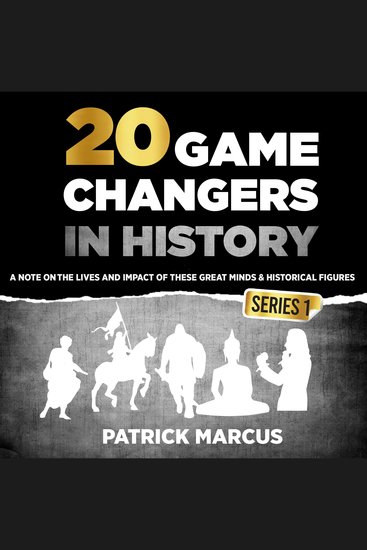
  • 20 Game Changers in History (Series 1) - A Note on the Lives and Impact of These Great Minds & Historical Figures (Edison Freud Mozart Joan of Arc Jesus Gandhi Einstein Buddha and more) - cover

    20 Game Changers in History...

    Patrick Marcus

    • 0
    • 0
    • 0
    Do you want to learn about the GIANTS of history without the information overload? Then keep reading. 
    Whether it’s the Greatest: Military Leaders, Flawed Geniuses, Religious Leaders, Polar Explorers, Revolutionaries, or Ground-Breaking Scientists... this book has what you need. Add in the most notable Ancient Philosophers, Emperors, Musicians, Artists, and Con-Artists, and there is someone here for everyone. 
    This book contains:Summaries of the Greatest Historical Figures that ever lived.Their impact and ACHIEVEMENTS which changed the world.The ADVERSITIES and SETBACKS they faced.The moments of INSPIRATION they found in their darkest hour.Rare characteristics and their most inspirational QUOTES. 
    The List of Historical Figures Includes:Thomas EdisonSigmund FreudJulius CaesarJesus ChristSir John FranklinSun TzuGenghis KhanLeif EriksonMahatma GandhiJoan of ArcCharles PonziFyodor DostoevskyIsaac NewtonAlbert EinsteinLeonardo Da VinciCleopatraSocratesWolfgang Amadeus MozartEmmeline PankhurstGautama Buddha 
    Click the “Buy Now” Button to get this Unique Book Series and spark some Inspiration into your life
    Zum Buch
  • Cocoa Saves The Day - cover

    Cocoa Saves The Day

    Rekha Balakrishna

    • 0
    • 0
    • 0
    How cocoa farming has helped these women farmers improve their livelihoods and increase income
    Zum Buch
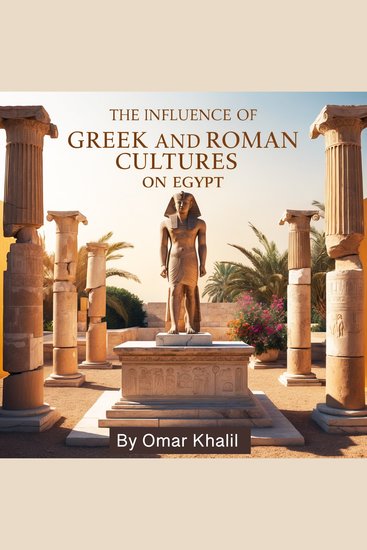
  • The Influence of Greek and Roman Cultures on Egypt - cover

    The Influence of Greek and Roman...

    Omar Khalil

    • 0
    • 0
    • 0
    The interaction between Greek, Roman, and Egyptian civilizations represents one of the most dynamic periods of cultural blending in ancient history. As neighboring powers came into contact through trade, diplomacy, and conquest, their customs, ideas, and beliefs began to intertwine, giving rise to a unique fusion that would leave a lasting imprint on Egyptian society. This chapter explores how these cultural exchanges began and how they shaped Egypt during the Hellenistic and Roman periods. 
    The initial encounter between Egypt and the Greeks occurred long before Alexander the Great’s arrival, through trade across the Mediterranean. However, it was Alexander’s conquest of Egypt in 332 BCE that marked a significant turning point. His establishment of the city of Alexandria set the stage for a new era, where Greek customs and governance took root alongside ancient Egyptian traditions. The subsequent Ptolemaic dynasty, descended from one of Alexander’s generals, became a bridge between Greek and Egyptian worlds, adopting pharaonic symbols while introducing Hellenistic art, language, and administrative systems. 
    Cultural transmission was not solely the result of conquest—it also flourished through everyday interactions. Greek settlers in Egypt brought with them their language, religion, and lifestyle, but they also adapted to local customs, often integrating Egyptian deities and rituals into their own belief systems. Temples began to reflect a blend of architectural styles, and literature began to emerge in both Greek and Demotic scripts, reflecting a hybrid intellectual life.
    Zum Buch