Begleiten Sie uns auf eine literarische Weltreise!
Buch zum Bücherregal hinzufügen
Grey
Einen neuen Kommentar schreiben Default profile 50px
Grey
Jetzt das ganze Buch im Abo oder die ersten Seiten gratis lesen!
All characters reduced
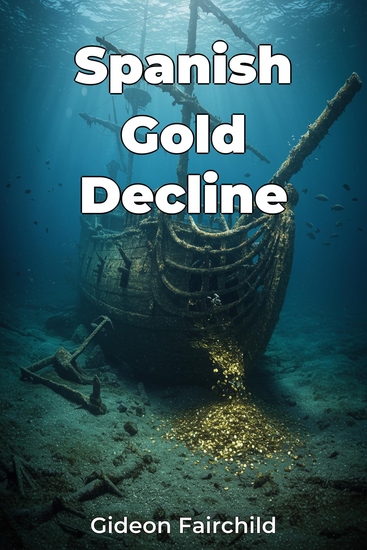
Spanish Gold Decline - cover

Spanish Gold Decline

Gideon Fairchild

Übersetzer A AI

Verlag: Publifye

  • 0
  • 0
  • 0

Beschreibung

Spanish Gold Decline offers a compelling analysis of how Spain's Golden Age was paradoxically undermined by its vast colonial wealth. The book argues that the influx of gold and silver from the Americas triggered hyperinflation, rendering Spanish goods uncompetitive and hindering domestic industry. The Spanish crown's reliance on colonial riches also disincentivized crucial economic reforms. The book reveals that Spain's economic decline was not inevitable but stemmed from specific policy choices and vulnerabilities exacerbated by colonial wealth.

 
The book meticulously examines the inflationary impact of colonial wealth, tracing price fluctuations and wage stagnation. It further investigates the decline of Spanish industry and agriculture due to cheap imports, as well as the Crown's fiscal policies and dependence on colonial revenue. By integrating quantitative data with qualitative analyses, Spanish Gold Decline challenges traditional narratives of Spain's Golden Age and offers a fresh perspective on the complexities of economic development and the resource curse.

 
Structured chronologically, the book begins by establishing the historical backdrop of Spain's ascent and its acquisition of American colonies. Subsequent chapters delve into the mechanisms by which colonial wealth influenced the Spanish economy, culminating in an illustration of how Spain's economic downturn resulted from policy decisions and structural weaknesses intensified by colonial wealth. This approach provides readers with a comprehensive understanding of Spain's economic trajectory during this pivotal period.
Verfügbar seit: 27.02.2025.
Drucklänge: 62 Seiten.


Weitere Bücher, die Sie mögen werden

  • The Concept of Presocratic Philosophy - Its Origin Development and Significance - cover

    The Concept of Presocratic...

    André Laks

    • 0
    • 0
    • 0
    When we talk about Presocratic philosophy, we are speaking about the origins of Greek philosophy and Western rationality itself. But what exactly does it mean to talk about “Presocratic philosophy” in the first place? How did early Greek thinkers come to be considered collectively as Presocratic philosophers? In this brief book, André Laks provides a history of the influential idea of Presocratic philosophy, tracing its historical and philosophical significance and consequences, from its ancient antecedents to its full crystallization in the modern period and its continuing effects today.Laks examines ancient Greek and Roman views about the birth of philosophy before turning to the eighteenth-century emergence of the term “Presocratics” and the debates about it that spanned the nineteenth and twentieth centuries. He analyzes the intellectual circumstances that led to the idea of Presocratic philosophy—and what was and is at stake in the construction of the notion. The book closes by comparing two models of the history of philosophy—the phenomenological, represented by Hans-Georg Gadamer, and the rationalist, represented by Ernst Cassirer—and their implications for Presocratic philosophy, as well as other categories of philosophical history. Other figures discussed include Plato, Aristotle, Cicero, Diogenes Laertius, Schleiermacher, Hegel, Nietzsche, Max Weber, and J.-P. Vernant.Challenging standard histories of Presocratic philosophy, the book calls for a reconsideration of the conventional story of early Greek philosophy and Western rationality.
    Zum Buch
  • Just Another Raggedy Doll - A Foster Care Story Based on True Events - cover

    Just Another Raggedy Doll - A...

    Dr. Sharon Zaffarese-Dippold

    • 0
    • 0
    • 0
    It took less than four hours for Sarah Bailey and her younger brother Curtis to lose everything they knew. She lost her school, her mudpie stations, her church, her father, and her name. Everything they own is packed in garbage bags as they are moved to a new foster home. It’s supposed to be a safe haven for them, but as Sarah—now called Anna—learns, their so-called safety comes at a horrific price, as she is groomed and abused by her new foster mother. 
    But Sarah/Anna is resilient. She adapts to wearing dresses after only dressing as a boy. She befriends a wild and dangerous horse. And for her first Christmas ever, she receives a rag doll, one she carries with her still today. For a child with so little, the rag doll comes to mean so much. 
    Based on a true story, author of Just Another Slice, Dr. Zaffarese-Dippold continues to share her foster care story in the series “Garbage Bag Life.” This book in the series sheds light on the grooming behavior of some sexual abusers, and the risk to children in the foster care system.
    Zum Buch
  • Childhood Abuse and Neglect - cover

    Childhood Abuse and Neglect

    Jim Colajuta

    • 0
    • 0
    • 0
    It's difficult for most of us to envision somebody injuring a child. Child abuse and neglect are absolutely real, as unpleasant as they can be. In the United States, more than 600,000 children are abused or neglected each year. Physical and psychological integrity and protection from all types of violence are guaranteed to all persons under 18. Nonetheless, we know that children and adolescents are subjected to violence in the home, at school, in legal and child protection systems, at work, and in the community for various social and cultural reasons.As a result, children and adolescents are harmed in areas and locations that are supposed to provide them with safety, affection, developmental stimulation, refuge, and advocacy for their rights. One of the factors that makes them particularly vulnerable is their lack of autonomy as a result of their young age, as well as the high levels of emotional, economic, and social dependency they have on adults or institutions, making it difficult for them to stop the abuse, seek help, or report the situation.We pay for children's exposure to violence in various ways, including physical and mental health care, child welfare, special education, juvenile and criminal justice, and productivity losses throughout their lives.
    Zum Buch
  • Russo-Turkish Wars The: The History and Legacy of the Conflicts Between the Russian Empire and Ottoman Empire - cover

    Russo-Turkish Wars The: The...

    Editors Charles River

    • 0
    • 0
    • 0
    In the wake of taking Constantinople, the Ottoman Empire would spend the next few centuries expanding its size, power, and influence, bumping up against Eastern Europe and becoming one of the world’s most important geopolitical players. It was a rise that would not truly start to wane until the 19th century, and in the centuries before the decline of the “sick man of Europe,” the Ottomans frequently tried to push further into Europe. 
    Some of those forays were memorably countered by Western Europeans and the Holy League, but the Ottomans’ most frequent foe was the Russian Empire, which opposed them for both geopolitical and religious reasons. From negotiations to battles, the two sides jockeyed for position over the course of hundreds of years, and the start of the fighting may have represented the Ottomans’ best chance to conquer Moscow and change the course of history. 
    By the 19th century, the tsar was notoriously referring to the Ottoman Empire as the “sick man of Europe,” and by the start of World War I, the Ottoman Empire was often described as a dwindling power, mired by administrative corruption, using inferior technology, and plagued by poor leadership. The general idea is that the Ottoman Empire was “lagging behind,” likely coming from the clear stagnation of the empire between 1683 and 1826. Yet it can be argued that this portrayal is often misleading and fails to give a fuller picture of the state of the Ottoman Empire. Looking at the reforms, technological advances and modernization efforts made by the Ottoman elite between 1826 and the beginning of World War I, one could really wonder why such a thirst for change failed to save the Ottomans when similar measures taken by other nations, such as Japan during the Meiji era, did in fact result in the rise of a global power in the 20th century.
    Zum Buch
  • The Last Assassin - The Hunt for the Killers of Julius Caesar - cover

    The Last Assassin - The Hunt for...

    Peter Stothard

    • 0
    • 0
    • 0
    Many men killed Julius Caesar. Only one man was determined to kill the killers. From the spring of 44 BC through one of the most dramatic and influential periods in history, Caesar's adopted son, Octavian, the future Emperor Augustus, exacted vengeance on the assassins of the Ides of March, not only on Brutus and Cassius, immortalized by Shakespeare, but all the others too, each with his own individual story. 


    The last assassin left alive was one of the lesser-known: Cassius Parmensis was a poet and sailor who chose every side in the dying Republic's civil wars except the winning one, a playwright whose work was said to have been stolen and published by the man sent to kill him. Parmensis was in the back row of the plotters, many of them Caesar's friends, who killed for reasons of the highest political principles and lowest personal piques. For fourteen years he was the most successful at evading his hunters but has been barely a historical foot note—until now. 


    The Last Assassin dazzlingly charts an epic turn of history through the eyes of an unheralded man. It is a history of a hunt that an emperor wanted to hide, of torture and terror, politics and poetry, of ideas and their consequences, a gripping story of fear, revenge, and survival.
    Zum Buch
  • How to embrace academic failure - Building a career with meaning integrity and honesty - cover

    How to embrace academic failure...

    Tara Brabazon

    • 0
    • 0
    • 0
    This book explores current attitudes towards failure in academia. Tara Brabazon argues that success and failures are rarely linked and instead failure can be harnessed as both a diagnostic and a literacy to improve research integrity, authenticity, accountability and consciousness. 
    Brabazon demonstrates how instances of failure can facilitate an awareness of asymmetrical power dynamics and injustice in academic life. How To Embrace Academic Failure illustrates how to create personal, professional and organizational change as a result of failure. It offers practical strategies for using failure to enhance academic careers and improve research ethics and teaching. Brabazon concludes by presenting an idealised academic future where a culture of failure provides transparency, rigour, ethical leadership and followership. 
    This insightful book is a vital resource for students and scholars of higher education management, business leadership and the sociology of education. Academics in critical university studies and early career researchers will also benefit from Brabazon's novel perspective on the post-pandemic, claustropolitan university.
    Zum Buch