Rejoignez-nous pour un voyage dans le monde des livres!
Ajouter ce livre à l'électronique
Grey
Ecrivez un nouveau commentaire Default profile 50px
Grey
Abonnez-vous pour lire le livre complet ou lisez les premières pages gratuitement!
All characters reduced
Coins Replaced Barter - cover

Coins Replaced Barter

Gideon Fairchild

Traducteur A AI

Maison d'édition: Publifye

  • 0
  • 0
  • 0

Synopsis

Coins Replaced Barter explores the fascinating evolution of monetary systems, detailing how societies progressed from inefficient barter economies to the complex financial landscapes of today. The book illustrates how the inherent limitations of barter, such as the difficulty in standardizing goods and services, spurred the adoption of commodity money like minted coins. These coins, particularly in ancient civilizations, facilitated trade, enabled taxation, and supported military expansion, marking a significant leap in economic development. The book traces the journey through the rise of paper currency, originating in medieval China, and culminating in an analysis of digital currencies. This progression represents a fundamental shift in how societies organize themselves and allocate resources. By examining numismatic data, historical trade records, and contemporary reports, Coins Replaced Barter offers a comprehensive understanding of money's role in shaping civilization. The book adopts an accessible approach, presenting complex economic concepts with real-world examples. Beginning with the limitations of barter, the narrative progresses through commodity money and paper currency before delving into digital currencies. This journey provides a historical context for understanding modern economic challenges and debates surrounding financial regulation, offering valuable insights for anyone interested in history and economics.
Disponible depuis: 03/03/2025.
Longueur d'impression: 64 pages.


D'autres livres qui pourraient vous intéresser

  • Smash Hit - Race Crime and Culture in Boxing Films - cover

    Smash Hit - Race Crime and...

    David Curcio

    • 0
    • 0
    • 0
    David Curcio’s SMASH HIT: RACE, CRIME, AND CULTURE IN BOXING FILMS joins Armin Lear Press’ titles exploring the way key social issues surface in the arts.      Cinema emerged alongside the rules that ushered in boxing’s modern age and the “squared circle” proved the ideal stage for cinematic display. The public had its first taste of the new medium in 1894 through a heavyweight bout, recognized today as the world’s first feature film.     As the two attractions fast-grew into the country’s most popular entertainments, nascent Hollywood studios were quick to spot an opening for a surefire combo. Like a snap-jab to the teeth, the boxing film emerged as a popular genre wherein the fighter assumed his place among the private dicks, rebel cops, and desperate underdogs mired in America’s expanding urban landscape.     Devoting equal time to both mediums, SMASH HIT: RACE, CRIME, AND CULTURE IN BOXING FILMS uses twenty films as the basis of a hard-nosed exploration as to how the genre held a bloody mirror to twentieth century America’s most prominent social anxieties, elucidating two conjoined mediums that serve as bellwether to an ever-shifting cultural zeitgeist.     “David Curcio’s Smash Hit is a first-round knockout filled with strong writing and deep insight.”-Bob Batchelor, author of Roadhouse Blues: Morrison, the Doors, and the Death Days of the Sixties and Stan Lee: A Life     "David Curcio's absorbing, fascinating book sent me down a rabbit hole of so many memorable movies....and Smash Hit belongs in the company of the best of them."-Donald McRae, The Guardian     "Smash Hit is not about the sport of boxing so much as a view of American society in the context of boxing culture, film history, and Hollywood gossip. An entertaining, informative, lively read.”-Glen Sharp, author of Punching in the Shadows
    Voir livre
  • Krishnamurti's Notebook - cover

    Krishnamurti's Notebook

    Jiddu Krishnamurti

    • 0
    • 0
    • 0
    When Krishnamurti's Notebook first became available in 1976, it was soon realized that it was a spiritually unique document giving his perceptions and experiences and describing his states of consciousness. It is a kind of diary but one that is little concerned with the day to day process of living, though very much aware of the natural world. 
    Jiddu Krishnamurti was born on 11 May 1895 in Madanapalle, a small town in south India. He and his brother were adopted in their youth by Dr Annie Besant, then president of the Theosophical Society. Dr Besant and others proclaimed that Krishnamurti was to be a world teacher whose coming the Theosophists had predicted. To prepare the world for this coming, a world-wide organisation called the Order of the Star in the East was formed and the young Krishnamurti was made its head. 
    In 1929, however, Krishnamurti renounced the role that he was expected to play, dissolved the Order with its huge following, and returned all the money and property that had been donated for this work. 
    From then, for nearly sixty years until his death on 17 February 1986, he travelled throughout the world talking to large audiences and to individuals about the need for a radical change in mankind.
    Voir livre
  • Leaving Adverse Childhood Experiences Behind - cover

    Leaving Adverse Childhood...

    Adashani Naicker

    • 0
    • 0
    • 0
    Are you suffering from untreated feelings resulting from adverse childhood experiences (ACEs)?Trauma lingers in your body and impacts your mental and physical health unless you excavate and process your traumas effectively. But how do you achieve this?I compiled a list of practical strategies that my friends, students, and loved ones used to overcome their childhood trauma.Their success is my motivation for writing this book and sharing strategies to assist you in coping with your childhood memories.    - Understand the impacts of Adverse Childhood Experiences (ACEs) on your mental and physical health as well as your relationships.    - Identify proven and effective strategies to help you cope with your childhood memories, including recovery plans.    - Step out into your sunshine and use this book as your quick guide to a more tranquil life.But before we begin our journey to positive self-esteem and letting go of our adverse childhood experiences (ACEs), we need to remove our backpacks full of shame, regret, misery, blunders, failure, broken hearts, and grudges.Your race will be much less challenging to complete after you drop that backpack.Remember, you cannot change the past, but you can use the memories to make you stronger. The choice is in your hands. It’s your story so write an awesome ending.It's time to start something new and better! Let's begin.
    Voir livre
  • State looters Again and again - cover

    State looters Again and again

    Philippe Pascot

    • 0
    • 0
    • 0
    On September 15, 2017, in front of millions of television viewers, Emmanuel Macron, with François Bayrou, his Keeper of the Seals at the time, delivered his first lie: “It is now impossible to be elected when you have a B2 criminal record”. Nothing could be further from the truth: in 2025, it is still possible to stand for election and be elected after having been convicted by the courts, whereas there are 396 jobs requiring a clean criminal record. Ten years after the best-seller Pilleurs d'État (State Looters), which sold 120,000 copies, Philippe Pascot takes stock of the progress and setbacks in French politics, listing all the legal abuses still available to the political class: exorbitant salaries and associated expenses, tax exemptions, multiple pensions, fictitious employment, exceptional justice, show trials, bogus declarations of interest and activities, and so many other little arrangements between friends... For Philippe Pascot, the findings are indisputable: “Behind a declared desire for transparency and moralization in the political sphere, our elected representatives continue to nurture their own interests through laws that are less and less comprehensible, in order to escape criminal prosecution and drape themselves in a circumstantial innocence. ”
    Voir livre
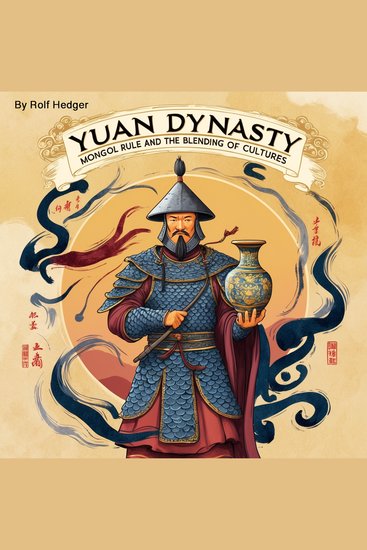
  • Yuan Dynasty - Mongol Rule and the Blending of Cultures - cover

    Yuan Dynasty - Mongol Rule and...

    Rolf Hedger

    • 0
    • 0
    • 0
    The Yuan Dynasty emerged from the ambitions of Kublai Khan, the grandson of Genghis Khan, who sought to consolidate Mongol rule over China. Before the establishment of the Yuan, the Mongols had waged a relentless military campaign against the Song Dynasty, the ruling power in southern China. After decades of conflict, Kublai Khan successfully defeated the Song in 1279, marking the first time in history that all of China was under foreign rule. His ascension to the throne not only signified the dominance of the Mongols but also introduced a new era of governance that blended Mongol traditions with Chinese administration. 
    Kublai Khan declared himself emperor in 1271 and named his dynasty "Yuan," meaning "Great Origin," a term rooted in Chinese philosophy and symbolic of the vast scope of Mongol rule. Unlike his predecessors, who maintained a nomadic lifestyle, Kublai recognized the necessity of adopting Chinese customs to effectively govern a vast and diverse population. He moved the capital from Karakorum to Dadu, present-day Beijing, reinforcing his commitment to ruling as a Chinese emperor while still maintaining Mongol authority. His reign sought to balance the military-driven expansion of his ancestors with the complexities of ruling a settled, bureaucratic society. 
    Despite his efforts to integrate into Chinese political traditions, Kublai faced challenges in legitimizing his rule. Many Han Chinese viewed the Mongols as outsiders and resisted their authority. To solidify his claim, Kublai adopted Confucian principles and retained elements of the Chinese imperial structure, appointing Chinese officials in lower government positions while keeping key positions reserved for Mongols and trusted foreign allies. This approach ensured Mongol dominance while utilizing the administrative expertise of the Chinese.
    Voir livre
  • But Whose Fault? - The AK-47 Found - cover

    But Whose Fault? - The AK-47 Found

    AMOS ASEMONE

    • 0
    • 0
    • 0
    Do you keep an eye on world events through mainstream media? If so, chances are you have missed out on many essential news stories from countries around the world. 
    While many news outlets will cover European, U.K., and U.S. news in great detail, they often leave out essential news from other continents, especially Africa. 
    And yet, that doesn’t mean that newsworthy events occur there every day, just like in the UK. 
    In fact, some of the most newsworthy stories have occurred in Africa in recent years. 
    If you want to learn more about the conflicts of African communities, you have come to the right place. 
    Introducing, But, Whose Fault? Part One, a true story based in Ghana, where two AK-47s mysteriously vanished before reappearing without ammunition. 
    Not only does this book shed light on an incident that is still to be answered to this day, but it also highlights one of the many conflicts that African communities go through and are never displayed on the big screen. 
    In many ways, the conflict surrounding the missing rifles is a point of convergence of the exploitation of Africa and the negligence shown toward the local people and their value to the world. 
    It is one of the main reasons it continues to go unnoticed in many countries, yet it is a story that must be told. 
    Inside, But, Whose Fault? Part One, discover: 
    ●	essential background information about the local people and community 
    ●	the political context behind the events that unfolded 
    ●	the initial factors that influenced the confrontation 
    ●	the company behind the Nguvu mining project 
    ●	the disappearance, search, and fallout from the missing rifles 
    If you are at all interested in the rich history and real-life stories of Africa, this book is a must-read. 
    Grab a copy of But, Whose Fault? Part One today!
    Voir livre