Begleiten Sie uns auf eine literarische Weltreise!
Buch zum Bücherregal hinzufügen
Grey
Einen neuen Kommentar schreiben Default profile 50px
Grey
Jetzt das ganze Buch im Abo oder die ersten Seiten gratis lesen!
All characters reduced
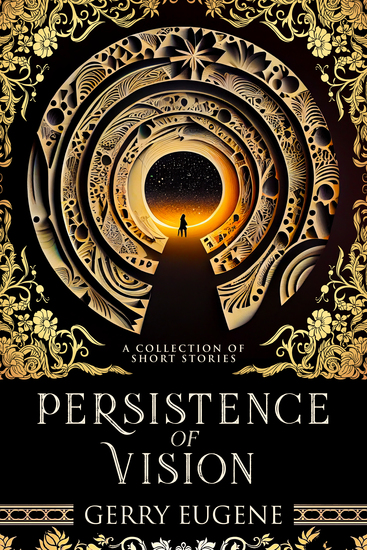
Persistence Of Vision - A Collection Of Short Stories - cover

Persistence Of Vision - A Collection Of Short Stories

Gerry Eugene

Verlag: Next Chapter

  • 0
  • 0
  • 0

Beschreibung

Gerry Eugene's 'Persistence of Vision' is a collection of twenty-five short stories, many of them interrelated. Set in a timespan that reaches from the stone age to the present, these stories transport readers to all quarters of the globe.
 
Here, you will encounter tales of vengeful gods, aliens with death rays, buried treasure, bank robberies, time travel, zombies, mob wars, psychedelic hallucinations, broken hearts, crime lords... and more!
Verfügbar seit: 21.07.2023.
Drucklänge: 222 Seiten.

Weitere Bücher, die Sie mögen werden

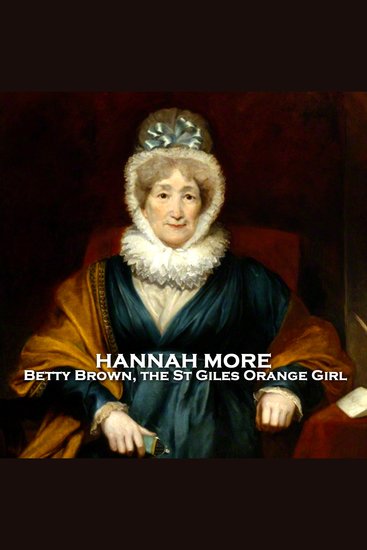
  • Betty Brown the St Giles Orange Girl - From their pens to your ears genius in every story - cover

    Betty Brown the St Giles Orange...

    Hannah More

    • 0
    • 0
    • 0
    Hannah More was born on February 2nd, 1745 at Fishponds in the parish of Stapleton, near Bristol. She was the fourth of five daughters. 
    The City of Bristol, at that time, was a centre for slave-trading and Hannah would, over time, become one of its staunchest critics.  
    She was keen to learn, possessed a sharp intellect and was assiduous in studying.  Hannah first wrote in 1762 with The Search after Happiness (by the mid-1780s some 10,000 copies had been sold). 
    In 1767 Hannah became engaged to William Turner.  After six years, with no wedding in sight, the engagement was broken off.  Turner then bestowed upon her an annual annuity of £200.  This was enough to meet her needs and set her free to pursue a literary career.   
    Her first play, The Inflexible Captive, was staged at Bath in 1775. The famous David Garrick himself produced her next play, Percy, in 1777 as well as writing both the Prologue and Epilogue for it.  It was a great success when performed at Covent Garden in December of that year.  
    Hannah turned to religious writing with Sacred Dramas in 1782; it rapidly ran through nineteen editions. These and the poems Bas-Bleu and Florio (1786) mark her gradual transition to a more serious and considered view of life. 
    Hannah contributed much to the newly-founded Abolition Society including, in February 1788, her publication of Slavery, a Poem recognised as one of the most important of the abolition period.   
    Her work now became more evangelical.  In the 1790s she wrote several Cheap Repository Tracts which covered moral, religious and political topics and were both for sale or distributed to literate poor people.  The most famous is, perhaps, The Shepherd of Salisbury Plain, describing a family of incredible frugality and contentment. Two million copies of these were circulated, in one year. 
    In 1789, she purchased a small house at Cowslip Green in Somerset. She was instrumental in setting up twelve schools in the area by 1800. 
    She continued to oppose slavery throughout her life, but at the time of the Abolition Bill of 1807, her health did not permit her to take as active a role in the movement as she had done in the late 1780s, although she maintained a correspondence with Wilberforce and others.  
    In July 1833, the Bill to abolish slavery throughout the British Empire passed in the House of Commons, followed by the House of Lords on August 1st. 
    Hannah More died on September 7th, 1833.
    Zum Buch

  • Russian Short Story The - Volume 5 - Anton Chekhov to Alexander Kuprin - cover

    Russian Short Story The - Volume...

    Maxim Gorky, Ivan Bunin,...

    • 0
    • 0
    • 0
    The Russian novel has a reputation that is immense, both in narrative and in length.  Unquestionably though the ideas, themes and characters make many novels rightly revered as world class, as icons of literature. 
     
    Perhaps an easier way to enjoy a wider selection of the Russian heritage, with its varied and glorious literary talents, is with the short story.  These gems sparkle and beguile the mind with their characters and narrative, exploring facets of society and the human condition that more Western authors somehow find more difficult to navigate, or to explore, explain and relate to.   
     
    The Russian short story is, in many respects, in a genre of its own.  It is at its captivating best whether it’s an exploration of real-life experiences, through fantasy and fables and on to total absurdity. 
     
    In a land so vast it is unsurprising that it is a world almost unto itself. Cultures and landscapes of differing hues are packed together bound only by the wilful bonds and force of Empire. 
     
    The stories in this collection traverse the decades where one might be a serf under an absolute monarch, and the reality of that was pretty near to slavery, into an emancipation of sorts in the fields, or towns under the despotic will of landowners and the rich into the upheavals of Empire and then the overthrow of the ruling class and its replacement by the communists, who promised equality for all and delivered a society where the down-trodden remained the lowest yet vital cog of the state machine and its will.  
     
    Whilst Tolstoy, Gogol, Dostoevsky, Pushkin and Chekhov are a given in any Russian collection we also explore and include Andreyev, Korolenko, Turgenev, Blavatsky and many others to create a world rich and dense across a sprawling landscape of diverse people, riddled with the class and unfairness in perhaps some of the most turbulent times that Russia has ever experienced. 
     
    01 - The Russian Short Story - Volume 5 - An Introduction 
    02 - About Love by Anton Chekhov 
    03 - Vanka by Anton Chekhov 
    04 - Hide And Seek or Pliatki by Fyodor Sologub 
    05 - In The Steppe by Maxim Gorky 
    06 - Chelkash - Part 1 by Maxim Gorky 
    07 - Chelkash - Part 2 by Maxim Gorky 
    08 - Chelkash - Part 3 by Maxim Gorky 
    09 - Twenty-Six Men and a Girl by Maxim Gorky 
    10 - One Autumn Night by Maxim Gorky 
    11 - Her Lover by Maxim Gorky 
    12 - The Servant by S T Semyonov 
    13 - Son by Ivan Bunin 
    14 - Kasimir Stanislavovitch by Ivan Bunin 
    15 - Gentle Breathing by Ivan Bunin 
    16 - The Outrage by Alexander Kuprin 
    17 - The Park of Kings by Alexander Kuprin
    Zum Buch
  • Dracula – Chapter 4: Jonathan Harker’s Journal (continued) - A Chapter-by-Chapter Reading of Bram Stoker’s Classic - cover

    Dracula – Chapter 4: Jonathan...

    Bram Stoker

    • 0
    • 0
    • 0
    As Jonathan Harker’s ordeal within Count Dracula’s castle continues, the young solicitor becomes increasingly aware that he is no longer a guest, but a prisoner. Every corridor feels like a trap, every locked door a warning. Terrifying discoveries—glimpses of the Count’s unnatural abilities, the disturbing behavior of the castle’s inhabitants, and the mounting evidence of dark intentions—begin to erode Jonathan’s sanity. 
    In this chapter, the façade of hospitality collapses entirely, revealing the chilling truth of Dracula’s power. Jonathan’s struggle shifts from curiosity to survival as he grasps the full horror of his situation. 
    This is Chapter 4 of Bram Stoker’s Dracula, narrated by Amazon bestselling horror author Jonathan Dunne — part of a full chapter-by-chapter audiobook series that brings the classic Gothic nightmare to life with gripping tension and atmospheric dread. 
    Experience the escalating terror, the claustrophobic isolation, and the dawning realization that escape may be impossible in this enduring masterpiece of Gothic horror. 
    📖 Public domain text. Original publication: 1897.
    Zum Buch
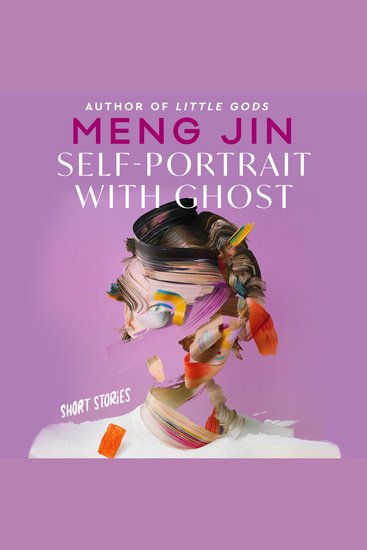
  • Self-Portrait with Ghost - Short Stories - cover

    Self-Portrait with Ghost - Short...

    Meng Jin

    • 0
    • 0
    • 0
    “A knockout short story collection...Each one of these 10 dizzyingly immersive stories offers up a heady and visceral portrait of what ails us, from isolation and self-doubt, to unrequited love and regret over what might have been, to what it means to be (and to be considered) an American."" -- San Francisco Chronicle 
    Meng Jin’s critically acclaimed debut novel, Little Gods, was praised as “spectacular and emotionally polyphonic (Omar El-Akkad, BookPage), “powerful” (Washington Post), and “meticulously observed, daringly imagined” (Claire Messud). Now Jin turns her considerable talents to short fiction, in ten thematically linked stories. 
    Written during the turbulent years of the Trump administration and the first year of the pandemic, these stories explore intimacy and isolation, coming-of-age and coming to terms with the repercussions of past mistakes, fraying relationships and surprising moments of connection. Moving between San Francisco and China, and from unsparing realism to genre-bending delight, Self-Portrait with Ghost considers what it means to live in an age of heightened self-consciousness, seemingly endless access to knowledge, and little actual power. 
    Page-turning, thought-provoking, and wholly unique, Self-Portrait with Ghost further establishes Meng Jin as a writer who “reminds us that possible explanations in our universe are as varied as the beings who populate it” (Paris Review).
    Zum Buch
  • Æpyornis Island - From their pens to your ears genius in every story - cover

    Æpyornis Island - From their...

    H G Wells

    • 0
    • 0
    • 0
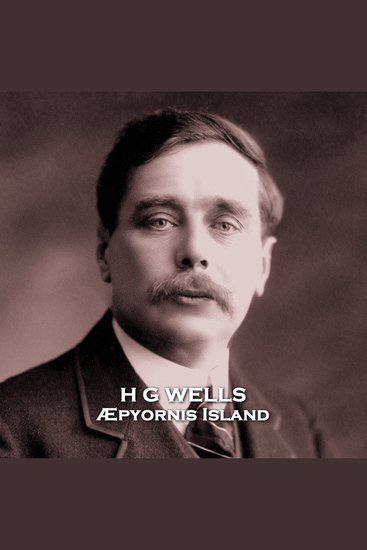
    Herbert George Wells was born on September 21st, 1866 at Atlas House, 46 High Street, Bromley, Kent. He was the youngest of four siblings and his family affectionately knew him as ‘Bertie’.  
    The first few years of his childhood were spent fairly quietly, and Wells didn’t display much literary interest until, in 1874, he accidentally broke his leg and was left to recover in bed, largely entertained by the library books his father regularly brought him. Through these Wells found he could escape the boredom and misery of his bed and convalescence by exploring the new worlds he encountered in these books.  
    From these humble beginnings began a career that was, after several delays, to be seen as one of the most brilliant of modern English writers.    
    Able to write comfortably in a number of genres he was especially applauded for his science fiction works such as The Time Machine and War of the Worlds but his forays into the social conditions of the times, with classics such as Kipps, were almost as commercially successful.  His short stories are miniature masterpieces many of which bring new and incredible ideas of science fiction to the edge of present day science fact.  Wells also received four nominations for the Nobel Prize in Literature 
    Despite a strong and lasting second marriage his affairs with other women also brought the complications of fathering other children.  His writings and work against fascism, as well as the promotion of socialism, brought him into increasing doubts with and opposition to religion.  His writings on what the world could be in works, such as A Modern Utopia, are thought provoking as well as being plausible, especially when viewed from the distressing times they were written in. 
    His diabetic condition pushed him to create what is now the largest Diabetes charity in the United Kingdom.  Wells even found the time to run twice for Parliament. 
    It was a long, distinguished and powerfully successful career by the time he died, aged 79, on August 13th, 1946.
    Zum Buch
  • Top 10 Short Stories The - Epistolary - The top 10 epistolary style short stories of all time - cover

    Top 10 Short Stories The -...

    Nikolai Gogol, Guy de...

    • 0
    • 0
    • 0
    Short stories have always been a sort of instant access into an author’s brain, their soul and heart.  A few pages can lift our lives into locations, people and experiences with a sweep of landscape, narration, feelings and emotions that is difficult to achieve elsewhere. 
     
    In this series we try to offer up tried and trusted ‘Top Tens’ across many different themes and authors. But any anthology will immediately throw up the questions – Why that story? Why that author?  
     
    The theme itself will form the boundaries for our stories which range from well-known classics, newly told, to stories that modern times have overlooked but perfectly exemplify the theme.  Throughout the volume our authors whether of instant recognition or new to you are all leviathans of literature. 
     
    Some you may disagree with but they will get you thinking; about our choices and about those you would have made.  If this volume takes you on a path to discover more of these miniature masterpieces then we have all gained something. 
     
    In this volume our classic authors share their narratives in the form of letters to create both intimacy and the knowing that the events unfolding, line by line, will bring both knowledge and revelation in very short order. 
     
    01 - Top Ten Stories - Epistolary - An Introduction 
    2 - Diary of a Madman by Nikolai Gogol 
    3 - Le Horla by Guy de Maupassant 
    4 - The Story of B 24 by Arthur Conan Doyle 
    5 - Eve's Diary by Mark Twain 
    6 - Diary of a Plain Girl by Amy Levy 
    7 - The Diary of a God by Barry Pain 
    8 - The Truth, the Whole Truth and Nothing But the Truth by Rhoda Broughton 
    9 - Morphine by Mikhail Bulgakov 
    10 - The Yellow Wallpaper by Charlotte Perkins Gilman 
    11 - Dionea - Part 1 by Vernon Lee 
    12 - Dionea - Part 2 by Vernon Lee
    Zum Buch