Rejoignez-nous pour un voyage dans le monde des livres!
Ajouter ce livre à l'électronique
Grey
Ecrivez un nouveau commentaire Default profile 50px
Grey
Abonnez-vous pour lire le livre complet ou lisez les premières pages gratuitement!
All characters reduced
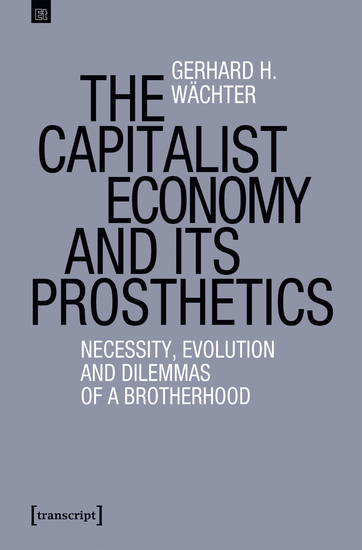
The Capitalist Economy and its Prosthetics - Necessity Evolution and Dilemmas of a Brotherhood - cover

The Capitalist Economy and its Prosthetics - Necessity Evolution and Dilemmas of a Brotherhood

Gerhard H. Wächter

Maison d'édition: transcript Verlag

  • 0
  • 0
  • 0

Synopsis

Notwithstanding its ruthless dynamics, the capitalist economy has the flaw of deficient employment-generating spending. This leads to unemployment of non-owners, individual suffering, social unrest and it undermines military strength. To deal with these issues, states use prosthetic policies, artificial transfers to the productive economy and to non-owners. But the funding of such prosthetic policies - through violent wealth appropriation abroad, protectionism, war, domestic expropriation and taxation, debt and money creation - is caught in dilemmas, while politicians are caught between non-solutions. According to Gerhard H. Wächter, the history of capitalist society is largely the history of this dilemmatic brotherhood.
Disponible depuis: 31/07/2024.
Longueur d'impression: 975 pages.


D'autres livres qui pourraient vous intéresser

  • The Human Herd - Awakening Our Natural Leadership - cover

    The Human Herd - Awakening Our...

    Beth Anstandig

    • 0
    • 0
    • 0
    The Human Herd is a guidebook that helps readers unleash their mammal instincts and shows them how to heighten their self-awareness, experience their lives more deeply, improve their relationships, and step into a more natural—and powerful—way to lead.
    Voir livre
  • Who Gets to Write Fiction? - Opening Doors to Imaginative Writing for All Students - cover

    Who Gets to Write Fiction? -...

    Ariel Sacks

    • 0
    • 0
    • 0
    Writing and sharing fiction allows adolescents to glimpse other lives 


    The current curricular emphasis on analytical writing can make it feel risky to teach creative writing in ELA classrooms. But the opportunity to write fiction in school opens many doors for young people: doors the author argues are critical to the development of our students, our education system, and even our democracy. 


    This book will delight English teachers weary of focusing relentlessly on argument and information writing. Veteran teacher Ariel Sacks vividly describes the many academic, social–emotional, and community-building advantages of teaching imaginative writing in the classroom, not least of which is the impact it has on equity for marginalized students. Her book is a teacher-to-teacher text that folds in detailed, practical guidance about how to design lessons and meet standards, while presenting a powerful central argument: that the writing of fiction should be treated not as a luxury for some, but as a center of the English curriculum for all students.
    Voir livre
  • Philosophical Fragments - cover

    Philosophical Fragments

    Søren Kierkegaard

    • 0
    • 0
    • 0
    Soren Kierkegaard was a Danish philosopher, theologian, and religious author interested in human psychology. He is regarded as a leading pioneer of existentialism and one of the greatest philosophers of the 19th Century.
    Voir livre
  • Stories are Weapons - Psychological Warfare and the American Mind - cover

    Stories are Weapons -...

    Annalee Newitz

    • 0
    • 0
    • 0
    In Stories Are Weapons, Annalee Newitz traces the way disinformation, propaganda, and violent threats have evolved from military weapons deployed against foreign adversaries into tools in domestic culture wars. Newitz delves into America's deep-rooted history with psychological operations, beginning with Benjamin Franklin's Revolutionary War–era fake newspaper and nineteenth-century wars on Indigenous nations, and reaching its apotheosis with the Cold War and twenty-first-century influence campaigns online. America's secret weapon has long been coercive storytelling. And there's a reason for that: operatives who shaped modern psychological warfare drew on their experiences as science fiction writers and in the advertising industry. 


    Now, through a weapons-transfer program long unacknowledged, psyops have found their way into the hands of culture warriors, transforming democratic debates into toxic wars over American identity. Newitz zeroes in on conflicts over race and intelligence, school board fights over LGBT students, and campaigns against feminist viewpoints, revealing how, in each case, specific groups of Americans are singled out and treated as enemies of the state. Crucially, Newitz delivers a powerful counternarrative, speaking with the researchers and activists who are outlining a pathway to achieving psychological disarmament and cultural peace.
    Voir livre
  • Wake Up America - Black Women on the Future of Democracy - cover

    Wake Up America - Black Women on...

    Keisha N. Blain

    • 0
    • 0
    • 0
    In 1968, civil rights activist Fannie Lou Hamer called for Americans to "wake up" if they wanted to "make democracy a reality." Today, as Black communities continue to face challenges built on centuries of discrimination, her plea is increasingly urgent. In this exhilarating anthology of original essays, Keisha N. Blain brings together the voices of major progressive Black women politicians, grassroots activists, and intellectuals to offer critical insights on how we can create a more equitable political future. 


    These women draw on their diverse experiences and expertise to speak to three core themes: claiming civil and human rights, building political and economic power, and combating all forms of hate. We hear from Black Lives Matter cofounder Alicia Garza, who argues that Black communities must organize to wield increased political power; EMILYs List president Laphonza Butler, who spells out ways to fight for women's reproductive rights; and Congresswoman Sheila Jackson Lee, who delineates practical, thorough steps toward tangible reparations. Additional incisive essays include those by former Ohio State Senator Nina Turner; prison abolitionist Mariame Kaba; disability rights activist Andraéa LaVant; Boston's first woman and first Black mayor, Kim Michelle Janey; and others at the forefront of the ongoing fight for social justice.
    Voir livre
  • What's Real about Race? - Untangling Science Genetics and Society - cover

    What's Real about Race? -...

    Rina Bliss

    • 0
    • 0
    • 0
    In What's Real About Race?, sociologist Rina Bliss illuminates the truth about one of the most misunderstood, controversial concepts in our society and reveals why we cannot confuse race with genetic difference. Blending energizing prose with the latest in genetics research, this paradigm-shifting tour unmasks what's truly real about race: namely, racism's impact on our bodies and lives. 


    Bliss traces the history of race, revealing how unscientific categories of identity—White, Black, Asian/Pacific Islander, and American Indian/Alaska Native—became the standard, and illuminates how the myth of biological races endures in science and society, warping our understanding of complex topics like intelligence, disease susceptibility, and behavior. Along the way, What's Real About Race? busts enduring myths about IQ, ancestry tests, behavioral racism, and more. In fascinating explorations of gene research, medicine, and social justice, Bliss argues for a new way forward. To create equity in science and society, we must disentangle our understanding of genetics from identity and see race for what it really is: a purely social category. At a time when misinformation about our bodies and identities is dangerously prevalent, What's Real About Race? is an indispensable resource and a powerful reminder that, biologically, our similarities vastly outweigh our differences.
    Voir livre