Unisciti a noi in un viaggio nel mondo dei libri!
Aggiungi questo libro allo scaffale
Grey
Scrivi un nuovo commento Default profile 50px
Grey
Iscriviti per leggere l'intero libro o leggi le prime pagine gratuitamente!
All characters reduced
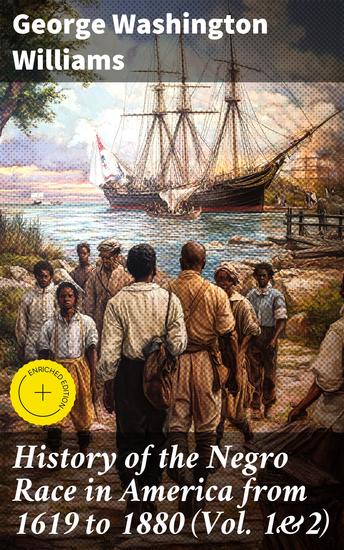
History of the Negro Race in America from 1619 to 1880 (Vol 1&2) - Account of African Americans as Slaves as Soldiers and as Citizens - cover

History of the Negro Race in America from 1619 to 1880 (Vol 1&2) - Account of African Americans as Slaves as Soldiers and as Citizens

George Washington Williams

Casa editrice: Good Press

  • 0
  • 0
  • 0

Sinossi

In "History of the Negro Race in America from 1619 to 1880 (Vol. 1&2)", George Washington Williams presents a meticulous examination of the African American experience from the inception of their presence in colonial America to the dawn of the Reconstruction era. Williams employs a blend of rigorous research and engaging prose, illuminating the struggles, achievements, and undeniable contributions of Black Americans amidst the oppressive structures of slavery and systemic racism. His narrative not only serves as a historical account but also as an indictment of the societal injustices faced by African Americans, revealing the intricate dynamics of race, culture, and identity in a transformative time. George Washington Williams was a pioneering African American historian, minister, and politician, whose own experiences as a descendant of freedmen profoundly influenced his scholarly pursuits. Born in 1849 in New Jersey, he witnessed the violent struggles of his community and was deeply motivated by the lack of comprehensive narratives concerning African American history. His scholarly dedication is not only reflective of his personal journey but also a commitment to raising awareness of the rich legacy of Black Americans amidst pervasive discrimination. This groundbreaking work is highly recommended for anyone seeking a comprehensive understanding of African American history. Williams's engaging style and thorough research serve to educate and inspire, making this text an essential addition to the libraries of scholars, students, and general readers alike who wish to grasp the complexities of race and the enduring spirit of resilience.
Disponibile da: 20/12/2023.
Lunghezza di stampa: 1156 pagine.

Altri libri che potrebbero interessarti

  • Summary: Forgiving What You Can't Forget - Discover How to Move On Make Peace with Painful Memories and Create a Life That's Beautiful Again by Lysa TerKeurst: Key Takeaways Summary & Analysis Included - cover

    Summary: Forgiving What You...

    Brooks Bryant

    • 0
    • 0
    • 0
    Disclaimer: This is not the official book, but a summary & it does not accompany the official. 
    Struggling with the shackles of unforgiveness? Discover healing with our incisive summary of Lysa TerKeurst's 'Forgiving What You Can't Forget.' Dive into a transformative guide that explores the intricate pathway toward forgiveness, even when it seems unfathomable. 
    TerKeurst provides you with practical tools and spiritual wisdom, but our summary distills her groundbreaking methods into digestible insights that you can apply today. Find out how to liberate yourself from the torment of resentment and let go of the grudges that hold you back. 
    Is it possible to forgive when your heart screams 'never'? Is there a way to move on without giving up your right to justice? Our summary answers these questions and more, setting you on a journey toward peace and emotional freedom. 
    If you're ready to step out of the past and into a future defined by joy and freedom, this is your go-to guide. Unlock the strength of forgiveness and reclaim your well-being now
    Mostra libro
  • CBT+DBT+ACT | MENTAL HEALTH | BIG BUNDLE 6 IN 1 - Unlock Your Full Potential: Mastering CBT DBT and ACT for Total Mental Health Transformation! - cover

    CBT+DBT+ACT | MENTAL HEALTH |...

    Helen Campbell, Andrew Lopez

    • 0
    • 0
    • 0
    Are you ready to embark on a transformative journey towards optimal mental health?  
    Look no further than "CBT+DBT+ACT | Mental Health | 6 in 1 Big Bundle." This comprehensive book bundle brings together the power of Cognitive Behavioral Therapy (CBT), Dialectical Behavior Therapy (DBT), and Acceptance and Commitment Therapy (ACT) to provide you with a holistic approach to mental well-being. 
    Inside this big bundle, you'll discover six essential books packed with practical strategies, insightful techniques, and empowering exercises. Whether you're struggling with anxiety, depression, stress, relationship challenges, or emotional dysregulation, this bundle offers a wealth of tools and resources to help you overcome obstacles and unlock your full potential. 
    With CBT, you'll learn to identify and reframe negative thought patterns, gaining control over anxiety, fears, and self-defeating behaviors. DBT will equip you with skills to manage intense emotions, enhance interpersonal relationships, and cultivate mindfulness in your daily life. ACT will guide you towards embracing acceptance, building psychological flexibility, and living a values-driven life. 
    The synergy of these evidence-based therapies creates a powerhouse of transformational change. You'll develop a deep understanding of the mind-body connection, harnessing the power of self-awareness, resilience, and self-compassion. Through step-by-step guidance and relatable examples, you'll gain mastery over your thoughts, emotions, and behaviors, creating lasting positive change. 
    Don't wait another day to take control of your mental well-being. Unleash the potential within you and embark on a life-changing journey with "CBT+DBT+ACT | Mental Health | 6 in 1 Big Bundle." Your path to lasting transformation starts here.
    Mostra libro
  • Righteous Renegades : Once Hidden Heroes of the Holocaust - cover

    Righteous Renegades : Once...

    Quentin Drummond Anderson

    • 0
    • 0
    • 0
    Righteous Renegades: Once Hidden Heroes of the Holocaust 
    By Quentin Drummond Anderson 
    As the Nazi regime tightened its grip across Europe, four diplomats waged a silent battle with bureaucracy itself. Chiune Sugihara, Raoul Wallenberg, Varian Fry, and Aristides de Sousa Mendes defied their governments to save thousands during the Holocaust. 
    The Nazi genocide operated through meticulous documentation and legal decrees. Escape required someone willing to break these very rules. 
    Japanese consul Sugihara issued thousands of unauthorized transit visas from Lithuania. Swedish diplomat Wallenberg arrived in Budapest in 1944, using forged documents and safe houses to rescue Hungarian Jews. American journalist Fry transformed an assignment in Vichy France into a covert rescue operation for intellectuals and refugees. Portuguese consul Sousa Mendes granted visas to thousands in Bordeaux against direct orders. 
    Their heroism came at tremendous cost. Some faced professional ruin, while others vanished into Soviet captivity. Recognition as Righteous Among the Nations came decades later. 
    Through gripping storytelling and extensive research, Anderson examines the ethical dilemmas these men confronted. Each was bound by government duty yet found moral courage to disobey. The book explores power structures, bureaucratic indifference, and how a single signature determined life or death. 
    More than historical account, Righteous Renegades reflects on individual responsibility within systems of power. In today's world of refugee crises and political oppression, these lessons remain profoundly relevant. 
    For readers of Erik Larson, Deborah Lipstadt, and Timothy Snyder, this essential addition to Holocaust literature poses a timeless question: When faced with injustice, would you have the courage to act?
    Mostra libro
  • Holy Roman Empire’s Conflicts with the Vatican The: The History of the Medieval Wars that Fractured Germany and Italy - cover

    Holy Roman Empire’s Conflicts...

    Charles River Editors

    • 0
    • 0
    • 0
    It has been famously pointed out that the Holy Roman Empire was neither holy, nor Roman, but it was also not an empire in the sense people expect when hearing the term. In theory, the emperor was the highest prince in Christendom, and his dominion extended the length and breadth of Western Europe. The empire had been created by the papacy in 801 when Pope Leo the Third famously crowned the supposedly unwitting Charlemagne in Saint Peter’s Basilica, intending to recreate the Western Roman Empire. In truth, the imperial power did not extend beyond central Europe, which by the beginning of the 16th century included Germany, northern Italy, and the Netherlands. Even in these lands, however, the emperor struggled to command obedience. His dominion over northern Italy was theoretical only, the cities of the Netherlands were deeply conscious of their ancient rights and privileges, and Germany had long ceased to be compliant. The latter had become a collection of principalities, dukedoms and bishoprics which vied with each other and pursued their own agendas. They were, however, united in only one sense: denying the emperor power and resisting attempts to centralize the government.  
    	At the same time, the secular sovereigns frequently butted heads with religious authorities back in Rome, and arguably none of the conflicts were as crucial as the War of the Keys and the Investiture Controversy. The tensions between the Holy Roman Empire and Church over the power to invest bishops with authority led to decades of civil war in Germany on the way to establishing the relationship between Church and state, elevating the status of the papacy and weakening the Holy Roman Empire. What is crucial in understanding the conflicts is to not view them with the benefit of hindsight. Most importantly, no nation as people recognize it today yet existed, as England, France, Germany, and Italy were largely geographical expressions, not national identities.
    Mostra libro
  • Gaslighting - The Narcissist's Favorite Tool of Manipulation - How to Avoid the Gaslight Effect and Recovery From Emotional and Narcissistic Abuse - cover

    Gaslighting - The Narcissist's...

    Dr. Theresa J. Covert

    • 0
    • 0
    • 0
    Still struggling from the effects of an abusive relationship? 
    Many people do and sadly there is very little information available to be found online or in the written research, or with counsellors and therapists that can help. The Gaslight Effect is not officially recognised, nor is it widely even known. 
    Even when it is accepted, recognised and known not many people seem to know what to DO ABOUT IT to heal it… The fact is being in a relationship with a narcissist over a long period of time has long lasting traumatic effects that can be extremely catastrophic to the person suffering them. 
    DO THE FOLLOWING SYMPTOMS SOUND FAMILIAR? 
     - Doubting yourself and your sanity 
    - Feeling like you’re losing your mind 
    - Feeling like you’re always apologizing 
    - You’re second-guessing your memory 
    - Feeling like you aren’t good enough 
    - Feeling misunderstood 
    - Feeling lonely 
    - Ruined self confidence 
    - Extreme weight loss or weight gain 
    - Uncharacteristic jealousy/ insecurity 
    - Feeling like you don’t know the difference between right and wrong 
    - Extreme paranoia (being turned into an obsessive detective) 
    - Endless, repetitive obsessive thinking about your ex 
    - Strange dreams 
    - Sudden inexplicable anxiety followed by rapid dips into depression 
    The list goes on…. 
    “NOBODY UNDERSTANDS!” 
    I hear this frustrated cry from abused people a lot. 
    Gaslighting is crazy-making, it makes you think that you’re actually going crazy. 
    Gaslighting is a way of hiding the abuse. 
    Gaslighting is lying with a goal. 
    The motive behind the gaslighting is to make you think that you’re crazy or that your memory doesn’t work right. So you can’t trust yourself and your perceptions of reality.
    Mostra libro
  • Follow First Lead Second - Leadership is for Everyone - cover

    Follow First Lead Second -...

    Max King

    • 0
    • 0
    • 0
    There is the widespread belief that management and leadership are inextricably linked, that every manager is (or should be) a good leader. As a result, management leadership has been elevated to a cause worthy of promotion, and leadership as a term has become a mantra chanted by all and sundry, with numerous voices proclaiming numerous theories, many of which are spoken as facts, particularly by those who are disciples of this management-leadership cause. Examples of their output can be found in any management texts, in texts specializing in engineering management, and, as one might expect, in texts devoted exclusively to the leading cause. Numerous literary fallacies and paradoxes will be examined, and an unusual literary source will be used to illustrate various leadership styles.The concept of leadership will be applied to engineer positions, and some potentially divisive conclusions will be presented.Leadership is a critical field because it affects the entire world. In other words, it is a vital management function that enables organizations to achieve maximum efficiency and effectiveness. Numerous individuals inquire why we should pursue this field of study or why this assignment is necessary. Not only is leadership a position, but it is also a process that shapes how people and organizations interact. All nations, business enterprises, educational institutions, and organizations succeed primarily due to effective leadership.
    Mostra libro