Begleiten Sie uns auf eine literarische Weltreise!
Buch zum Bücherregal hinzufügen
Grey
Einen neuen Kommentar schreiben Default profile 50px
Grey
Jetzt das ganze Buch im Abo oder die ersten Seiten gratis lesen!
All characters reduced
How Private George W Peck Put Down the Rebellion or The Funny Experiences of a Raw Recruit - 1887 - cover

How Private George W Peck Put Down the Rebellion or The Funny Experiences of a Raw Recruit - 1887

George W. Peck

Verlag: DigiCat

  • 0
  • 0
  • 0

Beschreibung

In "How Private George W. Peck Put Down the Rebellion or, The Funny Experiences of a Raw Recruit," Peck offers a captivating blend of humor and military narrative, reflecting on his experiences as an inexperienced recruit during the American Civil War. This semi-autobiographical work is characterized by its lively prose and comical anecdotes, providing both entertainment and insight into the absurdities of war. It serves as a unique literary artifact that captures the zeitgeist of the post-war period, employing satire to offset the grim realities faced by soldiers, demonstrating how comedy can emerge even in the bleakest circumstances. George W. Peck, a journalist and humorist, utilized his personal experiences to craft this engaging narrative, drawing from his service in the Wisconsin Volunteers. His career in the press and affinity for humor influenced his storytelling technique, allowing him to inject levity into a subject often steeped in sorrow. Peck's background in theater and journalism also enriched his narrative style, facilitating a presentation that resonates with both soldiers' camaraderie and the chaos of battle. Readers looking for a light-hearted yet poignant examination of military life during the Civil War will find Peck's work to be both enlightening and entertaining. This book is highly recommended for those interested in military history, humor literature, and personal narratives that reveal deeper truths through laughter, offering a fresh perspective on war's experience.
Verfügbar seit: 16.09.2022.
Drucklänge: 227 Seiten.
Weitere Bücher, die Sie mögen werden

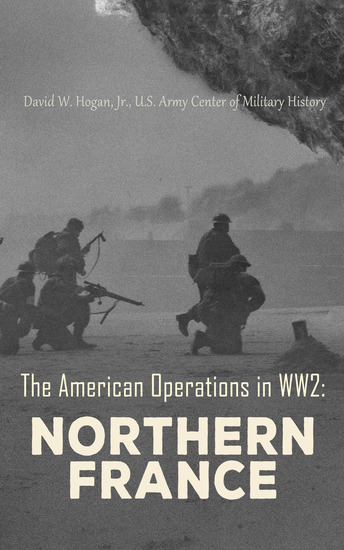
  • The American Operations in WW2: Northern France - cover

    The American Operations in WW2:...

    History U.S. Army Center of...

    • 0
    • 0
    • 0
    World War II was the largest and most violent armed conflict in the history of mankind. Highly relevant today, World War II has much to teach us, not only about the profession of arms, but also about military preparedness, global strategy, and combined operations in the coalition war against fascism. This book follows military operations of the US Army in the Northern France from 25 July to 14 September 1944. 
    As July 1944 entered its final week, Allied forces in Normandy faced, at least on the surface, a most discouraging situation. In the east, near Caen, the British and Canadians were making little progress against fierce German resistance. In the west, American troops were bogged down in the Norman hedgerows. These massive, square walls of earth, five feet high and topped by hedges, had been used by local farmers over the centuries to divide their fields and protect their crops and cattle from strong ocean winds. The Germans had turned these embankments into fortresses, canalizing the American advance into narrow channels, which were easily covered by antitank weapons and machine guns. The stubborn defenders were also aided by some of the worst weather seen in Normandy since the turn of the century, as incessant downpours turned country lanes into rivers of mud. By 25 July, the size of the Allied beachhead had not even come close to the dimensions that pre D-day planners had anticipated, and the slow progress revived fears in the Allied camp of a return to the static warfare of World War I. Few would have believed that, in the space of a month and a half, Allied armies would stand triumphant at the German border...
    Zum Buch
  • The Universe Within - cover

    The Universe Within

    Raphael Terra

    • 0
    • 0
    • 0
    This audiobook has been recorded using Text to speech (TTS). 
     
    This is a divided and chaotic world. A world torn apart by greed and hatred. By desires that spread around the world like a disease. The stress of modern life pushes us further and further apart from each other and nature. 
     
    The simple fact is that we are destroying the planet upon which we rely for sustenance. Our chaotic minds form chaotic societies. Power and wealth are in the hands of the people who should not have them. We subconsciously know that we have screwed things up and yet we proceed to screw things up a little more with each passing generation. 
     
    We have forgotten the prime directive of the universe. We ignore its teachings. We fail to listen to its pleas. 
     
    The truth that will save you and all of mankind is very simple. It is the Universal Law of Attraction and it is time to listen and learn from it.
    Zum Buch
  • In the Mind of Stalin - cover

    In the Mind of Stalin

    James Greensmith

    • 0
    • 0
    • 0
    On 1 October 1939, Winston Churchill, First Lord of the Admiralty and soon to be the UK’s wartime leader, described Russia as ‘a riddle wrapped in a mystery inside an enigma’. The same can certainly be said of Stalin. How can this paradox of a man, who on the one hand had once exhibited great tenderness and kindness to his daughter Svetlana, and on the other sent millions – including members of his own family - to their deaths, be explained? 
     
    It is impossible to quantify the total number of deaths attributable to the policies of Stalin, but the ‘Excess Mortality’ (i.e., deaths over and above what would normally have been expected during the period in question) gives an approximate figure in excess of 40 million. 
     
    However, this is only part of the story of the amount of misery inflicted by the Stalin regime through torture, deliberate starvation, neglect, separation from loved ones, cold and hypothermia (e.g. in the prisons of Siberia), which is unquantifiable and unimaginable. 
     
    Svetlana confessed that she ‘would never undertake to “explain” what motivated all my father’s actions, simply because I do not possess the psychological genius of [Russian novelist] Dostoevsky, who knew how to “penetrate” into another man’s soul and “examine it from within”’.
    Zum Buch
  • I Have a Dream - cover

    I Have a Dream

    Martin Luther King

    • 0
    • 0
    • 0
    Introducing the Martin Luther King Jr Library 
    With a New Foreword written and read by Amanda Gorman. 
    A beautiful audio edition of Dr. Martin Luther King Jr’s legendary speech at the March on Washington, part of Dr. King’s archives published exclusively by HarperCollins, hear both the original recording of the speech and a new reading by Blair Underwood. 
    On August 28, 1963, Dr. Martin Luther King Jr. stood before thousands of Americans who had gathered at the Lincoln Memorial in Washington, D.C. in the name of civil rights. Including the immortal words, “I have a dream,” Dr. King’s keynote speech would energize a movement and change the course of history. 
    With references to the Gettysburg Address, the Emancipation Proclamation, the Declaration of Independence, the U.S. Constitution, Shakespeare, and the Bible, Dr. King’s March on Washington address has long been hailed as one of the greatest pieces of writing and oration in history. Profound and deeply moving, it is as relevant today as it was nearly sixty years earlier. 
    This beautiful edition presents Dr. King’s speech in its entirety, paying tribute to this extraordinary leader and his immeasurable contribution, and inspiring a new generation of activists dedicated to carrying on the fight for justice and equality. 
    Zum Buch
  • Reflections on the Mind of Plato - cover

    Reflections on the Mind of Plato

    Joseph Norio Uemura

    • 0
    • 0
    • 0
    «Plato was not a Platonist! I would like to show in the following pages that anyone who reads the dialogues of Plato without bias or an ax to grind will find a humorous, witty, pleasant friend; and not a desiccated scholarly mandarin. Plato was an open-minded, tolerant, reasonable individual, not a tight-lipped, pietistic, puritan. In a word, Plato was an Athenian, not a Spartan!»
     
    In the twenty-four centuries that have passed since the Athenians put Socrates to death, every generation has interpreted the meaning of Plato’s work differently. Joseph Uemura guides us through six dialogues in an effort to promote a dialectical quest rather than seek a final resting place. Plato’s dialogues treat the big questions that confront any thoughtful person. Eythyphro explores religion, Phaedo reflects on mind, Theatetus examines knowledge, Sophist probes being, Phaedrus reflects on art, and the Republic ponders society. All great literature must be experienced first-hand. Because it is not self-explanatory, it must be interpreted and evaluated. Professor Uemura’s reflections serve as a touchstone by which to test every new reading of Plato’s work.
    Zum Buch
  • The Murder Squad - cover

    The Murder Squad

    Michael Adams

    • 0
    • 0
    • 0
    SHORTLISTED FOR THE NED KELLEY AWARD FOR BEST TRUE CRIME 
     
    How the New South Wales Police Force's finest solved murders in one of the most tumultuous periods in Australian history.  
     
    As Australia sank into the darkest days of the Great Depression, a succession of bloody mysteries grabbed headlines and gripped the country. The Hammer Horror, The Bungendore Bones, The Park Demon, The Human Glove and The Pyjama Girl – these were just some of the grisly cases that had to be solved by the Sydney detectives of The Murder Squad.  
     
    With the people, press and politicians screaming for justice and vengeance, homicide chief Tom McRae and his colleagues used bold new investigative tools in the massive manhunts for these maniacal killers. Working under intense pressure, hard-nosed and hard-charging cops solved some cases brilliantly – yet others were 'closed' with dodgy convictions while several shadowy figures were to get away with murder.  
     
    Set against the backdrop of our greatest economic crisis, as the federal and state governments headed for a showdown and fascist and communist thugs threatened civil war, The Murder Squad reopens the files on Australia's most chilling forgotten crimes to ask who was guilty, who was innocent, and whether some cops were as dangerous as the monsters they were hunting.
    Zum Buch