Begleiten Sie uns auf eine literarische Weltreise!
Buch zum Bücherregal hinzufügen
Grey
Einen neuen Kommentar schreiben Default profile 50px
Grey
Jetzt das ganze Buch im Abo oder die ersten Seiten gratis lesen!
All characters reduced
George Sand: The Collected Works (The Greatest Novelists of All Time – Book 11) - The Devil's Pool Indiana Mauprat The Countess of Rudolstadt Valentine Leone Leoni Antonia… - cover

George Sand: The Collected Works (The Greatest Novelists of All Time – Book 11) - The Devil's Pool Indiana Mauprat The Countess of Rudolstadt Valentine Leone Leoni Antonia…

George Sand

Verlag: e-artnow

  • 0
  • 0
  • 0

Beschreibung

George Sand was one of the most notable writers of the European Romantic era. In her novels Sand blends the conventions of romanticism, realism and idealism. Her writing was immensely popular during her lifetime and she was highly respected by the literary and cultural elite in France. Sand's works influenced many authors including Dostoevsky, Marcel Proust, Virginia Woolf and Walt Whitman. This unique collection includes some of her best and most famous novels:
The Devil's Pool
Indiana
Mauprat
The Countess of Rudolstadt
Valentine
The Sin of Monsieur Antoine
Leone Leoni
The Marquis de Villemer
The Bagpipers
Antonia
Verfügbar seit: 09.03.2022.
Drucklänge: 2688 Seiten.

Weitere Bücher, die Sie mögen werden

  • The Psychology of Secrets - My Adventures with Murderers Cults and Influencers - cover

    The Psychology of Secrets - My...

    Andrew Gold

    • 0
    • 0
    • 0
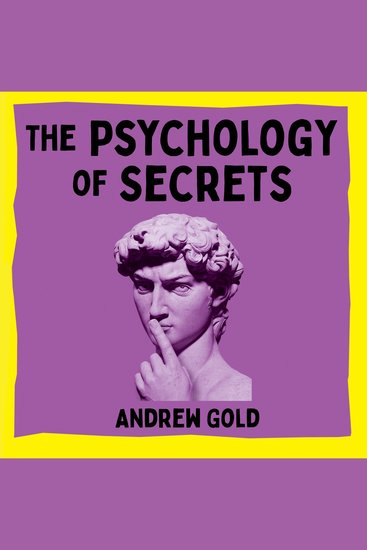
    This audio edition is read by the author, Andrew Gold, and includes an exclusive author Q&A. "Andrew Gold is the new Jon Ronson. Smart, funny, brave and deeply thoughtful, The Psychology of Secrets is an absolute must read" - Will Storr, bestselling author of The Status Game and The Science of Storytelling--Cult leaders, murderers, psychopaths – and you. Take a deep dive into the bizarre psychology of secrecy with Andrew Gold, award-winning investigative journalist and host of On the Edge With Andrew Gold. We all keep secrets. 97 per cent of us are hiding a secret right now, and on average we each hold thirteen at any one time. There’s a one-in-two chance that those secrets involve a breach of trust, a lie or a financial impropriety. They are the stuff of gossip, of novels and of classic dramas; secrets form a major part of our hidden inner lives.Andrew Gold knows this better than anyone. As a public figure, he has found himself the unwitting recipient of hundreds of strangers' most private revelations. This set him on a journey to understand this critical part of our societies and lives. Why do we keep secrets? Why are we fascinated by those of others? What happens to our mind when we confess?Drawing from psychology, history, social science, philosophy and personal interviews, The Psychology of Secrets is a rollicking journey through the history of secrecy.--"That Andrew Gold is a truly edgy journalist, broadcaster and now writer is - but should not be - one of our culture’s best kept secrets" - David Baddiel, bestselling author of The God Desire
    Zum Buch
  • Axis Powers’ Nuclear Weapons Programs The: The History of Germany and Japan’s Efforts to Build an Atomic Bomb during World War II - cover

    Axis Powers’ Nuclear Weapons...

    Editors Charles River

    • 0
    • 0
    • 0
    The Manhattan Project would ultimately yield the “Little Boy” and “Fat Man” bombs that released more than 100 Terajoules of energy at Hiroshima and Nagasaki, but as it turned out, the Axis were not far behind with their own nuclear weapons program. When the Nazis’ quest for a nuclear weapon began in earnest in 1939, no one really had a handle on how important nuclear weapons would prove to war and geopolitics. The attacks on Hiroshima and Nagasaki in August 1945, along with the Cold War-era tests and their accompanying mushroom clouds, would demonstrate the true power and terror of nuclear weapons, but in the late 1930s these bombs were only vaguely being thought through, particularly after the successful first experiment to split the atom by a German scientist. The nuclear age itself was in its infancy, barely 35 years old, but within a few short years the advent of nuclear war loomed over the world and the prospect of the enemy winning the nuclear race kept Allied leaders awake at night. 
    In November 1921, roughly a year after the Treaty of Versailles came into effect, Japan, Britain, and the United States gathered to sign another treaty of disarmament at the Washington Naval Conference. However, Japan opted against renewing the pact in the mid-1930s, and around the same time, Germany openly breached the terms of the former treaty and began to restock their weapons. This gave rise to the birth of a new and unprecedented arms race, one that had catastrophically disastrous consequences about a decade later. 
    Although their project is typically overlooked given the American use of the bombs and then the Soviets following suit early on in the Cold War, the Japanese avidly pursued nuclear weapons as well.
    Zum Buch
  • Subdivided - City-Building in an Age of Hyper-Diversity - cover

    Subdivided - City-Building in an...

    Jay Pitter, John Lorinc

    • 0
    • 0
    • 0
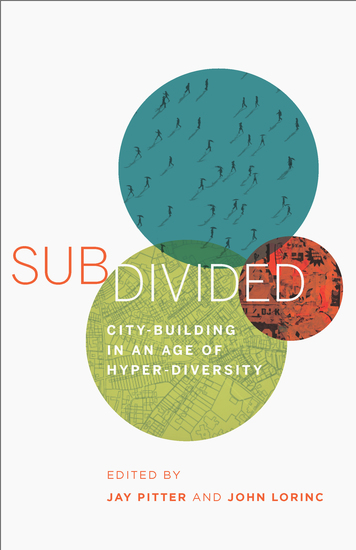
    How do we build cities where we aren't just living within the same urban space, but living together?
      
       
    Greater Toronto is now home to a larger proportion of foreign-born residents than any other major global metropolis. Not surprisingly, city officials rarely miss an opportunity to tout the region’s ethno-cultural neighbourhoods. Yet there’s strong evidence that the GTA is experiencing widening socio-economic disparities that have produced worrisome divisions. We say that ‘diversity is our strength,’ but has a feel-good catchphrase prevented us from confronting the forces that seem to be separating and isolating urban communities?
      
       
    Through compelling storytelling and analysis, Subdivided’s contributors – a wide range of place-makers, academics, activists and journalists – ask how we can expand city-building processes to tackle issues ranging from transit equity and trust-based policingto holistic mental health, dignified affordable housing and inclusive municipal governance. Ultimately, Subdivided aims to provoke the tough but pressing conversations required to build a truly connected and just city.
      
       
    Contents
      
       
    Introduction - Jay Pitter
      
       
    Identity and the City: Thinking Through Diversity – Beyhan Farhadi
      
       
    Doing Immigrant Resettlement Right – Doug Saunders
      
       
    Wasauksing–Vancouver–Toronto: My Path Home – Rebeka Tabobondung
      
       
    How We Welcome: Why Canada’s Refugee Resettlement Program Undermines Place-making – Sarah Beamish and Sofia Ijaz
      
       
    Finding Space for Spirituality – Fatima Syed
      
       
    Navigating the City with an Invisible Illness: The Story of Dorothy – Denise DaCosta
      
       
    Culture and Mental Illness – Karen Pitter
      
       
    Neighbourhood Watch: Racial Profiling and Virtual Gated Communities – Asmaa Malik
      
       
    Accessing Education: An Immigrant’s Story – Nicholas Davis
      
       
    Policing and Trust in the Hyper-Diverse City – Nana Yanful
      
       
    Three Questions about Carding – Idil Burale
      
       
    An Overburdened Promise: Arts Funding for Social Development – Ian Kamau, Paul Nguyen and Ryan Paterson, with John Lorinc
      
       
    Designing Dignified Social Housing – Jay Pitter
      
       
    Walking Through Loss: A Critical Visit to an Old Neighbourhood – Photography by Taha Muharuma
      
       
    Reconsidering Revitalization: The Case of Regent Park – Jay Pitter in conversation with Sandra Costain
      
       
    Model Citizens – Andrea Gunraj
      
       
    A Tale of Two – or Three – Cities: Gentrification and Community Consultations – Mariana Valverde
      
       
    Mobility in the Divided City – Eric Mann
      
       
    Toward MoreComplete Communities: Business Out of the Box – Alina Chatterjee
      
       
    Going Beyond Representation: The Diversity Deficit in Local Government – John Lorinc
      
       
    Brampton, a.k.a. Browntown – Noreen Ahmed-Ullah
      
       
    Life in the City In-Between – Shawn Micallef
      
       
    Conclusion – J. David Hulchanski
    Zum Buch
  • The Art of Cycling - Philosophy Meaning and a Life on Two Wheels - cover

    The Art of Cycling - Philosophy...

    James Hibbard

    • 0
    • 0
    • 0
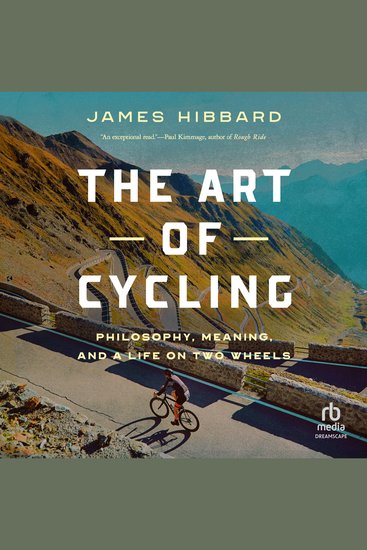
    A meditative love letter to the sport of cycling, revealing how cycling can shed new light on age-old questions of selfhood, meaning, and purpose.Interweaving cycling, philosophy, and personal narrative, The Art of Cycling provides listeners with a deep understanding of the highs and lows of being an elite athlete, the limits of approaching any sporting pursuit from a strictly rational perspective, and how the philosophical and often counterintuitive lessons derived from sport can be applied to other areas of life.Accessible to everyone from the hardened racer to the casual fan, this updated American edition of The Art of Cycling engages the history of thought through the lens of cycling to undermine much of what is typically thought of as "intellectual," breathing new vitality into life, and countering society's obsession with progress and drive towards the abstract, detached, and virtual.
    Zum Buch
  • Christianity as Mystical Fact and the Mysteries of Antiquity - cover

    Christianity as Mystical Fact...

    Rudolf Steiner

    • 0
    • 0
    • 0
    “As simultaneously mysticism and fact, Christianity is a breakthrough in the historical development of humanity, for which the mysteries, with the results that they brought about, form a prior evolutionary stage.” ― 
    Rudolf Steiner 
    During the fall and winter of 1901–02, Steiner gave a series of lectures called “Christianity as Mystical Fact” to members of the Theosophical Society. The lectures were rewritten and issued as a book later that year. They mark a watershed in the development of Western esotericism. Steiner wrote of the idea behind his book: 
    “The title 
    Christianity as Mystical Fact 
    was one I gave to this work eight years ago, when I gathered together the content of lectures given in 1902. It was meant to indicate the special approach adopted in the book. Its theme is not just the mystical side of Christianity in a historical presentation. It was meant to show, from the standpoint of a mystical awareness, how Christianity came into being.
    Zum Buch
  • The Fright Before Christmas - Surviving Krampus and Other Yuletide Monsters Witches and Ghosts - cover

    The Fright Before Christmas -...

    Jeff Belanger

    • 0
    • 0
    • 0
    Bronze Winner for Popular Culture, Foreword INDIEsStep into the dark roots of Christmas past where the Krampus punishes the bad boys and girls.Christmas time is truly the darkest and creepiest time of the year filled with devilish creatures lurking in the shadows waiting to get us. Best known is the Krampus who has been the subject of films and songs. There was a time in the late 1800s when people sent Krampus cards, not holiday greetings. There are other violent and dangerous monsters from all over northern climes who have been hunting naughty children for centuries. From shapeshifters to mountain trolls, to elves, to heavy-handed cohorts of Saint Nicholas, the Christmas holiday has been filled with ghosts and monsters ready to dole out punishment to those who need it.The Fright Before Christmas will delve into the folklore of Krampus and his friends with the elf-like Tomten and the goblinesque Karakoncolas. The Belsnickel is ready to hit us with his switch of sticks and Gryla may drag you back to her mountain lair. And watch out for the Yule Cat ready to pounce! These are just a few of the yuletide beasties coming for us in The Fright Before Christmas in the hope they can save us from ourselves.The folklore roots of Christmas under its many other guises (Yule, the Winter Solstice, Saturnalia) is examined in a different, darker light. The Winter Solstice is a time to be afraid. It’s the shortest day of the year. The longest night. In some parts of the world, the sun doesn’t rise at all. It’s dark, and we have to wonder if the sun will ever come back at all. Christmas has always been creepy and with The Fright Before Christmas you'll see the other side. This is a book for everyone who loves a little darkness around the holidays.Be good or the Krampus will get you!
    Zum Buch