Begleiten Sie uns auf eine literarische Weltreise!
Buch zum Bücherregal hinzufügen
Grey
Einen neuen Kommentar schreiben Default profile 50px
Grey
Jetzt das ganze Buch im Abo oder die ersten Seiten gratis lesen!
All characters reduced
The Seven Great Monarchies Of The Ancient Eastern World: Persia - Unveiling the Majesty of Ancient Persia - cover

The Seven Great Monarchies Of The Ancient Eastern World: Persia - Unveiling the Majesty of Ancient Persia

George Rawlinson

Verlag: Good Press

  • 0
  • 0
  • 0

Beschreibung

In 'The Seven Great Monarchies of the Ancient Eastern World: Persia', George Rawlinson meticulously examines the rise and fall of one of history'Äôs most formidable empires. This scholarly work is characterized by its rigorous historical analysis and eloquent prose that navigates the complex socio-political landscape of ancient Persia. Rawlinson employs a comprehensive approach, integrating archaeological findings, primary sources, and critical interpretations to detail the Persian Empire's governance, culture, and its interactions with neighboring civilizations. The book is set within the broader context of ancient Near Eastern studies, reflecting a deep understanding of the region'Äôs historical significance. George Rawlinson, a prominent Victorian scholar and Assyriologist, was profoundly influenced by the resurgence of interest in ancient civilizations during the 19th century. His scholarly pursuits were fueled by his experiences as a diplomat in the Middle East, where he developed a fervent interest in cuneiform inscriptions and the historical narratives they conveyed. This intimate familiarity with the region informed his meticulous research and brought a novel perspective to the understanding of Persia'Äôs historical legacy. This book is essential for historians, students, and enthusiasts of ancient history. Rawlinson's insightful examination of the Persian Empire not only illuminates its grandeur but also reveals the lasting impact it had on subsequent cultures. Readers seeking a well-rounded, scholarly foundation in ancient Persian history will find this work both enlightening and indispensable.
Verfügbar seit: 12.08.2023.
Drucklänge: 324 Seiten.
Weitere Bücher, die Sie mögen werden

  • Solidarity Is the Political Version of Love - Lessons from Jewish Anti-Zionist Organizing - cover

    Solidarity Is the Political...

    Alissa Wise, Rebecca...

    • 0
    • 0
    • 0
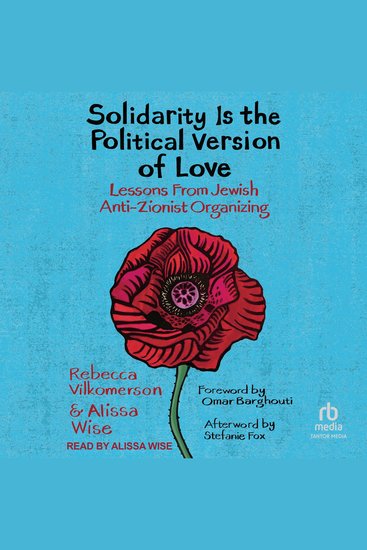
    Against enormous odds and in the face of fierce pushback, the Palestine solidarity movement has succeeded in transforming the landscape of American politics. The movement has catapulted Palestine from being an untouchable topic in even liberal political circles to a central rallying cry in grassroots progressive organizing, one that is championed by some of the highest profile and beloved members of Congress. 


    In the fall and winter of 2023, with the attention of the world focused on Israel's unprecedented aggression against the people of Gaza, millions across the globe mobilized in solidarity with Palestinians and their struggle for liberation. 


    In this book, two key leaders and former staff of Jewish Voice for Peace (JVP) focus on the important role of anti-Zionist Jewish organizing within the broader Palestine solidarity movement, reflecting on their decade of leadership of JVP and drawing lessons especially relevant to those organizing from a position of solidarity. 


    Their insights help contextualize the intense suppression of activism for Palestinian freedom, while illuminating the roots of today's flourishing Jewish solidarity with Palestinians worldwide.
    Zum Buch
  • Carlist Wars and the Spanish Civil War The: The History of the Conflicts that Divided Spain in the Last 200 Years - cover

    Carlist Wars and the Spanish...

    Editors Charles River

    • 0
    • 0
    • 0
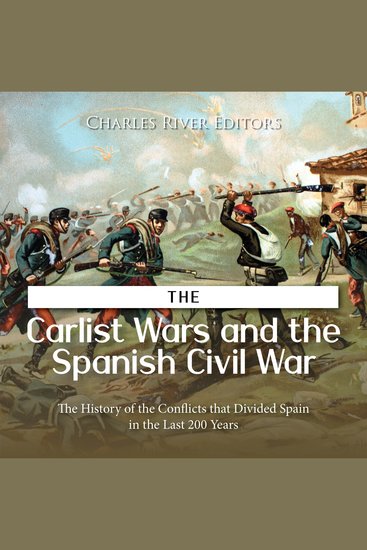
    Thinking of Spain as a modern nation state today distorts the complicated reality that the Iberian Peninsula faced in the past. Spain was a nation in progress, consisting of regions united under the Spanish crown, but with strong regional identities based on different historical and cultural experiences. The largest entities were the kingdoms of León and Castile, but Spain also included the kingdoms of Navarre, Andalusia, Granada, Jaén, Aragon, and Valencia. There were also the principalities of Asturias and Catalonia, the lordship of Vizcaya, and both Guipúzcoa and Alava were “exempted provinces.” Navarre, Aragon, and Catalonia had separate Cortes, which were versions of parliaments (Parker 18-19). This complex system of entities granted privilege to local power structures over the concept of a unified nation and made administration difficult, because there were few standards that applied to all of Spain. Many of the regions had special laws that respected and allowed traditional institutions, administrative patterns, and cultural patterns. These local and regional rights were called fueros and were fiercely defended against centralization. 
    	The Spanish Civil War has exerted a powerful impact on the historical imagination. Without question, the conflict was a key moment in the 20th century, a precursor to World War II, and an encapsulation of the rise of extremist movements in the 1930s, but it was also a complex narrative in and of itself, even as it offered a truly international theatre of war. It marked one of the seminal moments, along with the 1929 Wall Street Crash, between the two apocalyptic wars of the early 20th century, and since it occurred between 1936 and 1939, Spain proved to be a testing ground of tactics, weaponry, and ideology ahead of World War II. 
    Zum Buch
  • North American Revolutions - Historical Details about the Revolution in Cuba Mexico and the United States - cover

    North American Revolutions -...

    Kelly Mass

    • 0
    • 0
    • 0
    These three topics will be addressed in this book: 
    Cuban Revolution - Less than a decade after the Second World War, the Cuban revolution happened. It went on and off, irregularly causing riots and rebel actions, as well as tyrannical government suppression, and it all lingered on during the Cold War between the Soviet Union and the United States. What was it that typified the Cuban Revolution? Who were the players and what did they do? Which battles were most significant?And last but not least, what was the final result it all led to in the end? These and many other questions will be answered in this comprehensive guide, which will give you a better understanding about the history of one of the most controversial economies on the huge island near the United States coastline. 
    American Revolution - Between 1765 to 1791, the American Revolution was an ideological and political revolution in British America. In the American Revolutionary War (between 1775 to 1783), the Americans in the Thirteen Groups established sovereign countries that beat the British, getting independence from the British Crown and establishing the USA of America, the first modern-day constitutional liberal democracy. 
    Mexican Revolution - The Mexican Revolution was a great revolution that included a series of army local battles instead of a single united struggle. It destroyed the Federal Force and changed it with an innovative army, changing Mexican civilization and governance at the same time It also culminated in the adoption of a new constitution that included the revolutionaries' ideal visions. In spite of the fact that President Porfirio Daz's (from about 1880 to 1911) rule had grown progressively out of favor over the prior 31 years, there was no indicator that a transformation would break out in the year 1910.
    Zum Buch
  • Off The Map: A Global Atlas of Non-Existent Places - Unrecognized States Disputed Lands & The Places We Cannot Go - cover

    Off The Map: A Global Atlas of...

    Dr. Nick Coman, I. A.I.

    • 0
    • 0
    • 0
    A 24‑lecture audio expedition into the world’s cartographic glitches—unrecognized states, disputed borders, legal voids, and places you can’t enter. We move from café‑tile sovereignty in Baarle, where a front door decides your country, to the 2015 India–Bangladesh enclave exchange, and the 2022 line cut across Hans Island’s ravine; from Ceuta and Melilla’s fences and tax codes to the Danube where hydrology argues with history; from the Bir Tawil/Hala’ib paradox to the Chernobyl Exclusion Zone and America’s twin sacrifice zones, Picher and Centralia.         
    We make the atlas legible: thalweg versus cadastre, uti possidetis and boundary commissions, counter‑enclaves and neutral roads, patrol lines, CBMs, and maritime geodesy. Trace Fergana’s water politics from Golovnoi gates to the Andijan/Kempir‑Abad bargain; India’s Himalayan hinge from Siachen and Galwan to Sugauli; the pastoral circuits and patrol lines that keep the Ilemi Triangle ambiguous; and the nested Nahwa‑in‑Madha‑in‑UAE trick.     
    Markets and politics are treated as geography constraints. Learn to read sovereignty by ferries, fuel receipts, and power bills; to separate romantic claims from operational control; to test what‑ifs—who could claim Bir Tawil, what shifts if Sir Creek moves—and to map chokepoints beyond lines: customs regimes, water releases, patrol logistics, recognition cycles. Then follow the consequences—duty‑free ledgers and bunkering margins, quotas and visas, surveillance and tragedy on the fence. Rigorous, narrative‑driven, and built for the intellectually ambitious, this course is an operator’s guide to the law, logistics, and lived frictions of a planet whose map won’t sit still.  
    Zum Buch
  • Luba Empire - Central Africa's Kingdom of Trade and Power - cover

    Luba Empire - Central Africa's...

    Rolf Hedger

    • 0
    • 0
    • 0
    The Luba Empire emerged as one of the most influential kingdoms in Central Africa during the pre-colonial period. Rooted in a rich tradition of oral history and cultural heritage, the empire played a central role in shaping trade, political organization, and social structures throughout the region. The Luba people developed a sophisticated society that not only thrived on local commerce but also participated in expansive regional networks, connecting diverse communities across the African continent. 
    The formation of the Luba Empire was marked by a blend of indigenous traditions and innovative political practices. At its core was a system of governance that efficiently harnessed local resources, maintained internal stability, and forged strategic alliances with neighboring groups. This centralized authority, balanced by localized autonomy, enabled the empire to mediate conflicts and expand its influence through both diplomatic and military means. The administrative techniques developed during this era laid the groundwork for a resilient state capable of adapting to shifting economic and social dynamics. 
    Economically, the Luba Empire became a beacon of trade and craftsmanship. Its strategic location allowed it to serve as a vital crossroads for commerce, facilitating the exchange of valuable goods such as salt, iron, and agricultural products. The empire’s success in trade was not only a product of its abundant natural resources but also of the innovative methods its people employed in agriculture, metallurgy, and artisanal production. These economic activities formed the backbone of a prosperous society that celebrated both practical skills and cultural achievements, fostering an environment of continuous growth and learning.
    Zum Buch
  • Little Men and Tender Parenthood (Little Women Podcast) - cover

    Little Men and Tender Parenthood...

    Niina Niskanen, Annabelle

    • 0
    • 0
    • 0
    Little Men and Tender Parenthood (Little Women Podcast) 
     Hosted by Niina & Annabelle 
    Step back into the warm, bustling world of Plumfield with Niina and Annabelle as they unpack Little Men, Louisa May Alcott’s heartfelt companion to Little Women. In this thoughtful, tender, and deeply engaging discussion, the hosts explore the novel’s themes of parenting, moral growth, second chances, and the joy, and chaos, of raising children with compassion. 
    With their signature blend of literary insight and personal reflection, Niina and Annabelle examine Jo Bhaer’s unique approach to education, the emotional journeys of Plumfield’s young boys, and the novel’s enduring lessons about kindness, discipline, play, and purpose. Whether you’re revisiting the March family’s universe or discovering Little Men for the first time, this episode offers a rich, warm, and accessible exploration of the story’s heart. 
    Perfect for fans of classic literature, lovers of Alcott’s work, homeschoolers and educators, or anyone fascinated by the timeless art of gentle parenthood. 
    Settle in and join Niina and Annabelle for a cozy, insightful conversation that celebrates the wisdom, humor, and humanity of Little Men.
    Zum Buch