Rejoignez-nous pour un voyage dans le monde des livres!
Ajouter ce livre à l'électronique
Grey
Ecrivez un nouveau commentaire Default profile 50px
Grey
Abonnez-vous pour lire le livre complet ou lisez les premières pages gratuitement!
All characters reduced
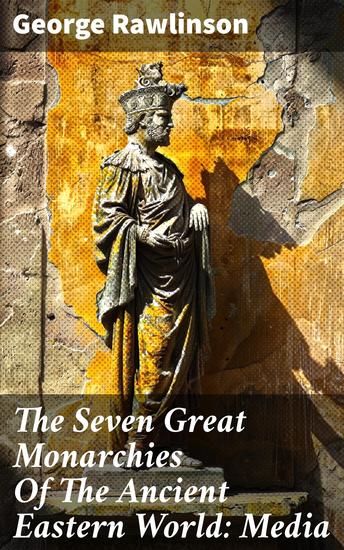
The Seven Great Monarchies Of The Ancient Eastern World: Media - Unveiling the Rise and Fall of a Forgotten Empire - cover

The Seven Great Monarchies Of The Ancient Eastern World: Media - Unveiling the Rise and Fall of a Forgotten Empire

George Rawlinson

Maison d'édition: Good Press

  • 0
  • 0
  • 0

Synopsis

In 'The Seven Great Monarchies Of The Ancient Eastern World: Media,' George Rawlinson offers a meticulous exploration of the ancient kingdom of Media, one of the pivotal powers in the early history of the Eastern world. Through a blend of detailed historical accounts and engaging narrative, Rawlinson examines the political, cultural, and social dimensions of Media, contextualizing its significance within the broader tapestry of ancient empires. His scholarly approach, infused with rich descriptions and critical analyses, reflects the Victorian fascination with uncovering the vestiges of past civilizations while integrating classical sources with modern archaeological findings. George Rawlinson, a noted historian and Assyriologist, was deeply involved in the study of ancient civilizations, which profoundly influenced his writing. His academic background, including his work on cuneiform inscriptions and contributions to the deciphering of ancient texts, equipped him with the tools to delve into the complexities of the Medes and their interactions with neighboring empires. Rawlinson's scholarship not only aimed to illuminate the past but also to instill a sense of appreciation for the interconnectedness of ancient cultures. With its scholarly rigor and narrative depth, 'The Seven Great Monarchies' is an essential read for historians, students, and enthusiasts of ancient history. Rawlinson'Äôs incisive insights will not only provoke thought but also enrich one's understanding of the pivotal role Media played in shaping historical trajectories. This book is a must-have for anyone looking to grasp the intricacies of one of history'Äôs great monarchies.
Disponible depuis: 12/08/2023.
Longueur d'impression: 133 pages.


D'autres livres qui pourraient vous intéresser

  • Longbow The: The History of the Weapon that Revolutionized Warfare in the Middle Ages - cover

    Longbow The: The History of the...

    Editors Charles River

    • 0
    • 0
    • 0
    While the bow was used throughout ancient times and the Middle Ages, on mainland Europe it was mostly replaced by the crossbow in the early 13th century, but that would change with the introduction of the longbow, a more powerful weapon than the traditional hunting bows. The original longbowmen were Welshmen recruited by King Edward I of England after he conquered Wales, and the weapon got its name from the fact that it was almost as tall as the man using it. This gave it a longer draw and therefore more force, as longbows were generally made of yew, a strong and pliable wood. The longbow was cheap and easy to make, but they required extensive training to be used well, so in England, commoners were encouraged and at times required to practice archery. A statute of Richard II dating from 1388 reads, “Servants and Laborers shall have Bows and Arrows, and use the same the Sundays and Holydays, and leave all playing at tennis or foot-ball, and other games called coits, dice, casting of the stone, kaikles [skittles], and other such importune games.” 
    	The longbow’s greatest day was at Agincourt in 1415, but the fact that this did not end the age of heavy plate cavalry indicated the longbow did have some limitations. For example, modern tests show that longbow arrows had trouble piercing plate armor, likely the main reason they were used as a massed weapon. With arrows raining down, it increased the chances of hitting a joint in the armor or an imperfection. Also, horse armor couldn’t protect the entire animal and the knights would soon find themselves dismounted. At some battles like Agincourt, the knights foundered in soft earth, and as their horses fell and the men became confused and hampered by the arrows clanking off their armor, they got mired in the mud and the English infantry could move in and finish them off. 
    Voir livre
  • Phenomenology - The Study of Perception Experience and Consciousness - cover

    Phenomenology - The Study of...

    Mike Crawford

    • 0
    • 0
    • 0
    Phenomenology is a branch of philosophy that delves into the structures of experience and consciousness, aiming to understand how individuals perceive and interact with the world around them. At its core, phenomenology seeks to examine the nature of subjective experience and the ways in which our consciousness engages with phenomena, offering insights into the nature of reality from a first-person perspective. This philosophical approach was pioneered by Edmund Husserl in the early 20th century, and it has since evolved to influence numerous disciplines, from psychology to cognitive science and beyond. 
    The essence of phenomenology lies in its commitment to the lived experience. Unlike traditional philosophy, which often abstracts reality through logic and reason, phenomenology emphasizes the importance of understanding the world as it is experienced by individuals. This involves focusing on the way things appear to consciousness before any interpretation or theoretical assumptions are made. In this sense, phenomenology is concerned with describing and analyzing the direct, lived experience of human beings, often referred to as the “phenomenon” in phenomenological terms.
    Voir livre
  • Russo-Turkish Wars The: The History and Legacy of the Conflicts Between the Russian Empire and Ottoman Empire - cover

    Russo-Turkish Wars The: The...

    Editors Charles River

    • 0
    • 0
    • 0
    In the wake of taking Constantinople, the Ottoman Empire would spend the next few centuries expanding its size, power, and influence, bumping up against Eastern Europe and becoming one of the world’s most important geopolitical players. It was a rise that would not truly start to wane until the 19th century, and in the centuries before the decline of the “sick man of Europe,” the Ottomans frequently tried to push further into Europe. 
    Some of those forays were memorably countered by Western Europeans and the Holy League, but the Ottomans’ most frequent foe was the Russian Empire, which opposed them for both geopolitical and religious reasons. From negotiations to battles, the two sides jockeyed for position over the course of hundreds of years, and the start of the fighting may have represented the Ottomans’ best chance to conquer Moscow and change the course of history. 
    By the 19th century, the tsar was notoriously referring to the Ottoman Empire as the “sick man of Europe,” and by the start of World War I, the Ottoman Empire was often described as a dwindling power, mired by administrative corruption, using inferior technology, and plagued by poor leadership. The general idea is that the Ottoman Empire was “lagging behind,” likely coming from the clear stagnation of the empire between 1683 and 1826. Yet it can be argued that this portrayal is often misleading and fails to give a fuller picture of the state of the Ottoman Empire. Looking at the reforms, technological advances and modernization efforts made by the Ottoman elite between 1826 and the beginning of World War I, one could really wonder why such a thirst for change failed to save the Ottomans when similar measures taken by other nations, such as Japan during the Meiji era, did in fact result in the rise of a global power in the 20th century.
    Voir livre
  • Deadly Triangle - "Famous Architect His Wife Their Chauffeur and Murder Most Foul The" - cover

    Deadly Triangle - "Famous...

    Susan Goldenberg

    • 0
    • 0
    • 0
    "The 1935 murder of architect Francis Mawson Rattenbury, world famous for his design of the iconic Parliament Buildings and Empress Hotel in Victoria, British Columbia, and the arrest and lurid trial of his thirty years younger second wife, Alma, and the family chauffeur, George Percy Stoner, her lover, who was half her age, riveted people. Debate continues even today as to which one of them really was responsible. Francis and Alma had moved to Bournemouth, England, when Victoria had ostracized them for their scandalous, flagrant affair while Francis was married to his first wife. Their life in Bournemouth was tangled. Francis became lush and impotent. Sex-starved, Alma seduced George, previously a virgin. They conducted their affair in her upstairs bedroom with her and Francis’s six-year-old son in a nearby bed, “sleeping” she said, and the near-deaf Francis, apparently unaware, downstairs in his armchair in a drunken stupor. The lovers were tried together at the historic high-profile Old Bailey Criminal Court in London, U.K., resulting in intense public interest and massive, frenzied media coverage. The trial sparked widespread debate over sexual mores and social strata distinctions."
    Voir livre
  • Youth and Society - Examining the Social Lives of Young People - cover

    Youth and Society - Examining...

    Fred Grandsen

    • 0
    • 0
    • 0
    Youth is a dynamic and socially constructed stage of life, shaped by cultural, economic, and historical factors. It is not merely a biological phase between childhood and adulthood but a period influenced by social expectations, policies, and institutional frameworks. While age-based definitions exist, they vary across cultures and societies, making "youth" a flexible and evolving category. 
    Historically, the concept of youth has changed over time. In traditional societies, young people transitioned quickly into adult roles through work, marriage, and family responsibilities. However, industrialization, urbanization, and formal education systems extended this period, creating a distinct youth culture. In contemporary society, youth is often associated with identity exploration, self-discovery, and the gradual assumption of adult responsibilities. This shift has been influenced by structural changes such as the expansion of higher education, delayed workforce entry, and evolving family dynamics. 
    The social construction of youth is evident in the ways governments, media, and institutions define and regulate young people’s lives. Policies related to education, employment, and legal adulthood shape how youth are perceived and treated in different regions. For example, the legal age for voting, drinking, and working varies across countries, reflecting societal expectations of maturity and responsibility. Similarly, media representations often portray youth either as a time of opportunity and innovation or as a period of rebellion and risk, shaping public perceptions and policy decisions.
    Voir livre
  • Democracy in America: Book Summary & Analysis - cover

    Democracy in America: Book...

    Briefly Summaries

    • 0
    • 0
    • 0
    This is a concise summary and analysis of Democracy in America, by Alexis de Tocqueville.
     
    It is not the original book and is not affiliated with or endorsed by Alexis de Tocqueville.
    Ideal those seeking a quick and insightful overview.
     
    Democracy in America is a profound and enduring analysis of the American democratic system, offering a unique perspective on the strengths and challenges of democracy in the 19th century. Written by a keen observer of political and social structures, this work examines the balance of equality and liberty, the role of civil society, and the impact of democracy on culture and individualism. With insights that remain relevant today, it serves as a cornerstone for understanding the complexities of democratic governance and the enduring quest for freedom and justice.
    Voir livre