Rejoignez-nous pour un voyage dans le monde des livres!
Ajouter ce livre à l'électronique
Grey
Ecrivez un nouveau commentaire Default profile 50px
Grey
Abonnez-vous pour lire le livre complet ou lisez les premières pages gratuitement!
All characters reduced
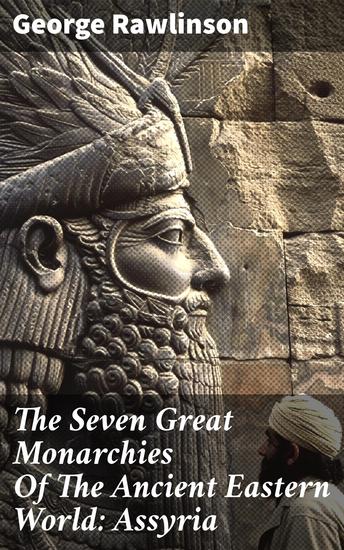
The Seven Great Monarchies Of The Ancient Eastern World: Assyria - Exploring Assyrian Power: Military Conquests Cultural Achievements and Political Structures of the Ancient Eastern World - cover

The Seven Great Monarchies Of The Ancient Eastern World: Assyria - Exploring Assyrian Power: Military Conquests Cultural Achievements and Political Structures of the Ancient Eastern World

George Rawlinson

Maison d'édition: Good Press

  • 0
  • 0
  • 0

Synopsis

In "The Seven Great Monarchies Of The Ancient Eastern World: Assyria," George Rawlinson presents an extensive exploration of Assyria's historical supremacy and cultural intricacies. Written in a compelling narrative style that melds rigorous scholarship with vivid storytelling, this volume delves into the rise and fall of one of the most formidable empires of the ancient world. Rawlinson meticulously analyzes various aspects of Assyrian society'Äîfrom its architecture and art to its military conquests and political structures'Äîframing the narrative against a rich tapestry of Mesopotamian history, thereby contextualizing Assyria'Äôs impact on subsequent civilizations. George Rawlinson, a noted Victorian historian and philologist, drew upon his deep knowledge of ancient languages and cultures, acquired during his tenure at Oxford and through his work in the East India Company, to craft this comprehensive study. His passion for archaeology and ancient Near Eastern history is evident throughout the text, reflective of a broader scholarly pursuit to uncover and understand the complexities of early empires and their legacies. This book is highly recommended for historians, students of ancient cultures, and avid readers alike. Rawlinson'Äôs engaging prose and thorough research not only illuminate Assyria's historical significance but also inspire a deeper appreciation for the ancient world, making it an essential addition to any library focused on ancient history.
Disponible depuis: 12/08/2023.
Longueur d'impression: 492 pages.

D'autres livres qui pourraient vous intéresser

  • The Stranger Who Was Myself - cover

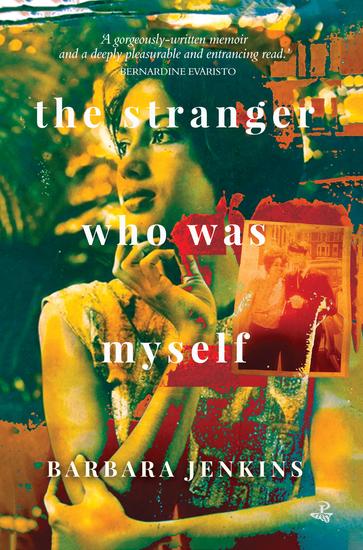
    The Stranger Who Was Myself

    Barbara Jenkins

    • 0
    • 0
    • 0
    Barbara Jenkins writes about the experiences of a personal and family-centred life in Trinidad with great psychological acuteness, expanding on the personal with a deep awareness of the economic, social and cultural contexts of that experience. She writes about a childhood and youth located in the colonial era and an adult life that began at the very point of Trinidad's independent nationhood, a life begun in poverty in a colonial city going through rapid change. It is about a life that expanded in possibility through an access to an education not usually available to girls from such an economic background. This schooling gave the young Barbara Jenkins the intense experience of being an outsider to Trinidad's hierarchies of race and class. She writes about a life that has gender conflict at its heart, a household where her mother was subject to beatings and misogynist control, but also about strong matriarchal women.
    As for so many Caribbean people, opportunity appeared to exist only via migration, in her case to Wales in the 1960s. But there was a catch in the arrangement that the years in Wales had put to the back of her mind: the legally enforceable promise to the Trinidadian government that in return for their scholarship, she had to return. She did, and has lived the rest of her life to date in Trinidad, an experience that gives her writing an insider/outsider sharpness of perception.
    'From her childhood in colonial Port of Spain, to becoming a migrant student and young mother in Wales and then returning to Trinidad post-Independence, Jenkins tells her own life story with the emotional sensitivity of a natural storyteller, the insight of a philosopher, the scope of a historian and the good humour of a Trini. This beautifully written and moving memoir will feel achingly familiar to anyone who knows what it is like to navigate race, class and girlhood while growing up in the West Indies, anyone who has ever felt like an outsider.' Ayanna Lloyd Banwo, author of When We Were Birds.
    Voir livre
  • The History of the American Revolution - cover

    The History of the American...

    Editors Charles River

    • 0
    • 0
    • 0
    The American Revolution is replete with seminal moments that every American learns in school, from the “shot heard ‘round the world” to the Declaration of Independence, but the events that led up to the fighting at Lexington & Concord were borne out of 10 years of division between the British and their American colonies over everything from colonial representation in governments to taxation, the nature of searches, and the quartering of British regulars in private houses. From 1764-1775, a chain of events that included lightning rods like the Townshend Acts led to bloodshed in the form of the Boston Massacre, while the Boston Tea Party became a symbol of nonviolent protest. 
    The political and military nature of the Revolutionary War was just as full of intrigue. While disorganized militias fought the Battles of Lexington & Concord, George Washington would lead the Continental Army in the field while men like Thomas Jefferson drafted the Declaration of Independence in Philadelphia and Benjamin Franklin negotiated overseas in France. Benedict Arnold would become one of his nation’s most vital war heroes and its most notorious traitor, French forces would play a crucial role at the end of the war, and the Treaty of Paris would conclude the Revolution with one last great surprise. 
    The History of the American Revolution chronicles the momentous events before and during the American Revolution, from the beginning of the troubles with Britain in 1764 to the successful conclusion of the Revolution in 1783 with the Treaty of Paris. It comprehensively covers the important battles and the political and military roles played by American legends like Samuel Adams, Thomas Jefferson, Benjamin Franklin, George Washington and more.
    Voir livre
  • My Blue Book of Grammar for Class 3 - cover

    My Blue Book of Grammar for Class 3

    Meigha Rawat

    • 0
    • 0
    • 0
    A Grammar Series That Uses the Functional Approach
    
    KEY FEATURES 
    - Functional approach to grammar teaching, using exemplars to illustrate the usage before defining the structure and rules
    - Vocabulary taught through language-in-use to build the learners’ vocabulary through use rather than memorisation of rules
    - Contemporary topics to inculcate 21-century skills amongst learners
    - Use of literature to help learners understand how grammar is used in text
    - A comprehension section comprising texts from different genres so that learners may relate grammar to different types of works produced in English
    - Phonics in Grades 1 and 2 to teach the very basis of language
    - Uniquely stylised illustrations
    - Activities such as puzzles, crosswords, word grids and games to aid the facilitator in using the concept of ‘flipped classroom’
    - Periodic tests to help the learners self-assess the acquisition of concepts
    - Digital component to cater to a technology-driven classroom
    
    DESCRIPTION: 
    My Blue Book of Grammar is a course that has been conceptualized and designed keeping in mind the increasingly dynamic role of the English language in today’s world. Especially in our country, where English serves as the lingua franca, a grammar course has to offer not only an exposition of the pedagogy but also the exhibition of the utility of that pedagogy. The aim of a grammar series should be to encourage the development of competency amongst learners, even though their proficiency levels may vary. While the level of exposure to English of all learners may be different, a grammar series should aid in the development of a certain level of confidence amongst the learners, with the end result being that they are able to converse without hesitation in English. 
    
    WHAT WILL YOU LEARN
    - Understand grammar concepts
    - Learn how to use different vocabulary concepts taught through language-in-use 
    - Learn 21-century skills 
    - Develop deeper understanding of and appreciation for literature
    - Have clearer pronunciation through a better understanding of phonics
    
    WHO THIS BOOK IS FOR: 
    School students of Grades 3
    
    TABLE OF CONTENTS
    GRAMMAR
    1. Nouns 
    2. Definite Article – the 
    3. Types of Sentences 
    4. Possessive Helping Verbs and Pronouns 
    5. Simple Future Tense – will and shall 
    6. Contractions 
    7. Present Continuous 
    8. Adjectives – Superlative Form 
    9. Kinds of Adverbs 
    10. Conjunctions – so, because 
    11. Prepositions of Time 
    12. Irregular Verbs 
    Test Paper 1 
    VOCABULARY
    13. Alphabetical Order – Using the Second Letter of the Word 
    14. Gender 
    15. Suffix: –able 
    16. Suffixes: –ness, –ship 
    17. Helping Verbs – can or may 
    18. Synonyms – Revision 
    19. Homonyms 
    Test Paper 2 
    WRITING
    20. Picture Composition 
    21. Diary Entry 
    22. Informal Letter Writing 
    23. A Birthday Invitation 
    24. Describing a Scene 
    25. Paragraph Writing 
    Test Paper 3 
    COMPREHENSION
    26. Black Beauty 
    27. Little House in the Big Woods 
    28. Rajasthan Hues: 
    Blue Pottery in India 
    29. Wednesday, Thursday and Friday 
    Orange Global Olympiad – English Sample Paper
    Voir livre
  • Tales from the Haunted South - Dark Tourism and Memories of Slavery from the Civil War Era - cover

    Tales from the Haunted South -...

    Tiya Miles

    • 0
    • 0
    • 0
    In this book Tiya Miles explores the popular yet troubling phenomenon of "ghost tours," frequently promoted and experienced at plantations, urban manor homes, and cemeteries throughout the South. As a staple of the tours, guides entertain paying customers by routinely relying on stories of enslaved black specters. But who are these ghosts? Examining popular sites and stories from these tours, Miles shows that haunted tales routinely appropriate and skew African American history to produce representations of slavery for commercial gain. "Dark tourism" often highlights the most sensationalist and macabre aspects of slavery, from salacious sexual ties between white masters and black women slaves to the physical abuse and torture of black bodies to the supposedly exotic nature of African spiritual practices. Because the realities of slavery are largely absent from these tours, Miles reveals how they continue to feed problematic "Old South" narratives and erase the hard truths of the Civil War era. In an incisive and engaging work, Miles uses these troubling cases to shine light on how we feel about the Civil War and race, and how the ghosts of the past are still with us.
    Voir livre
  • AMERICA AT WAR & THE GEMINI TRIGGER - The Hidden 84-Year Pattern That Shapes America's Destiny and the Countdown to the Next War Cycle (2025–2033) - cover

    AMERICA AT WAR & THE GEMINI...

    Jesús Cediel

    • 0
    • 0
    • 0
    A warning grounded in history—and the cosmic rhythms that shape it. 
    The Verne Code & The Gemini Trigger, by Jesús Cediel, is a sharp, provocative essay about the crisis unfolding in the United States and its echoes across the world. His central claim is clear: America is entering a historical phase that has, time and again, marked the beginning of revolutions, civil wars, and global realignments. 
    J. Cediel argues that the United States is entering a new historical cycle between 2025 and 2033—a period that mirrors three previous moments of profound upheaval, all of which coincided with a striking astronomical and astrological pattern: the transit of Uranus through Gemini. 
    • the American Revolution (1774–1782) 
    • the Civil War (1858–1866) 
    • and World War II (1941–1949) 
    The Verne Code & The Gemini Trigger uses a compelling narrative style to expose the structural fractures—political, social, economic, and geopolitical—that now threaten to break the United States from within. 
    🔹 How Trump’s reelection could ignite mass resistance and institutional breakdown 
    🔹 How internal conflict could lead to the secession of key states and global destabilization 
    🔹 How China, Russia, and Iran would exploit a divided America 
    🔹 Why this next cycle—2025 to 2033—could be as transformative and violent as those before 
    The Verne Code & The Gemini Trigger is a rigorous historical analysis, backed by the rhythm of past collapses and the cycles of celestial mechanics, written with urgency and clarity. 
    For readers who sense that something is coming—but want to understand the why, the when, and the deeper historical and cosmic patterns behind it.
    Voir livre
  • Dividing Lines - How Transportation Infrastructure Reinforces Racial Inequality - cover

    Dividing Lines - How...

    Deborah N. Archer

    • 0
    • 0
    • 0
    Our nation's transportation system is crumbling. But as acclaimed scholar and ACLU president Deborah Archer warns in Dividing Lines, before we can think about rebuilding and repairing, we must consider the role race has played in transportation infrastructure, from the early twentieth century and into the present day. 


    As Archer demonstrates, the success of the Civil Rights movement and the fall of Jim Crow in the 1960s did not mean the end of segregation. With state-sanctioned racism no longer legal, officials across the country turned to transportation infrastructure to keep Americans divided. A wealthy white neighborhood could no longer be "protected" by racial covenants and segregated shops, but a multilane road, with no pedestrian crossings, could be built along its border to make it difficult for people from a lower-income community to visit. Highways could not be routed through Black neighborhoods based on the race of their residents, but those neighborhoods' lower property values—a legacy of racial exclusion—could justify their destruction. 


    Drawing on a wealth of sources, including interviews with people who now live in the shadow of highways and other major infrastructure projects, Archer presents a sweeping, national account—from Atlanta and Houston to Indianapolis and New York City—of our persistent divisions.
    Voir livre