Rejoignez-nous pour un voyage dans le monde des livres!
Ajouter ce livre à l'électronique
Grey
Ecrivez un nouveau commentaire Default profile 50px
Grey
Abonnez-vous pour lire le livre complet ou lisez les premières pages gratuitement!
All characters reduced
The Brook Kerith - A Syrian story - cover

The Brook Kerith - A Syrian story

George Moore

Maison d'édition: e-artnow

  • 0
  • 0
  • 0

Synopsis

"The Brook Kerith" by George Moore. Published by e-artnow. e-artnow publishes a wide range of titles that encompasses every genre. From well-known classics & literary fiction and non-fiction to forgotten−or yet undiscovered gems−of world literature, we issue the books that need to be read. Each e-artnow edition has been meticulously edited and formatted to boost readability for all e-readers and devices. Our goal is to produce eBooks that are user-friendly and accessible to everyone in a high-quality digital format.
Disponible depuis: 24/11/2023.
Longueur d'impression: 398 pages.
D'autres livres qui pourraient vous intéresser

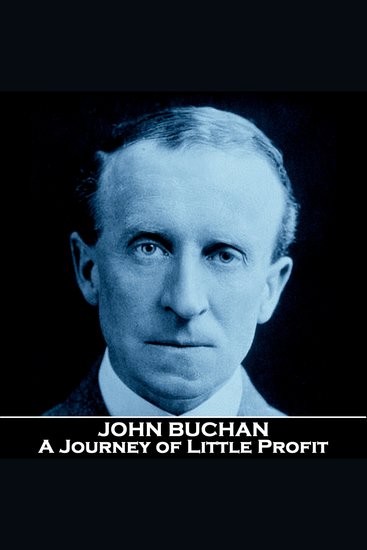
  • A Journey of Little Profit - From their pens to your ears genius in every story - cover

    A Journey of Little Profit -...

    John Buchan

    • 0
    • 0
    • 0
    The Scottish novelist John Buchan enjoyed a remarkable career as politician, historian and Governor General. He was born John Buchan on 26th August 1875 and later added 1st Baron Tweedsmuir PC GCMG GCVO CH to his name.  
    Buchan studied at Hutchesons’ Grammar School, Glasgow and at seventeen won a scholarship to the University of Glasgow to study classics. There he began to write poetry. In 1895 he transferred to Oxford to continue his study of Classics and in 1896 ‘Sir Quixote of the Moors’ was published followed by the non-fiction ‘Scholar-Gipsies’. His prolific literary output now hardly faltered. 
    He graduated in 1900 and became the private secretary to Alfred Milner, the High Commissioner for Southern Africa and other colonies. Buchan found the same inspiration in the African landscape as he had in the Scottish Borders, and would later set many works here. Returning to London he became a partner in a publishing house, and garnered an editorial role at The Spectator. He also completed his law studies. He was called to the bar in 1901 but never practiced.  
    On 15th July 1907 Buchan married Susan Charlotte Grosvenor, the cousin of the Duke of Westminster. In 1910 he wrote ‘Prester John’, the first of a series set in South Africa.  
    In 1911 Buchan entered politics as a Unionist candidate in the Scottish Borders advocating the support of free trade, women’s suffrage, national insurance, and reducing the power of the House of Lords.  
    The Great War saw Buchan writing for the War Propaganda Bureau and as Times correspondent in France. In 1915, he published ‘The Thirty-Nine Steps’, his most famous book and a follow-up Richard Hannay novel, ‘Greenmantle’, in 1916.  
    In 1916 Buchan enlisted in the Intelligence Corps which included writing speeches for Sir Douglas Haig. By 1917 he was Director of Information under Lord Beaverbrook. Buchan called it “the toughest job he ever took on”. He somehow found time to assist in a history of the war magazine. This was later published in 24 volumes: Nelson’s History of the War. 
    After the war his writing focused on historical studies. In 1927 Buchan became the Unionist Party Member of Parliament for the Combined Scottish Universities. In a speech to Parliament he said “I believe every Scotsman should be a Scottish nationalist. If it could be proved that a Scottish parliament were desirable… Scotsmen should support it.”  
    Over the next decade he continued to distinguish himself politically and in literature.  On the 1st June 1935 he became 1st Baron Tweedsmuir of Elsfield in the County of Oxford.  
    He was now also given the position of Governor General in Canada and resolved to travel all over Canada to gain a better insight of the country. Having crossed both length and breadth he saw the cultural shift between areas and their common ground and helped bring about a clear national Canadian identity. 
    On the 6th February 1940 he collapsed from a stroke and sustained a very serious head injury in falling. Two rounds of surgery to stabilise his condition were unsuccessful and Buchan died on the 11th February. After a state funeral in Ottawa his ashes were returned to his estate in Oxfordshire.
    Voir livre
  • Understanding the Hillbilly Thomist - The Philosophical Foundations of Flannery O'Connor's Narrative Art - cover

    Understanding the Hillbilly...

    Damian Ference

    • 0
    • 0
    • 0
    Flannery O’Connor is one of the greatest writers of the twentieth century. Her novels and short stories—shockingly violent, absurdly comic, spiritually potent—continue to entertain, beguile, and transform readers of all backgrounds to this day.  For many encountering them for the first time, O’Connor’s stories of backwoods prophets and outcasts feel strangely nihilistic and dark. Others familiar with her letters and essays appreciate the deep Catholic understanding of sin and grace that animates them. In this new book, Fr. Damian Ference proposes a more precise lens for decoding Flannery O’Connor’s narrative art, one that originates in O’Connor’s own words about herself: Hillbilly Thomism. The author examines the various ways in which St. Thomas Aquinas and the philosophical tradition of Thomism shaped not only O’Connor’s view of reality but also the stories she told to help us see and know it.    Featuring an impressive array of biographical and literary evidence and extended analysis of her short stories “The River,” “Parker’s Back,” and “The Displaced Person,” Understanding the Hillbilly Thomist is an important look at the intersection of medieval philosophy and modern fiction in one of the most treasured artists of the American South. 
    Voir livre
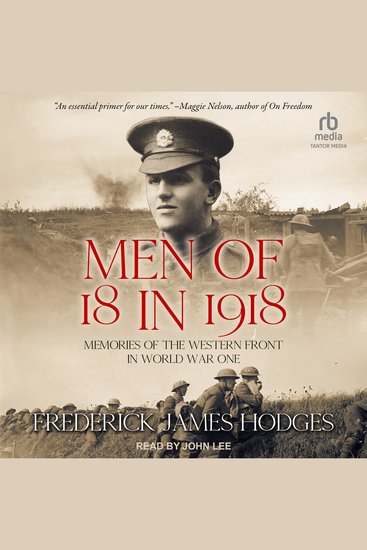
  • Men of 18 in 1918 - Memories of the Western Front in World War One - cover

    Men of 18 in 1918 - Memories of...

    Frederick James Hodges

    • 0
    • 0
    • 0
    An astounding account of one young infantryman's personal experience of the Western Front in the last year of World War One. 


    Perfect for fans of Peter Hart, Max Hastings, and Barbara W. Tuchman. 


    In the spring of 1918 German forces broke through Allied lines in a last-ditch attempt to overcome their enemies. To hold back this tide young, inexperienced men from France, Britain, the United States, Australia, and Canada were sent into war against battle-hardened and desperate German soldiers. 


    What was it like to be an eighteen-year-old and sent to the frontlines in the First World War? 


    Frederick James Hodges was one of these young men and his book, Men of 18 in 1918, provides insight into the ordeals of an ordinary soldier who left Britain as a teenager but returned as a man having witnessed the full horrors of war. 


    Hodges charts his progress through the conflict from his short period of training to being thrown into defending Allied lines against the onslaught before being ordered, as part of Britain's prime assault troops, into a ninety-five-day non-stop attack which only ended with the armistice of November 1918.
    Voir livre
  • The Canterville Ghost - cover

    The Canterville Ghost

    Oscar Wilde

    • 0
    • 0
    • 0
    This audiobook is narrated by an AI Voice.   
    Synopsis: 
    The Canterville Ghost is a short story written by Oscar Wilde. What the author achieves with this work is proof of his mastery, his knowledge of the literary language, and his ability to poignantly mix mystery and humor. 
    It is a narrative text that leaves the reader captivated from start to finish. It's about a ghost who, as usual, devises a plan to scare the new family that will move to Canterville Castle. The problem is that these people are not what he expected. 
    The Otis are part of a distinguished American family that is not impressed by the appearance of a simple ghost. This, logically, leaves the specter disconcerted and begins a conflict that finishes in an almost poetic way. 
    About the Author: 
    Oscar Wilde (1854–1900) was an Irish poet, playwright, and novelist, best known for his wit, flamboyant style, and sharp social commentary. He became one of the most prominent literary figures of the late Victorian era, gaining fame with works such as the novel The Picture of Dorian Gray and plays like The Importance of Being Earnest. Wilde’s writing often satirized Victorian society, exposing its hypocrisies with humor and elegance. Despite his literary success, his life took a tragic turn when he was imprisoned for "gross indecency" due to his homosexuality, which was criminalized at the time. After his release, he lived in exile in France, where he died at the age of 46. Today, Wilde is celebrated as a brilliant writer and a symbol of artistic freedom and individuality. 
    Title: The Canterville Ghost 
    Author: Oscar Wilde 
    Genre: Horror 
    Language: American English 
    Format: Mp3 
    Duration: 1 Hour 13 Min 
    Audiobook Narrated & Published by: Sweet Audible (2025) 
    Download our Audiobooks from: https://audio.sweetaudible.com/
    Voir livre
  • In Defense of Harriet Shelley - cover

    In Defense of Harriet Shelley

    Mark Twain

    • 0
    • 0
    • 0
    Mark Twain pulls no punches while exposing the "real" Percy Shelley in this scathing condemnation of Edward Dowden's "Life of Shelley". Even though, as Twain writes, "Shelley's life has the one indelible blot upon it, but is otherwise worshipfully noble and beautiful", Twain shows how Shelley's extra-marital conduct might easily be seen to have been the cause of his wife Harriet's suicide. (Introduction by John Greenman)
    Voir livre
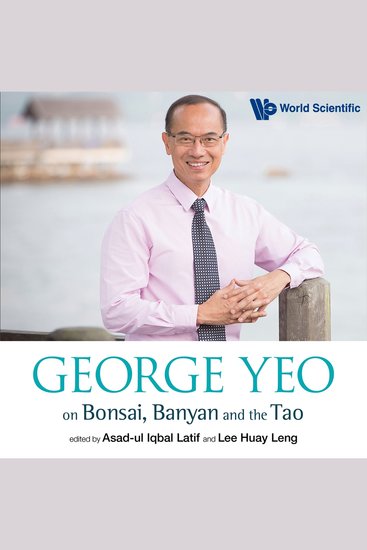
  • George Yeo on Bonsai Banyan and the Tao - cover

    George Yeo on Bonsai Banyan and...

    Asad-Ul Iqbal Latif, Lee Huay Leng

    • 0
    • 0
    • 0
    Since his undergraduate days in Cambridge, George Yeo has spoken and written much in and out of government. Many remember the things which he said or wrote years ago. This book is a compilation of some of his best speeches and writings which were selected by Asad Latif and Lee Huay Leng in consultation with him.
    
    The book has a rather unusual title because there are many aspects to George Yeo which makes him difficult to classify. As a student leader, he was radical but conciliatory. In the Singapore Armed Forces, he was atypical, moving from the Army to the Air Force before becoming Director of Joint Operations and Planning. In politics, he is fondly remembered by artists, journalists, doctors, businessmen and foreign diplomats, and by his colleagues and constituents. His own staff said he had a curious mind. They complained that he rarely used the drafts which they had prepared for him.
    
    George Yeo describes himself as a Taoist even though he is a Roman Catholic and is now on the Papal staff. Buddhists are surprised he championed the revival of Nalanda University as an international project. He remains close to Singaporeans of different races and religions even though he has a deep sense of his own ancestral roots and religion. In politics, he has been described both as a liberal and a conservative. In his Parliamentary maiden speech, he spoke of the importance of democracy but has repeated many times that democracy is only a means and not an end in itself. He has a deep interest in history which partly explains his seeing the re-emergence of China and India earlier than most others.
    
    The bonsai and the banyan are metaphors he uses for Singapore. Singapore is a city-state and must never have an inflated view of itself. The bonsai describes Singapore modestly, but he adds that the bonsai can be intensely interesting and valuable. The banyan provides shade and we are grateful for it, but too much makes us weak. As for the Tao, that perhaps is what gives unity to his many interests. © 2015 by George Yeo. Published in paper format in Singapore by World Scientific Publishing, recorded by Storyside 2021.
    Voir livre