Begleiten Sie uns auf eine literarische Weltreise!
Buch zum Bücherregal hinzufügen
Grey
Einen neuen Kommentar schreiben Default profile 50px
Grey
Jetzt das ganze Buch im Abo oder die ersten Seiten gratis lesen!
All characters reduced
Sir Gibbie - cover

Sir Gibbie

George MacDonald

Verlag: Bu Classics Books

  • 0
  • 0
  • 0

Beschreibung

Mute and destitute, a young street urchin named Gibbie navigates a world of cruelty with a heart of pure, unblemished gold. His ascent from the gutters to the highlands is marked by an almost angelic innocence that transforms the lives of those he meets. A lyrical fable about the triumph of the meek in a harsh world.
Verfügbar seit: 05.03.2026.
Drucklänge: 754 Seiten.

Weitere Bücher, die Sie mögen werden

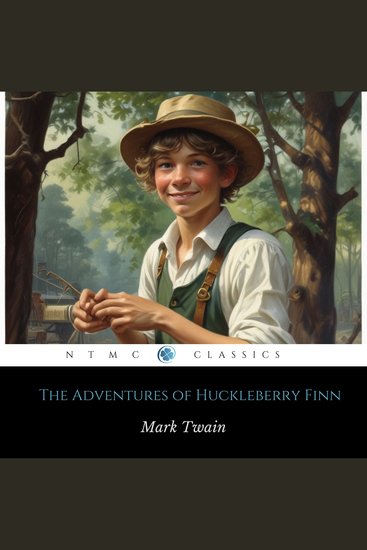
  • The Adventures of Huckleberry Finn - cover

    The Adventures of Huckleberry Finn

    Mark Twain

    • 0
    • 0
    • 0
    Set along the mighty Mississippi River, The Adventures of Huckleberry Finn is Mark Twain's timeless tale of freedom, friendship, and the search for identity. Huck Finn, a spirited boy escaping the confines of his small-town life, joins forces with Jim, an enslaved man fleeing for his freedom. Together, they embark on a daring journey aboard a raft, navigating treacherous waters and encountering a vivid cast of characters, from crafty conmen to feuding families.Through Huck's eyes, Twain explores themes of race, morality, and the bonds that transcend societal divisions. Huck wrestles with his conscience and challenges the prejudices of his world, making this story as relevant today as it was in its time. A thrilling adventure and a profound exploration of human nature, The Adventures of Huckleberry Finn is a cornerstone of American literature that will captivate readers of all ages.
    Zum Buch
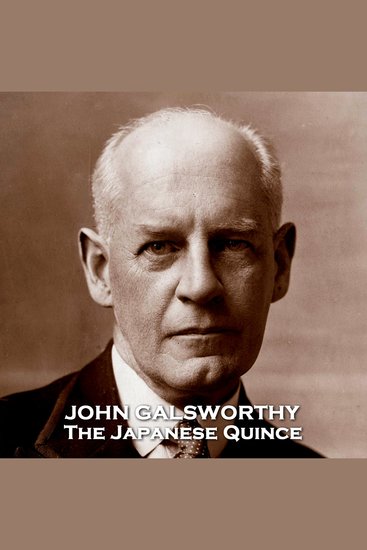
  • The Japanese Quince - From their pens to your ears genius in every story - cover

    The Japanese Quince - From their...

    John Galsworthy

    • 0
    • 0
    • 0
    John Galsworthy was born on the 14th August 1867 on the family estate, Parkfield, in Kingston-upon-Thames.  His family’s wealth came from the shipping industry 
    At age nine he began his education at Saugeen, a Bournemouth preparatory school, before moving to Harrow school in 1881, distinguishing himself as an athlete.  
    Galsworthy attended New College, Oxford to read law and left with a second-class degree with honours in 1889. The bar called him in 1890 but Galsworthy decided he would rather run the family’s shipping business. This also meant travelling to destinations such as Vancouver, South Africa and Australia. 
    In 1895 Galsworthy began a decade long affair with Ada Nemesis Pearson Cooper, the wife of his first cousin. It was only when, in 1905, she divorced and married Galsworthy that their affair became known. 
    His literary career began in 1897 with a short story volume, ‘From the Four Winds’, with the pseudonym John Sinjohn as were three further works. Under his own name, in 1904, came ‘The Island Pharisees’, a novel of social observation, seasoned with flashes of satire and propaganda. He also switched from small, independent publishers to the larger Heinemann and to whom he remained for the duration of his career. 
    1906 saw first major play, ‘The Silver Box’, and the novel ‘The Man of Property’. Each to considerable acclaim. The latter was the first in ‘The Forsyte Saga’ trilogy written between 1906 and 1921. It dealt with the questions of status, class and materialism through Soames Forsyte, who is acutely aware of his ‘new money’ status. Jealous of his wife, his machinations drive her into the arms of another. Soames engages in a terrible revenge with terrible consequences.  
    His social agenda was enlightened particularly in his condemnation over the use of solitary confinement in prisons, his attacks on theatrical censorship and campaigning for animal rights. 
    Galsworthy, having been passed over for active service, spent much of the First World War working as an orderly in a field hospital in France. 
    Despite his it was only in 1920 that he had his first blockbuster play ‘The Skin Game’, a melodrama dealing with ethics, property and class.  
    In 1920 ‘In Chancery’ also arrived with further discourse on the marital disharmony between Soames Forsyte and his wife.  
    The appreciation of his work gradually shifted from plays to novels, particularly through his detailing English social difference, tension and pretension with the Forsytes.  A second trilogy, ‘A Modern Comedy’, followed, examining his love for his daughter Fleur and the English commercial upper-middle class, its ideologies and Soames’ poisonous materialism.  
    Having rejected a knighthood in 1918 he was appointed, in 1929, to the Order of Merit. Galsworthy spent his last years writing a third Forsythe trilogy, ‘End of the Chapter’.   
    In 1932 he was awarded the Nobel Prize, but by now failing health meant he was too ill to attend the ceremony. 
    John Galsworthy died at his Hampstead home of a brain tumour on 31st January, 1933. He was cremated and his ashes scattered from an aeroplane over the South Downs.
    Zum Buch

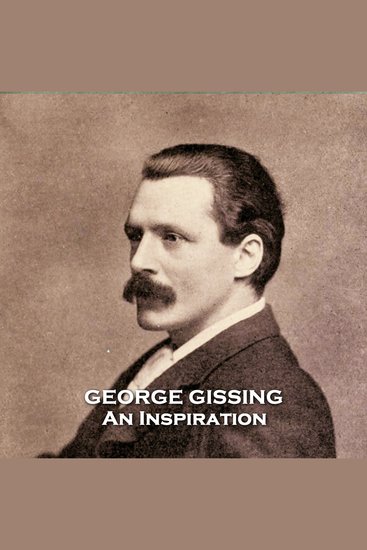
  • Inspiration An - From their pens to your ears genius in every story - cover

    Inspiration An - From their pens...

    George Gissing

    • 0
    • 0
    • 0
    George Robert Gissing was born on November 22nd, 1857 in Wakefield, Yorkshire.  
    He was educated at Back Lane School in Wakefield. Gissing loved school. He was enthusiastic with a thirst for learning and always diligent.  By the age of ten he was reading Dickens, a lifelong hero. 
    In 1872 Gissing won a scholarship to Owens College. Whilst there Gissing worked hard but remained solitary. Unfortunately, he had run short of funds and stole from his fellow students. He was arrested, prosecuted, found guilty, expelled and sentenced to a month's hard labour in 1876. 
    On release he decided to start over.  In September 1876 he travelled to the United States. Here he wrote short stories for the Chicago Tribune and other newspapers. On his return home he was ready for novels. 
    Gissing self-published his first novel but it failed to sell.  His second was acquired but never published. His writing career was static.  Something had to change.  And it did. 
    By 1884 The Unclassed was published.  Now everything he wrote was published. Both Isabel Claren-don and Demos appeared in 1886. He mined the lives of the working class as diligently as any capitalist. 
    In 1889 Gissing used the proceeds from the sale of The Nether World to go to Italy. This trip formed the basis for his 1890 work The Emancipated. 
    Gissing's works began to command higher payments. New Grub Street (1891) brought a fee of £250.  
    Short stories followed and in 1895, three novellas were published; Eve's Ransom, The Paying Guest and Sleeping Fires. Gissing was careful to keep up with the changing attitudes of his audience.  
    Unfortunately, he was also diagnosed as suffering from emphysema. The last years of his life were spent as a semi-invalid in France but he continued to write. 1899; The Crown of Life. Our Friend the Charlatan appeared in 1901, followed two years later by The Private Papers of Henry Ryecroft. 
    George Robert Gissing died aged 46 on December 28th, 1903 after catching a chill on a winter walk.
    Zum Buch
  • Peer Gynt - cover

    Peer Gynt

    Henrik Ibsen

    • 0
    • 0
    • 0
    Peer Gynt is a five-act play written by Henrik Ibsen, a renowned Norwegian playwright. First published in 1867, it tells the adventurous and introspective journey of the title character, Peer Gynt. The play follows Peer's exploits, starting from his youthful escapades in a small Norwegian village to his encounters with trolls, a seductive woman named Solveig, and various characters he meets along the way. Peer Gynt is known for its vivid imagery, symbolic language, and exploration of themes such as identity, self-discovery, and the nature of human existence. 
     
    At the heart of Peer Gynt is the character of Peer himself, a complex and multi-faceted individual. He is portrayed as a dreamer and a wanderer, constantly seeking meaning and purpose in life. Peer's journey is marked by his encounters with different aspects of himself and society, allowing the audience to reflect on the nature of human behavior and the consequences of one's actions. The play challenges conventional ideas of morality and societal norms, presenting Peer as a character who moves between selfishness and selflessness, illusion and reality, and ultimately learns the importance of personal responsibility and authenticity. 
     
    One of the notable aspects of Peer Gynt is its use of fantasy and folklore elements, particularly in Peer's encounters with trolls and other mythical creatures. These episodes provide a surreal and symbolic backdrop for Peer's psychological and spiritual journey. Through these encounters, Ibsen delves into themes of illusion versus reality, the human capacity for self-deception, and the consequences of chasing after superficial desires. The play also incorporates elements of Norwegian culture and folklore, adding a distinct national flavor to the story.
    Zum Buch
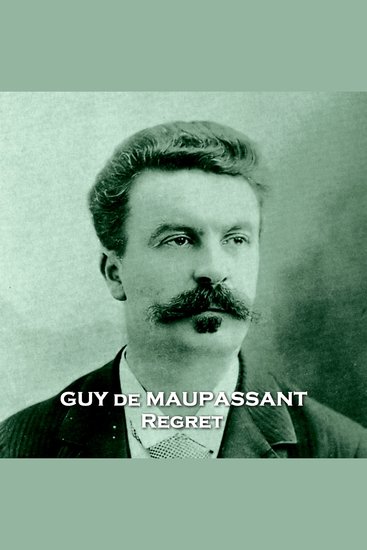
  • Regret - From their pens to your ears genius in every story - cover

    Regret - From their pens to your...

    Guy de Maupassant

    • 0
    • 0
    • 0
    Henri René Albert Guy de Maupassant was born on August 5th, 1850 near Dieppe in France.  
    Maupassant’s early life was badly torn when at age 11 (his younger brother Hervé was then five) his mother, Laure, a headstrong and independent-minded woman, risked social disgrace in order to obtain a legal separation from her husband. 
    After the separation, Laure kept custody of her two boys. With the father now forcibly absent, Laure became the most influential and important figure in the young boy's life.   
    Maupassant’s education was such that he rebelled against religion and other societal norms but a developing friendship with Gustave Flaubert began to turn his mind towards creativity and writing. 
    After graduation he volunteered for the Franco-Prussian war. With its end he moved to Paris to work as a clerk in the Navy Department.  Gustave Flaubert now took him under his wing.  Acting as a literary guardian to him, he guided the eager Maupassant to debuts in journalism and literature.  For Maupassant these were exciting times and the awakening of his creative talents and ambitions. 
    In 1880 he published what is considered his first great work, ‘Boule de Suif’, (translated as as ‘Dumpling’, ‘Butterball’, ‘Ball of Fat’, or ‘Ball of Lard’) which met with a success that was both instant and overwhelming.  Flaubert at once acknowledged that it was ‘a masterpiece that will endure.’ Maupassant had used his talents and experiences in the war to create something unique.  
    This decade from 1880 to 1891 was to be the most pivotal of his career.  With an audience now made available by the success of ‘Boule de Suif’ Maupassant organised himself to work methodically and relentlessly to produce between two and four volumes of work a year.  The melding of his talents and business sense and the continual hunger of sources for his works made him wealthy. 
    In his later years he developed a desire for solitude, an obsession for self-preservation, and a fear of death as well as a paranoia of persecution caused by the syphilis he had contracted in his youth.  
    On January 2nd, 1892, Maupassant tried to commit suicide by cutting his throat.  Unsuccessful he was committed to the private asylum of Esprit Blanche at Passy, in Paris.  It was here on July 6th, 1893 that Henri René Albert Guy de Maupassant died at the age of only 42.
    Zum Buch
  • Three Stories & Ten Poems - cover

    Three Stories & Ten Poems

    Ernest Hemingway

    • 0
    • 0
    • 0
    One of Ernest Hemingway’s first published works, these are short stories and poems about life, love, loss and heartache. 
    The three stories include Up In Michigan, Out Of Season and My Old Man. 
    The ten poems included in this book are:MitraigliatriceOklahomaOily WeatherRooseveltCaptivesChamps d’HonneurRiparto d’AssaltoMontparnasseAlong With YouthChapter Heading 
    Originally published by Ernest Hemingway in 1923. 
    Zum Buch