Rejoignez-nous pour un voyage dans le monde des livres!
Ajouter ce livre à l'électronique
Grey
Ecrivez un nouveau commentaire Default profile 50px
Grey
Abonnez-vous pour lire le livre complet ou lisez les premières pages gratuitement!
All characters reduced
Sir Gibbie - cover

Sir Gibbie

George MacDonald

Maison d'édition: Bu Classics Books

  • 0
  • 0
  • 0

Synopsis

Mute and destitute, a young street urchin named Gibbie navigates a world of cruelty with a heart of pure, unblemished gold. His ascent from the gutters to the highlands is marked by an almost angelic innocence that transforms the lives of those he meets. A lyrical fable about the triumph of the meek in a harsh world.
Disponible depuis: 05/03/2026.
Longueur d'impression: 754 pages.
D'autres livres qui pourraient vous intéresser

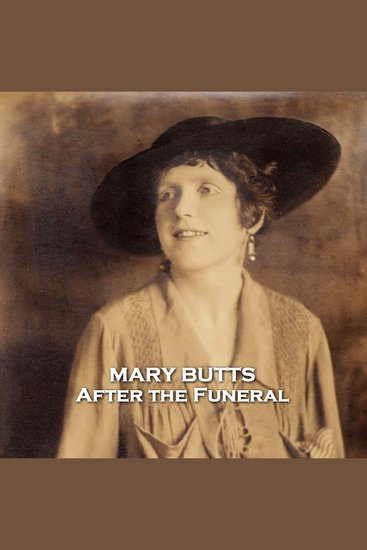
  • After the Funeral - From their pens to your ears genius in every story - cover

    After the Funeral - From their...

    Mary Butts

    • 0
    • 0
    • 0
    Mary Frances Butts was born on 13th December 1890 in Poole, Dorset. 
    Her early years were spent at Salterns, an 18th-century house overlooking Poole Harbour.  Sadly in 1905 her father died, and she was sent for boarding at St Leonard's school for girls in St Andrews. 
    Her mother remarried and, from 1909, Mary studied at Westfield College in London, and here, first became aware of her bisexual feelings.  She was sent down for organising a trip to Epsom races and only completed her degree in 1914 when she graduated from the London School of Economics.  By then Mary had become an admirer of the occultist Aleister Crowley and she was given a co-authorship credit on his ‘Magick (Book 4)’. 
    In 1916, she began the diary which would now detail her future life and be a constant reference point for her observations and her absorbing experiences. 
    During World War I, she was doing social work for the London County Council in Hackney Wick, and involved in a lesbian relationship.  Life changed after meeting the modernist poet, John Rodker and they married in 1918. 
    In 1921 she spent 3 months at Aleister Crowley's Abbey of Thelema in Sicily; she found the practices dreadful and also acquired a drug habit.  Mary now spent time writing in Dorset, including her celebrated book of short stories ‘Speed the Plough’ which saw fully develop her unique Modernist prose style. 
    Europe now beckoned and several years were spent in Paris befriending many artists and writing further extraordinary stories.   
    She was continually sought after by literary magazines and also published several short story collections as books. Although a Modernist writer she worked in other genres but is essentially only known for her short stories.  Mary was deeply committed to nature conservation and wrote several pamphlets attacking the growing pollution of the countryside. 
    In 1927, she divorced and the following year her novel ‘Armed with Madness’ was published.  A further marriage followed in 1930 and time was spent attempting to settle in London and Newcastle before setting up home on the western tip of Cornwall.  By 1934 the marriage had failed. 
    Mary Butts died on 5th March 1937, at the West Cornwall Hospital, Penzance, after an operation for a perforated gastric ulcer. She was 46.
    Voir livre
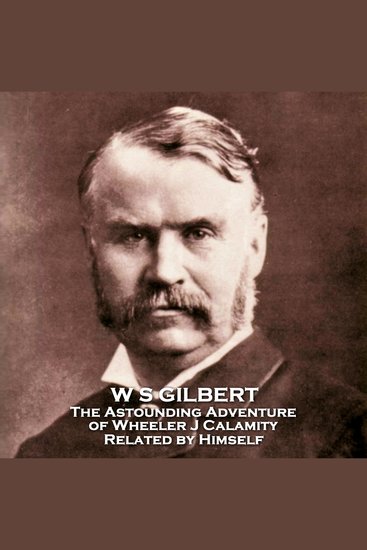
  • The Astounding Adventure of Wheeler J Calamity Related by Himself - From their pens to your ears genius in every story - cover

    The Astounding Adventure of...

    W S Gilbert

    • 0
    • 0
    • 0
    The bookshelves of British literature are incredible collections that have gathered together centuries of very talented authors.  From these Isles their fame spread and whilst among their number many are now forgotten or neglected their talents endure.  Among them is W S Gilbert one very talented half of the Gilbert & Sullivan duo who wrote so many famed light operas.
    Voir livre
  • Anathema - From their pens to your ears genius in every story - cover

    Anathema - From their pens to...

    Alexander Kuprin

    • 0
    • 0
    • 0
    Alexander Kuprin was born in Narovchat, Penza in Russia on 7th September 1870. 
    At 3 his Father died and he and mother moved to Moscow. By 10 he was enrolled at the Second Moscow Military High School and there his interest in literature began. The Alexander Military Academy followed and two years later he was a sub-lieutenant and posted to an Infantry Regiment for a further four years. 
    Despite his duties he was a now a keen writer and published his first short story at this time. His military duties also garnered him experiences for his breakthrough work ‘The Duel’.  Leaving the military he left for Kiev to work for local newspapers.  He continued to publish both stories and novels and by 1901 he was in St Petersburg becoming part of a group that included Chekhov, Ivan Bunin, Maxim Gorky and Leonid Andreyev.  
    In the years that followed further controversial works and acclaim followed.  His comments on the regime meant he was also put under secret police surveillance.   
    As World War I erupted, Kuprin opened a military hospital but was then given command of an infantry company in Finland. He was soon discharged on grounds of ill health.  
    The October Revolution saw him praise Lenin, but he warned that the Bolsheviks threatened Russian culture and might cause further widespread suffering to the peasants.  As Civil War raged he took his family to Helsinki and then on to Paris. 
    Exile saw his talents decline further and his succumbing to alcoholism. He became lonely and withdrawn. The family's poverty increased his malaise.   
    In May 1937, the Kuprin’s returned to Moscow.  He now saw his work published but wrote almost nothing new.  In 1938 his health rapidly deteriorated.  Already suffering from a kidney problems and sclerosis, he had now developed cancer of the oesophagus.  
    Alexander Kuprin died on 25th August 1938.
    Voir livre
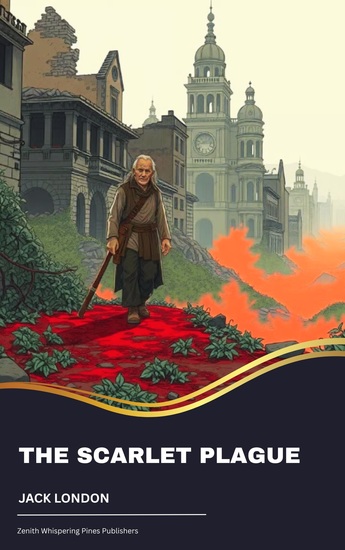
  • The Scarlet Plague - cover

    The Scarlet Plague

    Jack London

    • 0
    • 0
    • 0
    A world wiped out. A survivor who remembers. A warning that feels eerily close to our own.
    Set in a devastated future, The Scarlet Plague follows an old man guiding his grandsons through the ruins of a once-thriving civilization. As they wander the empty landscape, he recounts the terrifying plague that swept across the globe—how society crumbled overnight, how fear replaced order, and how humanity was forced back to primitive survival.
    
    Praised as "one of the earliest and most chilling visions of global collapse," Jack London's novella blends suspense, stark beauty, and unsettling realism. Its portrait of fragility, resilience, and the lessons forgotten by future generations remains strikingly relevant.
    
    If you enjoy dystopian fiction, survival stories, and classics that echo with modern resonance, this powerful tale will grip your imagination.
    
    Open the book—and walk through a world where one plague changed everything.
    Voir livre
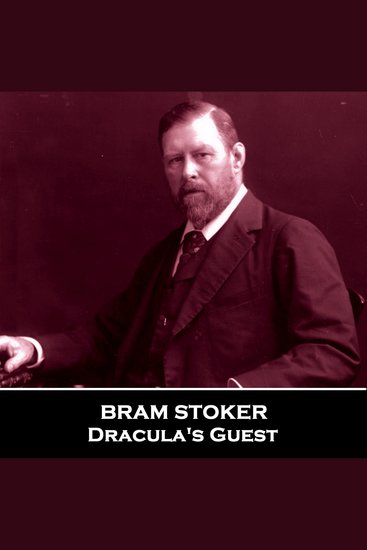
  • Dracula's Guest - From their pens to your ears genius in every story - cover

    Dracula's Guest - From their...

    Bram Stoker

    • 0
    • 0
    • 0
    Abraham Stoker was born in Dublin, Ireland on the 8th of November 1847, the third of seven children.  
    His early years were plagued with such ill-health that he was unable to start school until the age of seven.  He turned the long periods of recovery into an opportunity for thinking and said “I was naturally thoughtful, and the leisure of long illness gave opportunity for many thoughts which were fruitful according to their kind in later years”.  
    Strikingly at Trinity College, Dublin his health had returned with such vigour that he was named their University Athlete whilst also achieving a BA in Mathematics with honours.  
    At this time his interest in theatre became a job offer to be the Dublin Evening Mail’s theatre critic, co-owned by Sheridan Le Fanu.  He now began to also write short stories and in 1872 ‘The Crystal Cup’ was published.  An interest in art developed and he co-founded the Dublin Sketching Club.  
    In 1878 came marriage to Florence Balcombe.  She had formerly been courted by Stoker’s acquaintance, Oscar Wilde.  The marriage produced one child.   
    Stoker had some years before reviewed Henry Irving’s Hamlet and had dined with him.  That friendship now resulted in a proposal from Irving to move to London and to manage his Lyceum Theatre.  His numerous commercial innovations ensured both he and the theatre thrived.  Irving would also often take Stoker with him when he toured abroad. 
    Despite this busy life Stoker continued to write and these works paved the way for his most famous creation, published in 1897, ‘Dracula’.  It is rightly recognised as one of the greatest horror novels of all time and although not the first with a theme of Vampires, it is undoubtedly the most well-known. 
    Stoker also wrote poetry and many excellent short stories and continued to write novels and other works throughout his career. 
    Politically Stoker supported Home Rule, though only by peaceful means.  He was also keen on following scientific trends particularly in medicine. 
    In 1902 his tenure at the Lyceum Theatre ended and although he continued to write his health was deteriorating, mainly due to a series of debilitating strokes. 
    Bram Stoker died on the 20th April 1912, in Pimlico, London.  He was 64.
    Voir livre
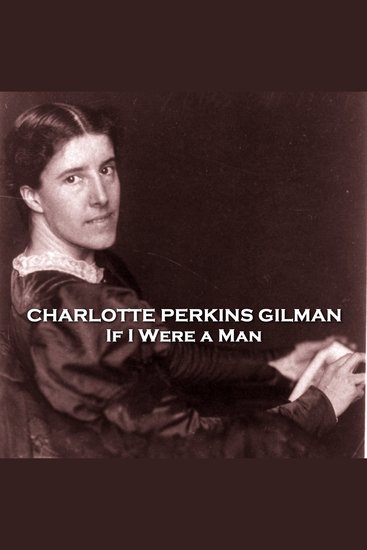
  • If I Were a Man - From their pens to your ears genius in every story - cover

    If I Were a Man - From their...

    Charlotte Perkins Gilman

    • 0
    • 0
    • 0
    Charlotte Perkins Gilman was born on 3rd July 1860 in Hartford, Connecticut, to an unaffectionate mother and a father who abandoned her and her older brother to a life of poverty. 
    Inevitably her schooling was limited and by 15 she had attended seven different schools but received only four years education.  However Charlotte was resourceful and did spend time with her father’s aunts – the suffragist Isabella Beecher Hooker and the ‘Uncle Tom Cabin’s’ author, Harriet Beecher Stowe as well as many hours at the public library studying ancient civilisations. 
    In 1878, she enrolled in classes at the Rhode Island School of Design where she met Martha Luther and they developed a close relationship until Luther married in 1881. Charlotte was devastated and detested romance and love until she met and married the artist Charles Walter Stetson.  
    Their only child, Katharine Beecher Stetson, was born in 1885 but left Charlotte with post-natal depression, then often dismissed as a case of hysteria or nerves.  Unsuited to domestic life she ruptured her life and moved to California with Katherine.  She divorced in 1894 and then sent Katharine east to live with her father and his second wife confirming that his paternal rights be acknowledged and that Katherine establish a relationship with her father. 
    After her mother died in 1893, Charlotte moved back east and became involved with her first cousin, Wall Street attorney, Houghton Gilman who she married in 1900. After his death she moved back to California, where Katherine now lived.   
    Her most popular story is ‘The Yellow Wallpaper’ which touched on her own post-partum depression and underlined the need for women to be responsible for their mental and physical well-being, as the narrator is ordered by her husband/doctor to take compete rest in her room where she is isolated and becomes obsessed with the revolting yellow wallpaper.   
    She wrote other notable short stories the best of which we also include.   
    Charlotte lectured widely for social reform, wrote important non-fiction works that questioned our patriarchal system and left a legacy as a leading and positive spokesperson for feminism.  
    She was diagnosed with incurable breast cancer in 1932 and, as she wrote in her suicide note and autobiography, she ‘chose chloroform over cancer’    
    Charlotte Perkins Gilman took her own life on 17th August 1935, aged 75, in Pasadena, California.
    Voir livre